Blog
Soil Creep: Understanding Mass Wasting and Its Landscape Impact

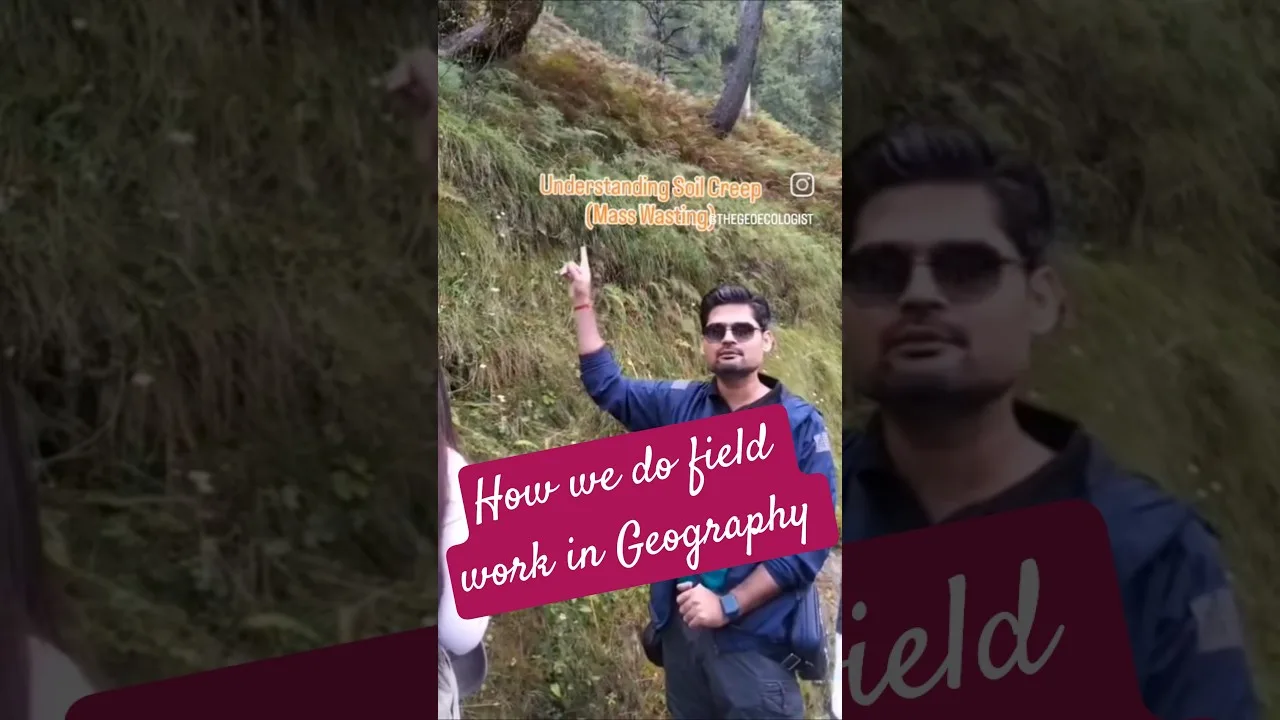
Table of Contents
- Introduction to Soil Creep and Mass Movement
- The Science Behind Soil Creep Mechanisms
- Field Identification Techniques for Soil Creep
- Classic Indicators of Active Soil Creep
- Technological Advances in Soil Creuse Measurement
- Soil Creep Impact on Human Infrastructure
- Climate Change Connections to Soil Creep Dynamics
- Soil Creep in Natural Hazard Assessment
- Educational Value and Field Training Importance
- Conclusion: Recognizing Soil Creep's Lasting Impact
Introduction to Soil Creep and Mass Movement
Soil creep represents one of nature’s most persistent yet overlooked geological forces. This slow, gradual downhill movement of soil and surface materials occurs at rates of mere millimeters to centimeters annually, making it virtually invisible to casual observation. Despite its subtle nature, soil creep plays a fundamental role in shaping Earth’s surface through continuous mass wasting processes.
- Soil creep moves materials at extremely slow rates (2-10 mm per year)
- It affects landscapes over decades to centuries
- Recognizing soil creep signs prevents infrastructure damage
- Field training is essential for identifying creep indicators
- Technology enhances measurement of these subtle movements
The Science Behind Soil Creep Mechanisms
Understanding soil creep begins with recognizing its driving forces. Temperature fluctuations cause frost action in colder climates, where repeated freezing and thawing cycles push materials downslope. In warmer regions, wet-dry cycles create similar expansion and contraction effects. Gravity remains the constant force pulling materials downward, while vegetation roots provide temporary cohesion that eventually fails under persistent stress.
Soil creep operates through three primary mechanisms: frost creep, where ice expansion lifts particles that settle lower during thaw; thermal creep, caused by differential heating of slope materials; and biological creep, where plant root growth and decay contribute to gradual movement. These processes work synergistically, making soil creep a complex phenomenon that varies significantly across different environmental conditions.
Field Identification Techniques for Soil Creep

Identifying soil creep requires careful observation of landscape features that reveal long-term movement patterns. The most obvious indicators include tilted human-made structures such as fences, walls, and utility poles that gradually lean downslope over time. These features weren’t originally installed at angles; rather, they’ve been slowly displaced by the underlying soil movement.
Classic Indicators of Active Soil Creep
Armed with proper field training, geologists and students can recognize distinctive signs of soil creep activity. Tilted gravestones in cemeteries located on slopes provide excellent examples of this phenomenon, as they maintain their original vertical installation while gradually leaning over decades. Similarly, telephone poles and fence posts show measurable angular displacement that accumulates over extended periods.
Bent trees, particularly those displaying characteristic J-shaped trunks or pistol-butt formations, indicate areas where soil creep actively deforms root systems and trunk growth patterns. These trees grow vertically against gravitational forces while their foundations slowly move downhill, creating the distinctive curved morphology that serves as a clear field indicator.
Technological Advances in Soil Creuse Measurement
Modern geomorphology employs sophisticated tools to quantify soil creep rates that exceed human perception thresholds. GPS monitoring stations can detect millimeter-level movements over time, providing precise data on creep velocity and seasonal variations. Laser scanning technology, including LiDAR systems, creates detailed topographic maps that reveal subtle surface changes invisible to traditional surveying methods.
Aerial photography and satellite imagery offer temporal analysis capabilities, allowing researchers to compare landscape positions across years or decades. This approach has documented soil creep rates averaging 5-15 mm annually in many temperate regions, with higher rates observed in areas experiencing freeze-thaw cycles or intense wet-dry seasonal patterns.
Soil Creep Impact on Human Infrastructure
The practical implications of soil creep extend significantly into engineering and construction planning. Roadways, building foundations, and utility installations situated on slopes face gradual displacement that compromises structural integrity over time. Understanding local soil creep characteristics becomes essential before any major construction project begins, as ignoring these forces leads to expensive repairs and potential safety hazards.
Retaining walls, drainage systems, and foundation designs must account for expected soil creep rates when determining appropriate engineering specifications. Areas with documented high creep activity require specialized construction techniques, including flexible foundations and regular maintenance schedules to address the inevitable gradual displacement of supporting materials.
Climate Change Connections to Soil Creep Dynamics
Changing precipitation patterns and temperature regimes directly influence soil creep processes worldwide. Increased rainfall intensity accelerates wet-dry cycling in many regions, potentially increasing creep rates beyond historical averages. Conversely, altered freeze-thaw cycles in previously cold regions may reduce frost creep contributions while enhancing other mechanisms.
Research published in recent geological surveys indicates that soil creep rates may accelerate by 15-30% in regions experiencing increased precipitation variability. This acceleration compounds existing landscape instability, making proper assessment and monitoring even more critical for hazard mitigation planning and land-use decisions.
Soil Creep in Natural Hazard Assessment
While soil creep itself rarely creates immediate danger, it serves as an important precursor indicator for more catastrophic mass wasting events. Areas experiencing accelerated creep often precede landslide development, as weakened slope materials reach failure thresholds under additional stress from heavy precipitation or seismic activity. Professional geologists use soil creep observations as early warning signals for potential hazard zones requiring closer monitoring.
The relationship between soil creep and larger mass movement events makes field identification skills invaluable for emergency management agencies and land-use planners. Understanding these connections enables better risk assessment and more effective mitigation strategies for communities situated in geologically sensitive areas.
Educational Value and Field Training Importance
Hands-on field training transforms abstract theoretical knowledge about soil creep into practical observational skills. Working alongside experienced geologists like Dr. Krishnanand provides students with direct exposure to real-world examples and measurement techniques. This experiential learning approach builds confidence in identifying subtle landscape changes that indicate active soil creep processes.
Field exercises typically involve measuring tilt angles of existing structures, documenting vegetation patterns, and using simple surveying tools to track surface changes over time. These activities develop critical thinking skills necessary for interpreting landscape evolution and understanding the complex interactions between geological processes and surface features.
Conclusion: Recognizing Soil Creep’s Lasting Impact
Soil creep may move slowly, but its cumulative effects reshape landscapes continuously over geological time scales. From tilted fence posts to curved tree trunks, the evidence surrounds us for those who know how to look. Understanding these processes through proper field training and modern measurement techniques provides essential knowledge for managing human interaction with dynamic Earth surface processes.
The importance of recognizing soil creep extends beyond academic interest into practical applications affecting infrastructure planning, hazard assessment, and environmental management. As climate patterns continue shifting, maintaining awareness of soil creep dynamics becomes increasingly important for sustainable development and risk reduction strategies.
Frequently Asked Questions
Soil creep is the slow, gradual downhill movement of soil and surface materials, typically occurring at rates of 2-10 millimeters per year. This makes it virtually imperceptible to direct observation but measurable with proper instruments over time.
Common indicators include tilted fences, walls, and utility poles; trees with curved or J-shaped trunks (pistol-butt trees); terracettes (small step-like ridges); and soil accumulation patterns against obstacles. These features develop gradually over years to decades.
Soil creep affects foundations, roads, and infrastructure by causing gradual displacement that compromises structural integrity over time. Engineers must account for expected creep rates when designing buildings and infrastructure on sloped terrain to prevent long-term damage and safety issues.