

Blog
Himalayan Waste Crisis: Mountains Drowning in Plastic Pollution

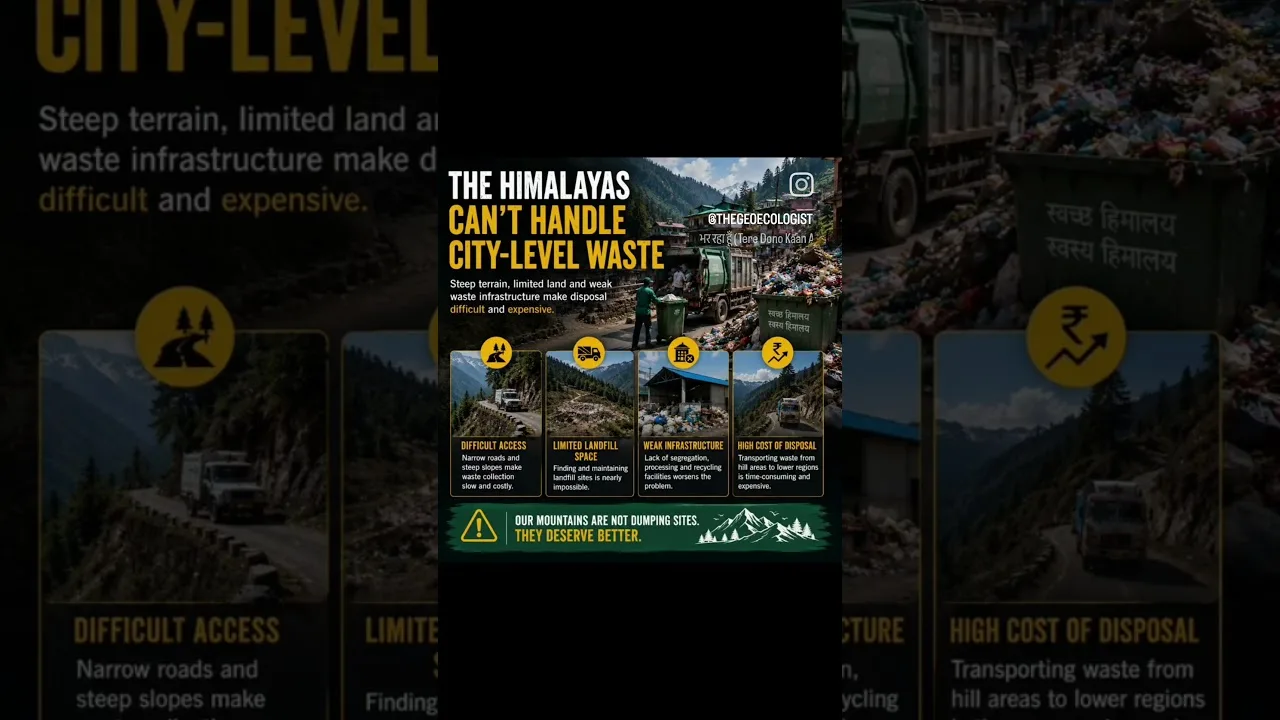
Table of Contents
- The Scale of the Himalayan Waste Crisis
- Plastic Dominates the Waste Stream
- Tourism's Double-Edged Sword: Economic Boon, Ecological Burden
- Infrastructure Gaps in Hill Stations
- Downstream Impact: From Peaks to Plains
- Why Mountain Waste Management Is Uniquely Difficult
- 1. Terrain and Logistics
- 2. Climate Constraints
- 3. Limited Land Availability
- 4. Institutional Fragmentation
- Policy Responses and Government Initiatives
- Community-Led Solutions and Success Stories
- Zero Waste Himalaya (Sikkim & Darjeeling)
- Waste Warriors (Dehradun, Dharamshala, Corbett)
- Ladakh's "No Plastic" Regulation
- The Role of Responsible Tourism
- Actionable Steps for Travelers
- Conclusion: Protecting the Water Towers of Asia
The Himalayan waste crisis has reached a tipping point, threatening the water security of nearly two billion people across South Asia. For centuries, the majestic peaks of the Himalayas have stood as symbols of purity, spirituality, and untamed beauty. From the serene monasteries of Ladakh to the bustling hill stations of Himachal Pradesh and Uttarakhand, these mountains are the lifelines for millions, providing fresh water to the Ganga, Yamuna, Brahmaputra, Indus, and their countless tributaries. However, a silent emergency is unfolding beneath the snow-capped summits. A growing wave of pollution—dominated by single-use plastics, packaging waste, and untreated sewage—is scarring this fragile paradise. The Himalayan waste crisis is no longer a local issue; it is a transboundary environmental catastrophe with downstream consequences for agriculture, biodiversity, and human health across the Indo-Gangetic Plain.
- The Himalayan waste crisis threatens water security for ~2 billion people dependent on Himalayan rivers.
- Tourism generates over 5 million metric tonnes of waste annually in the Indian Himalayan Region alone.
- Microplastics have been detected in glacial meltwater at altitudes above 5,000 meters.
- Limited infrastructure, difficult terrain, and weak enforcement make mountain waste management uniquely complex.
- Community-led models like Zero Waste Himalaya and Waste Warriors prove decentralized solutions work.
- Travelers can reduce impact by adopting “carry-in, carry-out” policies and refusing single-use plastics.
The Scale of the Himalayan Waste Crisis
According to a 2023 study by the United Nations Environment Programme, the Hindu Kush Himalaya region generates an estimated 5.4 million tonnes of solid waste annually, of which less than 30% is collected and processed scientifically. The remainder is openly dumped, burned, or washed into river systems. In popular destinations like Manali, Leh, Mussoorie, and Dharamshala, per-capita waste generation during peak tourist season exceeds 2 kg per day—four times the national urban average. The Himalayan waste crisis is exacerbated by the region’s remoteness: many villages lack motorable roads, making waste transport to processing facilities economically unviable.
Plastic Dominates the Waste Stream
Plastic constitutes 60–80% of visible litter on trekking trails and pilgrimage routes. A 2022 audit by the Waste Warriors network found that polyethylene terephthalate (PET) bottles, multi-layered packaging (chips, biscuits), and synthetic textiles account for the bulk of non-biodegradable waste. These materials persist for centuries, fragmenting into microplastics that infiltrate glacial ice. Researchers from the Indian Institute of Technology (IIT) Roorkee detected microplastic concentrations of 50–200 particles per litre in meltwater samples from the Gangotri and Chorabari glaciers—evidence that the Himalayan waste crisis has reached the cryosphere.
Tourism’s Double-Edged Sword: Economic Boon, Ecological Burden
Tourism is the economic backbone of the Indian Himalayan Region (IHR), contributing an estimated ₹1.2 lakh crore annually and employing millions. However, the Himalayan waste crisis is intrinsically linked to unregulated tourist footfall. The Char Dham Yatra alone attracts over 40 lakh pilgrims between April and November, generating an estimated 15–20 tonnes of waste daily along the routes to Yamunotri, Gangotri, Kedarnath, and Badrinath. Similarly, the Amarnath Yatra in Jammu & Kashmir and the Hemis Festival in Ladakh create seasonal waste spikes that overwhelm local municipal solid waste management (MSWM) systems.
Infrastructure Gaps in Hill Stations
Most hill stations were planned for populations a fraction of their current size. Shimla, for instance, has a permanent population of ~1.7 lakh but hosts over 35 lakh tourists annually. Its sole waste-processing plant at Bhariyal has a capacity of 70 tonnes per day (TPD), while the city generates >120 TPD during peak season. The deficit is dumped at Sanjauli or burned openly, releasing dioxins and furans. The Himalayan waste crisis in urban centers is thus a direct consequence of infrastructure failing to keep pace with floating populations.
Downstream Impact: From Peaks to Plains

The Himalayas are the “Water Towers of Asia“, feeding ten major river basins. When rain and snowmelt carry waste downstream, the Himalayan waste crisis becomes a plains crisis. The Namami Gange programme estimates that 80% of the Ganga’s pollution load originates from its upper reaches in Uttarakhand. Key impacts include:
- Water Quality: Microplastics and leachates contaminate drinking water for cities like Haridwar, Kanpur, and Varanasi.
- Agriculture: Plastic mulch residues and microplastics reduce soil porosity and microbial activity, lowering yields in the Terai belt.
- Biodiversity: Endemic species like the Himalayan brown bear, snow leopard, and golden mahseer ingest plastic or suffer habitat degradation.
- Human Health: A 2021 ICMR study linked microplastic ingestion via water and fish to inflammatory responses in riverside communities.
Why Mountain Waste Management Is Uniquely Difficult
The Himalayan waste crisis persists because standard urban waste-management models fail in mountain contexts. Key barriers include:
1. Terrain and Logistics
Steep slopes, landslides, and seasonal road closures make waste collection vehicles impractical above 2,000 meters. In Lahaul-Spiti and Zanskar, waste must be transported by mule or porter for days to reach the nearest processing facility.
2. Climate Constraints
Sub-zero temperatures for 6–8 months halt composting and slow biological treatment. Landfills in permafrost zones risk leachate contamination of groundwater when thaw occurs.
3. Limited Land Availability
Forest conservation laws (Forest Conservation Act, 1980) restrict landfill siting. Most hill municipalities have zero designated landfill sites compliant with Solid Waste Management Rules, 2016.
4. Institutional Fragmentation
Waste management falls under Urban Local Bodies (ULBs), Panchayati Raj Institutions, Forest Departments, and Tourism Boards—often with overlapping jurisdictions and no unified data platform.
Policy Responses and Government Initiatives
India has launched several programmes targeting the Himalayan waste crisis:
- Swachh Bharat Mission (Grameen) Phase II: Focuses on plastic waste management units (PWMUs) at block level in Himalayan states.
- National Mission for Sustaining the Himalayan Ecosystem (NMSHE): Includes waste-management components under the National Action Plan on Climate Change (NAPCC).
- Plastic Waste Management (Amendment) Rules, 2022: Mandates Extended Producer Responsibility (EPR) for brands selling in hill states, requiring take-back of multi-layered packaging.
- Himalayan State Regional Council (NITI Aayog): Coordinates cross-state strategies for waste, water, and tourism.
However, implementation remains patchy. A 2023 CAG audit found that only 12 of 59 ULBs in Uttarakhand had functional material recovery facilities (MRFs).
Community-Led Solutions and Success Stories
Despite systemic gaps, grassroots models demonstrate that the Himalayan waste crisis can be mitigated through decentralized action:
Zero Waste Himalaya (Sikkim & Darjeeling)
This network of NGOs, schools, and monasteries has established community composting pits, upcycling centres, and plastic-free pilgrimage routes. Since 2018, they have diverted >300 tonnes of waste from landfills and trained 5,000+ waste workers.
Waste Warriors (Dehradun, Dharamshala, Corbett)
Operating material recovery facilities and behaviour-change campaigns, Waste Warriors processes 15 TPD of dry waste and employs 200+ safai saathis (waste pickers) with formal contracts and social security.
Ladakh’s “No Plastic” Regulation
Since 2018, the Leh Autonomous Hill Development Council has banned single-use plastics in government offices, hotels, and markets. Compliance is enforced via spot fines and community monitoring, reducing plastic litter by an estimated 60% in Leh town.
The Role of Responsible Tourism
Tour operators, homestays, and trekking agencies are pivotal in resolving the Himalayan waste crisis. The Adventure Tour Operators Association of India (ATOAI) and Indian Mountaineering Foundation (IMF) now mandate “Leave No Trace” protocols for certified operators. Key practices include:
- Providing clients with reusable steel bottles and tiffin boxes instead of packaged water and meals.
- Contracting local waste cooperatives for trail clean-ups and waste back-haul.
- Designing itineraries that avoid over-touristed fragile zones during peak season.
- Educating guests on mountain ecology and waste segregation at orientation briefings.
Actionable Steps for Travelers
Every visitor can reduce their contribution to the Himalayan waste crisis by adopting a Zero Waste mindset:
- Carry In, Carry Out: Pack out all non-biodegradable waste to the nearest city with processing infrastructure.
- Refuse Single-Use Plastics: Carry a reusable water bottle (refill at hotels/filtered streams), cloth bags, and metal cutlery.
- Segregate at Source: Separate wet, dry, and sanitary waste; hand over to designated collectors.
- Support Eco-Certified Stays: Choose homestays/hotels with composting, rainwater harvesting, and plastic-free policies.
- Pick Up Litter: Spend 10 minutes daily collecting trash on trails—”plogging” builds community norms.
- Report Illegal Dumping: Use apps like Swachhata or state-specific grievance portals.
Conclusion: Protecting the Water Towers of Asia
The Himalayan waste crisis is a test of our collective stewardship. These mountains are not merely scenic backdrops; they are the cryospheric reservoirs that sustain civilizations. Solving this crisis requires convergent action: robust policy enforcement, producer accountability under EPR, investment in decentralized mountain-appropriate technology, and a cultural shift toward circular economies in tourism. The cost of inaction—measured in poisoned rivers, lost biodiversity, and compromised water security for billions—is incalculable. The Himalayas have given us life, water, and spiritual sustenance for millennia. It is time we reciprocate by ensuring they remain pristine, plastic-free, and resilient for generations to come.
Frequently Asked Questions
The primary drivers are unregulated tourism generating massive seasonal waste spikes, inadequate waste-collection infrastructure in remote mountain terrain, weak enforcement of plastic bans, and the absence of scientifically designed landfills or processing facilities in most hill municipalities.
Waste from the mountains flows into major rivers like the Ganga, Yamuna, and Brahmaputra, contaminating drinking water with microplastics and leachates, degrading agricultural soils in the Indo-Gangetic Plain, and entering the food chain through fish and crops—ultimately impacting human health across North and East India.
Travelers should adopt a 'carry-in, carry-out' policy for all non-biodegradable waste, refuse single-use plastics by carrying reusable bottles and bags, stay at eco-certified homestays, segregate waste at source, and participate in trail clean-ups or report illegal dumping via the Swachhata app.
