Blog
Education System India: School Closures & Access Issues

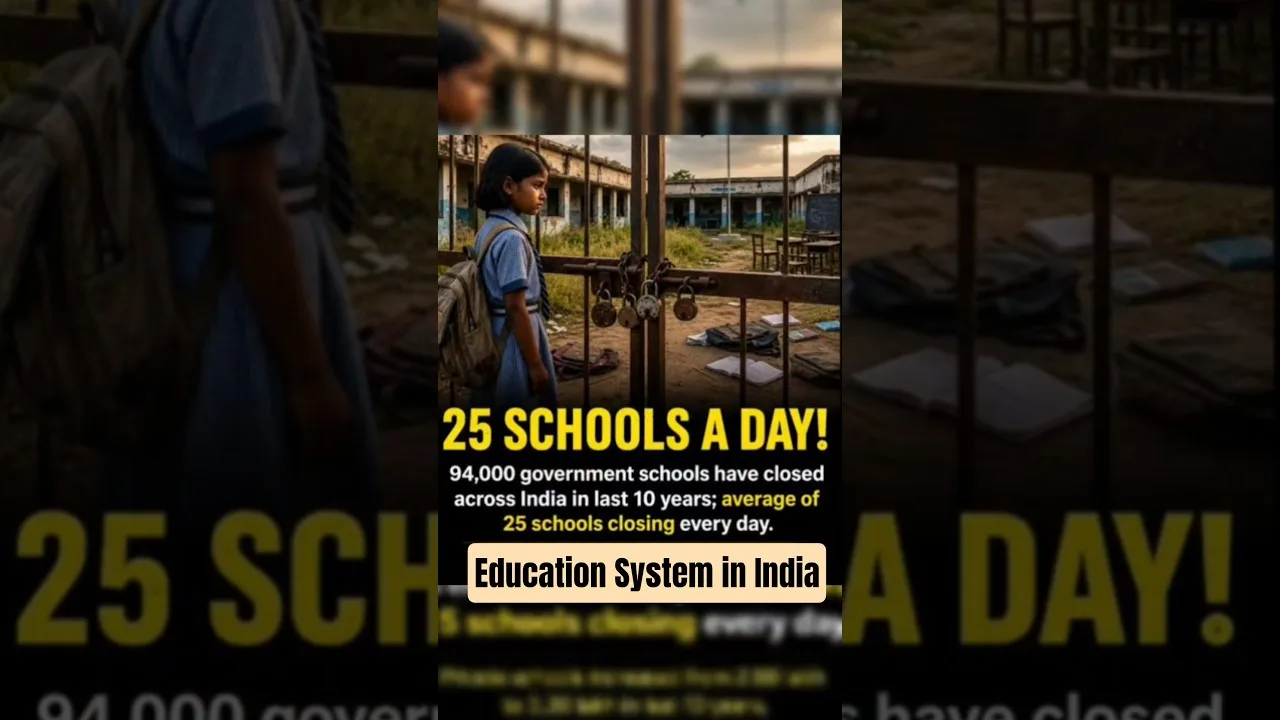
Table of Contents
- Education System India: Historical Context
- Education System India: Pre‑Independence Era
- Education System India: Post‑Independence Policies
- Education System India: Current Crisis of School Closures
- Education System India: Data on Declining Enrolment
- Education System India: Migration and Urbanisation
- Education System India: Spatial Landscape Changes
- Education System India: School Rationalisation and Mergers
- Education System India: Impact on Remote Villages
- Education System India: Accessibility, Distance and Equal Opportunity
- Education System India: Right to Education Act
- Education System India: Travel Burden on Children
- Education System India: Policy Responses and Recommendations
- Education System India: Government Initiatives
- Education System India: Community Role
- Education System India: Future Outlook
Education System India is undergoing a profound transformation as declining enrolment, migration, and shifting demographics reshape the spatial landscape of public education. Across states, hundreds of schools are being merged or shut down under rationalisation drives, raising urgent questions about accessibility, distance, and equal opportunity for children in rural and remote areas. This article examines the data behind the trend, its socio‑economic impact, and what policymakers must do to safeguard the Right to Education.
- School closures are driven by falling enrolment, migration to cities, and budget constraints.
- Rural and economically weaker communities bear the brunt of increased travel distances.
- The Right to Education Act guarantees free and compulsory education, but implementation gaps persist.
- Policy responses must balance rationalisation with genuine access and quality improvements.
- Community participation and technology‑based learning can mitigate isolation.
Education System India: Historical Context
Understanding the present crisis requires a look at how Education System India evolved since independence. The post‑1947 era saw massive expansion of government schools, aiming to universalise elementary education. By the 1990s, enrolment ratios had risen sharply, yet regional disparities remained. The turn of the millennium brought initiatives like Sarva Shiksha Abhiyan and the Right to Education Act (2009), which legally mandated free schooling for children aged 6–14. These policies boosted attendance but also exposed systemic inefficiencies, such as under‑utilised schools in sparsely populated areas.
Data from the Ministry of Education shows that between 2005 and 2020, the number of recognised government schools grew from approximately 1.05 million to 1.12 million, while average enrolment per school dropped from 210 to 165 students. This trend set the stage for rationalisation efforts that gained momentum after 2015, when several states began reviewing school viability based on enrolment thresholds.
Education System India: Pre‑Independence Era
Before 1947, education was largely elitist, with limited access for marginalised groups. Colonial policies favoured urban centres, leaving vast rural tracts underserved. The legacy of this uneven distribution still influences today’s school map, where many remote villages inherit schools built decades ago that now struggle to attract sufficient students.
Education System India: Post‑Independence Policies
Post‑independence, the state prioritised school construction as a tool for nation‑building. The 1986 National Policy on Education emphasised access and equity, leading to a surge in school openings. However, the lack of a robust maintenance framework meant that many schools fell into disrepair, contributing to later decisions to close or merge them.
Education System India: Current Crisis of School Closures
Recent reports indicate that over 150,000 government schools have been closed or merged since 2017. States such as Rajasthan, Madhya Pradesh, and Jharkhand have led the drive, citing low enrolment as the primary rationale. The official Ministry of Education portal publishes annual statistics showing a steady decline in the number of schools with fewer than 30 students.
Migration from agrarian regions to urban hubs has exacerbated the problem. Families seeking better livelihoods move to cities, leaving behind ageing populations and fewer school‑age children. Consequently, schools that once served 400‑plus pupils now struggle to maintain double‑digit enrolments, making them financially unsustainable under current norms.
Education System India: Data on Declining Enrolment
The Unified District Information System for Education (UDISE) 2022‑23 report highlights that enrolment in government elementary schools fell by 8.4% compared to 2018‑19. Simultaneously, private school enrolment rose by 4.2%, indicating a shift in parental preference, often driven by perceptions of better quality. This migration from public to private institutions further reduces the student base in government schools, triggering closure reviews.
Education System India: Migration and Urbanisation
Internal migration data from the 2011 Census shows that over 45 million people moved from rural to urban areas in the decade preceding the census. Recent estimates suggest this number has grown, especially after the COVID‑19 pandemic disrupted agricultural incomes. The resulting demographic skew means that many villages now have a higher proportion of elderly residents and fewer children, directly impacting school viability.
Education System India: Spatial Landscape Changes
School rationalisation is not merely a numerical exercise; it reshapes the physical geography of education. When a neighbourhood school closes, the nearest alternative may be several kilometres away, often requiring children to walk or rely on unreliable transport. This shift disproportionately affects girls, whose safety concerns can lead to dropout.
Education System India: School Rationalisation and Mergers
States adopt varying thresholds for merger—some close schools with fewer than 20 students, others use 15. In Madhya Pradesh, the ‘School Consolidation Programme’ merged over 12,000 schools between 2018 and 2022, claiming savings of roughly ₹1,200 crore. While fiscal efficiency is a legitimate goal, critics argue that the human cost—measured in increased travel time and reduced attendance—has not been adequately assessed.
Education System India: Impact on Remote Villages
A field study conducted by the National Institute of Rural Development (NIRD) in 2021 found that in tribal districts of Chhattisgarh, average distance to the nearest government school increased from 1.2 km to 3.8 km after rationalisation. Attendance dropped by 15% in the affected villages, with girls’ enrolment suffering the most. Such findings underscore the need for accessibility‑centric planning.
Education System India: Accessibility, Distance and Equal Opportunity
The Right to Education Act, 2009, enshrines the principle that every child must have access to a school within a defined walking distance—normally 1 km for primary and 3 km for upper primary levels. When schools are closed beyond these thresholds, the Act’s promise is compromised. The state is obligated to provide alternatives such as transport, residential facilities, or digital learning solutions.
Education System India: Right to Education Act
For a detailed overview of the Act’s provisions, see the Wikipedia page. It outlines the responsibilities of central and state governments, including norms for pupil‑teacher ratio, infrastructure, and monitoring mechanisms. Despite its comprehensive framework, ground‑level implementation often lags, especially in remote areas where teacher absenteeism and inadequate facilities persist.
Education System India: Travel Burden on Children
Research by the World Bank indicates that each additional kilometre of travel to school reduces attendance probability by approximately 2% for rural children. In regions where the nearest school is now 5 km away, attendance can decline by up to 10%, translating into significant learning losses over an academic year. Addressing this barrier requires targeted interventions such as bicycle schemes, escorted walking groups, or subsidised transport.
Education System India: Policy Responses and Recommendations
To reconcile fiscal pressures with the constitutional guarantee of education, policymakers must adopt a nuanced approach. Blanket closures based solely on enrolment numbers risk violating the spirit of the Right to Education Act. Instead, a multi‑pronged strategy is needed.
Education System India: Government Initiatives
Several states have piloted innovative models. In Odisha, the ‘School Cluster Approach’ groups nearby schools under a single administrative head, sharing resources while retaining physical campuses. In Kerala, the ‘Mobile Classroom’ initiative brings teachers to remote hamlets via specially equipped buses. These examples demonstrate that access can be preserved without sacrificing efficiency.
Education System India: Community Role
Local communities play a vital role in safeguarding schools. Parent‑teacher associations can monitor enrolment trends, volunteer for transport logistics, and advocate for retaining schools that serve as community hubs. Empowering gram panchayats with decision‑making authority over school rationalisation ensures that local realities are respected.
Education System India: Future Outlook
Looking ahead, Education System India faces a dual challenge: managing demographic shifts while upholding equity. Projections from the National Commission for Protection of Child Rights (NCERT) suggest that by 2030, nearly 20% of villages may have fewer than 10 school‑age children, necessitating alternative delivery will become essential.
Investment in digital infrastructure—such as solar‑powered tablets and offline‑compatible learning apps—can bridge gaps when physical schools are distant. Simultaneously, improving the quality of remaining schools through teacher training, curriculum reform, and infrastructure upgrades will retain parental trust in the public system.
Ultimately, the fate of Education System India hinges on whether policymakers view schools merely as cost centres or as vital nodes of social development. By placing accessibility, distance, and equal opportunity at the core of rationalisation decisions, the nation can ensure that no child’s right to learn is compromised by administrative expediency.
Frequently Asked Questions
Schools are closed or merged primarily due to declining enrolment, rural-to-urban migration, and state-driven rationalisation policies aimed at reducing operational costs.
Increased travel distances can lower attendance, especially for girls, and raise safety concerns, ultimately impacting learning outcomes and increasing dropout risks.
The Act mandates free and compulsory education for children aged 6–14 and sets norms for the maximum walking distance to a school—1 km for primary and 3 km for upper primary levels.