Blog
India Government Schools: Why Thousands Are Disappearing

Table of Contents
- The Crisis of India Government Schools: Analyzing the UDISE+ Trends
- Understanding the UDISE+ Data: Why the Numbers are Dropping
- The Government's Perspective: Quality Over Quantity
- The Counter-Argument: The Accessibility Gap
- State-Wise Trends and Regional Disparities
- Comparing Public vs. Private Schooling Trends
- The Role of Technology in Bridging the Gap
- Pathways to a Sustainable Education Model
- Conclusion: The Future of Public Education
The Crisis of India Government Schools: Analyzing the UDISE+ Trends
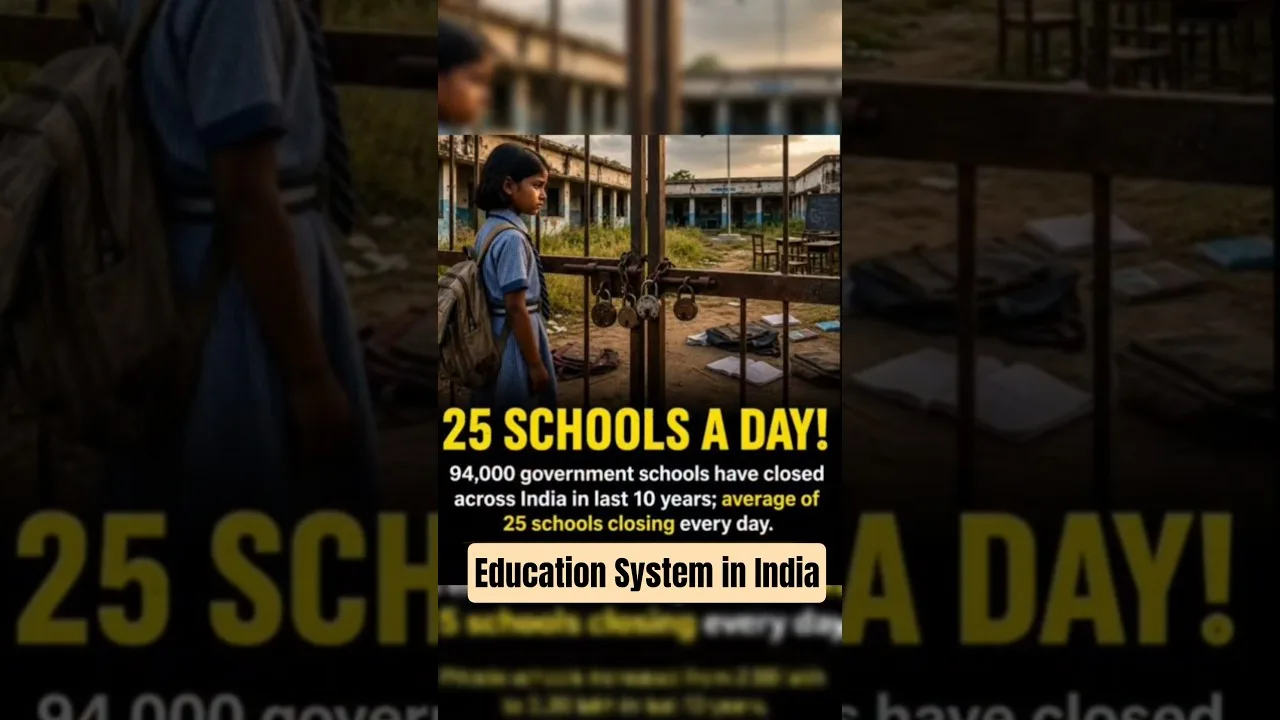
The landscape of primary and secondary education in the country is undergoing a seismic shift. Recent data regarding India government schools has sparked a national debate on whether the state is prioritizing administrative efficiency over the fundamental right to education. According to the latest UDISE+ 2025–26 report released by the Ministry of Education, 4,791 schools disappeared from the official records in just one year. This startling statistic raises a critical question: Is India truly losing its public education infrastructure, or is this a strategic reorganization for a digital age?
- Key Takeaways:
- UDISE+ 2025–26 reports a loss of 4,791 government schools in a single year.
- The primary drivers are school mergers, rationalization, and upgrades.
- Government aims to improve teacher-student ratios and infrastructure quality.
- Experts warn of decreased accessibility for rural and marginalized children.
- The debate centers on the trade-off between educational quality and physical proximity.
Understanding the UDISE+ Data: Why the Numbers are Dropping
To understand why India government schools are showing a downward trend in quantity, one must look at the Unified District Information System for Education Plus (UDISE+). This comprehensive database is the gold standard for educational statistics in the country. The disappearance of nearly 5,000 institutions does not necessarily mean the buildings were demolished; rather, India government schools indicates a process called ‘School Rationalization’.
School rationalization occurs when the government identifies schools with low enrollment—often those with fewer than 50 students—and merges them with larger, nearby institutions. The logic is that maintaining a standalone building with only a handful of students is fiscally inefficient. By consolidating resources, the state believes it can provide better facilities, such as science labs and libraries, which a tiny village school could never afford. You can learn more about the systemic structure of education in the Wikipedia entry on Education in India.
The Government’s Perspective: Quality Over Quantity
The Ministry of Education argues that the rationalization of India government schools is a necessary step toward achieving the goals of the National Education Policy (NEP) 2020. For years, the system suffered from ‘single-teacher schools’ where one educator was responsible for teaching students from Grade 1 to Grade 5 simultaneously. This pedagogical nightmare severely hindered learning outcomes.
By merging these smaller units, the government aims to achieve several key objectives:
- Improved Teacher-Student Ratio: Ensuring that every classroom has a dedicated teacher.
- Better Infrastructure: Concentrating funds on a few ‘hub schools’ rather than spreading them thin across thousands of dilapidated buildings.
- Specialized Instruction: Allowing for subject-specific teachers (Math, Science, English) who can serve a larger pool of students.
- Resource Optimization: Reducing the administrative overhead of managing thousands of tiny administrative units.
The Counter-Argument: The Accessibility Gap
While the government focuses on quality, educationists and social activists argue that the decline of India government schools in rural pockets creates a barrier to entry. For a child in a remote village, a distance of 3 to 5 kilometers to the nearest merged school can be an insurmountable obstacle, especially for girls and children with disabilities.
The ‘last-mile connectivity’ problem is real. When a local school closes, the cost of transportation—whether in time or money—increases. This often leads to a spike in dropout rates, particularly during the transition from primary to upper-primary school. The fear is that the push for ‘rationalization’ is a veiled attempt to reduce public spending on education, potentially paving the way for the privatization of schooling in rural India.
State-Wise Trends and Regional Disparities
The impact of the reduction in India government schools is not uniform across the country. Certain states have adopted more aggressive merger policies than others. States with high population densities and better road connectivity have found the transition easier. However, in hilly terrains or forest-dwelling regions, the closure of a single school can alienate an entire community from the formal education system.
Data suggests that states focusing on ‘Cluster Schools’ are seeing an improvement in test scores, but at the cost of inclusive enrollment. The challenge for the Ministry of Education is to balance the mathematical efficiency of UDISE+ data with the sociological reality of rural life. For official updates on these policies, citizens often refer to the Ministry of Education’s official portal.
Comparing Public vs. Private Schooling Trends
As the number of India government schools decreases, there is a noticeable trend of parents shifting their children toward low-cost private schools. This migration is often driven by the perception that private schools offer better English-medium instruction and more consistent attendance. However, this creates a socio-economic divide where quality education becomes a commodity rather than a right.
The irony is that many of these private ‘budget schools’ operate without the basic infrastructure that the government is trying to build in its consolidated hub schools. The loss of a local government school removes the only free, safe, and accessible option for the poorest strata of society, forcing them into a debt-cycle to pay private tuition fees.
The Role of Technology in Bridging the Gap
To mitigate the loss of physical India government schools, the government has leaned heavily into EdTech. The introduction of digital classrooms and online learning modules is intended to ensure that students in remote areas still have access to high-quality content even if their local school has been merged. However, the ‘digital divide’ remains a significant hurdle. Without reliable electricity and internet penetration in the deepest corners of the country, digital learning cannot replace the physical presence of a teacher in a village school.
Pathways to a Sustainable Education Model
If the goal is to improve the quality of India government schools without sacrificing accessibility, a hybrid model might be the answer. Instead of complete closures, the government could implement:
- Satellite Centers: Small learning centers in villages that provide basic instruction, with students traveling to a hub school only twice a week for specialized subjects.
- Mobile Schools: Using buses equipped with libraries and tablets to reach the most remote students.
- Community-Led Management: Empowering village panchayats to manage small schools, ensuring that local accountability prevents low enrollment.
Conclusion: The Future of Public Education
The decline in the number of India government schools as reported by UDISE+ 2025–26 is a symptom of a system in transition. While the drive for better infrastructure and teacher ratios is commendable, it must not come at the cost of the most vulnerable children. Education is more than just a set of learning outcomes; it is a social equalizer. When a school closes in a village, it isn’t just a building that disappears—it is a beacon of hope for the next generation.
The government must ensure that ‘rationalization’ does not become ‘marginalization’. The success of the Indian education system will not be measured by the number of high-tech hub schools it builds, but by whether the child in the furthest village still has a path to a classroom. As we analyze the trajectory of India government schools, the priority must remain clear: quality must be enhanced, but accessibility must be non-negotiable.
Frequently Asked Questions
Schools are being merged primarily to improve the teacher-student ratio, optimize infrastructure costs, and provide better facilities like labs and libraries in centralized 'hub schools'.
UDISE+ (Unified District Information System for Education Plus) is a comprehensive database managed by the Ministry of Education that tracks school data, enrollment, and infrastructure across India.
Yes, experts argue that closing local schools increases travel distances, which can lead to higher dropout rates, especially among girls and marginalized communities in rural areas.