Blog
Dibang Hydropower Project: Environmental Concerns & Sustainable Development

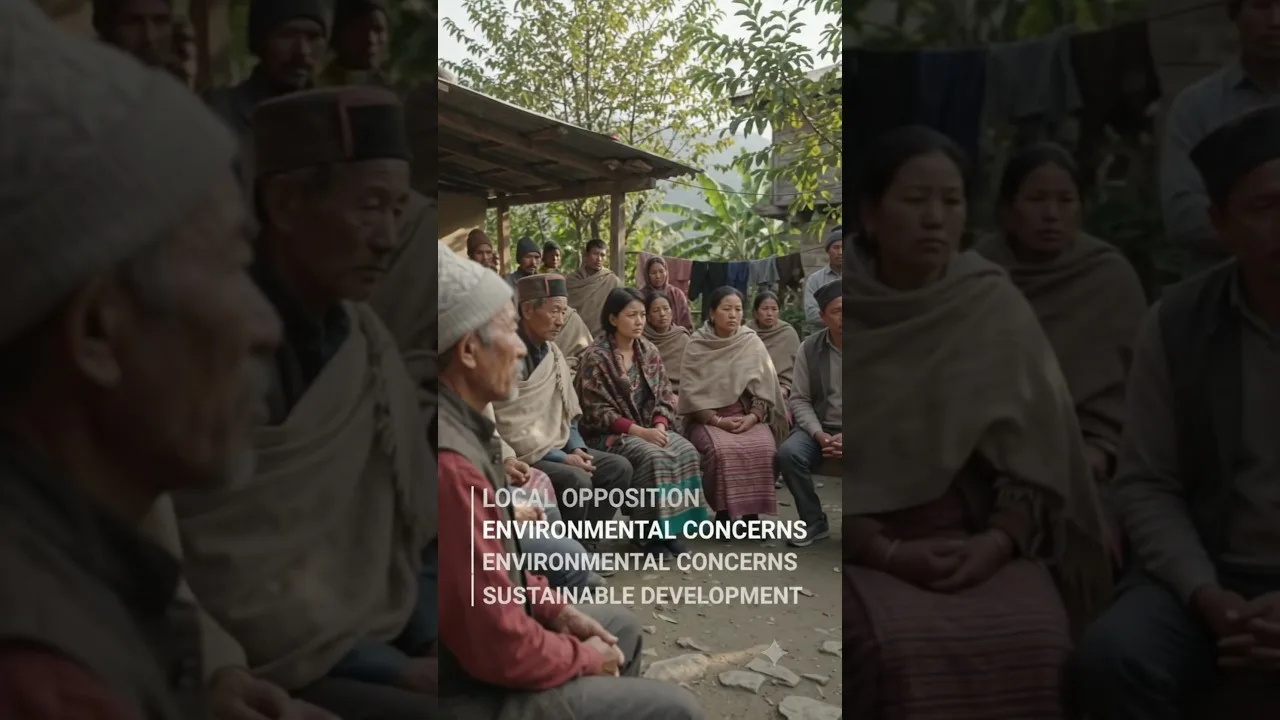
Table of Contents
- Project Overview and Technical Specifications
- Strategic Importance for India's Energy Security
- Environmental Impact Assessment and Ecological Concerns
- Forest Loss and Biodiversity Implications
- River Ecosystem Alteration
- Social Impacts: Displacement and Cultural Disruption
- Impact on Indigenous Idu Mishmi Communities
- Downstream Concerns in Assam
- Legal, Regulatory, and Policy Framework
- Environmental Clearance Journey
- Seismic Safety Concerns
- Economic Viability and Cost-Benefit Analysis
- Sustainable Alternatives and the Way Forward
- Run-of-River and Small Hydro Options
- Solar-Wind-Hydro Hybrid Systems
- Strengthening Governance and Community Consent
- Current Status and Future Outlook
- Conclusion
The Dibang Hydropower Project stands as one of India’s most ambitious and controversial hydroelectric initiatives, proposed on the Dibang River in Arunachal Pradesh. This mega project promises substantial electricity generation to meet the nation’s growing energy demands, yet Dibang Hydropower Project has ignited intense debate among environmentalists, local communities, policymakers, and downstream residents in Assam. As India races toward its renewable energy targets, the project epitomizes the complex trade-offs between development imperatives and ecological preservation in the fragile Eastern Himalayan ecosystem.
- The Dibang Hydropower Project is a proposed 2,880 MW hydroelectric project on the Dibang River in Arunachal Pradesh
- Key concerns include displacement of indigenous Idu Mishmi communities, deforestation of 4,500+ hectares, and downstream flood risks in Assam
- Environmental clearance has faced multiple legal challenges and expert committee reviews
- The project sits in a seismically active Zone V region with high biodiversity value
- Sustainable alternatives like run-of-river projects and solar-wind hybrids are gaining traction
Project Overview and Technical Specifications
The Dibang Hydropower Project is conceived as a storage-based hydroelectric scheme with an installed capacity of 2,880 MW (12 × 240 MW), making Dibang Hydropower Project one of the largest hydropower projects in India. The project envisages a 278-meter high concrete gravity dam — the tallest in India — creating a reservoir spanning approximately 4,500 hectares. The project is being developed by NHPC Limited (National Hydroelectric Power Corporation), a Government of India enterprise under the Ministry of Power.
Located in the Lower Dibang Valley district of Arunachal Pradesh, the dam site lies approximately 1.5 km upstream of the confluence of the Dibang and Tangon rivers. The reservoir would extend upstream for nearly 43 kilometers, submerging vast tracts of subtropical and temperate forests. The project’s design includes an underground powerhouse, a 6.5 km headrace tunnel, and a tailrace tunnel discharging back into the Dibang River. – a key consideration for Dibang Hydropower Project.
Strategic Importance for India’s Energy Security
India’s commitment to achieving 500 GW of non-fossil fuel capacity by 2030, announced at COP26, places immense emphasis on hydropower as a stable, dispatchable renewable source. The Dibang Hydropower Project is projected to generate approximately 11,223 million units of electricity annually, contributing significantly to the Northern and Eastern grid stability. Unlike solar and wind, hydropower provides peaking power, grid balancing, and black start capability — critical attributes for integrating variable renewable energy.
Furthermore, the project aligns with India’s Act East Policy and strategic infrastructure development in the Northeast. The region’s hydroelectric potential is estimated at over 50,000 MW, with Arunachal Pradesh alone accounting for nearly 50,000 MW. The Dibang project is seen as a flagship development that could catalyze regional economic growth, employment, and infrastructure development in one of India’s most remote and strategically sensitive border states. – a key consideration for Dibang Hydropower Project.
Environmental Impact Assessment and Ecological Concerns
Forest Loss and Biodiversity Implications
The most contentious aspect of the Dibang Hydropower Project is its environmental footprint. The reservoir submergence would directly affect approximately 4,577 hectares of forest land, including 1,765 hectares of unclassed state forests and 2,812 hectares of community-owned forests. The region falls within the Eastern Himalaya biodiversity hotspot, recognized globally for its exceptional species richness and endemism.
According to the Wildlife Institute of India (WII) and the Forest Survey of India, the project area harbors critical habitats for numerous Schedule I species under the Wildlife Protection Act, 1972, including the red panda, Mishmi takin, clouded leopard, and Himalayan black bear. The Dibang Valley is also an Important Bird Area (IBA) hosting over 300 avian species, including the critically endangered white-bellied heron and several pheasant species endemic to the Eastern Himalayas. – a key consideration for Dibang Hydropower Project.
The Environmental Impact Assessment (EIA) conducted in 2014 identified the loss of 3.5 lakh trees, though independent experts argue this is a significant underestimation. The submergence would fragment wildlife corridors connecting the Dibang Wildlife Sanctuary, Mehao Wildlife Sanctuary, and the proposed Dibang-Debang Biosphere Reserve, disrupting genetic flow and increasing human-wildlife conflict in adjacent areas. – a key consideration for Dibang Hydropower Project.
River Ecosystem Alteration
The transformation of a free-flowing river system into a regulated reservoir fundamentally alters aquatic ecology. The Dibang River supports unique fish fauna adapted to high-gradient, cold-water conditions, including several endemic and threatened species like the golden mahseer (Tor putitora) and chocolate mahseer (Neolissochilus hexagonolepis). The dam would block migratory routes, alter sediment transport, modify water temperature regimes, and disrupt the natural flood pulse that sustains floodplain ecosystems downstream. – a key consideration for Dibang Hydropower Project.
Sediment trapping behind the 278-meter dam would starve downstream reaches of nutrients and bed material, leading to channel incision, bank erosion, and loss of fertile agricultural land in Assam’s plains. The altered flow regime — with reduced monsoon peaks and augmented lean season flows — would affect riparian vegetation, groundwater recharge, and the livelihoods of riverine communities dependent on fisheries and flood-recession agriculture. – a key consideration for Dibang Hydropower Project.
Social Impacts: Displacement and Cultural Disruption

Impact on Indigenous Idu Mishmi Communities
The Dibang Hydropower Project directly affects the Idu Mishmi tribe, a Scheduled Tribe with distinct cultural identity, language, and traditional resource management practices. The Idu Mishmis have inhabited the Dibang Valley for centuries, practicing shifting cultivation (jhum), hunting, and gathering within a cosmological framework that views the river, forests, and mountains as sacred entities inhabited by spirits.
Official estimates indicate displacement of approximately 2,000 people from 15 villages, though community leaders claim the actual number is higher when accounting for upstream villages affected by reservoir-induced landslides and downstream communities losing access to river resources. The Rehabilitation and Resettlement (R&R) package, based on the Right to Fair Compensation and Transparency in Land Acquisition, Rehabilitation and Resettlement Act, 2013 (LARR Act), has been criticized for inadequate compensation rates, lack of land-for-land compensation, and failure to account for cultural and spiritual losses. – a key consideration for Dibang Hydropower Project.
The Idu Mishmi Cultural and Literary Society (IMCLS) has consistently opposed the project, arguing that monetary compensation cannot replace their ancestral lands, sacred sites (including the Athu Pobu mountain), and traditional territories. The community’s opposition gained momentum after the 2017 public hearing, where affected villagers voiced concerns about the loss of community forests, grazing lands, and access to medicinal plants. – a key consideration for Dibang Hydropower Project.
Downstream Concerns in Assam
The Dibang River is a major tributary of the Brahmaputra, joining Dibang Hydropower Project near Dibrugarh in Assam. Any alteration in the Dibang’s flow regime has direct implications for Assam’s flood dynamics, agriculture, and ecology. The Dibang Hydropower Project‘s reservoir operation — storing monsoon flows and releasing water during lean seasons — could modify the timing and magnitude of flood peaks in the Brahmaputra.
Assam experiences annual floods affecting millions, and the Brahmaputra’s sediment load (among the highest globally) shapes its braided channel morphology. Reduced sediment supply from the Dibang could accelerate channel incision, threaten embankments, and alter the river’s geomorphology. Conversely, sudden water releases during dam emergencies could exacerbate flash flood risks downstream.
Farmers in Dhemaji, Lakhimpur, and Dibrugarh districts depend on the Dibang’s silt-laden waters for soil fertility. Fisheries — a major livelihood source — would be impacted by blocked fish migration and altered hydrology. The All Assam Students’ Union (AASU) and various civil society organizations have demanded a comprehensive cumulative impact assessment of all upstream dams in Arunachal Pradesh before individual project clearances.
Legal, Regulatory, and Policy Framework
Environmental Clearance Journey
The Dibang Hydropower Project has undergone a protracted environmental clearance process. The project received Terms of Reference (ToR) in 2013, and the EIA/EMP report was submitted in 2014. The Expert Appraisal Committee (EAC) for River Valley and Hydroelectric Projects reviewed the project multiple times between 2014 and 2017.
In 2017, the Ministry of Environment, Forest and Climate Change (MoEFCC) granted Stage-I forest clearance with 35 conditions, including wildlife conservation plans, catchment area treatment, and compensatory afforestation. However, the National Green Tribunal (NGT) stayed the clearance in 2018 following a petition by environmental activists, citing inadequacies in the EIA, failure to assess cumulative impacts, and violation of the Forest Rights Act, 2006.
In 2020, the Forest Advisory Committee (FAC) recommended Stage-II forest clearance subject to additional conditions, including a revised wildlife management plan approved by the National Board for Wildlife (NBWL). The project also requires clearance from the Central Water Commission (CWC), Central Electricity Authority (CEA), and the Arunachal Pradesh state government.
Seismic Safety Concerns
The project site lies in Seismic Zone V (the highest risk category in India), near the Mishmi Thrust and the Main Central Thrust — major tectonic features responsible for the 1950 Assam-Tibet earthquake (Mw 8.6), one of the largest intracontinental earthquakes ever recorded. The 278-meter dam’s safety under maximum credible earthquake scenarios has been questioned by geologists and dam safety experts.
The Central Water Commission’s Dam Safety Organization mandates rigorous seismic design parameters, but critics argue that reservoir-induced seismicity (RIS) — triggered by the weight of the 43-km long reservoir — remains inadequately assessed. The Koyna dam in Maharashtra (103 m high) experienced RIS including a Mw 6.3 earthquake in 1967, raising concerns about the Dibang project’s much larger reservoir in a more seismically active region.
Economic Viability and Cost-Benefit Analysis
The Dibang Hydropower Project‘s estimated cost has escalated from ₹16,000 crore (2014) to over ₹28,000 crore (2023), reflecting typical cost overruns in Himalayan hydro projects. The levelized cost of electricity (LCOE) is projected at ₹4.50-5.50 per unit, significantly higher than solar (₹2.50-3.00) and wind (₹2.80-3.50) tariffs discovered in recent competitive bidding.
Proponents argue that hydropower’s system value — peaking capacity, grid balancing, and long asset life (80-100 years) — justifies higher tariffs. The project would generate revenue for Arunachal Pradesh through 12% free power royalty and 1% local area development fund (LADF). However, the long gestation period (8-10 years construction), geological surprises, and social conflicts often lead to time and cost overruns, as seen in the Subansiri Lower (2,000 MW) and Teesta III (1,200 MW) projects.
Climate change adds another layer of uncertainty. Glacial retreat in the Eastern Himalayas may initially increase flows but reduce long-term water availability. Extreme precipitation events could challenge dam safety, while prolonged droughts could affect power generation reliability. The project’s economic models may not adequately incorporate these climate risks.
Sustainable Alternatives and the Way Forward
Run-of-River and Small Hydro Options
Experts advocate exploring run-of-river (RoR) projects with minimal reservoir storage as alternatives to the large storage-based Dibang Hydropower Project. RoR projects divert a portion of river flow through turbines without large-scale submergence, significantly reducing environmental and social impacts. The Dibang basin’s steep gradients offer potential for multiple smaller RoR projects with cumulative capacity approaching the storage project’s output.
However, RoR projects in the Himalayas face challenges: reduced lean season generation, sediment management during monsoons, and cumulative impacts of multiple projects on the same river stretch. The Ministry of Power’s 2019 classification of large hydro (>25 MW) as renewable energy has revived interest in storage projects, but the environmental clearance process remains stringent.
Solar-Wind-Hydro Hybrid Systems
Arunachal Pradesh receives abundant solar radiation (4.5-5.5 kWh/m²/day) and has wind potential in higher reaches. Solar-wind-hydro hybrid systems, with battery storage or pumped hydro, could provide firm power with lower environmental footprint. Floating solar on existing reservoirs, distributed solar on degraded lands, and community-owned micro-hydro projects align with decentralized, democratic energy transitions.
The International Renewable Energy Agency (IRENA) emphasizes that hybrid renewable systems with storage are becoming cost-competitive with new hydro projects globally. India’s National Green Hydrogen Mission and energy storage targets (4,000 MWh by 2030) create policy space for such integrated solutions.
Strengthening Governance and Community Consent
Any future development on the Dibang must prioritize Free, Prior, and Informed Consent (FPIC) of affected indigenous communities, as mandated by the UN Declaration on the Rights of Indigenous Peoples (UNDRIP) and India’s Forest Rights Act. The Gram Sabha’s consent under the Panchayats (Extension to Scheduled Areas) Act, 1996 (PESA) is legally binding for land acquisition in Scheduled Areas.
Cumulative Impact Assessment (CIA) and Basin-level Strategic Environmental Assessment (SEA) — considering all existing, under-construction, and proposed projects in the Dibang-Brahmaputra basin — are essential before individual project decisions. The NHPC and MoEFCC should institutionalize participatory monitoring with community representation throughout the project lifecycle.
Current Status and Future Outlook
As of 2024, the Dibang Hydropower Project has received Stage-I forest clearance and techno-economic clearance from the CEA. Stage-II forest clearance is pending compliance with FAC conditions. The project’s financial closure depends on power purchase agreements (PPAs) with distribution companies, which are hesitant given high tariffs and renewable energy alternatives.
The 15th Finance Commission allocated ₹1,000 crore for pre-investment activities of northeastern hydro projects, including Dibang. However, the project faces ongoing litigation in the NGT and Supreme Court regarding environmental clearance validity, Forest Rights Act compliance, and downstream impact assessment.
The broader question remains: Can the Dibang Valley’s ecological and cultural heritage be reconciled with India’s clean energy aspirations? The answer lies not in a binary choice but in reimagining development through participatory planning, rigorous science, and respect for constitutional safeguards for indigenous peoples and the environment. The Dibang’s fate will set a precedent for Himalayan river governance in the climate change era.
Conclusion
The Dibang Hydropower Project embodies the central dilemma of 21st-century development: balancing energy security, climate mitigation, and economic growth against irreversible ecological loss and social injustice. While the project’s 2,880 MW capacity offers undeniable grid benefits, its environmental and social costs — displacement of the Idu Mishmi, submergence of biodiversity-rich forests, downstream impacts on Assam’s floodplains, and seismic risks in Zone V — demand rigorous, transparent, and inclusive evaluation.
India’s renewable energy transition need not replicate the high-impact hydro model of the past. Technological advances in solar, wind, storage, and hybrid systems offer pathways to clean energy with lower ecological footprints. The Dibang Valley’s future should be shaped by the voices of its indigenous custodians, the best available science, and a development paradigm that values rivers as living ecosystems, not merely engineering resources. Only then can we achieve development without compromising the environmental sustainability and community interests that ultimately sustain us all.
Frequently Asked Questions
The Dibang Hydropower Project has a proposed installed capacity of 2,880 MW (12 units of 240 MW each), making it one of India's largest hydroelectric projects.
The indigenous Idu Mishmi tribe, a Scheduled Tribe in Arunachal Pradesh, is primarily affected by displacement, loss of community forests, and submergence of sacred cultural sites.
Key concerns include submergence of 4,500+ hectares of biodiversity-rich forests in the Eastern Himalaya hotspot, fragmentation of wildlife corridors, blocking of fish migration routes, sediment trapping affecting downstream agriculture in Assam, and seismic risks in Zone V.