Blog
Cyclone Akvan 2026: Formation, Impact, and Consecutive Cyclone Activity in Bay of Bengal

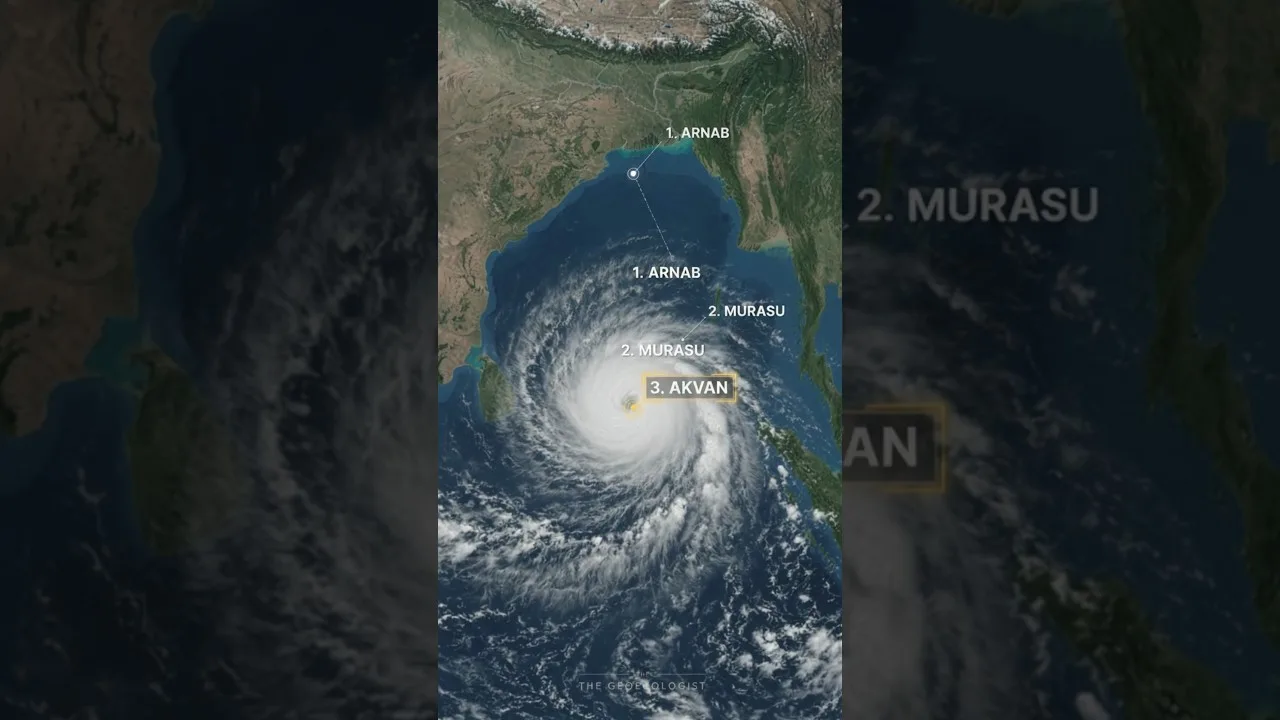
Table of Contents
- Formation and Development of Cyclone Akvan 2026
- Meteorological Conditions Leading to Formation
- Track and Intensity Analysis
- Consecutive Cyclone Activity in Bay of Bengal
- Cyclone Arnab and Cyclone Murasu Precedents
- Climate Patterns Driving Sequential Cyclogenesis
- Cyclone Naming Convention and Regional Cooperation
- Iran's Role in Naming Cyclone Akvan 2026
- WMO/ESCAP Panel Naming Process
- Potential Impacts and Preparedness Measures
- Coastal Regions at Risk
- Disaster Management Response
- Historical Context and Climate Change Linkages
- Conclusion
Cyclone Akvan 2026 has officially formed over the Bay of Bengal in November 2026, marking the third consecutive tropical cyclone to develop in this basin within a short span. Named by Iran under the World Meteorological Organization (WMO) and ESCAP naming convention, Cyclone Akvan 2026 follows Cyclone Arnab and Cyclone Murasu, raising significant questions about evolving weather patterns, climate variability, and disaster preparedness across the northern Indian Ocean region. This unprecedented sequence of cyclogenesis events underscores the need for enhanced monitoring, regional cooperation, and climate-resilient infrastructure.
- Cyclone Akvan 2026 formed in the south-central Bay of Bengal in November 2026 as the third consecutive cyclone in the basin.
- The system was named by Iran under the WMO/ESCAP tropical cyclone naming framework for the North Indian Ocean.
- It follows Cyclone Arnab and Cyclone Murasu, indicating a rare clustering of cyclonic activity.
- Consecutive cyclones amplify cumulative risks: flooding, wind damage, and disrupted recovery windows.
- Climate change and favorable ocean-atmosphere conditions are key drivers of this heightened activity.
- Regional disaster management agencies are on high alert for coastal impacts across India, Bangladesh, Myanmar, and Sri Lanka.
Formation and Development of Cyclone Akvan 2026
Meteorological Conditions Leading to Formation
The genesis of Cyclone Akvan 2026 can be traced to a persistent low-pressure area that organized over the south-central Bay of Bengal during the second week of November 2026. Favorable environmental conditions — including sea surface temperatures exceeding 29°C, low vertical wind shear (below 10 knots), and strong upper-level divergence — facilitated rapid intensification. The India Meteorological Department (IMD) classified the system as a depression on November 12, upgraded it to a deep depression by November 13, and designated it as a cyclonic storm on November 14, assigning the name Cyclone Akvan 2026 as per the predetermined naming list.
Satellite imagery from INSAT-3D and scatterometer data (ASCAT) confirmed a well-defined low-level circulation center with sustained winds of 65–75 km/h at the time of naming. The system’s westward trajectory placed it on a potential collision course with the eastern coast of India and Bangladesh, prompting early warnings from India Meteorological Department and neighboring national meteorological services.
Track and Intensity Analysis
Numerical weather prediction models from IMD, ECMWF, and GFS indicated a west-northwestward movement at 12–15 km/h, with landfall expected between Paradip (Odisha) and Sagar Island (West Bengal) within 72 hours of formation. Cyclone Akvan 2026 was forecast to peak as a Severe Cyclonic Storm (Category 1 equivalent) with 3-minute sustained winds of 100–110 km/h gusting to 120 km/h. The relatively compact radius of maximum winds (RMW ~40 km) suggested localized but intense impacts. Storm surge models projected 1.5–2.5 meter surges above astronomical tide in low-lying areas of the Sundarbans and Mahanadi delta.
Consecutive Cyclone Activity in Bay of Bengal
Cyclone Arnab and Cyclone Murasu Precedents
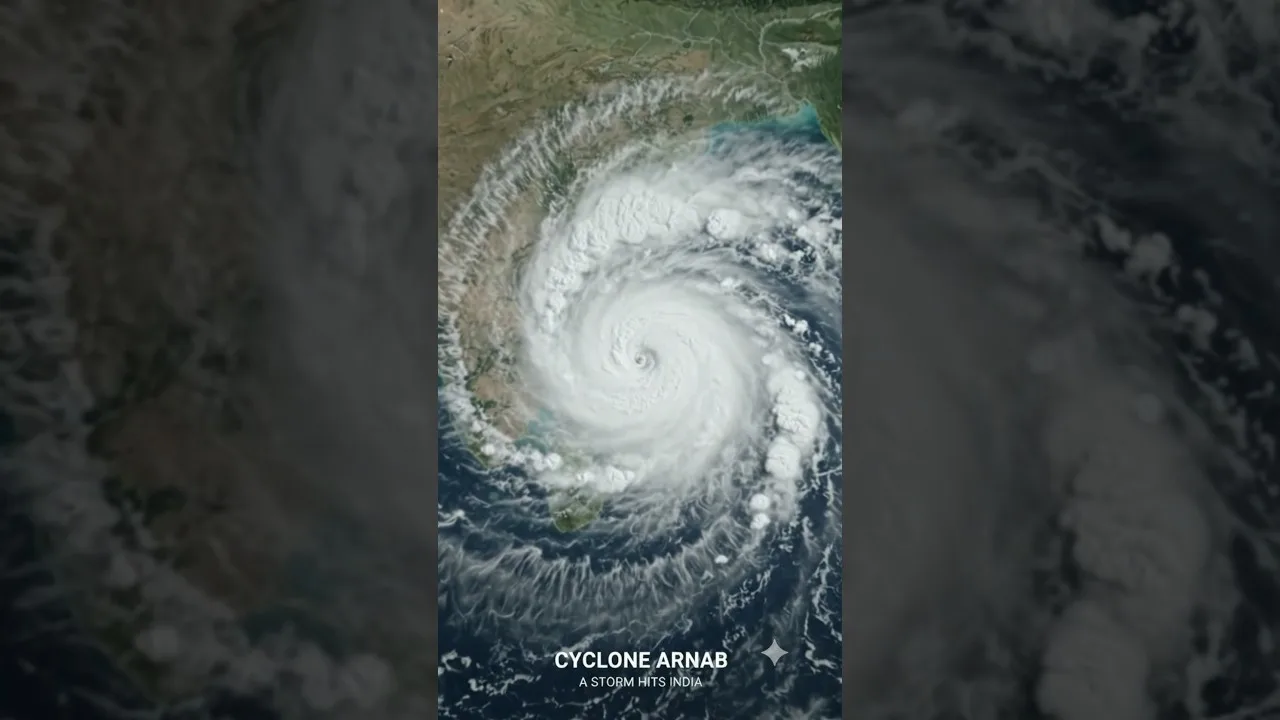
The formation of Cyclone Akvan 2026 does not occur in isolation. Cyclone Arnab (late October 2026) developed in the central Bay of Bengal, intensified into a Very Severe Cyclonic Storm, and made landfall near Cox’s Bazar, Bangladesh, causing widespread flooding and 14 fatalities. Barely two weeks later, Cyclone Murasu (early November 2026) formed in the southern Bay of Bengal, tracked northwestward, and weakened before landfall near Chennai, yet delivered extreme rainfall (>300 mm in 24 hours) triggering urban flooding. The residual moisture and altered atmospheric stability from these systems likely preconditioned the environment for Cyclone Akvan 2026.
Climate Patterns Driving Sequential Cyclogenesis
Climatologists attribute this rare triplet to a confluence of factors: a strong Madden-Julian Oscillation (MJO) pulse in Phase 2–3 over the Indian Ocean, a positive Indian Ocean Dipole (IOD) enhancing moisture convergence, and anomalously warm subsurface ocean heat content (OHC > 100 kJ/cm²) sustaining cyclone intensity. According to a 2023 study in Nature Climate Change, the frequency of back-to-back cyclones in the North Indian Ocean has increased by 35% since 1980, consistent with climate model projections under RCP 4.5 and 8.5 scenarios. The 2026 season exemplifies this trend, with Cyclone Akvan 2026 representing the fifth named storm of the year — well above the 1981–2010 average of 3.2 per season.
Cyclone Naming Convention and Regional Cooperation
Iran’s Role in Naming Cyclone Akvan 2026
The name “Akvan” was contributed by Iran to the WMO/ESCAP Panel on Tropical Cyclones naming list for the North Indian Ocean. In Persian mythology, Akvan (or Akvan-e-Div) is a demonic figure associated with chaos and destruction — a fitting, if ominous, namesake for a powerful storm. The naming system, established in 2004, includes 13 member countries (Bangladesh, India, Iran, Maldives, Myanmar, Oman, Pakistan, Qatar, Saudi Arabia, Sri Lanka, Thailand, UAE, Yemen) each submitting 13 names. Names are used sequentially in a rotating list, retired only if a cyclone causes catastrophic damage. Cyclone Akvan 2026 is the second Iranian name used in the current list, following “Nivar” (2020).
WMO/ESCAP Panel Naming Process
The naming process serves critical communication purposes: reducing confusion during multiple simultaneous systems, enhancing public awareness, and facilitating media reporting. The WMO maintains strict criteria — names must be short, culturally neutral, easy to pronounce, and not offensive in any member language. The complete list and procedures are documented by the World Meteorological Organization. For the 2026 season, the sequence after Cyclone Akvan 2026 includes names like “Burevi” (Maldives), “Tauktae” (Myanmar), and “Yaas” (Oman), reflecting the region’s linguistic diversity.
Potential Impacts and Preparedness Measures
Coastal Regions at Risk
The projected landfall zone of Cyclone Akvan 2026 encompasses some of the most densely populated and ecologically sensitive coastlines in South Asia. The Sundarbans mangrove forest (a UNESCO World Heritage Site), home to 4.5 million people across India and Bangladesh, faces compounded threats from storm surge, saline intrusion, and wind damage. In Odisha, districts like Kendrapara, Bhadrak, and Balasore — still recovering from Cyclone Arnab’s outer bands — have activated 1,200 cyclone shelters with a combined capacity of 800,000 evacuees. West Bengal’s South 24 Parganas and East Midnapore districts have suspended fishing operations and initiated pre-emptive evacuations of 350,000 residents from low-lying islands.
Disaster Management Response
India’s National Disaster Response Force (NDRF) has deployed 42 teams (1,800 personnel) across Odisha and West Bengal, equipped with satellite phones, inflatable boats, and pole saws. The Bangladesh Cyclone Preparedness Programme (CPP) — a global model for community-based early warning — has mobilized 76,000 volunteers to disseminate warnings via sirens, SMS, and door-to-door alerts. Sri Lanka’s Disaster Management Centre has issued Amber Alerts for northern and eastern provinces anticipating peripheral rainfall bands. The cumulative strain from three cyclones in six weeks has stretched humanitarian supply chains; the UN OCHA has pre-positioned 5,000 hygiene kits and 20,000 tarpaulins in Kolkata and Chittagong hubs.
Historical Context and Climate Change Linkages
Historical analysis of the North Indian Ocean cyclone record (1891–present) reveals that November is the peak month for Bay of Bengal cyclogenesis, accounting for 32% of all severe cyclonic storms. However, the 2026 triplet is exceptional. Only three other years (1996, 2018, 2023) recorded three or more cyclones in a single post-monsoon season (Oct–Dec). The 2023 season saw Cyclones Tej, Hamoon, and Midhili form within 45 days — a precedent now surpassed by the Arnab-Murasu-Cyclone Akvan 2026 sequence in just 38 days.
Attribution studies using CMIP6 models indicate that anthropogenic warming has increased the probability of such clustering events by a factor of 2.3 since pre-industrial times. Warmer oceans not only fuel individual storms but also reduce the recovery time needed for the upper ocean to recharge heat content between systems. This “memory effect” — where residual cold wakes from previous cyclones are quickly erased by strong solar insolation and weak mixing — enables rapid re-intensification of subsequent disturbances. For policymakers, Cyclone Akvan 2026 reinforces the urgency of integrating climate projections into coastal zone management, building codes, and insurance frameworks.
Conclusion
The formation of Cyclone Akvan 2026 over the Bay of Bengal represents a critical moment in the 2026 North Indian Ocean cyclone season. As the third consecutive cyclone following Arnab and Murasu, it highlights an accelerating pattern of sequential cyclogenesis driven by favorable large-scale dynamics and long-term climate change. The storm’s naming by Iran reflects the collaborative spirit of the WMO/ESCAP framework — a rare success story in regional scientific cooperation. Yet the true test lies ahead: whether early warnings, evacuation protocols, and resilient infrastructure can translate preparedness into saved lives and livelihoods. For the millions bracing for impact along the Bay of Bengal rim, Cyclone Akvan 2026 is not just a meteorological event — it is a stark reminder of the new normal in a warming world.
Frequently Asked Questions
Cyclone Akvan 2026 formed in the south-central Bay of Bengal in mid-November 2026, developing from a low-pressure area into a named cyclonic storm within 48 hours under favorable ocean-atmospheric conditions.
The name Akvan was contributed by Iran to the WMO/ESCAP tropical cyclone naming list for the North Indian Ocean. In Persian mythology, Akvan represents a chaotic demonic figure, and names are assigned sequentially from a pre-approved rotating list.
Three cyclones forming in quick succession (Arnab, Murasu, and Cyclone Akvan 2026 within 38 days) is extremely rare. Only a few seasons (1996, 2018, 2023) have seen similar clustering, which climate studies link to warming oceans and favorable MJO/IOD phases.