Blog
Thwaites Glacier Melting: Doomsday Glacier Accelerates Sea Level Rise

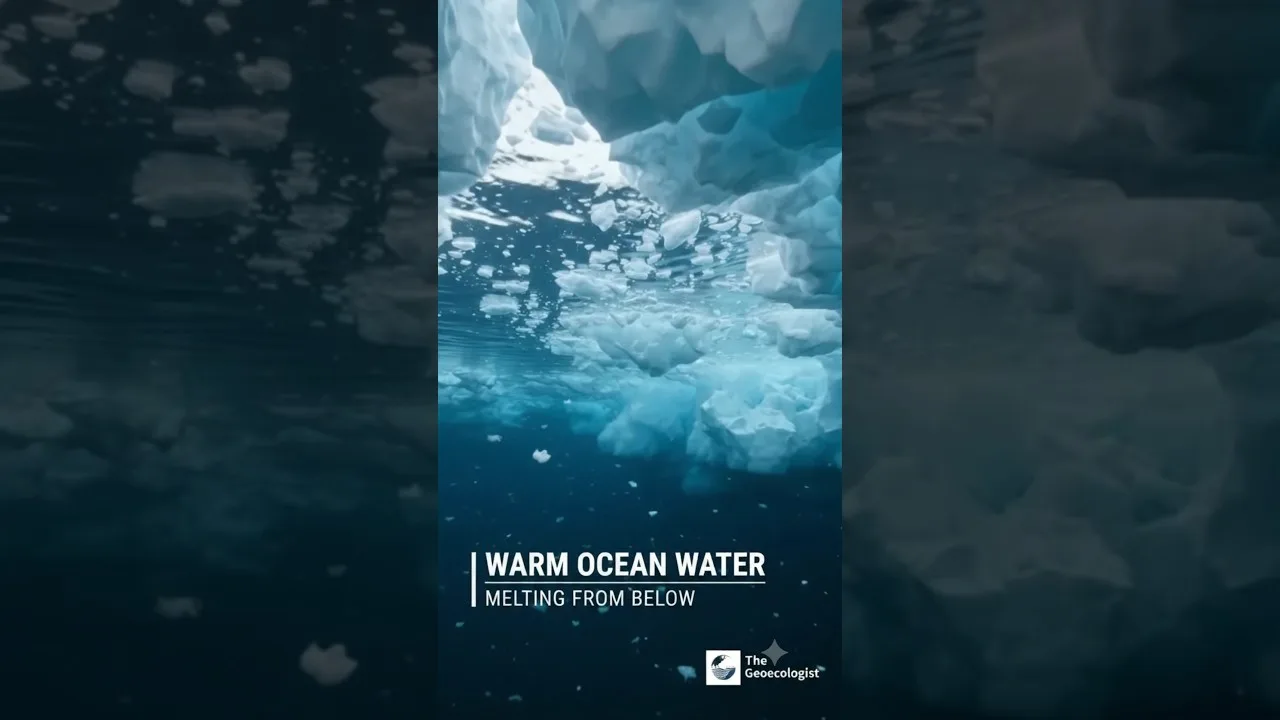
Table of Contents
- Why Thwaites Glacier Is Called the Doomsday Glacier
- The Marine Ice Sheet Instability Mechanism
- How Warm Ocean Water Drives Basal Melting
- New Discoveries: Tidal Pumping and Channelized Melting
- Sea Level Rise Implications for Coastal Communities
- Vulnerable Populations and Infrastructure
- Climate Change Reshaping Antarctica's Future
- Mitigation and Adaptation Pathways
- Frequently Asked Questions About Thwaites Glacier
- How soon could Thwaites Glacier collapse?
- Can geoengineering slow Thwaites Glacier melting?
- What makes Thwaites different from other Antarctic glaciers?
The Thwaites Glacier melting crisis has intensified dramatically according to new research published in 2024, with scientists warning that Antarctica’s most vulnerable ice sheet is disappearing faster than previous climate models predicted. This massive glacier, roughly the size of Florida, holds enough ice to raise global sea levels by more than two feet (65 centimeters) on its own — and its collapse could trigger a cascading failure of the entire West Antarctic Ice Sheet, adding up to 10 feet (3 meters) of sea level rise over centuries.
- Thwaites Glacier melting has accelerated due to warm ocean currents eroding its base from below
- The glacier contributes approximately 4% of global sea level rise annually
- New satellite data reveals grounding line retreat of up to 2 kilometers per year in some sectors
- Complete collapse could raise global sea levels by 65+ centimeters directly
- Cascading effects could destabilize the entire West Antarctic Ice Sheet
Why Thwaites Glacier Is Called the Doomsday Glacier
The nickname “Doomsday Glacier” isn’t hyperbole — it reflects the Thwaites Glacier melting trajectory and its outsized influence on global coastlines. Located in West Antarctica’s Amundsen Sea sector, Thwaites acts as a critical buttress, holding back the massive West Antarctic Ice Sheet. Unlike glaciers that sit on bedrock above sea level, Thwaites rests on a retrograde slope — bedrock that deepens inland. This geometry creates a dangerous feedback loop: as the glacier retreats, it moves into deeper water, exposing thicker ice to warm ocean currents, which accelerates melting further.
According to the International Thwaites Glacier Collaboration (ITGC), a joint US-UK research program involving over 100 scientists, the glacier’s grounding line — where ice lifts off bedrock and begins to float — has retreated up to 14 kilometers since the 1990s. This retreat exposes more ice to relatively warm Circumpolar Deep Water, which reaches temperatures of 1-2°C above freezing — enough to melt ice rapidly from below.
The Marine Ice Sheet Instability Mechanism
The Thwaites Glacier melting process exemplifies Marine Ice Sheet Instability (MISI), a theoretical concept confirmed by observations. As warm water melts the ice shelf from beneath, the grounding line retreats down the retrograde slope. Thicker ice at the new grounding line flows faster (due to ice physics), thinning the glacier further and causing more flotation and retreat. This self-reinforcing cycle, once initiated, may be irreversible on human timescales.
How Warm Ocean Water Drives Basal Melting

The primary driver of Thwaites Glacier melting isn’t atmospheric warming but oceanic heat transport. Changes in wind patterns over the Southern Ocean — linked to ozone depletion and greenhouse gas forcing — have strengthened the Antarctic Circumpolar Current and shifted it poleward. This allows warmer Circumpolar Deep Water to access the continental shelf and flow into cavities beneath ice shelves.
Recent autonomous underwater vehicle (AUV) missions, including the famous “Boaty McBoatface” deployments, have mapped these sub-ice-shelf cavities in unprecedented detail. They discovered that warm water accesses the grounding zone through deep troughs carved by the glacier itself during previous advances. The melt rates at the grounding line exceed 30 meters per year in some locations — orders of magnitude higher than surface melt.
New Discoveries: Tidal Pumping and Channelized Melting
A groundbreaking 2024 study published in Proceedings of the National Academy of Sciences revealed that tidal cycles dramatically amplify Thwaites Glacier melting. During high tide, seawater intrudes kilometers farther beneath the grounded ice than previously known, creating a “tidal pumping” effect that flushes warm water against the grounding line. Additionally, meltwater channels carved into the ice shelf base focus warm water flow, creating localized melt rates up to 100 meters per year.
Sea Level Rise Implications for Coastal Communities
The Thwaites Glacier melting contribution to sea level rise is already measurable. Satellite altimetry (ICESat-2, CryoSat-2) and gravimetry (GRACE-FO) show Thwaites losing approximately 50 billion metric tons of ice annually — a rate that has doubled since the 1990s. This contributes roughly 0.1 millimeters per year to global mean sea level rise, about 4% of the total.
But the greater concern is non-linear acceleration. The IPCC Sixth Assessment Report (AR6) projects global mean sea level rise of 0.28-0.55 meters by 2100 under low emissions (SSP1-2.6) and 0.63-1.01 meters under high emissions (SSP5-8.5). However, these projections include “low confidence” processes like marine ice cliff instability (MICI), which could add meters of additional rise if Thwaites’ ice cliffs become exposed and collapse under their own weight.
Vulnerable Populations and Infrastructure
Even modest additional sea level rise from Thwaites Glacier melting compounds storm surge risks. NOAA reports that “nuisance flooding” (high-tide flooding) has increased 300-900% along US coastlines since the 1960s. By 2050, moderate flooding events are expected to occur 10 times more frequently than today. Major cities at risk include Miami, New Orleans, Shanghai, Mumbai, Lagos, and Jakarta — the latter already relocating its capital due to subsidence compounded by sea level rise.
Climate Change Reshaping Antarctica’s Future
The Thwaites Glacier melting story is part of a broader Antarctic transformation. The continent lost approximately 2,670 billion metric tons of ice between 1992 and 2020, with the rate accelerating from 49 billion tons/year (1992-1997) to 219 billion tons/year (2012-2017). West Antarctica accounts for the majority of this loss, while East Antarctica — once considered stable — shows signs of vulnerability in sectors like Wilkes and Aurora basins.
Atmospheric rivers — narrow corridors of intense moisture transport — are increasingly reaching Antarctica, causing extreme melt events. In March 2022, an unprecedented atmospheric river drove temperatures 30-40°C above normal across East Antarctica, triggering widespread surface melt and the collapse of the Conger Ice Shelf. Such events precondition ice shelves for hydrofracture, where meltwater wedges open crevasses.
Mitigation and Adaptation Pathways
Limiting Thwaites Glacier melting ultimately requires stabilizing global temperatures. The Paris Agreement’s 1.5°C target, while ambitious, may not prevent West Antarctic Ice Sheet collapse if marine ice sheet instability has already passed a tipping point. However, every fraction of a degree matters: limiting warming to 2°C versus 3°C could halve the long-term sea level commitment from Antarctica.
Adaptation strategies include managed retreat, coastal defenses, and nature-based solutions like wetland restoration. The Netherlands’ “Room for the River” program and New York’s post-Sandy resilience plans exemplify proactive adaptation. Meanwhile, the ITGC continues deploying sensors, satellites, and models to reduce uncertainty in Thwaites Glacier melting projections — critical information for coastal planning worldwide.
Frequently Asked Questions About Thwaites Glacier
How soon could Thwaites Glacier collapse?
Current models suggest the main trunk of Thwaites could begin irreversible collapse within decades to centuries, depending on emissions scenarios. The ITGC’s latest simulations indicate that under high emissions, the glacier’s eastern ice shelf could disintegrate within 10-20 years, removing buttressing and accelerating grounded ice flow.
Can geoengineering slow Thwaites Glacier melting?
Proposals include seabed curtains to block warm water, or pumping seawater onto the ice sheet to refreeze. However, a 2023 National Academies report concluded such interventions face immense technical, governance, and ecological challenges. Most scientists prioritize emissions reduction over unproven geoengineering.
What makes Thwaites different from other Antarctic glaciers?
Its retrograde bed slope, massive size, and exposure to warm Circumpolar Deep Water make Thwaites uniquely vulnerable. Unlike Greenland’s glaciers, which mostly terminate on land, Thwaites’ marine-terminating geometry enables the self-reinforcing Marine Ice Sheet Instability mechanism.
For authoritative data on Antarctic ice mass changes, visit NASA’s Ice Sheets vital signs page. The IPCC Sixth Assessment Report provides comprehensive sea level rise projections. Detailed glacier-specific information is available at Wikipedia’s Thwaites Glacier article.
Frequently Asked Questions
Current models suggest the main trunk of Thwaites could begin irreversible collapse within decades to centuries, depending on emissions scenarios. The ITGC's latest simulations indicate that under high emissions, the glacier's eastern ice shelf could disintegrate within 10-20 years, removing buttressing and accelerating grounded ice flow.
Proposals include seabed curtains to block warm water, or pumping seawater onto the ice sheet to refreeze. However, a 2023 National Academies report concluded such interventions face immense technical, governance, and ecological challenges. Most scientists prioritize emissions reduction over unproven geoengineering.
Its retrograde bed slope, massive size, and exposure to warm Circumpolar Deep Water make Thwaites uniquely vulnerable. Unlike Greenland's glaciers, which mostly terminate on land, Thwaites' marine-terminating geometry enables the self-reinforcing Marine Ice Sheet Instability mechanism.