Blog
Earth Stops Rotating: The Ultimate Global Catastrophe Explained

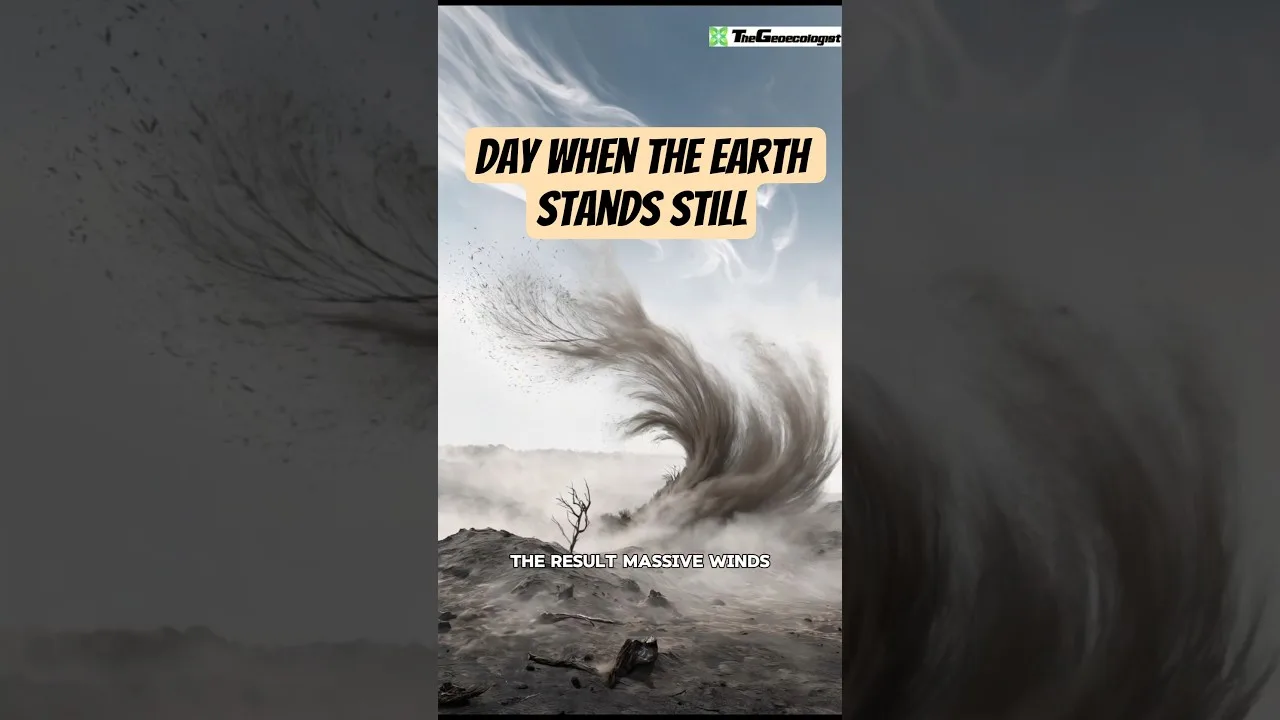
Table of Contents
- What If Earth Stops Rotating: Understanding Our Planet's Delicate Balance
- The Physics Behind Earth's Rotation
- Supersonic Winds of Destruction
- Mega-Tsunamis and Ocean Redistribution
- Permanent Geographic Transformation
- Extreme Day-Night Cycle Changes
- The Scorched Day Side
- The Frozen Night Side
- Magnetic Field Collapse and Radiation Exposure
- Timeline of Magnetic Field Loss
- Total Climate System Collapse
- Agricultural and Ecosystem Devastation
- Scientific Perspectives on Planetary Motion
- Comparative Planetology Insights
- Timeline of Catastrophic Events
- Immediate Consequences (Minutes to Hours)
- Medium-Term Effects (Days to Months)
- Long-Term Transformation (Years to Centuries)
- Why Earth Continues Spinning
- Educational Value of Hypothetical Scenarios
- Conclusion: Appreciating Earth's Natural Balance
What If Earth Stops Rotating: Understanding Our Planet’s Delicate Balance
Every day, Earth completes one full rotation on its axis, creating the 24-hour cycle that governs our lives. But what if Earth stops rotating? This hypothetical scenario reveals the catastrophic consequences that would unfold across our planet. From supersonic winds to extreme climate shifts, the implications are staggering. Scientists estimate that Earth’s rotation generates winds exceeding 1,000 miles per hour at the equator, and without this motion, our world would face unprecedented devastation.
- Momentum disaster would create supersonic winds destroying everything in seconds
- Massive tsunamis would reshape ocean distribution globally
- Day-night cycles would extend to six-month durations
- Magnetic field loss would expose Earth to lethal solar radiation
- Total climate collapse would make most regions uninhabitable
The Physics Behind Earth’s Rotation
Earth stops rotating only in our imagination, but understanding why this matters requires grasping fundamental physics. Our planet spins at approximately 1,000 miles per hour (1,600 km/h) at the equator, a speed that decreases toward the poles. This rotation generates centrifugal force, causing Earth to bulge at its equator, making it an oblate spheroid rather than a perfect sphere. The Earth’s rotation is powered by angular momentum conserved since the planet’s formation 4.5 billion years ago.
When Earth stops rotating, the laws of physics dictate that momentum must be conserved. This means the atmosphere and oceans, which currently travel with the planet’s surface, would continue moving at their current velocities. The result would be catastrophic winds unlike anything ever experienced.
Supersonic Winds of Destruction
If Earth stops rotating suddenly, the atmosphere would maintain its eastward momentum while the ground beneath comes to a halt. These supersonic winds could reach speeds of 1,000 mph or more, far exceeding the fastest recorded winds on Earth. Hurricane Patricia holds the record at 215 mph, but winds generated by Earth stopping would be five times stronger. Structures, trees, and topsoil would be scoured from the surface instantly, creating a global catastrophe that would reshape our planet within minutes.
Mega-Tsunamis and Ocean Redistribution
Water obeys the same physical laws as air, so if Earth stops rotating, the oceans would continue moving eastward at incredible speeds. This momentum would generate mega-tsunamis hundreds of meters high, sweeping across continents and obliterating coastal regions worldwide. The energy released would be equivalent to thousands of nuclear weapons detonating simultaneously.
Beyond the immediate tsunami destruction, Earth’s shape itself would change dramatically. Without centrifugal force pushing outward at the equator, the planet’s equatorial bulge would collapse inward. Oceans would migrate toward the poles, leaving vast expanses of dry land around the equator while forming massive polar oceans. This redistribution would permanently alter Earth’s geography and climate zones.
Permanent Geographic Transformation
Scientists estimate that Earth’s equatorial bulge adds about 21 kilometers (13 miles) to the planet’s diameter compared to a non-rotating sphere. When Earth stops rotating, this bulge would gradually collapse over thousands of years, but the initial redistribution of water would create immediate flooding and drought conditions. Coastal cities would vanish beneath newly formed polar oceans, while equatorial regions would become arid wastelands.
Extreme Day-Night Cycle Changes
Our familiar 24-hour day-night cycle exists solely because Earth stops rotating relative to the Sun. If this rotation ceased, one side of our planet would face continuous sunlight for six months while the other endures perpetual darkness. This extreme cycle would trigger unprecedented environmental changes.
The Scorched Day Side
The hemisphere continuously exposed to sunlight would experience temperatures rising far beyond current records. Without atmospheric circulation to distribute heat, surface temperatures could exceed 100°C (212°F) during peak radiation periods. Oceans would evaporate rapidly, creating massive water vapor clouds that could eventually trigger extreme greenhouse effects or atmospheric collapse.
The Frozen Night Side
Conversely, the dark hemisphere would plunge into extreme cold. Temperatures could drop below -100°C (-148°F), causing the atmosphere itself to condense and freeze. Water vapor would precipitate as snow and ice, potentially forming permanent ice caps that could extend toward the equator. Any remaining atmosphere would be extremely thin and unable to support life.
Magnetic Field Collapse and Radiation Exposure
Perhaps the most insidious consequence occurs deep within Earth’s core. The dynamo effect that generates our magnetic field relies on Earth’s rotation to create convection currents in the liquid outer core. When Earth stops rotating, these currents would cease, and the magnetic field would gradually disappear over decades or centuries.
Without this protective shield, Earth would be bombarded by solar radiation and cosmic rays. The ozone layer would be stripped away, exposing surface life to harmful ultraviolet radiation. Solar winds would directly impact the atmosphere, potentially stripping it entirely and rendering the planet barren. This radiation exposure alone would make Earth stops rotating scenario lethal for virtually all known life forms.
Timeline of Magnetic Field Loss
Research indicates that Earth’s magnetic field would weaken gradually after rotation stops. Within 100 years, the field strength could drop by 50%, and within 1,000 years, it might disappear entirely. During this transition period, auroras would become visible worldwide, and radiation levels would increase dramatically. Electronic systems would fail, and DNA damage rates would skyrocket, accelerating mutation and extinction events.
Total Climate System Collapse
The combination of factors when Earth stops rotating would trigger complete climate system breakdown. Weather patterns depend entirely on atmospheric circulation driven by temperature differences and planetary rotation. Without these drivers, the jet stream would vanish, and traditional weather systems would cease to exist.
Agricultural and Ecosystem Devastation
Modern agriculture relies on predictable seasonal patterns and climate zones. When Earth stops rotating, growing seasons would extend for months, followed by equally long periods of extreme cold. Most crops would fail, and food production would become nearly impossible. Ecosystems evolved over millions of years would collapse as species cannot adapt quickly enough to such dramatic changes.
Ocean currents, which distribute heat around the planet through thermohaline circulation, would also cease. This would eliminate the moderating effect that keeps regional climates stable. Deserts might form in previously temperate regions, while other areas experience unprecedented flooding or freezing.
Scientific Perspectives on Planetary Motion
Astronomers and geophysicists study Earth stops rotating scenarios to understand planetary dynamics better. NASA’s research on planetary formation shows that rotation is fundamental to planetary habitability. Other planets in our solar system demonstrate what happens when rotation varies – Venus rotates backward very slowly, while Jupiter rotates rapidly, affecting their atmospheric dynamics.
The conservation of angular momentum means that stopping Earth’s rotation would require an impact of impossible scale. Calculations suggest an object roughly the size of Mars would need to strike Earth at precisely the right angle to halt rotation. Such an event would destroy both planets entirely, making Earth stops rotating purely theoretical.
Comparative Planetology Insights
Studying other celestial bodies helps us understand what happens when Earth stops rotating. Mercury, with its 59-day rotation period, experiences extreme temperature variations similar to what Earth would face. Mars, with its thin atmosphere and lack of magnetic field, demonstrates the vulnerability of planets without proper protection. These comparisons validate the catastrophic predictions scientists make about Earth stops rotating scenarios.
Timeline of Catastrophic Events
If Earth stops rotating, the sequence of events would unfold rapidly. Initial supersonic winds would last minutes but cause maximum destruction. Mega-tsunamis would persist for hours, reshaping coastlines. The day-night cycle changes would become apparent within days, while magnetic field loss would take decades. Climate collapse would accelerate over months to years, making the planet increasingly uninhabitable.
Immediate Consequences (Minutes to Hours)
The first effects when Earth stops rotating would be the supersonic winds and massive tsunamis. These immediate consequences would destroy infrastructure, flatten forests, and claim billions of lives within hours. The energy released would be equivalent to major asteroid impacts, but distributed globally rather than locally.
Medium-Term Effects (Days to Months)
As the atmosphere stabilizes, extreme temperature differences between day and night sides would become apparent. Weather systems would begin failing, and the first signs of magnetic field weakening might emerge. Ocean redistribution would continue, altering coastlines permanently. These changes would compound existing damage and create new survival challenges.
Long-Term Transformation (Years to Centuries)
Over extended periods, Earth stops rotating would lead to complete ecosystem collapse. The magnetic field would fade entirely, exposing the planet to radiation. Atmospheric loss could accelerate, and remaining life would need to adapt to extreme conditions. Eventually, Earth might resemble Mars – cold, barren, and lifeless.
Why Earth Continues Spinning
The good news is that Earth stops rotating only in hypothetical discussions. Our planet possesses enormous angular momentum that cannot be easily dissipated. The conservation of angular momentum ensures that Earth will continue spinning for billions of years. Tidal forces from the Moon create minimal braking, but this process takes millions of years.
Even if external forces attempted to slow Earth’s rotation, the planet’s mass and momentum would resist change. Only events of cosmic proportions – like massive asteroid impacts or gravitational interactions with passing stars – could significantly affect Earth’s rotation. Such events would likely destroy the planet entirely rather than simply stopping its spin.
Educational Value of Hypothetical Scenarios
While Earth stops rotating remains impossible, exploring this scenario teaches us about planetary science. Students learn about atmospheric physics, ocean dynamics, magnetic fields, and climate systems. These thought experiments help scientists develop models for understanding how rotation affects habitability on other planets.
Comparative studies of Earth stops rotating scenarios also inform space exploration. Understanding what makes Earth unique helps identify potentially habitable exoplanets and prepares us for future colonization efforts. The knowledge gained from these studies proves invaluable for protecting our planet’s delicate systems.
Conclusion: Appreciating Earth’s Natural Balance
When we consider what happens when Earth stops rotating, we gain profound appreciation for our planet’s natural systems. Every aspect of life – from weather patterns to protective magnetic fields – depends on this constant motion. The catastrophic consequences remind us that Earth’s current state represents perfect balance achieved over billions of years.
Rather than fearing hypothetical scenarios, we should focus on preserving Earth’s existing systems. Climate change, pollution, and environmental destruction pose real threats that could disrupt the delicate balance keeping our planet habitable. By studying Earth stops rotating scenarios, we better understand what we stand to lose and why protecting our world matters more than ever.
Frequently Asked Questions
If Earth stops rotating suddenly, supersonic winds of up to 1,000 mph would scour the surface, massive tsunamis would reshape coastlines, and the planet would experience six-month day-night cycles with extreme temperatures.
Earth's rotation is gradually slowing due to tidal forces, but it would take billions of years to stop completely. The current deceleration rate is about 1.7 milliseconds per century.
Yes, Earth's magnetic field depends on the dynamo effect created by rotation-driven convection in the outer core. When Earth stops rotating, this field would gradually weaken and disappear over centuries.