Blog
Himalayan Glaciers Melting: Third Pole Vanishing Faster

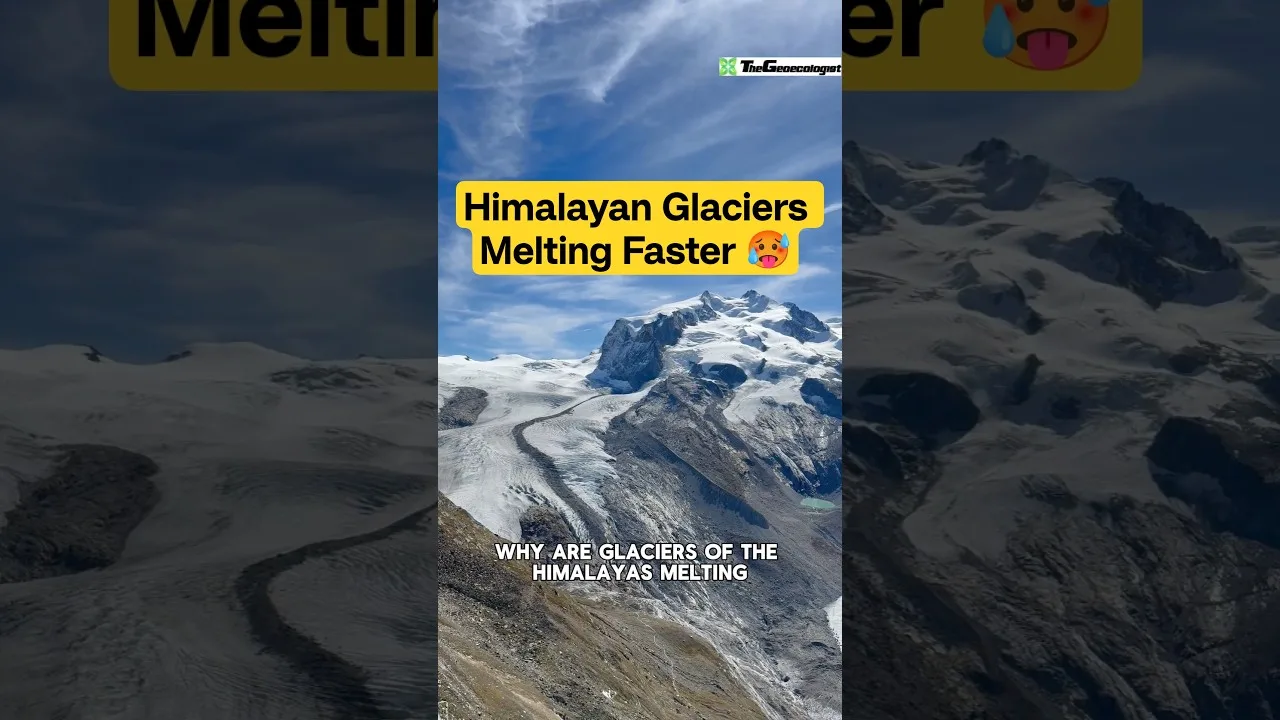
Table of Contents
- Why Are Himalayan Glaciers Melting Faster Than Ever?
- 1. Rising Temperatures and Elevation-Dependent Warming
- 2. Shifting Precipitation Patterns and Reduced Accumulation
- 3. The Black Carbon Effect: Pollution Darkening the Ice
- Downstream Catastrophe: Impacts Beyond the Mountains
- Glacial Lake Outburst Floods (GLOFs): A Growing Threat
- Water Insecurity: From Floods to Drought
- Ecological and Cultural Losses
- The Science Behind the Melt: Key Studies and Data
- Satellite Gravimetry and Altimetry
- Ice Core Records from the Third Pole
- Field Observations: Benchmark Glaciers
- Regional Hotspots: Where Melting Is Most Severe
- Western Himalayas: Karakoram Anomaly Fading
- Central Himalayas: Nepal's Rapid Retreat
- Eastern Himalayas: Bhutan and the Monsoon Margin
- Mitigation and Adaptation: Pathways Forward
- Global: Deep Decarbonization
- Regional: Black Carbon Reduction
- Local: Monitoring, Early Warning, and Water Management
- The Role of International Cooperation
- Conclusion: The Fate of the Third Pole Is Our Fate
The Himalayan glaciers melting crisis has accelerated at an alarming rate over the past two decades, transforming the roof of the world into a barometer for planetary health. Often called the “Third Pole,” the Hindu Kush Himalaya (HKH) region holds the largest volume of ice outside the polar regions, feeding ten major river systems that sustain nearly 2 billion people across Asia. From the Indus and Ganges to the Brahmaputra, Yangtze, and Mekong, these frozen reservoirs act as a giant water tower, regulating seasonal flows that support agriculture, hydropower, and drinking water for megacities like Delhi, Dhaka, and Shanghai.
- Accelerated ice loss: Himalayan glaciers have lost over 40% of their ice volume since the Little Ice Age, with melt rates doubling since 2000.
- Water security threat: Over 1.9 billion people depend on glacier-fed rivers for agriculture, drinking water, and hydropower.
- Elevation-dependent warming: High mountains are warming 0.3–0.7°C faster than the global average, amplifying Himalayan glaciers melting.
- Black carbon deposition: Soot from fossil fuels and biomass burning darkens ice surfaces, reducing albedo and increasing melt by 10–20%.
- GLOF risk rising: Glacial lake outburst floods have increased in frequency, threatening downstream communities and infrastructure.
- Urgent action needed: Mitigation requires global emissions cuts, regional black carbon controls, and local adaptation investments.
Why Are Himalayan Glaciers Melting Faster Than Ever?
The drivers behind Himalayan glaciers melting are complex and interconnected. Scientists from the International Centre for Integrated Mountain Development (ICIMOD) and the Intergovernmental Panel on Climate Change (IPCC) identify three primary mechanisms accelerating ice loss across the 3,500 km arc.
1. Rising Temperatures and Elevation-Dependent Warming
The HKH region has warmed by approximately 1.3°C since the pre-industrial era, outpacing the global average of 1.1°C. This phenomenon, known as elevation-dependent warming, means temperatures rise more steeply at higher altitudes. A 2021 study published in Nature Climate Change found that warming rates above 5,000 meters are nearly double those at lower elevations. The IPCC Sixth Assessment Report confirms that even under a 1.5°C global warming scenario, the Himalayas will lose an additional 30–50% of their glacier volume by 2100. Under high-emission pathways (SSP5-8.5), up to two-thirds of current ice mass could vanish. — a key consideration for Himalayan glaciers melting.
2. Shifting Precipitation Patterns and Reduced Accumulation
Glaciers require a delicate balance between winter snowfall (accumulation) and summer melt (ablation). Climate change is disrupting this equilibrium. The Indian Summer Monsoon, which delivers 70–80% of annual precipitation to the central and eastern Himalayas, has become more erratic. A 2020 analysis by the Indian Institute of Tropical Meteorology revealed a 6–7% decline in monsoon rainfall over the western Himalayas since 1950, while extreme rainfall events have increased. Meanwhile, rising freezing levels mean more precipitation falls as rain rather than snow at critical accumulation zones above 4,500 meters. This “rain-on-snow” effect accelerates melt and reduces the glacier’s ability to replenish itself. — a key consideration for Himalayan glaciers melting.
3. The Black Carbon Effect: Pollution Darkening the Ice
Perhaps the most underappreciated driver of Himalayan glaciers melting is black carbon — fine soot particles from incomplete combustion of fossil fuels, biomass, and agricultural waste. The Indo-Gangetic Plain, one of the world’s most polluted regions, emits massive quantities of black carbon that are transported upslope by valley winds. When deposited on glacier surfaces, these particles reduce surface albedo (reflectivity) from 0.8–0.9 to as low as 0.3–0.4. A landmark 2019 study in Proceedings of the National Academy of Sciences estimated that black carbon alone accounts for 10–20% of observed glacier mass loss in the Himalayas. The problem is seasonal: pre-monsoon (April–June) deposition coincides with peak solar radiation, maximizing melt impact.
Downstream Catastrophe: Impacts Beyond the Mountains
The consequences of Himalayan glaciers melting cascade far beyond alpine zones. The region’s rivers support 129 million farmers directly and underpin food security for billions more.
Glacial Lake Outburst Floods (GLOFs): A Growing Threat
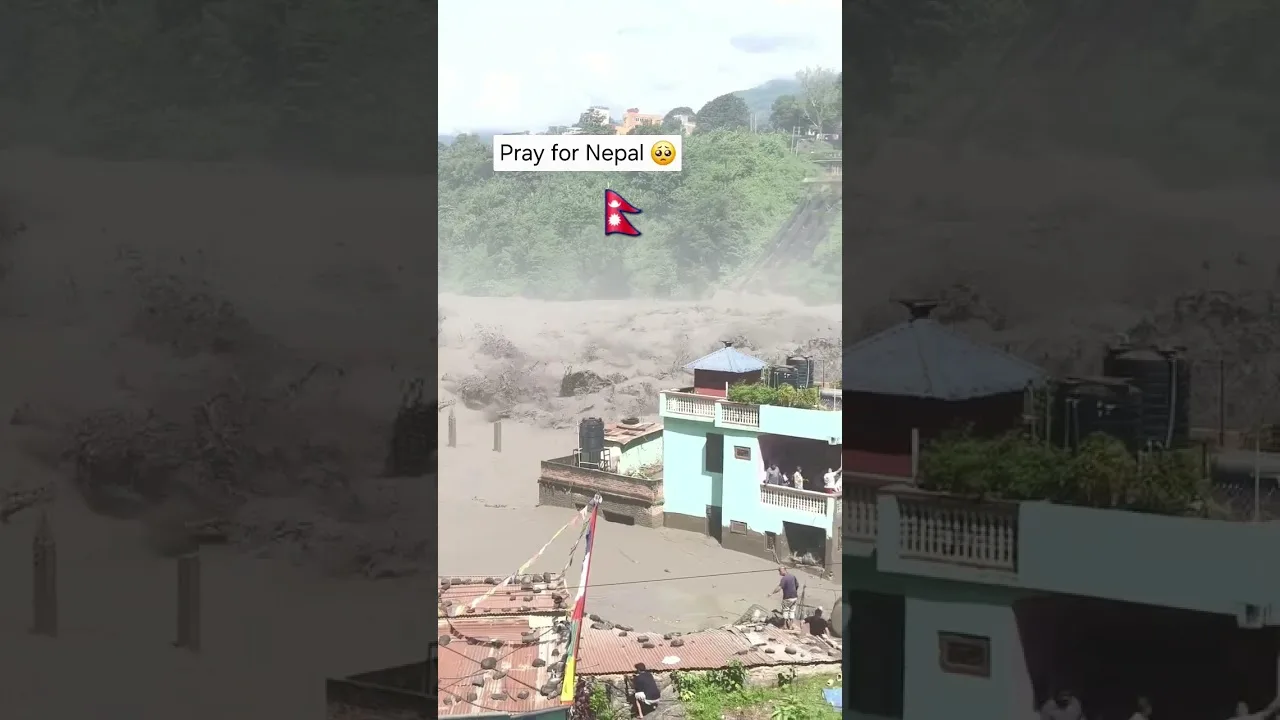
As glaciers retreat, they leave behind overdeepened basins that fill with meltwater, forming unstable moraine-dammed lakes. The number of glacial lakes in the HKH increased from 4,260 in 1990 to over 5,200 in 2020, with total lake area expanding by 15%. The 2013 Kedarnath disaster in Uttarakhand — triggered by a GLOF from Chorabari Lake — killed over 6,000 people. More recently, the February 2021 Chamoli flash flood, likely caused by a rock-ice avalanche onto a glacier lake, destroyed two hydropower projects and killed over 200. ICIMOD identifies 47 potentially dangerous glacial lakes in Nepal alone, with 21 in Bhutan and 25 in Pakistan requiring urgent monitoring. — a key consideration for Himalayan glaciers melting.
Water Insecurity: From Floods to Drought
The hydrological trajectory follows a “peak water” curve. Initially, Himalayan glaciers melting increases summer runoff, boosting river flows. But this is a temporary surplus. Modeling by Utrecht University and ICIMOD projects that the Indus, Ganges, and Brahmaputra basins will reach peak water between 2030 and 2050, after which dry-season flows will decline sharply. For the Indus Basin — where 90% of agriculture depends on irrigation — this threatens Pakistan’s food security. The Ganges Basin, supporting 600 million people, faces similar risks. A 2022 World Bank report warned that by 2050, climate-induced water scarcity could reduce GDP in South Asia by 6.7%.
Ecological and Cultural Losses
Alpine ecosystems host unique biodiversity, including the snow leopard, Himalayan musk deer, and hundreds of endemic plant species. As the cryosphere shrinks, habitats shift upward until they run out of mountain. Cultural heritage is also at risk: sacred peaks like Mount Kailash and Amarnath draw millions of pilgrims annually, while monastic communities in Ladakh, Spiti, and Bhutan rely on glacier-fed streams for agriculture and spiritual practices. — a key consideration for Himalayan glaciers melting.
The Science Behind the Melt: Key Studies and Data

Understanding Himalayan glaciers melting relies on multi-decadal observations from satellites, field stations, and ice cores.
Satellite Gravimetry and Altimetry
NASA’s GRACE and GRACE-FO missions measure changes in Earth’s gravity field, revealing mass loss across the HKH. A 2020 study in Science Advances using GRACE data found the region lost 8.3 ± 1.0 gigatons of ice per year during 2003–2009, accelerating to 18.6 ± 2.2 Gt/yr during 2010–2018. Meanwhile, ICESat and ICESat-2 laser altimetry show thinning rates of 0.3–0.7 m/yr at lower elevations, with some glaciers in the Everest region thinning over 1 m/yr. — a key consideration for Himalayan glaciers melting.
Ice Core Records from the Third Pole
Ice cores drilled at Dasuopu (7,200 m, Tibet), East Rongbuk (6,518 m, Everest), and Guliya (6,200 m, western Kunlun) provide millennial-scale context. The Dasuopu core shows 20th-century warming is unprecedented in the last 1,000 years. Black carbon concentrations in East Rongbuk ice rose threefold after 1950, correlating with South Asian industrialization. These records confirm that current Himalayan glaciers melting is not part of a natural cycle but driven by anthropogenic forcing.
Field Observations: Benchmark Glaciers
Long-term monitoring at benchmark glaciers — Chhota Shigri (India), Yala (Nepal), and Urumqi No.1 (China) — provides ground truth. Chhota Shigri, monitored since 1987, has lost 1.2 m water equivalent per year since 2000. Yala Glacier in Langtang Valley has retreated 680 m since 1980 and may disappear by 2040. These in-situ measurements validate satellite data and calibrate regional models. — a key consideration for Himalayan glaciers melting.
Regional Hotspots: Where Melting Is Most Severe
The pace of Himalayan glaciers melting varies across sub-regions due to topography, climate regimes, and pollution gradients.
Western Himalayas: Karakoram Anomaly Fading
The Karakoram range, spanning Pakistan, India, and China, long exhibited a “Karakoram anomaly” — stable or slightly advancing glaciers due to increased winter precipitation from westerly disturbances. However, recent studies show this anomaly is weakening. A 2021 paper in Nature Geoscience found that even Karakoram glaciers are now losing mass at -0.07 m w.e./yr, with surge-type glaciers becoming less frequent. The Siachen Glacier, the world’s highest battlefield, has retreated 800 m since 1989 and thinned by 17 m.
Central Himalayas: Nepal’s Rapid Retreat
Nepal’s glaciers, fed by the summer monsoon, are among the fastest shrinking. ICIMOD’s 2019 assessment of 3,808 glaciers in the Koshi, Gandaki, and Karnali basins showed a 24% area loss between 1977 and 2010. The Khumbu Glacier, Everest’s iconic icefall, has thinned by 40–50 m near Base Camp since the 1960s. Imja Lake, which didn’t exist in 1960, now spans 1.3 km² and is 150 m deep — a GLOF hazard mitigated only by a 2016 drainage project that lowered its level by 3.4 m.
Eastern Himalayas: Bhutan and the Monsoon Margin
Bhutan’s 700 glaciers and 2,674 glacial lakes face acute risk. The 1994 Luggye Tsho GLOF killed 21 people and destroyed Punakha Dzong. A 2021 ICIMOD report identified 17 potentially dangerous lakes in Bhutan. The eastern Himalayas receive the highest monsoon rainfall, but warming freezing levels are converting snow to rain at unprecedented rates. Glaciers in Sikkim and Arunachal Pradesh have lost 13–15% area since 1990.
Mitigation and Adaptation: Pathways Forward
Addressing Himalayan glaciers melting requires action at global, regional, and local scales.
Global: Deep Decarbonization
The only long-term solution is limiting global warming to 1.5°C. This requires halving global CO₂ emissions by 2030 and reaching net-zero by 2050, per the IPCC. The 2023 UAE Consensus at COP28 called for “transitioning away from fossil fuels,” but current policies put the world on track for 2.7°C. Every fraction of a degree matters: at 2°C, the HKH loses 50% of its ice; at 3°C, 75%.
Regional: Black Carbon Reduction
Unlike CO₂, black carbon stays in the atmosphere for days to weeks. Reducing emissions yields near-immediate climate and health co-benefits. The Climate and Clean Air Coalition estimates that full implementation of existing technologies — clean cookstoves, diesel particulate filters, brick kiln upgrades, and agricultural residue management — could cut South Asian black carbon emissions by 70% by 2030. India’s Pradhan Mantri Ujjwala Yojana (LPG access) and Bhutan’s zero-emission vehicle targets are steps in the right direction.
Local: Monitoring, Early Warning, and Water Management
ICIMOD’s Regional Database System and the World Meteorological Organization’s Global Cryosphere Watch are expanding high-altitude observing networks. Nepal’s Department of Hydrology and Meteorology, with UNDP support, has installed early warning systems at Tsho Rolpa and Imja lakes. In Ladakh, “ice stupas” — artificial glaciers created by spraying winter stream water into conical mounds — store 30,000–50,000 liters each, releasing meltwater for spring irrigation. Pakistan’s Glacial Lake Outburst Flood (GLOF-II) project, funded by the Green Climate Fund, is scaling up monitoring in Gilgit-Baltistan and Khyber Pakhtunkhwa.
The Role of International Cooperation
The transboundary nature of Himalayan rivers demands cooperation. The Indus Waters Treaty (1960) has survived wars but lacks climate adaptation clauses. The Ganges Water Sharing Treaty (1996) expires in 2026. No basin-wide treaty exists for the Brahmaputra/Yarlung Tsangpo, where China’s upstream dam construction raises concerns. The 2020 establishment of the Hindu Kush Himalaya Assessment Process under ICIMOD, modeled on the IPCC, is a scientific milestone. But science must translate into policy: a regional cryosphere convention, data-sharing protocols, and joint GLOF early warning systems are urgently needed.
Conclusion: The Fate of the Third Pole Is Our Fate
The Himalayan glaciers melting crisis is not a distant environmental issue — Himalayan glaciers melting is a humanitarian emergency in slow motion. The ice stored in these mountains buffers the seasonal extremes that define South Asian civilization. Its loss will reshape geopolitics, economies, and the daily lives of billions. The window for meaningful action is narrowing. As the IPCC’s 2023 Synthesis Report states: “The choices and actions implemented in this decade will have impacts now and for thousands of years.” Protecting the Third Pole requires the same urgency we apply to the Arctic and Antarctic. The rivers of Asia begin in the Himalayas. Their future — and ours — depends on what we do next.
For authoritative data on glacier mass balance, visit the ICIMOD Himalayan Glacier Database. For global cryosphere assessments, see the IPCC Sixth Assessment Report. NASA’s satellite observations are available at the NASA Earth Observatory.
Frequently Asked Questions
Himalayan glaciers are melting faster due to elevation-dependent warming, where high mountains warm 0.3–0.7°C more than the global average, combined with black carbon deposition from South Asian pollution that darkens ice and reduces reflectivity, and shifting monsoon patterns that reduce snowfall accumulation.
Nearly 2 billion people across Asia depend on the ten major river systems fed by Himalayan glaciers — including the Indus, Ganges, Brahmaputra, Yangtze, and Mekong — for agriculture, drinking water, hydropower, and ecosystem services.
Complete reversal is unlikely this century, but limiting global warming to 1.5°C could save 30–50% of remaining ice volume. Regional black carbon reductions, expanded glacier monitoring, GLOF early warning systems, and adaptive water management can significantly reduce risks to downstream communities.