Blog
Wetlands Flood Prevention: Nature’s Mighty Defense Against Rising Waters

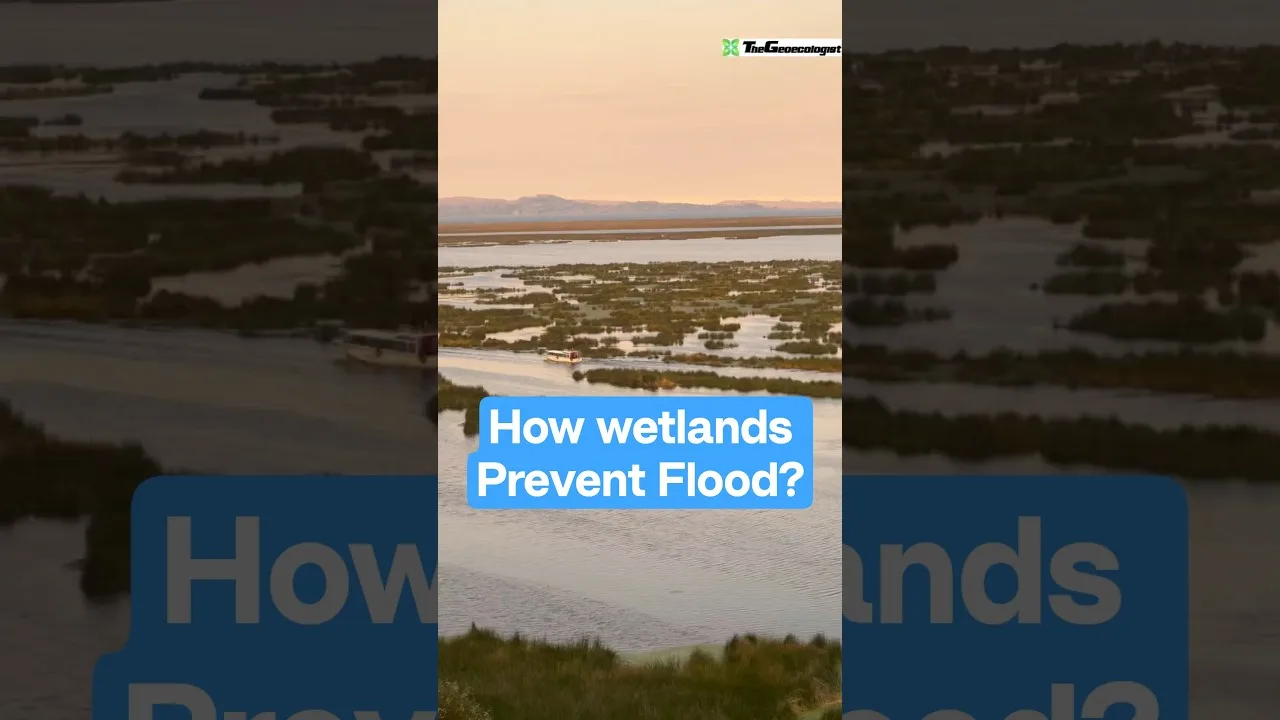
Table of Contents
- The Natural Sponge Mechanism: How Wetlands Flood Prevention Works
- Absorption Capacity of Wetland Soils
- Vegetation as Natural Speed Bumps
- Floodplain Expansion and Storage
- Quantifying the Impact: Wetlands Flood Prevention Statistics
- Global Flood Damage Reduction Data
- The Mississippi River Floodplain Example
- Urban Wetlands and Stormwater Management
- Beyond Flood Control: Ecosystem Services of Wetlands
- Groundwater Recharge and Water Security
- Carbon Sequestration and Climate Mitigation
- Biodiversity Hotspots
- International Recognition: The Ramsar Convention
- Notable Ramsar Sites Worldwide
- Indian Wetlands: Sundarbans and Keoladeo
- Threats to Wetlands and Conservation Imperatives
- Rates of Wetland Loss
- Economic Valuation of Wetland Services
- Nature-Based Solutions: Restoring Wetlands for Flood Resilience
- Cost-Effectiveness vs. Gray Infrastructure
- Successful Restoration Projects
- Policy Frameworks and Global Initiatives
Wetlands flood prevention stands as one of the most effective yet underappreciated natural defenses against the escalating threat of inundation worldwide. As climate change intensifies rainfall patterns and sea levels rise, these water-saturated ecosystems—including marshes, swamps, bogs, and floodplains—function as Earth’s primordial sponges, absorbing, slowing, and storing massive volumes of water that would otherwise devastate communities downstream. Far from being wastelands ripe for drainage and development, wetlands represent critical green infrastructure whose preservation and restoration offer cost-effective, sustainable solutions to the growing crisis of urban and riverine flooding.
- Natural sponges: Wetland soils and vegetation absorb up to 1.5 million gallons of floodwater per acre, releasing wetlands flood prevention gradually.
- Peak flow reduction: Studies show wetlands reduce peak flood discharges by 30–50% in many watersheds.
- Cost-effective: Restoring wetlands costs 2–5 times less per unit of flood protection than concrete levees or dams.
- Multi-benefit ecosystems: Beyond flood control, wetlands recharge groundwater, sequester carbon, and harbor 40% of all species.
- Global recognition: The Ramsar Convention protects 2,500+ sites covering 257 million hectares worldwide.
- Urgent threat: Wetlands are disappearing three times faster than forests, with 35% lost since 1970.
The Natural Sponge Mechanism: How Wetlands Flood Prevention Works
The hydrological magic of wetlands flood prevention lies in three interconnected physical processes that transform violent flood pulses into manageable baseflows. When intense rainfall or storm surge strikes a landscape, wetlands intercept water through their unique combination of porous soils, dense vegetation, and topographic complexity.
Absorption Capacity of Wetland Soils
Wetland soils—rich in organic matter and often underlain by peat or alluvial deposits—exhibit extraordinary porosity, frequently exceeding 80–90% void space. A single acre of wetland can store 1–1.5 million gallons of water (approximately 3–4.5 acre-feet), acting as a massive subterranean reservoir. During the 2019 Mississippi River floods, the Atchafalaya Basin wetlands absorbed an estimated 1.2 trillion gallons of floodwater, significantly reducing pressure on downstream levees protecting Baton Rouge and New Orleans. This storage capacity is not static; as water infiltrates, wetlands flood prevention recharges aquifers that supply drinking water to millions, linking wetlands flood prevention directly to long-term water security.
Vegetation as Natural Speed Bumps
Dense stands of emergent vegetation—cattails, bulrushes, sedges, and woody shrubs—create hydraulic roughness that dramatically slows surface water velocity. Manning’s roughness coefficients (n-values) for wetland vegetation range from 0.05 to 0.20, compared to 0.013 for concrete channels, meaning water moves 4–15 times slower through vegetated wetlands. This velocity reduction allows suspended sediments to settle, improving water quality while extending the time over which flood peaks pass. In the Florida Everglades, sawgrass marshes reduce flow velocities from meters per second to centimeters per second, transforming destructive flash floods into slow-moving sheet flow that nourishes the ecosystem. — a key consideration for wetlands flood prevention.
Floodplain Expansion and Storage
Connected floodplains serve as natural overflow valves, allowing rivers to spread laterally during high-water events. The Yolo Bypass in California’s Sacramento Valley exemplifies this principle: this 59,000-acre engineered floodplain diverts up to 80% of Sacramento River floodflows, protecting the state capital while providing seasonal habitat for migratory birds and native fish. Research from the University of California, Davis demonstrates that each hectare of reconnected floodplain provides $12,000–$15,000 annually in flood risk reduction benefits alone, not counting ecosystem services. — a key consideration for wetlands flood prevention.
Quantifying the Impact: Wetlands Flood Prevention Statistics
Empirical evidence from across the globe confirms that wetlands flood prevention delivers measurable, significant reductions in flood damage. A landmark 2020 study published in Nature analyzed 3,000+ flood events across 127 countries and found that wetlands reduce flood damages by an average of 38%, with coastal wetlands providing up to 50% reduction in storm surge impacts.
Global Flood Damage Reduction Data
The economic value of these services is staggering. The World Bank estimates that coastal wetlands prevent $38 billion in annual flood damages globally, while inland wetlands contribute an additional $23 billion. In the United States alone, the Federal Emergency Management Agency (FEMA) calculates that every $1 invested in wetland restoration yields $7–$10 in avoided flood losses. Following Hurricane Sandy in 2012, researchers at the University of California, Santa Cruz determined that coastal wetlands prevented $625 million in property damages across 12 northeastern states, with New Jersey and New York benefiting most significantly. — a key consideration for wetlands flood prevention.
The Mississippi River Floodplain Example
The Mississippi River’s historic floodplain once covered 24 million acres; today, only 4.5 million acres remain connected to the river. This disconnection—driven by levee construction, drainage for agriculture, and urban development—has amplified flood peaks downstream. The 1993 Great Flood, which caused $15 billion in damages, catalyzed the Emergency Wetlands Reserve Program, which has since restored over 2.5 million acres of floodplain wetlands. Modeling by the U.S. Army Corps of Engineers suggests that restoring an additional 5 million acres could reduce 100-year flood stages at St. Louis by 1.5–2 feet, a margin that determines whether levees hold or breach. — a key consideration for wetlands flood prevention.
Urban Wetlands and Stormwater Management
In cities, constructed and restored wetlands serve as green infrastructure for stormwater management. Philadelphia’s Green City, Clean Waters program has created over 2,000 greened acres—including wetland basins, rain gardens, and swales—reducing combined sewer overflows by 3 billion gallons annually while saving $8 billion compared to traditional gray infrastructure. Similarly, Singapore’s Active, Beautiful, Clean (ABC) Waters program integrates wetlands into urban design, with Bishan-Ang Mo Kio Park’s 3-kilometer naturalized river channel reducing peak flows by 40% while creating recreational space for 6 million annual visitors.
Beyond Flood Control: Ecosystem Services of Wetlands
The value of wetlands extends far beyond wetlands flood prevention, creating a cascade of co-benefits that amplify their conservation imperative. These ecosystem services, valued at $47 trillion annually by the Ramsar Convention, make wetlands among the most economically valuable ecosystems on Earth.
Groundwater Recharge and Water Security
Wetlands function as critical groundwater recharge zones, particularly in arid and semi-arid regions. The Ogallala Aquifer, which underlies eight U.S. states and supports $35 billion in annual agricultural production, receives significant recharge through playa wetlands—shallow, seasonal depressions that number over 80,000 across the High Plains. Research from Texas Tech University shows that a single playa wetland can recharge 1–10 acre-feet of water annually, directly linking wetlands flood prevention to long-term agricultural and municipal water supplies.
Carbon Sequestration and Climate Mitigation
Peatlands—wetlands with accumulated organic soils—cover just 3% of Earth’s land surface but store 30% of all soil carbon, twice the carbon stock of all global forests combined. The Congo Basin’s Cuvette Centrale peatland complex, discovered in 2017, holds 30 billion metric tons of carbon, equivalent to three years of global fossil fuel emissions. When drained, these wetlands become massive carbon sources; Indonesia’s peatland fires in 2015 released 1.75 billion tons of CO₂e, exceeding Japan’s annual emissions. Protecting wetlands thus serves dual climate goals: mitigation through carbon storage and adaptation through wetlands flood prevention.
Biodiversity Hotspots
Wetlands support 40% of all plant and animal species despite covering only 6% of Earth’s surface. The Pantanal, the world’s largest tropical wetland spanning Brazil, Bolivia, and Paraguay, hosts 4,700+ species including the highest density of jaguars globally. Keoladeo National Park in India, a UNESCO World Heritage Site and Ramsar wetland, supports 370+ bird species within 29 km², serving as a critical wintering ground for the endangered Siberian crane. This biodiversity underpins ecosystem resilience, ensuring wetlands continue providing flood protection under changing climatic conditions.
International Recognition: The Ramsar Convention
The Convention on Wetlands, signed in Ramsar, Iran, in 1971, remains the only global treaty focused on a single ecosystem type. With 172 contracting parties as of 2024, the Ramsar Convention has designated 2,500+ Wetlands of International Importance covering 257 million hectares—an area larger than Mexico.
Notable Ramsar Sites Worldwide
The Everglades (USA, 1.5 million hectares), the Okavango Delta (Botswana, 2.2 million hectares), and the Sundarbans (Bangladesh/India, 1 million hectares) represent the crown jewels of the Ramsar network. These sites demonstrate the global applicability of wetlands flood prevention: the Sundarbans’ mangrove forests reduce cyclone storm surge heights by 50–70%, protecting 4.5 million coastal residents in Bangladesh alone. The Okavango Delta’s seasonal flooding—driven by rainfall 1,000 km away in Angola—creates a pulsed wetland that supports one of Africa’s greatest wildlife concentrations while recharging the Kalahari’s fossil aquifers.
Indian Wetlands: Sundarbans and Keoladeo
India’s 75 Ramsar sites cover 1.3 million hectares, with the Sundarbans (423,000 hectares) and Chilika Lake (116,500 hectares) leading in flood protection value. The Sundarbans’ intricate network of tidal channels and mangrove islands attenuates wave energy by 75% over 100 meters of forest width, a natural seawall valued at $2.5 billion in avoided infrastructure costs. Keoladeo National Park, originally a maharaja’s duck hunting reserve, now demonstrates how wetland restoration can revive degraded landscapes: after near-complete drying in the 2000s, managed water releases from the Ajan Bund have restored its hydrology, bringing back migratory birds and local groundwater tables.
Threats to Wetlands and Conservation Imperatives
Despite their proven value for wetlands flood prevention and myriad other services, wetlands are Earth’s most threatened ecosystem. The Global Wetland Outlook (2021) reports that 35% of natural wetlands were lost between 1970 and 2015—a rate three times faster than forest loss—with 87% lost since 1700. Primary drivers include drainage for agriculture (responsible for 65% of losses), urban expansion, pollution, invasive species, and climate change impacts such as sea-level rise and altered precipitation regimes.
Rates of Wetland Loss
In the United States, the lower 48 states lost 53% of their original wetlands between the 1780s and 1980s, with California losing 91% and Florida 46%. The Prairie Pothole Region—”America’s duck factory”—has seen 50–90% of its wetlands drained for row-crop agriculture. In Europe, 60–70% of wetlands have disappeared since 1900. Southeast Asia’s peatlands face acute pressure: 50% of Indonesia’s and Malaysia’s peatlands have been drained for oil palm and acacia plantations, creating fire-prone landscapes that burn catastrophically during El Niño years.
Economic Valuation of Wetland Services
The economic case for conservation is compelling. A 2019 study in Ecological Economics valued global wetland ecosystem services at $47.4 trillion annually (2011 USD), with flood protection accounting for $23.2 trillion—nearly half the total. The Economics of Ecosystems and Biodiversity (TEEB) initiative calculates that every hectare of inland wetland provides $6,000–$220,000 annually in flood regulation services alone, depending on location and hydrological context. These figures dwarf the one-time profits from drainage and conversion, yet perverse subsidies—$540 billion annually in agricultural support alone, per OECD—continue incentivizing wetland destruction.
Nature-Based Solutions: Restoring Wetlands for Flood Resilience
The emerging paradigm of nature-based solutions (NbS) positions wetlands flood prevention at the heart of climate adaptation strategy. The International Union for Conservation of Nature (IUCN) defines NbS as “actions to protect, sustainably manage, and restore natural or modified ecosystems that address societal challenges effectively and adaptively, simultaneously providing human well-being and biodiversity benefits.” Wetland restoration exemplifies this approach.
Cost-Effectiveness vs. Gray Infrastructure
Comparative analyses consistently favor green over gray infrastructure for flood management. The U.S. Army Corps of Engineers’ Engineering With Nature initiative documents projects where wetland restoration cost $50,000–$200,000 per hectare, versus $1–$5 million per kilometer for levee construction. Maintenance costs are similarly lower: wetland systems self-maintain through ecological processes, while concrete infrastructure requires perpetual inspection, repair, and eventual replacement. The Netherlands’ Room for the River program, launched after near-catastrophic floods in 1993 and 1995, invested €2.3 billion in floodplain lowering, side channels, and wetland creation—avoiding an estimated €10+ billion in dike heightening while creating 4,000 hectares of new nature.
Successful Restoration Projects
The Napa River Flood Protection Project in California replaced a proposed concrete channel with a “living river” design: 650 acres of restored tidal marsh, 1,000 acres of floodplain terraces, and strategic levee setbacks. Completed in 2019 at $500 million (versus $1.2 billion for the concrete alternative), the project withstood its first major test in 2023’s atmospheric river storms, reducing peak flows by 35% while supporting endangered steelhead trout and Chinook salmon. In the UK, the Great Fen Project aims to restore 3,700 hectares of fenland between two National Nature Reserves, creating a climate-resilient landscape that stores 1.5 million cubic meters of floodwater while sequestering 325,000 tons of CO₂ over 50 years.
Policy Frameworks and Global Initiatives
Integrating wetlands flood prevention into policy requires bridging environmental, water management, and disaster risk reduction frameworks. The Sendai Framework for Disaster Risk Reduction (2015–2030) explicitly recognizes ecosystem-based approaches, while the UN Decade on Ecosystem Restoration (2021–2030) targets 350 million hectares of degraded land restoration. The European Union’s Water Framework Directive and Floods Directive mandate ecological flood management, and the U.S. Clean Water Act’s Section 404 program—though imperfect—provides regulatory protection for jurisdictional wetlands.
Innovative financing mechanisms are emerging to scale restoration. Wetland mitigation banking in the U.S. creates a $3–$4 billion annual market where developers purchase credits from restored wetlands to offset permitted impacts. Green bonds—such as the World Bank’s $1.5 billion Sustainable Development Bond for nature-based solutions—channel private capital into wetland projects. Payment for Ecosystem Services (PES) schemes in Costa Rica, China, and Mexico compensate landowners for maintaining wetlands’ hydrological functions, directly monetizing wetlands flood prevention.
Wetlands flood prevention represents a convergence of ecological wisdom and engineering pragmatism—a solution that works with nature rather than against wetlands flood prevention. From the mangrove-fringed coasts of Bangladesh to the prairie potholes of North Dakota, these ecosystems demonstrate that the most sophisticated flood defense technology ever developed is not made of concrete and steel, but of soil, water, and life. As the Intergovernmental Panel on Climate Change (IPCC) warns of increasing flood frequency and intensity, the imperative is clear: protect remaining wetlands, restore degraded ones, and integrate them into every flood management strategy. The cost of inaction—measured in lives lost, communities displaced, and economies shattered—far exceeds the investment required. Wetlands are not obstacles to development; they are the foundation of resilience. Let us treat them accordingly.
Frequently Asked Questions
One acre of wetland can absorb and store 1–1.5 million gallons of floodwater (approximately 3–4.5 acre-feet), releasing it gradually to reduce peak flows downstream.
Yes. Wetland restoration typically costs 2–5 times less per unit of flood protection than concrete levees or dams, with lower maintenance costs and additional co-benefits like carbon sequestration and habitat provision.
Approximately 35% of natural wetlands were lost between 1970 and 2015, and 87% have been lost since 1700—a rate three times faster than forest loss.