Blog
Excessive Rain Drought: The Paradox of Floods Causing Water Scarcity

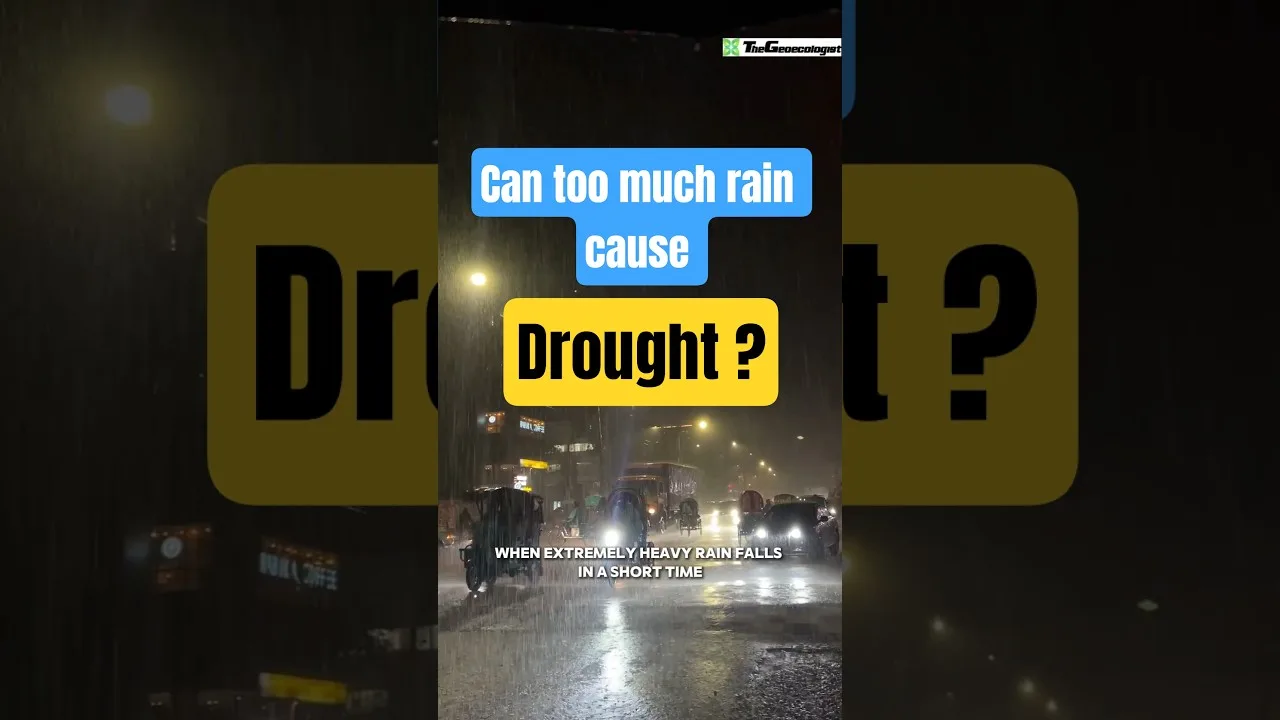
Table of Contents
- The Mechanics of Excessive Rain Drought: Why Downpours Fail to Replenish
- Infiltration Capacity vs. Rainfall Intensity
- The Groundwater Deficit
- Soil Structure Degradation
- Climate Change: The Engine of Precipitation Extremes
- Thermodynamics of a Warmer Atmosphere
- Observed Shifts in Global Hydroclimate
- Case Studies: When Floods Beget Famine
- Pakistan 2022: A Continental-Scale Example
- California's Whiplash Years
- European Summer 2021: Floods Then Scorching Heat
- Impacts Across Sectors
- Agriculture and Food Security
- Urban Water Supply
- Ecosystem Disruption
- Adaptation Strategies: Managing the Paradox
- Slow the Flow: Landscape-Scale Infiltration
- Managed Aquifer Recharge (MAR)
- Forecast-Informed Reservoir Operations (FIRO)
- Demand-Side Resilience
- Policy and Governance Implications
- Integrated Water Resources Management (IWRM)
- Climate Finance for Adaptation
- Data and Monitoring Gaps
- Future Outlook: Navigating the New Hydroclimate
- Frequently Asked Questions
- Can heavy rain really cause drought conditions?
- Which regions are most vulnerable to excessive rain drought cycles?
- What can individuals do to reduce excessive rain drought impacts?
The concept of excessive rain drought seems contradictory at first glance—how can too much water lead to water scarcity? Yet this paradox is becoming an increasingly common reality across the globe as climate change reshapes precipitation patterns. When intense rainfall events overwhelm the landscape’s capacity to absorb moisture, the result is often destructive flooding followed by persistent dry conditions, creating a cycle of feast and famine for water resources. Understanding this mechanism is essential for farmers, urban planners, and policymakers navigating the volatile hydroclimate of the twenty-first century.
- Runoff dominates recharge: Intense downpours exceed soil infiltration rates, sending water rushing overland instead of percolating into aquifers.
- Groundwater suffers: Aquifer recharge is severely limited during extreme events, leaving long-term water supplies depleted despite surface flooding.
- Climate change amplifies extremes: Rising temperatures drive more erratic precipitation—concentrated deluges followed by prolonged dry spells.
- Same-year flood-drought cycles: Regions experience catastrophic floods in the wet season and crippling water scarcity months later.
- Adaptation is urgent: Water management must shift from volume capture to infiltration enhancement and landscape resilience.
The Mechanics of Excessive Rain Drought: Why Downpours Fail to Replenish
Infiltration Capacity vs. Rainfall Intensity
Soil acts like a sponge, but every sponge has a saturation limit. When rainfall intensity exceeds the soil’s hydraulic conductivity—the rate at which water can move through pore spaces—infiltration stops and surface runoff begins. This threshold varies by soil type: sandy soils may absorb 50 millimeters per hour, while clay-rich soils might manage only 5 millimeters. A cloudburst delivering 100 millimeters in two hours overwhelms almost any natural landscape. The water that could have recharged groundwater instead becomes a flood hazard, racing toward streams and rivers in hours rather than percolating downward over weeks or months.
The Groundwater Deficit
Groundwater aquifers are the planet’s largest accessible freshwater reserves, supplying drinking water for nearly half the global population and irrigating roughly 40 percent of agricultural land according to the U.S. Geological Survey. Recharge occurs slowly, often requiring sustained, gentle precipitation that keeps soils moist without saturating them. Excessive rain drought scenarios short-circuit this process: the flood pulse passes too quickly for meaningful percolation, and the post-flood dry spell allows evaporation to claim remaining soil moisture. The net result is a groundwater deficit despite above-average seasonal rainfall totals.
Soil Structure Degradation
High-energy runoff does more than waste water—it actively degrades the landscape’s future absorption capacity. Erosion strips topsoil, while the sheer force of flowing water compacts subsoil layers, reducing porosity. Crusted soil surfaces repel subsequent rainfall, creating a feedback loop where each extreme event makes the next one more damaging. Research published in Nature Geoscience demonstrates that repeated intense rainfall events can reduce infiltration capacity by 20–40 percent over a decade, locking landscapes into a cycle of worsening excessive rain drought vulnerability.
Climate Change: The Engine of Precipitation Extremes
Thermodynamics of a Warmer Atmosphere
The Clausius–Clapeyron relation dictates that for every degree Celsius of warming, the atmosphere holds approximately 7 percent more water vapor. This thermodynamic reality translates directly into more intense precipitation events. The Intergovernmental Panel on Climate Change Sixth Assessment Report confirms that heavy precipitation events have increased in frequency and intensity across most land regions since the 1950s, with human-caused greenhouse gas emissions as the primary driver. Meanwhile, subtropical high-pressure systems expand, lengthening dry seasons in many mid-latitude regions. The combination creates the perfect setup for excessive rain drought cycles: shorter, wetter wet seasons and longer, hotter dry seasons.
Observed Shifts in Global Hydroclimate
Observational datasets from the National Oceanic and Atmospheric Administration reveal stark trends. In the U.S. Southwest, the number of days with extreme precipitation has risen 15 percent since 1958, while the length of dry spells between rain events has increased by nearly 20 percent. India’s monsoon now delivers more rain in fewer bursts—central India experienced a threefold increase in widespread extreme rain events between 1950 and 2015, even as total seasonal rainfall remained stable. Australia’s Millennium Drought (1997–2009) was punctuated by catastrophic floods in 2010–2011, followed by renewed drought. These patterns exemplify the excessive rain drought dynamic playing out across diverse climates.
Case Studies: When Floods Beget Famine
Pakistan 2022: A Continental-Scale Example
The 2022 Pakistan floods submerged one-third of the country, affected 33 million people, and caused over $30 billion in damages. Yet within months, districts that had been underwater faced acute water scarcity. Groundwater tables in Punjab and Sindh—already declining at 0.5–1 meter per year due to over-extraction—received negligible recharge because the floodwater moved too quickly and evaporated rapidly in the post-monsoon heat. The Pakistan Council of Research in Water Resources warned that the flood-drought sequence could reduce agricultural output by 15–20 percent for multiple seasons, a textbook excessive rain drought outcome.
California’s Whiplash Years
California’s 2022–2023 water year illustrated the paradox vividly. After three years of severe drought, a parade of atmospheric rivers delivered record snowpack and widespread flooding. Reservoirs filled, but groundwater basins—depleted by decades of overdraft—recovered only marginally. The California Department of Water Resources estimated that despite 141 percent of average precipitation, many Central Valley aquifers gained less than 5 percent of their deficit. The reason: intense storms generated runoff that exceeded conveyance capacity, forcing flood releases to the ocean rather than managed aquifer recharge. The state’s excessive rain drought reality underscores that infrastructure designed for a gentler climate cannot capture the new extremes.
European Summer 2021: Floods Then Scorching Heat
Western Germany and Belgium experienced catastrophic flooding in July 2021, with some areas receiving a month’s rain in 24 hours. By August, the same regions faced soil moisture deficits and crop stress as a heat wave baked the saturated ground. The European Drought Observatory reported that the rapid transition from waterlogged to water-stressed conditions reduced wheat yields by up to 30 percent in affected zones. The compound event—extreme wet followed by extreme dry—is a hallmark of the excessive rain drought mechanism amplified by a warming climate.
Impacts Across Sectors
Agriculture and Food Security
Crops face a double jeopardy: flood damage to standing crops (root hypoxia, nutrient leaching, physical lodging) followed by moisture stress during critical reproductive stages. The Food and Agriculture Organization estimates that between 2008 and 2018, floods and droughts together caused $30 billion in agricultural losses annually in developing countries, with compound excessive rain drought events disproportionately affecting smallholder farmers lacking irrigation or drainage infrastructure. Rice systems in South Asia, maize in sub-Saharan Africa, and wheat in the Mediterranean are particularly vulnerable to this one-two punch.
Urban Water Supply
Cities reliant on surface reservoirs face treatment challenges during floods (high turbidity, contaminant loads) and supply shortfalls during subsequent dry spells. Cape Town’s “Day Zero” crisis (2017–2018) was preceded by intense winter rainfall that overwhelmed storage capacity, leading to spillage, followed by a record-dry summer. Chennai, India, experienced devastating floods in 2015 and acute water scarcity in 2019, with groundwater levels dropping 10 meters in the interim. Urban resilience requires rethinking storage, conveyance, and demand management to buffer excessive rain drought swings.
Ecosystem Disruption
Natural ecosystems evolved under relatively stable hydroclimatic regimes. Riparian forests, wetlands, and floodplain meadows depend on seasonal inundation patterns that allow groundwater recharge and slow release. When floods become flashier and dry periods longer, native species face physiological stress beyond their adaptive capacity. The Murray-Darling Basin in Australia has seen massive fish kills during drought-flood transitions, while Amazonian floodplain forests show reduced regeneration after extreme flood-drought sequences. Biodiversity loss from excessive rain drought cycles erodes the very ecosystem services—water purification, flood attenuation, carbon sequestration—that buffer human communities.
Adaptation Strategies: Managing the Paradox
Slow the Flow: Landscape-Scale Infiltration
The most direct response to excessive rain drought is increasing the landscape’s “sponge” capacity. Practices include contour trenching, check dams, swales, and regenerative agriculture techniques (cover cropping, no-till, agroforestry) that rebuild soil organic matter and porosity. China’s “Sponge City” program mandates that 80 percent of urban land absorb 70 percent of rainfall through permeable pavements, green roofs, and restored wetlands. Early results from pilot cities like Wuhan show 20–30 percent reductions in peak runoff and measurable groundwater recovery. Rural applications—such as India’s watershed development programs—have demonstrated that community-led soil and water conservation can raise water tables by 3–5 meters within five years, directly countering the excessive rain drought mechanism.
Managed Aquifer Recharge (MAR)
Engineered MAR captures floodwater and directs it into aquifers via injection wells, infiltration basins, or riverbank filtration. California’s Sustainable Groundwater Management Act (2014) has spurred hundreds of MAR projects, with the Flood-MAR initiative specifically targeting atmospheric river events. In 2023, the state recharged an estimated 3.8 million acre-feet—roughly the annual urban use of Los Angeles—by flooding fallow fields and orchards during high flows. Australia’s Burdekin Delta and India’s Gujarat state have similarly scaled MAR to buffer excessive rain drought cycles. The key is conveyance infrastructure that can divert peak flows before they become destructive floods.
Forecast-Informed Reservoir Operations (FIRO)
Traditional reservoir rule curves prioritize flood control (keeping space empty) or water supply (keeping space full). FIRO uses advanced weather and hydrologic forecasts to dynamically adjust storage: releasing water ahead of predicted atmospheric rivers to create flood capacity, then retaining post-storm inflows for recharge and supply. The U.S. Army Corps of Engineers’ pilot at Lake Mendocino, California, increased water supply reliability by 20 percent without increasing flood risk. Scaling FIRO globally could transform reservoirs from passive victims of excessive rain drought into active regulators of the flood-drought pendulum.
Demand-Side Resilience
Supply-side measures alone cannot close the gap. Agricultural water productivity (crop per drop) must improve through precision irrigation, drought-tolerant cultivars, and cropping pattern shifts. Urban systems need tiered pricing, leakage reduction (global average non-revenue water is 30 percent), and diversified portfolios including recycled water and desalination where appropriate. Behavioral nudges—real-time feedback, social norm messaging—can reduce residential demand 5–15 percent during dry spells. Integrating demand management with supply augmentation creates a more robust defense against excessive rain drought volatility.
Policy and Governance Implications
Integrated Water Resources Management (IWRM)
Siloed institutions—separate agencies for flood control, irrigation, drinking water, and environment—struggle to manage the interconnected excessive rain drought cycle. IWRM frameworks, mandated by the UN Sustainable Development Goal 6.5, require coordinated planning across sectors and scales. The Netherlands’ “Room for the River” program exemplifies this: by lowering floodplains, relocating levees, and creating emergency storage, the Dutch simultaneously reduced flood risk, enhanced groundwater recharge, and restored ecological connectivity. Similar basin-scale approaches are emerging in the Mekong, Nile, and Colorado River basins.
Climate Finance for Adaptation
The Global Commission on Adaptation estimates that investing $1.8 trillion in climate-resilient infrastructure by 2030 could generate $7.1 trillion in net benefits. Yet adaptation finance remains a fraction of mitigation flows. Green Climate Fund projects increasingly target excessive rain drought resilience—such as the $256 million Zambia Strengthening Climate Resilience project, which combines watershed management, early warning systems, and climate-smart agriculture. Blending public grants with private investment via resilience bonds could unlock the scale needed.
Data and Monitoring Gaps
Effective management requires real-time data on soil moisture, groundwater levels, and streamflow—yet monitoring networks are declining in many regions. The World Meteorological Organization’s Global Hydrological Status and Outlook System (HydroSOS) aims to fill this gap, but national commitments are uneven. Satellite missions (GRACE-FO, SMAP, SWOT) provide unprecedented views of terrestrial water storage, but ground truthing remains essential. Closing the data gap is a prerequisite for anticipating and managing excessive rain drought events.
Future Outlook: Navigating the New Hydroclimate
Climate projections under all emissions scenarios indicate continued intensification of the hydrological cycle. The IPCC’s high-confidence finding—that extreme precipitation will increase in frequency and magnitude while drought severity rises in many regions—means excessive rain drought will become more common, not less. By 2100, under a high-emissions pathway (SSP5-8.5), the global land area experiencing compound flood-drought events could triple compared to the pre-industrial baseline. Even under aggressive mitigation (SSP1-2.6), the committed warming ensures decades of escalating extremes.
This reality demands a paradigm shift: from managing average conditions to managing extremes; from gray infrastructure alone to hybrid green-gray systems; from reactive emergency response to proactive resilience building. Communities that invest in landscape sponge capacity, aquifer recharge, forecast-informed operations, and demand flexibility will fare far better than those clinging to stationary-climate assumptions. The paradox of excessive rain drought is not a curiosity—it is the defining water challenge of our era. Understanding it, measuring it, and adapting to it will determine water security for billions in the coming decades.
Frequently Asked Questions
Can heavy rain really cause drought conditions?
Yes. When rainfall intensity exceeds the soil’s infiltration capacity, water runs off the surface instead of recharging groundwater. This creates a situation where flooding occurs in the short term, but aquifers and soil moisture remain depleted, leading to drought conditions weeks or months later. This excessive rain drought mechanism is well-documented in hydroclimatic research.
Which regions are most vulnerable to excessive rain drought cycles?
Regions with Mediterranean climates (California, Chile, South Africa, Australia, Mediterranean Basin), monsoon-influenced areas (South Asia, Southeast Asia, West Africa), and semi-arid zones with intense seasonal rainfall (U.S. Southwest, northern Mexico, northeastern Brazil) are particularly vulnerable. Urban areas with high impervious surface coverage and agricultural regions with degraded soils face amplified risk.
What can individuals do to reduce excessive rain drought impacts?
Property owners can install rain gardens, permeable pavements, and rainwater harvesting systems to increase on-site infiltration. Supporting regenerative agriculture through purchasing choices, advocating for green infrastructure investments, and reducing personal water waste during dry spells all contribute to community-scale resilience against excessive rain drought cycles.
Frequently Asked Questions
Yes. When rainfall intensity exceeds the soil's infiltration capacity, water runs off the surface instead of recharging groundwater. This creates a situation where flooding occurs in the short term, but aquifers and soil moisture remain depleted, leading to drought conditions weeks or months later. This excessive rain drought mechanism is well-documented in hydroclimatic research.
Regions with Mediterranean climates (California, Chile, South Africa, Australia, Mediterranean Basin), monsoon-influenced areas (South Asia, Southeast Asia, West Africa), and semi-arid zones with intense seasonal rainfall (U.S. Southwest, northern Mexico, northeastern Brazil) are particularly vulnerable. Urban areas with high impervious surface coverage and agricultural regions with degraded soils face amplified risk.
Property owners can install rain gardens, permeable pavements, and rainwater harvesting systems to increase on-site infiltration. Supporting regenerative agriculture through purchasing choices, advocating for green infrastructure investments, and reducing personal water waste during dry spells all contribute to community-scale resilience against excessive rain drought cycles.