Blog
Super El Nino 2026: Understanding the Global Climate Crisis


Table of Contents
- Understanding El Niño and Its Variants
- Regular El Niño vs Super El Niño
- Global Climate Disruptions
- Weakened Indian Monsoon
- Intensifying Heatwaves
- Global Wildfires & Floods
- India’s Agricultural Crisis
- Catastrophic Crop Losses
- Water Stress
- Livelihood Collapse
- The Heatwave Siege
- Survival Strategies: Adaptation & Mitigation
- Water Harvesting
- Crop Diversification
- Early Warning Systems
- Renewable Transition
- Economic Fallout
- Agricultural GDP Impact
- Tourism & Industry
- Healthcare Costs
- Why This Matters Now
- Conclusion
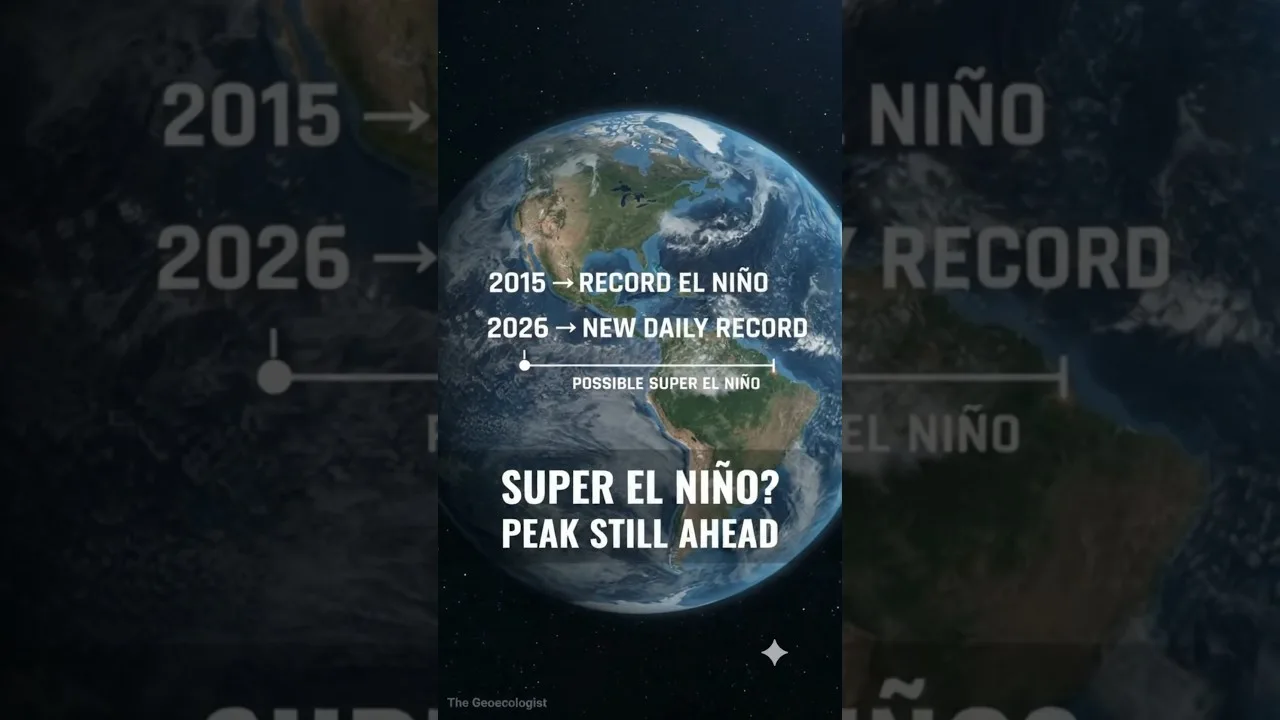
Super El Nino 2026 has emerged as one of the most intense climate anomalies in recent history, with sea surface temperatures in the central and eastern Pacific exceeding 3°C above average. This phenomenon is not just a seasonal fluctuation; it is a planetary-scale disruption that reshapes weather patterns, amplifies extreme events, and threatens food and water security across continents. The term Super El Nino 2026 describes a state where the ocean‑atmosphere coupling reaches a tipping point, triggering cascading impacts from weakened monsoons to scorching heatwaves. Scientists warn that without rapid adaptation, the socioeconomic fallout could reverberate for decades.
- Super El Nino 2026 drives a 30% reduction in Indian monsoon rainfall, jeopardizing crops for over 1.4 billion people.
- Regions such as Rajasthan and Telangana may experience temperatures above 50°C, pushing wet‑bulb limits toward survivability thresholds.
- Global wildfire risk spikes in Australia while Latin America faces intensified flooding due to altered atmospheric circulation.
- Economic models project a 3–5% contraction in India’s agricultural GDP, potentially inflating staple prices by 40%.
- Adaptation measures—water harvesting, drought‑resistant crops, AI‑based early warnings, and renewable energy scaling—are critical to mitigate losses.
Understanding El Niño and Its Variants
El Niño refers to the periodic warming of sea surface temperatures in the equatorial Pacific, a natural part of the El Niño‑Southern Oscillation (ENSO) cycle. While a typical El Niño raises temperatures by 0.5–1.5 °C, Super El Nino 2026 pushes anomalies beyond 3 °C, fundamentally altering the balance of heat exchange between ocean and atmosphere. This intensification strengthens the Walker circulation reversal, disrupts trade winds, and shifts convective rainfall eastward. For authoritative background, see the El Niño Wikipedia page.
Regular El Niño vs Super El Niño
During a regular El Niño, moderate droughts affect Southeast Asia and increased rainfall occurs along the western coast of South America. In contrast, Super El Nino 2026 generates a chain reaction: the Pacific heat reservoir fuels stronger atmospheric Rossby waves, leading to persistent high‑pressure ridges over India and low‑pressure troughs over the Americas. The result is a stark dichotomy—severe drought and heat in South Asia, coupled with catastrophic floods and landslides in parts of Brazil and Argentina.
Global Climate Disruptions
Weakened Indian Monsoon
The Indian monsoon relies on the meridional temperature gradient between the heated landmass and the cooler Indian Ocean. Super El Nino 2026 weakens the easterly trade winds, reducing moisture transport from the Bay of Bengal. Climate models from the Indian Institute of Tropical Meteorology predict a 30% deficit in seasonal rainfall, with the northwest and central regions bearing the brunt. This deficit translates directly into water stress for agriculture, drinking supplies, and hydropower generation.
Intensifying Heatwaves
Hotter Pacific air masses advect over the Indian subcontinent, elevating baseline temperatures. Forecasts from the India Meteorological Department indicate that Super El Nino 2026 could push daytime highs beyond 50 °C in Rajasthan, Gujarat, and Telangana for extended periods. When combined with high humidity, wet‑bulb temperatures may exceed 35 °C—the threshold at which human sweat can no longer cool the body effectively, raising the risk of fatal heatstroke.
Global Wildfires & Floods
The same atmospheric reconfiguration that dries India intensifies precipitation over the equatorial Pacific and the eastern Pacific coast of Latin America. NOAA’s seasonal outlook highlights an increased likelihood of extreme rainfall events in Colombia, Peru, and northern Brazil, heightening flood and landslide hazards. Simultaneously, Australia faces heightened bushfire risk as drought conditions deepen; the NOAA El Niño resource page provides real‑time monitoring of these developments.
India’s Agricultural Crisis
Catastrophic Crop Losses
Staple crops such as rice, wheat, and sugarcane are highly sensitive to monsoon timing and volume. A 30% rain shortfall under Super El Nino 2026 could reduce yields by 20–25 % nationwide, according to the Indian Council of Agricultural Research. This decline threatens the food security of over 1.4 billion people and may trigger a ripple effect in global grain markets.
Water Stress
Reservoirs like Karnataka’s Krishnaraja Sagar and Maharashtra’s Jayakwadi are already operating near capacity. Reduced inflow from deficient monsoons could push these storages to dead levels, curtailing drinking water supplies and hydroelectric generation. Urban centers such as Delhi and Mumbai may face intermittent water rationing, exacerbating public health concerns.
Livelihood Collapse
Approximately 60 % of India’s workforce depends on rain‑fed agriculture. Prolonged drought under Super El Nino 2026 could push millions of smallholder farmers into debt, distress migration, and heightened vulnerability to exploitation. Social safety nets and timely credit interventions will be essential to avert a humanitarian crisis.
The Heatwave Siege
Beyond rainfall deficits, Super El Nino 2026 imposes a relentless heat burden. Climate projections suggest that parts of the Indo‑Gangetic plain could endure 50 °C+ temperatures for three to four consecutive weeks. Urban heat islands amplify these effects, raising energy demand for cooling and straining already fragile power grids. Public health systems must prepare for a surge in heat‑related illnesses, dehydration, and exacerbation of cardiovascular conditions.
Survival Strategies: Adaptation & Mitigation
Water Harvesting
Reviving traditional water bodies—such as tankas, johads, and stepwells—combined with modern rainwater harvesting infrastructure can capture monsoon runoff when it does occur. States like Rajasthan have demonstrated that community‑led recharge structures can raise groundwater levels by up to 2 meters annually, providing a buffer against dry spells.
Crop Diversification
Shifting from water‑intensive rice and wheat to drought‑tolerant millets, sorghum, and pulses reduces irrigation demand while maintaining nutritional security. The Indian government’s Pradhan Mantri Krishi Sinchayee Yojana encourages micro‑irrigation and seed subsidies for these resilient varieties, a strategy that could cut yield losses by half under Super El Nino 2026 scenarios.
Early Warning Systems
Leveraging satellite data, AI‑driven models, and automated SMS alerts can give farmers and city officials lead time to implement protective measures. The India Meteorological Department’s upcoming “Monsoon Mission 2.0” platform aims to deliver district‑level heatwave and drought forecasts with 85 % accuracy, a vital tool for reducing mortality and economic loss.
Renewable Transition
Accelerating solar and wind power deployment lessens reliance on fossil‑fuel‑based thermal plants that become inefficient during extreme heat. Distributed solar rooftops can also provide emergency power during grid outages caused by heat‑induced transformer failures. Policy incentives that fast‑track renewable projects will simultaneously mitigate climate change and enhance adaptive capacity.
Economic Fallout
Agricultural GDP Impact
The Ministry of Statistics and Programme Implementation estimates that agriculture contributes roughly 18 % to India’s GDP. A 3–5 % contraction in this sector, driven by Super El Nino 2026, could shave 0.5–0.9 percentage points off national GDP growth. Concurrently, staple prices—particularly rice and wheat—may surge by 30–40 %, inflating household expenditure and potentially triggering social unrest.
Tourism & Industry
Coastal tourism in Kerala and Goa faces dual threats: sea‑level rise exacerbates flooding, while heatwaves deter visitors. Industrial output in heat‑sensitive sectors such as textiles and steel could decline by up to 10 % due to reduced labor productivity and increased energy costs for cooling.
Healthcare Costs
Heat‑related illnesses and waterborne diseases (e.g., cholera, dysentery) are expected to rise sharply. The Public Health Foundation of India projects that additional healthcare spending could exceed $1 billion annually during peak Super El Nino 2026 months, straining already limited resources.
Why This Matters Now
As greenhouse gas concentrations continue to climb, the background state of the Pacific Ocean becomes more prone to extreme El Niño events. Super El Nino 2026 is not a distant possibility; it is already unfolding, offering a stark warning of the nonlinear risks embedded in our climate system. Understanding these dynamics is essential for policymakers, businesses, and citizens alike—because adaptation today determines survivability tomorrow.
Conclusion
The arrival of Super El Nino 2026 marks a critical juncture in the global climate narrative. Its far‑reaching impacts—from monsoon failure and scorching heatwaves to economic contraction and public health strain—demand urgent, coordinated action. By investing in water harvesting, promoting drought‑resilient agriculture, deploying advanced early‑warning systems, and accelerating the renewable energy transition, societies can buffer the worst outcomes. The challenge is immense, but the opportunity to build a more resilient future is within reach—if we act decisively, informed by science, and guided by equity.
Frequently Asked Questions
Super El Nino 2026 features sea‑surface temperature anomalies exceeding 3 °C, compared to 0.5–1.5 °C in a typical El Nino, leading to far stronger disruptions in monsoon patterns, heatwaves, and global precipitation extremes.
It is expected to weaken the easterly trade winds, cutting monsoon rainfall by about 30 % and reducing rice, wheat, and sugarcane yields by 20–25 %, threatening food security for over 1.4 billion people.
Key strategies include reviving traditional water harvesting, shifting to drought‑resistant crops like millets, deploying AI‑based early warning systems, and accelerating solar and wind energy projects to reduce heat‑related strain on power grids.