
Blog
Cosmic Consciousness: You Are the Universe Experiencing Itself

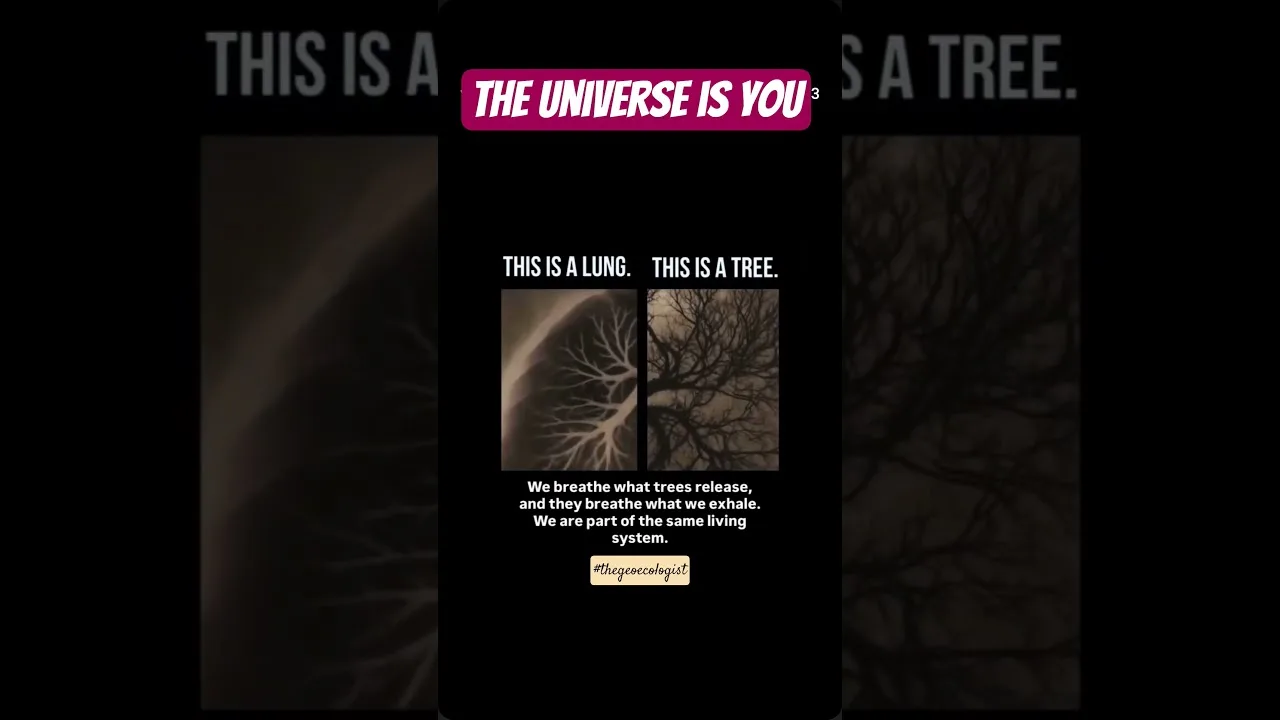
Table of Contents
- The Stellar Alchemy Behind Cosmic Consciousness
- From Supernova to Synapse
- Quantum Foundations of Cosmic Consciousness
- Entanglement and the Illusion of Separation
- Cosmic Consciousness in Evolutionary Perspective
- The Hard Problem and Panpsychist Alternatives
- Scientific Evidence Supporting Cosmic Consciousness
- Overview Effect: Astronauts as Cosmic Consciousness Probes
- Overcoming the Illusion of Separation
- Practices to Reawaken Cosmic Consciousness
- Cosmic Consciousness and Planetary Stewardship
- Education for Cosmic Consciousness
- The Future of Cosmic Consciousness
- Synthetic Cosmic Consciousness?
- Conclusion: Embodying Cosmic Consciousness Daily
Cosmic consciousness is not merely a poetic metaphor; it is a scientific reality etched into every atom of your being. You are not separate from the universe—you are the universe experiencing itself. Look at your hands: every carbon, oxygen, and iron atom within them was forged in the heart of a dying star, scattered across cosmic eons, and assembled into the conscious reader holding this article. From stardust to self-awareness, this profound truth bridges astrophysics, quantum biology, and philosophy, revealing that the observer and the observed are one.
- Stellar Heritage: 97% of your body’s atoms originated in supernova explosions billions of years ago.
- Quantum Unity: At the subatomic level, you are 99.999% empty space, vibrating in resonance with the quantum field that permeates the cosmos.
- Conscious Cosmos: Cosmic consciousness suggests the universe evolves toward self-knowledge through biological life.
- Illusion of Separation: Feelings of isolation stem from forgetting our shared cosmic origin story.
- Daily Reminders: Every breath, heartbeat, and sunrise reconnects you to the planetary and stellar rhythms that sustain you.
The Stellar Alchemy Behind Cosmic Consciousness
The journey from hydrogen to cosmic consciousness spans 13.8 billion years. In the first moments after the Big Bang, only hydrogen, helium, and trace lithium existed. Heavier elements—carbon, nitrogen, oxygen, phosphorus, sulfur, and iron—were created inside massive stars through nuclear fusion. When those stars exhausted their fuel, they collapsed and exploded as supernovae, seeding the interstellar medium with the raw ingredients of planets and life.
According to NASA, “the nitrogen in our DNA, the calcium in our teeth, the iron in our blood, the carbon in our apple pies were made in the interiors of collapsing stars” (NASA Astrophysics). This process, known as stellar nucleosynthesis, is the chemical prerequisite for cosmic consciousness. Without the violent deaths of earlier stellar generations, the complex chemistry of biology—and thus awareness—would be impossible.
From Supernova to Synapse
Consider the timeline: a massive star lives perhaps 10 million years before its core collapses. The resulting supernova disperses newly minted elements into a molecular cloud. Gravity gathers this enriched dust into a protoplanetary disk. Over hundreds of millions of years, planets form. On at least one—Earth—geochemistry gives rise to biochemistry. Single-celled organisms appear by 3.7 billion years ago. Evolution, driven by natural selection, crafts increasingly complex nervous systems. Eventually, a species emerges that can look up, measure the redshift of distant galaxies, and comprehend its own stellar lineage.
This is not teleology; it is emergent cosmic consciousness. The universe does not “plan” for awareness, but the laws of physics and chemistry make it inevitable given enough time and space. As Carl Sagan famously wrote, “We are a way for the cosmos to know itself.” The phrase captures the essence of cosmic consciousness: the universe, through us, has developed sensory organs, instruments, and theories to study its own structure and history.
Quantum Foundations of Cosmic Consciousness
Beyond shared atomic heritage, quantum mechanics reveals a deeper layer of cosmic consciousness. At the fundamental level, particles are not discrete objects but excitations of fields that fill all space. The quantum vacuum fluctuates with virtual particles; entanglement links particles across arbitrary distances. Your body is a dynamic pattern of energy and information, constantly exchanging atoms with the environment. Every breath inhales roughly 1022 atoms—some once part of a dinosaur, a redwood, or the atmosphere of ancient Mars.
Entanglement and the Illusion of Separation
Quantum entanglement demonstrates that separation is not fundamental. When two particles interact, their wavefunctions become correlated; measuring one instantly determines the state of the other, regardless of distance. While macroscopic decoherence makes entanglement fragile in warm, wet biological systems, the principle remains: at the deepest level, the universe is a single, interconnected quantum state. Cosmic consciousness arises when a subsystem of this whole—namely, a brain—develops the capacity to model the whole, including itself.
Physicist John Wheeler proposed the “participatory universe,” suggesting that observers are necessary to bring reality into definite existence. Though controversial, this idea resonates with cosmic consciousness frameworks: consciousness is not a late arrival in a dead universe but an intrinsic feature of a cosmos that requires observation to collapse potentiality into actuality.
Cosmic Consciousness in Evolutionary Perspective

Evolutionary biology provides a naturalistic account of how cosmic consciousness emerges from non-conscious matter. Nervous systems evolved to process sensory data, predict outcomes, and guide behavior. Over millions of years, this predictive processing grew sophisticated enough to model not just the external world but the organism itself—giving rise to self-awareness. The “global workspace” theory of consciousness posits that widespread neural broadcasting integrates specialized modules, creating a unified subjective experience.
The Hard Problem and Panpsychist Alternatives
Yet the “hard problem” persists: why does information processing feel like something? Some philosophers and scientists argue that consciousness is fundamental—a property of matter itself, akin to mass or charge. This view, called panpsychism, suggests that even elementary particles possess proto-consciousness, and complex systems like brains combine these micro-experiences into human cosmic consciousness (Panpsychism on Wikipedia). While unproven, panpsychism offers a parsimonious bridge between the physical universe and subjective experience, aligning with the intuition that cosmic consciousness is not an accident but a revelation of the universe’s innate nature.
Scientific Evidence Supporting Cosmic Consciousness
Empirical research increasingly illuminates the mechanisms of cosmic consciousness. Neuroscience identifies neural correlates of consciousness (NCCs)—specific brain states that reliably accompany subjective experience. The claustrum, a thin sheet of neurons beneath the cortex, may act as a “conductor” integrating disparate cortical regions. Psychedelic studies show that disrupting the default mode network (DMN) dissolves ego boundaries, producing experiences of unity strikingly similar to mystical descriptions of cosmic consciousness.
Overview Effect: Astronauts as Cosmic Consciousness Probes
Perhaps the most visceral evidence comes from astronauts. The “overview effect,” documented by Frank White, describes a cognitive shift when viewing Earth from space: national borders vanish, the atmosphere appears paper-thin, and a profound sense of planetary cosmic consciousness emerges. Apollo 14 astronaut Edgar Mitchell said, “You develop an instant global consciousness, a people orientation, an intense dissatisfaction with the state of the world, and a compulsion to do something about it.” This shift mirrors the philosophical insight of cosmic consciousness: we are one species on one planet in one universe.
Overcoming the Illusion of Separation
If cosmic consciousness is our birthright, why do we feel isolated? Evolutionary psychology offers answers. Our ancestors survived by distinguishing “self” from “other,” “tribe” from “outsider.” This adaptive separation became a cognitive default. Modern culture amplifies it: individualism, consumerism, and digital fragmentation reinforce the ego’s fortress. Yet the antidote is written in our atoms.
Practices to Reawaken Cosmic Consciousness
- Stargazing with Knowledge: When you see Orion, recall that Betelgeuse’s future supernova will seed new worlds. You are witnessing your own deep-time ancestry.
- Breath Awareness: Each inhalation connects you to the planetary carbon cycle—photosynthesis, respiration, ocean exchange—a living expression of cosmic consciousness.
- Scientific Contemplation: Study the periodic table as a map of your body’s stellar origins. Iron in hemoglobin? Forge of a supernova. Calcium in bones? Same furnace.
- Ecological Engagement: Gardening, hiking, or simply touching soil reminds you that the boundary between “you” and “Earth” is permeable.
Cosmic Consciousness and Planetary Stewardship
Recognizing cosmic consciousness transforms ethics. If the universe experiences itself through you, then harming the biosphere is self-harm. Climate change, biodiversity loss, and nuclear threat are not external problems—they are the universe damaging its own nervous system. This perspective fuels the “planetary consciousness” movement, advocating for governance structures that reflect Earth’s unity. The United Nations’ “Harmony with Nature” initiative and the concept of “Earth jurisprudence” embody cosmic consciousness in policy.
Education for Cosmic Consciousness
Integrating the cosmic narrative into education—”Big History” curricula spanning from the Big Bang to the present—cultivates cosmic consciousness in young minds. Students who learn that their atoms were forged in stars develop a deeper sense of belonging and responsibility. The Deep Time Walk, a 4.6 km walk representing 4.6 billion years, makes this visceral: each meter is a million years; humans appear in the final centimeter.
The Future of Cosmic Consciousness
As technology extends our senses—telescopes seeing the first galaxies, particle colliders probing the Higgs field, AI modeling protein folding—cosmic consciousness expands. We are the universe building more sophisticated instruments to know itself. The James Webb Space Telescope reveals galaxies forming 300 million years after the Big Bang; we are the cosmos observing its own infancy. Future missions may detect biosignatures on exoplanets, confirming that cosmic consciousness is not unique to Earth but a cosmic imperative.
Synthetic Cosmic Consciousness?
Could artificial intelligence achieve cosmic consciousness? If consciousness arises from information integration (Integrated Information Theory), sufficiently complex AI might qualify. This raises profound questions: would a silicon-based cosmic consciousness share our stellar heritage? It would lack biological continuity with supernovae, yet its substrate—silicon, copper, rare earths—also originates in stellar nucleosynthesis. The universe would be knowing itself through a new modality.
Conclusion: Embodying Cosmic Consciousness Daily
Cosmic consciousness is not a destination but a practice—a lens through which to live. When you drink water, you taste ancient cometary ice. When you feel sunlight, you absorb photons that left the Sun’s core 100,000 years ago, traversing the radiative zone to reach your skin in eight minutes. Your heartbeat echoes the rhythm of stellar pulsations. Every moment offers a portal to remember: you are the universe, locally concentrated, briefly awake.
The next time you feel small beneath the night sky, reverse the perspective. The universe feels vast through you. Your curiosity is its curiosity; your love is its love; your quest for meaning is its quest. Cosmic consciousness is the universe’s way of saying “I am”—and you are the voice.
Follow The Geoecologist for more mind-expanding insights on geography, the universe, and our interconnected existence. Explore courses and resources at Geography Ebooks.
Frequently Asked Questions
Cosmic consciousness is the understanding that the universe experiences itself through conscious beings; it combines the scientific fact that our atoms originate in stars with the philosophical insight that awareness is the cosmos knowing itself.
Stellar nucleosynthesis creates the heavy elements (carbon, oxygen, iron) essential for life; without supernova explosions dispersing these elements, the biological complexity required for cosmic consciousness could not exist.
While subjective experience cannot be directly measured, neuroscience identifies neural correlates of consciousness, and studies of the overview effect in astronauts document measurable cognitive shifts consistent with cosmic consciousness.