Blog
UGC NET Geography Books: Ultimate Guide for Assistant Professor Aspirants


Table of Contents
- Why Choosing the Right UGC NET Geography Books Matters
- Top Recommended UGC NET Geography Books for Paper 1 and Paper 2
- Physical Geography Essentials
- Human and Economic Geography Core Texts
- Indian Geography Specialized Books
- How to Build a Strategic Study Plan with UGC NET Geography Books
- Phase 1: Foundation (Days 1–40)
- Phase 2: Core Theory & Models (Days 41–80)
- Phase 3: Integration & Current Affairs (Days 81–105)
- Phase 4: Mock Tests & Revision (Days 106–120)
- Supplementing UGC NET Geography Books with Online Courses and Materials
- Common Mistakes to Avoid When Selecting UGC NET Geography Books
- Expert Tips from The Geoecologist for UGC NET Geography Success
- Conclusion
Finding the right UGC NET geography books is the single most critical step for candidates aiming to crack the National Eligibility Test and secure an assistant professor position in Indian universities. With the exam’s vast syllabus covering physical, human, economic, and Indian geography, aspirants often feel overwhelmed by the sheer volume of available study material. This comprehensive guide distills expert recommendations, strategic study plans, and trusted resources to help you build a focused, high-yield preparation strategy tailored to the latest NTA pattern.
- Focus on standard references: Prioritize NCERTs (Class 6–12), Majid Husain, Savindra Singh, and Khullar for core concepts.
- Separate Paper 1 and Paper 2 prep: Use dedicated books for Teaching Aptitude, Research Aptitude, and Geography-specific topics.
- Integrate current affairs: Link static geography with recent climatic events, policy changes, and Census 2011/2021 data.
- Practice with previous years’ papers: Solve at least 10 years of UGC NET geography question papers to identify recurring themes.
- Leverage online courses: Supplement books with structured video lectures from platforms like The Geoecologist for conceptual clarity.
Why Choosing the Right UGC NET Geography Books Matters
The UGC NET examination, conducted by the National Testing Agency (NTA) on behalf of the University Grants Commission, is the gateway to assistant professor roles and Junior Research Fellowships across India. Geography, as a subject, demands both breadth and depth—spanning geomorphology, climatology, oceanography, population geography, settlement geography, regional planning, and contemporary issues like climate change and sustainable development. The right UGC NET geography books act as a curated roadmap, preventing aspirants from wasting months on redundant or outdated material. According to NTA data from the December 2023 cycle, the qualifying rate for Geography hovered around 6.2%, underscoring the need for precision in resource selection.
Many candidates make the mistake of accumulating dozens of titles without a clear hierarchy. Toppers consistently emphasize that mastery of 8–10 core UGC NET geography books yields better results than superficial reading of 30+. The Geoecologist, a leading mentorship platform for geography optional and UGC NET, advocates a “standard books + current affairs + test series” framework that has produced numerous JRFs and assistant professors since 2018.
Top Recommended UGC NET Geography Books for Paper 1 and Paper 2
Physical Geography Essentials
Physical geography forms the backbone of Paper 2. The following UGC NET geography books are universally recommended by subject experts and previous-year toppers:
- Physical Geography by Savindra Singh (Pravalika Publications): Considered the bible for geomorphology, climatology, and oceanography. Its diagrams and explanatory depth align perfectly with NTA’s conceptual question style.
- Geomorphology by Majid Husain (Rawat Publications): Essential for landform processes, theories (Davis, Penck, King), and applied geomorphology.
- Climatology and Oceanography by D.S. Lal (Sharda Pustak Bhawan): Concise yet comprehensive coverage of atmospheric circulation, climatic classification (Koppen, Thornthwaite), and ocean currents.
- NCERT Class 11 & 12 (Fundamentals of Physical Geography, India: Physical Environment): Non-negotiable for building foundational clarity. NTA frequently frames direct questions from NCERT diagrams and definitions.
Human and Economic Geography Core Texts
Human geography carries significant weightage (approx. 30–35% of Paper 2). These UGC NET geography books cover models, theories, and contemporary debates:
- Human Geography by Majid Husain (Rawat Publications): Covers population, migration, settlement, and cultural geography with Indian case studies.
- Economic and Social Geography by R. N. Dubey (Kitab Mahal): Strong on resource geography, agriculture, industry, transport, and trade patterns.
- Models in Geography by Majid Husain: Dedicated resource for theoretical models (Von Thunen, Weber, Christaller, Rostov, Demographic Transition) — a high-yield area where 4–6 questions appear annually.
- Geographical Thought by R. D. Dixit / Sudeepta Adhikari: Covers the evolution of geographic thought from ancient to modern, including quantitative revolution, behavioralism, humanism, and postmodernism.
Indian Geography Specialized Books
Indian geography is a distinct section (approx. 25% weightage) requiring state-level data, regional planning, and policy awareness. The most effective UGC NET geography books for this segment include:
- India: A Comprehensive Geography by D.R. Khullar (Kalyani Publishers): The gold standard for physiography, drainage, climate, soils, natural vegetation, agriculture, minerals, industries, transport, and regional development.
- Geography of India by Majid Husain (McGraw Hill): Excellent for thematic maps, census data interpretation, and contemporary issues like water disputes, smart cities, and aspirational districts.
- NCERT Class 12 (India: People and Economy): Direct source for demographic attributes, planning, and sustainable development case studies.
- Economic Survey & India Year Book (latest editions): For updated statistics on GDP contribution by sector, cropping patterns, infrastructure corridors, and government schemes (Jal Jeevan Mission, PM Gati Shakti).
How to Build a Strategic Study Plan with UGC NET Geography Books
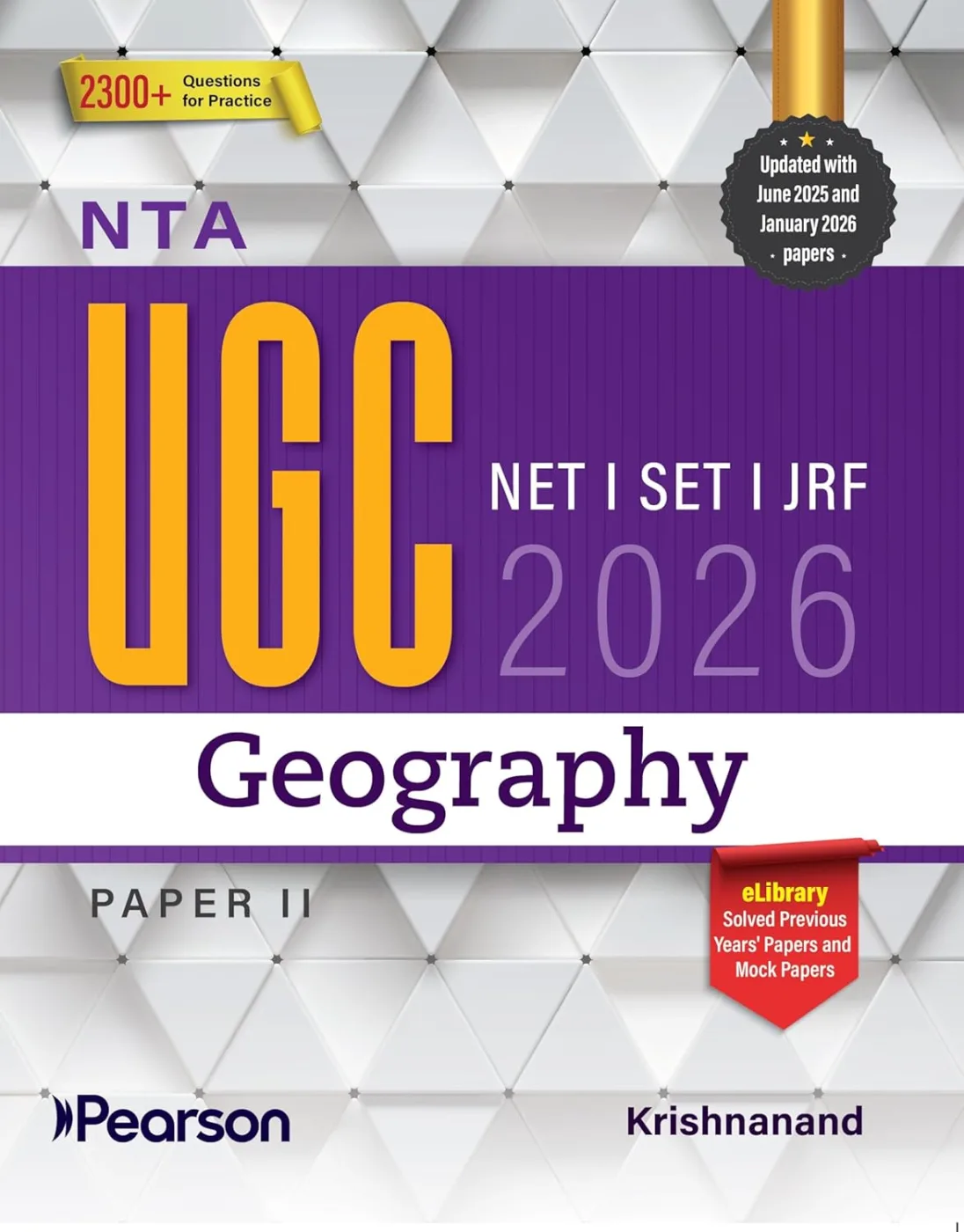
A structured timetable transforms passive reading into active retention. The Geoecologist’s 120-day roadmap—validated by 500+ successful candidates—organizes UGC NET geography books into four phases:
Phase 1: Foundation (Days 1–40)
Complete all NCERTs (Class 6–12) + Savindra Singh (Physical Geography) + Khullar (Indian Geography). Allocate 3 hours daily. Make one-page mind maps per chapter. Focus on definitions, diagrams, and terminology.
Phase 2: Core Theory & Models (Days 41–80)
Cover Majid Husain (Human, Geomorphology, Models), Geographical Thought, and Economic Geography. Dedicate weekends to model derivations and graphical representations. Solve topic-wise PYQs after each unit.
Phase 3: Integration & Current Affairs (Days 81–105)
Link static concepts with recent developments: IPCC AR6 findings, COP28 outcomes, Census 2011/2021 provisional data, National Water Policy 2022, and GIS/remote sensing applications in governance. Use The Geoecologist’s monthly current affairs compilations.
Phase 4: Mock Tests & Revision (Days 106–120)
Attempt 20+ full-length mocks under exam conditions. Analyze errors, revisit weak areas from your UGC NET geography books, and memorize high-yield facts (tribal groups, biosphere reserves, industrial corridors, planning regions).
Supplementing UGC NET Geography Books with Online Courses and Materials
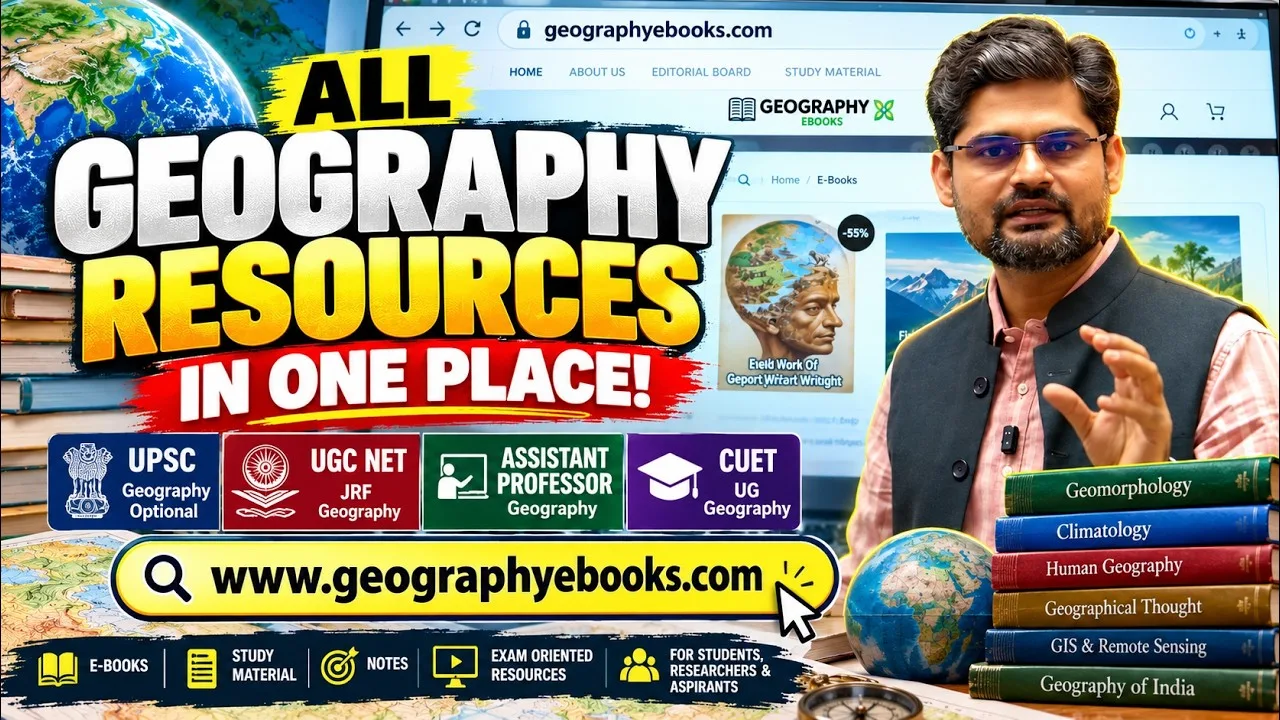
While books provide depth, structured guidance accelerates concept mastery. The Geoecologist offers Online Geography Courses for UPSC and UGC NET featuring 300+ hours of lectures, live doubt sessions, and personalized mentorship. Their study materials—available at geographyebooks.com—include topic-wise notes, map atlases, and 5000+ MCQs with explanations. For aspirants unable to attend offline coaching in Delhi’s Mukherjee Nagar or Old Rajinder Nagar hubs, these digital resources bridge the gap effectively.
Additionally, the NCERT official website provides free PDF downloads of all textbooks, ensuring accessibility. The UGC NET Wikipedia page offers a reliable overview of exam pattern changes, eligibility criteria, and historical cut-off trends.
Common Mistakes to Avoid When Selecting UGC NET Geography Books
- Ignoring edition currency: Geography data evolves rapidly. Always buy the latest edition (post-2020) of Khullar, Majid Husain, and Economic Survey-linked books.
- Skipping maps and diagrams: NTA asks 8–12 map-based questions annually. Practice locating tribes, biosphere reserves, mineral belts, and cropping regions on blank outline maps.
- Over-reliance on coaching notes: Notes are supplements, not substitutes. Standard UGC NET geography books build the analytical depth needed for assertion-reason and statement-based questions.
- Neglecting Paper 1: Teaching Aptitude, Research Aptitude, Communication, and ICT contribute 100 marks. Use dedicated books like KVS Madaan or Arihant’s Paper 1 guide.
- Isolated preparation: Join Telegram/Discord groups (e.g., The Geoecologist community) for peer discussion, doubt resolution, and motivation.
Expert Tips from The Geoecologist for UGC NET Geography Success
Krishna Kumar, founder of The Geoecologist and a 4-time UGC NET qualifier, shares three non-negotiable principles:
“First, treat UGC NET geography books as reference libraries, not novels. Read with a pencil—annotate, question, and connect concepts across chapters. Second, write 200-word answers for every major topic (e.g., ‘Explain the relevance of Von Thunen’s model in Indian agriculture’). This builds answer-writing stamina for the assistant professor interview stage. Third, reverse-engineer the last 10 years’ papers—identify the 20% of topics yielding 80% of questions and master them first.”
The platform’s YouTube channel (THEGEOECOLOGIST) releases free weekly lectures on high-yield topics like “Climate Change and Himalayan Glaciation” or “Smart Cities Mission: Geographic Perspective.” Their Instagram handle @thegeoecologist shares daily MCQs, map practice, and motivational content for consistent engagement.
Conclusion
Cracking UGC NET Geography and securing an assistant professor position demands more than hard work—it requires strategic resource selection, disciplined execution, and expert mentorship. The UGC NET geography books outlined in this guide represent the distilled wisdom of toppers and educators who have navigated this path successfully. Combine these standard references with structured online courses, rigorous test practice, and current affairs integration to maximize your score. Remember, the goal isn’t just to qualify but to build a scholarly foundation for a lifelong academic career in geography. Start today: pick up Savindra Singh, open the NCERTs, and take the first step toward your JRF and assistant professor dream.
For personalized guidance, comprehensive study materials, and access to India’s most trusted geography mentorship ecosystem, visit thegeoecologist.com or email krishna.geography@gmail.com. Your academic journey deserves the best roadmap—choose wisely, prepare relentlessly, and succeed inevitably.
Frequently Asked Questions
The most recommended UGC NET geography books for Paper 2 include Physical Geography by Savindra Singh, Human Geography and Models in Geography by Majid Husain, India: A Comprehensive Geography by D.R. Khullar, and NCERT Class 11–12 textbooks. These cover the entire syllabus with conceptual depth and diagram-rich explanations aligned to NTA patterns.
Toppers suggest mastering 8–10 core UGC NET geography books rather than skimming 20+. Focus on standard references (NCERTs, Savindra Singh, Majid Husain, Khullar), supplement with current affairs and PYQs, and revise repeatedly. Quality and retention matter more than quantity.
Online courses like those from The Geoecologist provide excellent structure and concept clarity, but standard UGC NET geography books remain indispensable for authentic definitions, diagrams, and data. Use courses to guide your reading of books, not replace them. A hybrid approach yields the highest success rates.