Blog
Assistant Professor Geography: Complete Preparation Guide for Exam Success

Table of Contents
- Understanding the Assistant Professor Geography Exam Landscape
- Decoding the Syllabus: Core Areas to Master
- 1. Geomorphology and Climatology (Units I & II)
- 2. Oceanography and Biogeography (Units III & IV)
- 3. Geographic Thought and Human Geography (Units V & VI)
- 4. Economic, Political, and Regional Geography (Units VII, VIII, IX)
- 5. Geographical Techniques (Unit X) – The Game Changer
- Building a Strategic Study Plan
- Phase 1: Foundation Building (Months 1–3)
- Phase 2: Intensive Revision & PYQ Integration (Months 4–6)
- Phase 3: Mock Marathon & Weakness Plugging (Final 1–2 Months)
- Mastering Answer Writing for Geography
- Leveraging Previous Year Questions (PYQs)
- Integrating RS-GIS and Modern Tools
- The Role of Specialized Courses and Mentorship
- Time Management and Revision Techniques
- Common Mistakes to Avoid
- Conclusion
Cracking the assistant professor geography exam requires a blend of deep subject mastery, strategic planning, and consistent answer-writing practice. Whether you are targeting the UGC NET, a State Eligibility Test (SET), or a direct university recruitment drive, the competition is fierce and the syllabus vast. This comprehensive guide breaks down the exact roadmap—from decoding the syllabus to leveraging previous year questions (PYQs) and modern tools like RS-GIS—to help you secure your place in academia.
- Syllabus Alignment is Non-Negotiable: Map every topic to the official UGC NET Geography syllabus to avoid blind spots.
- Conceptual Clarity Trumps Rote Learning: Focus on understanding geomorphological processes, climatic theories, and spatial models rather than memorizing facts.
- Answer Writing is a Skill: Practice structured, diagram-rich answers daily; assistant professor geography separates top rankers from average aspirants.
- PYQs are Your Best Mentor: Analyze at least 10 years of papers to identify high-yield themes and question patterns.
- Integrate Technology Early: RS-GIS, GPS, and quantitative methods are now core, not optional, sections of the exam.
Understanding the Assistant Professor Geography Exam Landscape
The pathway to becoming an assistant professor geography faculty member in India primarily runs through the UGC National Eligibility Test (NET), conducted by the National Testing Agency (NTA) on behalf of the University Grants Commission. Clearing NET (or JRF) is a mandatory eligibility criterion for most central and state university positions. Additionally, many states conduct their own State Eligibility Tests (SET/SLET), which are valid for appointments within that specific state. Some premier institutes and private universities may also conduct direct recruitment interviews, but a NET qualification remains the gold standard.
The University Grants Commission mandates that the test assesses both teaching aptitude and subject-specific knowledge. For Geography (Subject Code: 80), the exam comprises two papers: Paper I (General Teaching & Research Aptitude – 50 questions, 100 marks) and Paper II (Geography – 100 questions, 200 marks). The duration is 3 hours with no break between papers. Understanding this structure is the first step in crafting a winning strategy for the assistant professor geography journey.
Decoding the Syllabus: Core Areas to Master
The UGC NET Geography syllabus is divided into ten units. A smart aspirant does not treat all units equally; instead, they prioritize based on weightage, difficulty, and personal strength. The assistant professor geography syllabus broadly covers:
1. Geomorphology and Climatology (Units I & II)
These are the bedrock of physical geography. Focus on endogenetic and exogenetic forces, plate tectonics, cycle of erosion (Davis vs. Penck), slope development, and applied geomorphology. In climatology, master atmospheric composition, heat budget, circulation patterns (Hadley, Ferrel, Polar cells), monsoon mechanisms (especially the Indian Monsoon), climatic classification (Koppen, Thornthwaite), and climate change science (IPCC reports).
2. Oceanography and Biogeography (Units III & IV)
Oceanography demands clarity on bottom topography, temperature/salinity distribution, ocean currents, coral reefs, and marine resources. Biogeography requires command over soil formation (pedogenesis), biomes, biodiversity hotspots, and conservation strategies. These units often yield high-scoring, diagram-based questions.
3. Geographic Thought and Human Geography (Units V & VI)
This is where many science-background students struggle. Study the evolution of geographic thought—from ancient Greek and Chinese contributions to the quantitative revolution, behavioralism, humanism, radicalism, and postmodernism. Key figures: Humboldt, Ritter, Ratzel, Vidal de la Blache, Hartshorne, Harvey, Soja. In Human Geography, focus on population theories (Malthus, Marx, Demographic Transition), migration models (Lee, Ravenstein), settlement geography (Christaller, Losch), and agricultural/industrial location theories (Von Thunen, Weber).
4. Economic, Political, and Regional Geography (Units VII, VIII, IX)
Economic geography covers resource classification, energy crisis, food security, and world trade patterns (WTO, globalization). Political geography includes frontiers, boundaries, geopolitics (Mackinder, Spykman, Cohen), and federalism. Regional geography of India is a massive high-yield area: physiography, drainage, climate, soils, natural vegetation, agriculture, industries, transport, and regional development planning (NITI Aayog, Aspirational Districts Programme).
5. Geographical Techniques (Unit X) – The Game Changer
This unit carries disproportionate weight because assistant professor geography tests practical skills. It covers: maps (types, projections, scale), surveying (chain, plane table, prismatic compass), remote sensing (EMR interaction, sensors, platforms, Indian satellites like Resourcesat, Cartosat), GIS (data models, topology, overlay analysis, DEM), GPS (segments, accuracy, applications), and quantitative methods (central tendency, dispersion, correlation, regression, time series, hypothesis testing). Mastery of RS-GIS is no longer optional for the assistant professor geography aspirant; assistant professor geography is a decisive differentiator.
Building a Strategic Study Plan
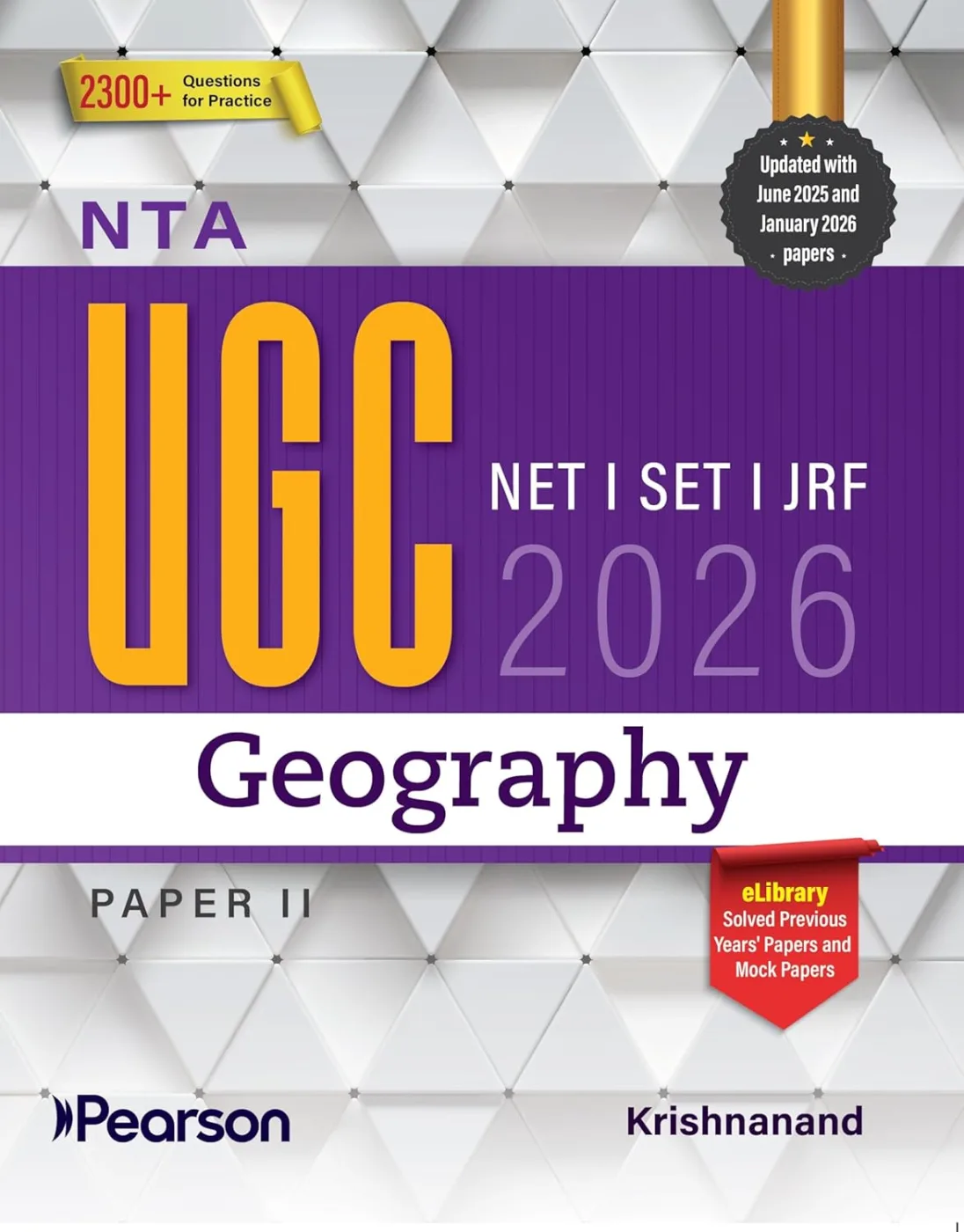
A haphazard approach guarantees failure. A structured plan for the assistant professor geography exam should span 6–9 months for a beginner, or 3–4 months for a repeater with base knowledge.
Phase 1: Foundation Building (Months 1–3)
- Read NCERT Class XI & XII textbooks (Fundamentals of Physical Geography, India Physical Environment, Fundamentals of Human Geography, India People and Economy) cover-to-cover. These are the bible for basic concepts. Download them free from the NCERT official website.
- Supplement with standard references: Savindra Singh (Physical Geography), Majid Husain (Human Geography, Models, Indian Geography), Khullar (India), and Chandna (Geographic Thought).
- Prepare one-page mind maps for each unit. Use color coding: Red for definitions, Blue for theories/models, Green for examples/case studies.
Phase 2: Intensive Revision & PYQ Integration (Months 4–6)
- Solve topic-wise PYQs immediately after finishing a unit. This validates retention and reveals examiner mindset.
- Join a test series that offers full-length mocks with detailed explanations and All-India Rank (AIR) analysis.
- Dedicate 1 hour daily only to Paper I (Teaching Aptitude, Research Aptitude, Communication, Math/Reasoning, ICT, Environment, Higher Education). Do not ignore assistant professor geography; 10–15 marks here can decide JRF vs. NET.
Phase 3: Mock Marathon & Weakness Plugging (Final 1–2 Months)
- Attempt 2–3 full mocks per week under exam conditions (3 hours, no phone, OMR sheet).
- Analyze every mock: categorize errors as “Concept Gap,” “Silly Mistake,” “Time Pressure,” or “Misreading.” Attack Concept Gaps first.
- Revise mind maps, formulas (statistics), and diagrams (geomorphology cycles, climatic charts, models) daily.
Mastering Answer Writing for Geography
In the assistant professor geography exam (especially if you later face descriptive university interviews or state PSC mains), answer writing is your voice. Even in the objective NET format, the mental discipline of structuring answers helps eliminate options faster.
- Structure: Introduction (Definition/Context) → Body (Theories, Models, Diagrams, Case Studies, Data) → Conclusion (Way forward/Sustainability angle).
- Diagrams: Draw neat, labeled sketches for every physical geography answer (e.g., cycle of erosion, pressure belts, ocean currents, soil profile). A 2-minute diagram can fetch 4–5 marks.
- Keywords: Sprinkle technical terms: “isostasy,” “adiabatic lapse rate,” “threshold concept,” “spatial autocorrelation,” “carrying capacity.”
- Contemporary Relevance: Link static concepts to current affairs—e.g., link Western Disturbances to recent unseasonal rains, or plate tectonics to the Turkey-Syria earthquake.
Leveraging Previous Year Questions (PYQs)
PYQs are the single most reliable predictor of future papers. For the assistant professor geography exam, adopt a forensic approach:
- Frequency Analysis: List topics asked in the last 10 years. Mark those appearing ≥3 times as “Core,” 1–2 times as “Peripheral.”
- Pattern Recognition: Notice the shift from factual (“Capital of Mizoram?”) to conceptual (“Which geomorphic process dominates the Mizoram hills?”).
- Option Deconstruction: For every MCQ, write why the correct option is right and why each distractor is wrong. This builds elimination skill.
- Assertion-Reason & Match the Following: These formats test deep linkage. Practice them separately.
Integrating RS-GIS and Modern Tools
Unit X (Geographical Techniques) has evolved from a minor section to a major score differentiator. The NTA now asks 15–20 questions from this unit alone. For the serious assistant professor geography candidate:
- Learn QGIS (open-source) hands-on: load shapefiles, perform buffer/overlay analysis, create layouts.
- Understand sensor characteristics: spatial, spectral, radiometric, temporal resolution. Know the difference between Landsat, Sentinel, MODIS, and Indian missions (IRS series, Cartosat, RISAT).
- Master statistical formulas: Chi-square, t-test, ANOVA, Pearson/Spearman correlation, regression equation (Y = a + bX), nearest neighbor analysis.
- Practice map projection identification: properties (conformal, equal-area, equidistant), standard parallels, use cases (Mercator for navigation, Mollweide for distribution maps).
The Role of Specialized Courses and Mentorship
Self-study works, but guided preparation compresses the learning curve. Platforms like TheGeoecologist offer structured, exam-oriented courses tailored for the assistant professor geography aspirant. Their curriculum aligns 1:1 with the UGC NET syllabus, providing concept videos, answer-writing workshops, PYQ marathons, and revision modules for Indian & World Geography, RS-GIS, and Environment. Thousands of aspirants have converted their NET/JRF dreams into reality through such focused mentorship. The key is to choose a course that offers answer-writing feedback and live doubt resolution, not just passive video lectures.
Time Management and Revision Techniques
- The 80/20 Rule: Spend 80% time on the 20% syllabus that yields 80% marks (Geomorphology, Climatology, Indian Geography, Geographic Thought, Techniques).
- Spaced Repetition: Use Anki or physical flashcards for definitions, formulas, model names, and satellite specs. Review at intervals: 1 day, 3 days, 1 week, 1 month.
- Weekly “Zero-Day” Revision: One day per week, zero new input—only revision of mind maps, PYQ errors, and weak areas.
- Exam-Day Strategy: Attempt Paper I first (35–40 mins), then Paper II (140–145 mins). Mark doubtful questions for review. No negative marking—attempt all.
Common Mistakes to Avoid
- Ignoring Paper I: Many geography aspirants score 140+ in Paper II but fail to clear the Paper I cutoff (40% for General, 35% for reserved). Allocate fixed weekly slots.
- Collector’s Fallacy: Downloading 50 PDFs and reading none. One standard book + one reliable course + PYQs > 50 unread PDFs.
- Neglecting Diagrams: “I’ll draw in the exam” is a myth. Muscle memory comes from drawing 2–3 diagrams daily during prep.
- Skipping Statistics/RS-GIS: Treating Unit X as “too technical.” assistant professor geography is the most scoring because answers are objective and verifiable.
- Isolation: Prepare in a peer group or mentorship circle. Discussion exposes blind spots.
Conclusion
The journey to becoming an assistant professor geography is a marathon of intellectual rigor and strategic discipline. It demands mastery over a sprawling syllabus, fluency in modern geospatial tools, and the ability to articulate geographic thinking under exam pressure. By aligning your preparation with the UGC NET blueprint, anchoring every topic in PYQs, practicing diagram-rich answer writing, and leveraging expert mentorship where needed, you transform from an aspirant into a selected candidate. The classroom awaits your geographic perspective—start building it today.
Frequently Asked Questions
Candidates must have a Master's degree in Geography with at least 55% marks (50% for reserved categories) from a recognized university. Clearing UGC NET or a State SET/SLET is mandatory for eligibility as per UGC regulations.
A dedicated preparation of 6–9 months is ideal for first-time aspirants covering the full syllabus, PYQs, and mock tests. Repeaters with strong basics can crack it in 3–4 months of focused revision.
Yes, Geographical Techniques (Unit X) including Remote Sensing, GIS, GPS, and Quantitative Methods is a compulsory unit in the UGC NET Geography syllabus and carries significant weightage (15–20 questions).