Blog
Definition of a State: Essential Criteria in Political Geography

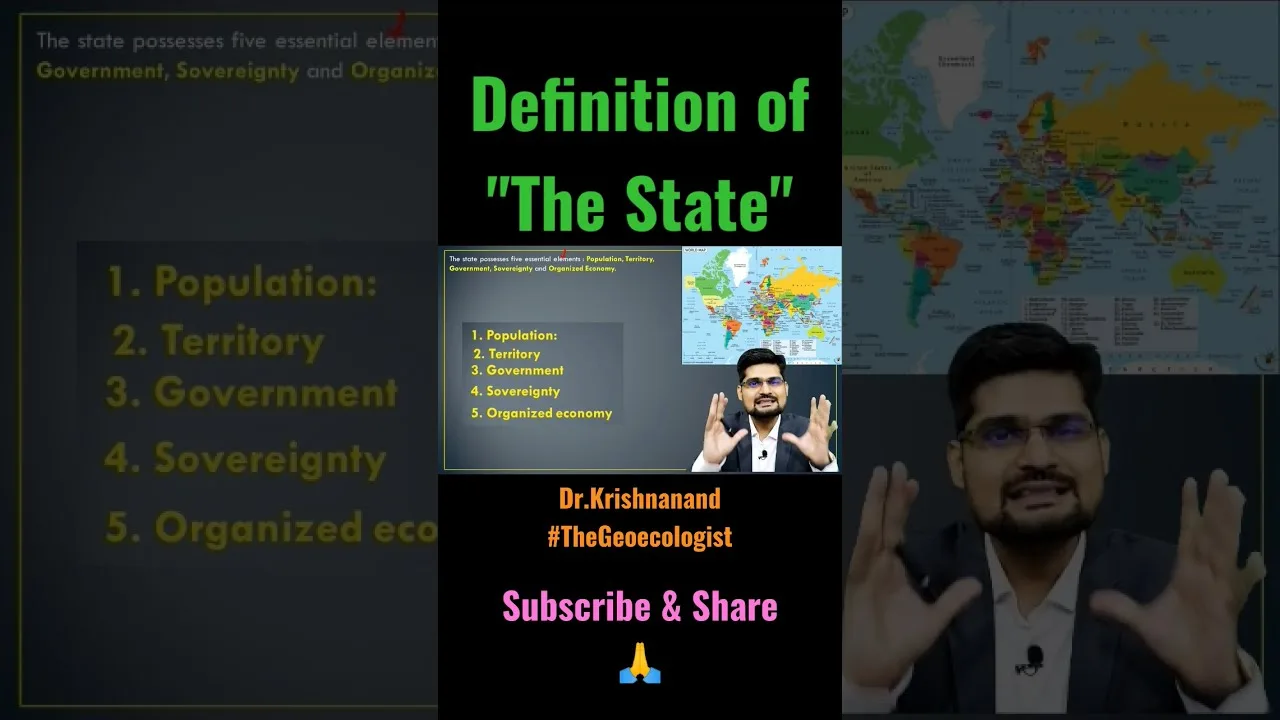
Table of Contents
- Historical Evolution of the State Concept
- From City-States to Nation-States
- The Montevideo Convention: Legal Codification
- Sovereignty: The Core Attribute
- State vs. Nation vs. Nation-State: Critical Distinctions
- Quasi-States and Contested Sovereignty
- Recognition Politics and International Law
- Succession and Continuity
- Contemporary Challenges to Statehood
- Globalization and Transnational Flows
- Climate Change and Territorial Integrity
- Non-State Actors and Hybrid Governance
- Measuring State Capacity: Indices and Indicators
- Federalism and Asymmetric Autonomy
- Future Trajectories: The State in 2050
- Potential New States
- Conclusion
The definition of a state remains one of the most fundamental concepts in political geography and international relations. A state is a politically organized body of people occupying a defined territory with a government that possesses sovereignty — the supreme authority to govern without external interference. This concept forms the bedrock of the modern international system, yet its precise boundaries continue to evolve amid globalization, secessionist movements, and supranational integration.
- Four essential criteria define statehood under international law: permanent population, defined territory, government, and capacity to enter relations with other states.
- The Montevideo Convention (1933) codified these criteria, establishing the declarative theory of statehood.
- Sovereignty distinguishes states from other political entities like nations, provinces, or autonomous regions.
- Recognition by other states remains politically significant despite the declarative theory’s legal stance.
- Contemporary challenges include quasi-states, failed states, and entities with limited recognition like Taiwan and Kosovo.
Historical Evolution of the State Concept
The modern definition of a state traces its origins to the Peace of Westphalia in 1648, which ended the Thirty Years’ War and established the principle of territorial sovereignty. Before this watershed moment, political authority in Europe was fragmented among overlapping feudal loyalties, religious hierarchies, and imperial claims. The Westphalian system introduced the revolutionary idea that each ruler exercised exclusive authority within defined borders — a concept that gradually spread worldwide through colonization and decolonization.
By the 19th century, the state had become the primary actor in international law. The Congress of Vienna (1815) and later the League of Nations Covenant (1919) reinforced state sovereignty as the organizing principle of global politics. The United Nations Charter (1945) further entrenched this framework, with Article 2(1) affirming “the sovereign equality of all its Members.” Today, 193 member states populate the UN General Assembly, each meeting the core criteria of statehood despite vast differences in size, population, wealth, and governance. – a key consideration for definition of a state.
From City-States to Nation-States
Ancient civilizations organized themselves as city-states — Athens, Sparta, Venice, and the Mayan polities exemplify this form. These entities combined urban centers with surrounding agricultural hinterlands. The medieval period saw the rise of feudal fragmentation, where sovereignty was dispersed among monarchs, nobles, and the Church. The Treaty of Westphalia catalyzed the transition toward territorial states with centralized bureaucracies, standing armies, and defined frontiers. – a key consideration for definition of a state.
The 19th-century unification of Germany and Italy demonstrated how nationalism could forge states from fragmented territories. Conversely, the dissolution of empires — Ottoman, Austro-Hungarian, Russian, and later British and French — produced dozens of new states in the 20th century. Decolonization after 1945 created the most dramatic expansion of the state system, with over 80 former colonies achieving independence by 1980. – a key consideration for definition of a state.
The Montevideo Convention: Legal Codification
The 1933 Montevideo Convention on the Rights and Duties of States provides the most widely cited definition of a state in international law. Article 1 stipulates four qualifications:
- Permanent population — A stable community of people, though no minimum number exists. Nauru (population ~12,000) and China (1.4 billion) both qualify.
- Defined territory — Clear boundaries, though disputes don’t necessarily negate statehood. Israel’s borders remain contested, yet its statehood is undisputed.
- Government — An effective administrative apparatus exercising control. Somalia’s statehood persisted despite decades without a functioning central government.
- Capacity to enter relations with other states — Independence in foreign affairs, implying sovereignty.
Article 3 famously declares: “The political existence of the state is independent of recognition by the other states.” This establishes the declarative theory — statehood arises from factual criteria, not diplomatic acknowledgment. However, the constitutive theory counters that recognition by existing states confers legal personality. In practice, both theories operate: entities meeting Montevideo criteria typically seek recognition to participate fully in international organizations. – a key consideration for definition of a state.
Sovereignty: The Core Attribute
Sovereignty distinguishes the definition of a state from subnational units. definition of a state encompasses two dimensions: internal sovereignty (supreme authority within territory) and external sovereignty (independence from outside control). Jean Bodin’s 1576 formulation — “absolute and perpetual power” — evolved through Hobbes, Locke, and Rousseau into the modern concept of popular sovereignty, where authority derives from the people rather than divine right.
Contemporary sovereignty faces pressures from multiple directions. Humanitarian intervention doctrines (Responsibility to Protect, adopted 2005) challenge non-interference norms. Supranational bodies like the European Union exercise pooled sovereignty — member states voluntarily cede authority over trade, competition law, and monetary policy. Global governance regimes (WTO, ICC, Paris Agreement) create binding obligations. Yet the state remains the primary duty-bearer under international law. – a key consideration for definition of a state.
State vs. Nation vs. Nation-State: Critical Distinctions
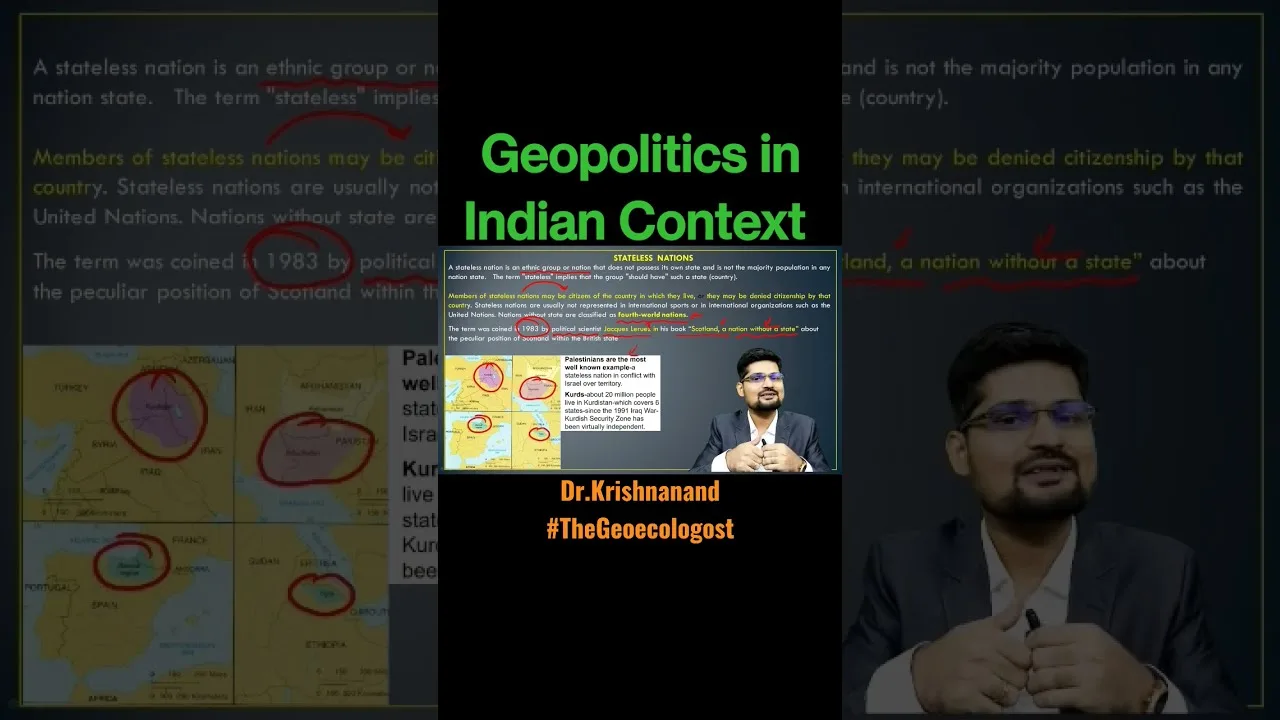
Political geography demands precision in terminology. The definition of a state refers to a legal-political entity. A nation denotes a cultural-ethnic group sharing identity markers — language, religion, history, myths of common descent. The Kurds (30-40 million across Turkey, Iraq, Iran, Syria) constitute a nation without a state. Conversely, Belgium contains two major nations (Flemish and Walloon) within one state.
A nation-state ideally aligns political boundaries with national boundaries. Japan and Iceland approximate this model — over 98% ethnic homogeneity. But most states are multinational: India recognizes 22 official languages and hundreds of ethnic groups; Nigeria encompasses 250+ ethnicities. The mismatch between state borders and national identities drives many contemporary conflicts, from Kashmir to South Sudan. – a key consideration for definition of a state.
Quasi-States and Contested Sovereignty
Robert Jackson’s concept of “quasi-states” describes entities possessing juridical statehood (UN membership, diplomatic recognition) but lacking empirical statehood (effective governance, territorial control, legitimacy). Examples include Somalia (1991-2012), Afghanistan during Taliban rule (1996-2001), and the Central African Republic during periods of state collapse. These entities satisfy the definition of a state legally but fail functionally.
Conversely, entities like Taiwan (Republic of China) meet all empirical criteria — permanent population (23 million), defined territory, effective government, independent foreign relations — but lack widespread diplomatic recognition due to PRC pressure. As of 2024, only 12 UN members recognize Taiwan. Kosovo (recognized by ~100 states), Western Sahara, and Northern Cyprus occupy similar gray zones. – a key consideration for definition of a state.
Recognition Politics and International Law
State recognition remains a political act with legal consequences. The UN Charter requires Security Council recommendation and General Assembly approval for membership — effectively a collective recognition mechanism. Palestine’s 2012 upgrade to non-member observer state status (138 votes in favor) demonstrated recognition’s symbolic and practical weight without full membership. – a key consideration for definition of a state.
Recognition can be explicit (formal declaration) or implicit (establishing diplomatic relations, signing treaties). The “Estrada Doctrine” (Mexico, 1930) advocates automatic recognition of governments meeting factual criteria, avoiding political judgments. The “Tobar Doctrine” (1907) and “Stimson Doctrine” (1932) refused recognition to governments arising from coups or aggression — though compliance remains inconsistent.
Succession and Continuity
State continuity persists despite government changes. The French Republic succeeded the monarchy; the Russian Federation succeeded the USSR. The Vienna Convention on Succession of States in Respect of Treaties (1978) governs treaty obligations during state transformation. When Czechoslovakia peacefully dissolved in 1993, both Czech Republic and Slovakia assumed predecessor treaty obligations — a model “velvet divorce.”
Yugoslavia’s violent dissolution (1991-2006) produced seven successor states, each requiring fresh UN admission. Serbia claimed continuity as the Federal Republic of Yugoslavia, but the UN rejected automatic succession, requiring new application. South Sudan’s 2011 independence followed a referendum under the 2005 Comprehensive Peace Agreement — the first successful secession in Africa since Eritrea (1993).
Contemporary Challenges to Statehood
Globalization and Transnational Flows
Economic globalization constrains state autonomy. Capital mobility limits tax policy; supply chains span jurisdictions; digital platforms operate across borders. The 2008 financial crisis demonstrated how regulatory decisions in one state cascade globally. States respond through regulatory cooperation (Basel Accords, OECD BEPS project) but surrender unilateral control.
Climate Change and Territorial Integrity
Rising sea levels threaten the territorial criterion for low-lying states. Kiribati, Tuvalu, and the Marshall Islands face existential territorial loss. The International Law Commission’s 2023 draft articles on “Sea-level rise in relation to international law” explore whether statehood persists if territory becomes uninhabitable. Some Pacific nations negotiate “migration with dignity” agreements — New Zealand’s Pacific Access Category visa offers a pathway.
Non-State Actors and Hybrid Governance
Multinational corporations, terrorist organizations, and transnational advocacy networks exercise governance functions. The Islamic State (2014-2019) controlled territory, collected taxes, administered justice, and issued identity documents — mimicking state functions without recognition. Private military contractors, tech giants governing digital spaces, and humanitarian organizations delivering services in conflict zones blur the state’s monopoly on governance.
Measuring State Capacity: Indices and Indicators
Political geographers employ quantitative tools to assess empirical statehood. The Fragile States Index (Fund for Peace, annual since 2005) evaluates 12 cohesion, economic, political, and social indicators. Yemen, Somalia, and South Sudan consistently rank most fragile. The World Bank’s Worldwide Governance Indicators measure voice/accountability, political stability, government effectiveness, regulatory quality, rule of law, and corruption control across 200+ entities.
The Varieties of Democracy (V-Dem) project distinguishes electoral, liberal, participatory, deliberative, and egalitarian democracy dimensions. Their 2024 report classifies 91 countries as democracies and 98 as autocracies — the first time autocracies outnumbered democracies since 1998. These metrics reveal that meeting the definition of a state legally doesn’t guarantee effective governance.
Federalism and Asymmetric Autonomy
Federal states (USA, Germany, Brazil, India, Nigeria) distribute sovereignty between central and regional governments. Asymmetric federalism grants differentiated powers — Quebec’s distinct language laws, Scotland’s separate legal system, Catalonia’s fiscal autonomy demands. Spain’s “state of autonomies” and Ethiopia’s ethnic federalism illustrate how states manage multinational populations without secession.
Future Trajectories: The State in 2050
Scholars debate the state’s trajectory. “Retreat of the state” theorists (Strange, Ohmae) argue globalization erodes sovereignty. “Transformation” scholars (Held, McGrew) see states adapting through networked governance. “Resilience” proponents (Krasner) emphasize states’ enduring monopoly on legitimate violence and taxation. The COVID-19 pandemic demonstrated both dimensions: states closed borders and mandated vaccines (sovereign power) while depending on WHO coordination and global vaccine supply chains (interdependence).
Emerging technologies reshape state capacity. Digital identity systems (India’s Aadhaar, Estonia’s e-Residency) enhance administrative reach. Surveillance capabilities expand internal control. Cyber warfare blurs attack/defense and state/non-state attribution. Central bank digital currencies could redefine monetary sovereignty. Space governance — the 1967 Outer Space Treaty prohibits territorial claims, but lunar resource extraction may create new jurisdictional questions.
Potential New States
Several territories aspire to statehood. Bougainville’s 2019 independence referendum (97.7% in favor) awaits PNG parliamentary ratification. New Caledonia’s referendums (2018, 2020, 2021) rejected independence but the process continues. Scotland’s independence movement persists post-2014 referendum. Catalonia’s unilateral 2017 declaration failed but sentiment endures. Each case tests the definition of a state against self-determination claims.
Conclusion
The definition of a state endures as the foundational unit of international order despite profound transformations since Westphalia. The Montevideo criteria provide legal clarity, yet empirical statehood varies dramatically. Sovereignty remains the defining attribute — simultaneously absolute in principle and constrained in practice. As climate change, technological disruption, and identity politics reshape the global landscape, the state adapts rather than disappears. Understanding its definition, criteria, and contested boundaries remains essential for political geographers, international lawyers, and anyone seeking to comprehend how human populations organize political authority across the planet’s surface.
Frequently Asked Questions
The four criteria are: (1) a permanent population, (2) a defined territory, (3) a government, and (4) the capacity to enter into relations with other states. These were codified in the 1933 Montevideo Convention on the Rights and Duties of States.
A state is a legal-political entity with sovereignty over a territory and population. A nation is a cultural-ethnic group sharing identity markers like language, religion, and history. A nation-state ideally aligns both, but most states are multinational.
Under the declarative theory (Montevideo Convention Article 3), statehood exists independently of recognition. However, the constitutive theory holds that recognition by other states confers legal personality. In practice, recognition enables diplomatic relations and UN membership.