Blog
AI Geopolitics: Why Artificial Intelligence Is Becoming a Geopolitical Weapon


Table of Contents
- The Strategic Logic of AI Geopolitics
- Compute as the New Oil
- Data Sovereignty and the Fragmentation of the Global Internet
- Military Applications and Strategic Stability
- Autonomous Weapons and the Governance Gap
- Economic Statecraft and Technology Alliances
- Talent Wars and Knowledge Security
- Global Governance: Fragmented, Nascent, and Contested
- Implications for the Global South
- Future Trajectories: Scenarios for 2030
- Scenario 1: Managed Bipolar Competition
- Scenario 2: Multipolar Diffusion with Weak Governance
- Scenario 3: Breakthrough Cooperation
- Conclusion: Navigating the Age of AI Geopolitics
AI geopolitics is rapidly reshaping the global balance of power as nations recognize that artificial intelligence is no longer merely a technological innovation but a strategic asset that determines economic dominance, military superiority, and diplomatic leverage. The competition has expanded far beyond Silicon Valley boardrooms into the halls of government ministries, semiconductor fabrication plants, and international standards bodies. Computing power, proprietary data, advanced semiconductors, and the infrastructure required to train frontier models have become the new currency of great-power rivalry. In this comprehensive analysis, we explore why AI geopolitics has emerged as the defining strategic contest of the 21st century and what AI geopolitics means for global stability.
- AI geopolitics has transformed artificial intelligence from a commercial technology into a core strategic asset for nation-states.
- Control over semiconductor supply chains, particularly advanced logic chips below 7nm, determines which countries can train and deploy frontier models.
- The U.S.–China technology rivalry drives export controls, investment screening, and competing standards initiatives across the Indo-Pacific.
- Data sovereignty laws and localized compute infrastructure are fragmenting the global internet into rival digital blocs.
- International governance efforts — from the OECD AI Principles to the UN Global Digital Compact — struggle to keep pace with capability advances.
The Strategic Logic of AI Geopolitics
At its core, AI geopolitics reflects a simple calculus: the nation that leads in artificial intelligence gains disproportionate advantages across every domain of national power. The U.S. National Security Commission on Artificial Intelligence (NSCAI), chaired by former Google CEO Eric Schmidt and former Deputy Secretary of Defense Robert Work, concluded in its 2021 final report that “AI will be the most powerful tool in generations for benefiting humanity” but also warned that “the United States is not prepared to defend or compete in the AI era.” This bipartisan assessment catalyzed the CHIPS and Science Act, which allocated $52.7 billion to domestic semiconductor manufacturing and research.
China’s response has been equally systematic. The 14th Five-Year Plan (2021–2025) identifies AI as a “strategic emerging industry” and calls for breakthroughs in core technologies including high-end chips, open-source frameworks, and large-scale model training. Beijing’s “New Generation Artificial Intelligence Development Plan” (2017) set explicit milestones: catching up by 2020, achieving major breakthroughs by 2025, and becoming the world’s primary AI innovation center by 2030. The State Council document frames AI leadership as essential to “national security” and “social governance.” – a key consideration for AI geopolitics.
Compute as the New Oil
If data is the new oil, then compute — the specialized hardware required to train and run large models — is the refinery. The AI geopolitics of compute centers on a handful of choke points. ASML Holding NV, a Dutch company, holds a near-monopoly on extreme ultraviolet (EUV) lithography machines required to produce chips at 7nm, 5nm, and 3nm process nodes. Taiwan Semiconductor Manufacturing Company (TSMC) fabricates approximately 90% of the world’s advanced logic chips, including the GPUs and accelerators from NVIDIA, AMD, and custom designs from Google, Amazon, and Microsoft.
This concentration creates acute vulnerability. In October 2022, the U.S. Bureau of Industry and Security (BIS) imposed sweeping export controls restricting China’s access to advanced computing chips, semiconductor manufacturing equipment, and U.S. persons supporting Chinese fabs. The rules were updated in October 2023 to close loopholes and extend controls to additional countries. Japan and the Netherlands subsequently aligned their export regimes, creating a coordinated chokehold on China’s ability to indigenously produce or acquire cutting-edge compute.
Data Sovereignty and the Fragmentation of the Global Internet
Beyond hardware, AI geopolitics is driving the balkanization of data flows. The European Union’s General Data Protection Regulation (GDPR), China’s Personal Information Protection Law (PIPL) and Data Security Law, India’s Digital Personal Data Protection Act (2023), and similar frameworks in Brazil, Saudi Arabia, and Indonesia mandate data localization and restrict cross-border transfers. For AI developers, this means training data must often be sourced, stored, and processed within jurisdictional boundaries — increasing costs and reducing the scale of datasets available for model training.
The U.S. has pursued a different approach through the Executive Order on Safe, Secure, and Trustworthy AI (October 2023), which invokes the Defense Production Act to require reporting on large-scale model training runs and compute acquisition. The order also directs federal agencies to develop standards for AI safety, watermarking of synthetic content, and red-teaming protocols — effectively setting domestic regulatory benchmarks that may become de facto global standards through the “Brussels effect” of market power.
Military Applications and Strategic Stability
The most consequential dimension of AI geopolitics lies in military integration. The U.S. Department of Defense’s Joint All-Domain Command and Control (JADC2) initiative relies on AI to fuse sensor data across land, sea, air, space, and cyber domains in real time. Project Maven, launched in 2017, pioneered computer vision for drone footage analysis; its successor initiatives aim to automate target recognition, logistics optimization, and cyber defense.
China’s People’s Liberation Army (PLA) pursues “intelligentized warfare” (智能化战争), a concept formalized in the 2019 defense white paper “China’s National Defense in the New Era.” The PLA’s Strategic Support Force integrates space, cyber, electronic warfare, and psychological operations with AI-enabled decision support. Russian military doctrine similarly emphasizes AI for hypersonic missile guidance, electronic warfare automation, and disinformation at scale — capabilities demonstrated in the Ukraine conflict.
Autonomous Weapons and the Governance Gap
Lethal autonomous weapons systems (LAWS) represent the sharpest edge of AI geopolitics. The United Nations Convention on Certain Conventional Weapons (CCW) has hosted governmental experts meetings since 2017, but consensus remains elusive. The U.S., Russia, Israel, and others oppose a legally binding ban, arguing existing international humanitarian law suffices. China supports a ban on *use* but not *development* — a distinction that preserves research freedom. Meanwhile, systems like Turkey’s Kargu-2 loitering munition (reportedly used in Libya in 2020 per a UN Panel of Experts report) and Israel’s Harpy/Harop systems operationalize autonomy in terminal attack phases.
The strategic stability risks are profound. AI-enabled intelligence, surveillance, and reconnaissance (ISR) compresses decision timelines for nuclear command and control. Deepfake generation and automated disinformation campaigns erode shared epistemic foundations for crisis communication. A 2023 RAND Corporation study warned that “AI could inadvertently increase the risk of nuclear war” by creating false positives in early-warning systems or enabling adversarial manipulation of sensor data.
Economic Statecraft and Technology Alliances

AI geopolitics has spawned new minilateral groupings that blend technology cooperation with security alignment. The Quad (U.S., Japan, India, Australia) established a Critical and Emerging Technology Working Group in 2021, focusing on semiconductor supply chains, 5G/6G, biotechnology, and AI standards. AUKUS (Australia, UK, U.S.) Pillar II explicitly coordinates on AI, quantum, hypersonics, and electronic warfare. The U.S.–EU Trade and Technology Council (TTC) seeks regulatory alignment on AI risk classification, though the EU AI Act’s extraterritorial scope creates friction.
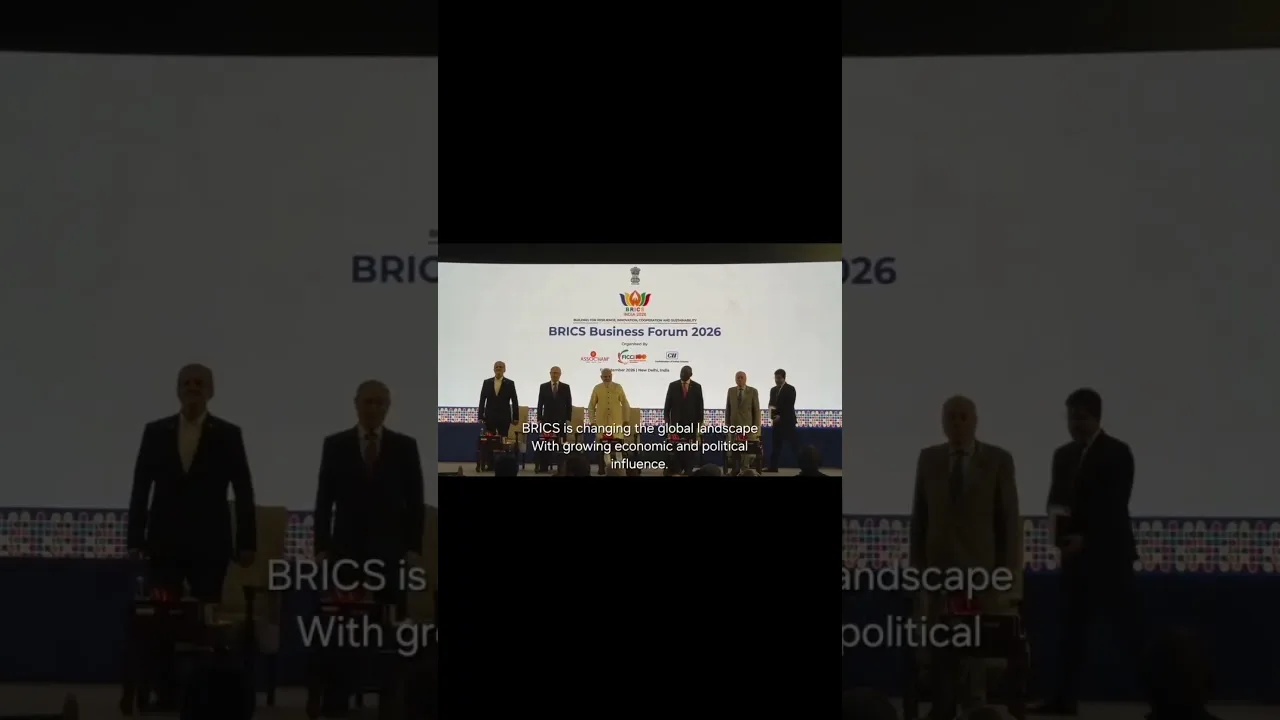
China counters with the Global AI Governance Initiative (announced October 2023), the BRICS+ expansion (adding Iran, UAE, Egypt, Ethiopia), and the Digital Silk Road component of the Belt and Road Initiative — exporting surveillance infrastructure, smart city platforms, and AI training partnerships to the Global South. The competition for standards-setting in bodies like ISO/IEC JTC 1/SC 42 (AI), ITU-T, and IEEE reflects a deeper contest: whose values — openness, transparency, human rights vs. sovereignty, stability, state control — embed in the technical architecture of the AI era.
Talent Wars and Knowledge Security
Human capital is the ultimate scarce resource in AI geopolitics. The U.S. leads in attracting top-tier researchers: a 2023 MacroPolo study found 57% of elite AI researchers (top 20% by citation count) work in the U.S., while China produces the largest share of undergraduate STEM graduates. However, visa restrictions, research security screening (e.g., NIH and NSF disclosure requirements, China Initiative legacy effects), and rising nationalism complicate talent flows.
Allied nations are tightening knowledge security. The UK’s National Security and Investment Act (2021), Germany’s tightened foreign investment screening, and the EU’s Foreign Subsidies Regulation target sensitive AI acquisitions. Universities implement “dual-use” research vetting; conferences adopt ethics review for papers with potential military applications. These measures aim to prevent unwanted technology transfer but risk slowing open scientific exchange that has historically driven AI progress.
Global Governance: Fragmented, Nascent, and Contested
Efforts to govern AI geopolitics internationally remain fragmented. The OECD AI Principles (2019, updated 2024) — adopted by 46 countries — provide a voluntary baseline for trustworthy AI. The G7 Hiroshima Process (2023) produced a voluntary Code of Conduct for advanced AI developers. The UK AI Safety Summit (November 2023) yielded the Bletchley Declaration, signed by 28 countries and the EU, acknowledging catastrophic risks from frontier models. The UN Secretary-General’s High-Level Advisory Body on AI (2023) recommended a global AI governance framework, leading toward a Global Digital Compact at the 2024 Summit of the Future.
Yet binding treaties are absent. The EU AI Act (effective August 2024) is the world’s first comprehensive horizontal AI regulation, classifying systems by risk tier and banning unacceptable practices (social scoring, real-time biometric identification in public spaces). Its extraterritorial reach means any provider serving the EU market must comply — a regulatory projection of power that shapes global product design. China’s algorithmic recommendation regulations (2022), deep synthesis rules (2023), and interim generative AI measures (2023) establish a state-centric model prioritizing content security and socialist core values.
Implications for the Global South
Developing nations face a dual squeeze in AI geopolitics. On one hand, they lack the compute, capital, and talent to train frontier models, risking permanent dependency on imported AI services — a new form of “digital colonialism.” On the other, they are courted by both blocs for data, markets, and diplomatic alignment. India’s “AI for All” strategy, Brazil’s AI Bill (PL 2338/2023), and the African Union’s Continental AI Strategy (2024) seek sovereign capacity through public compute infrastructure, open-source model adaptation, and regional data governance.
The UN Development Programme warns that without inclusive governance, AI could widen the “digital development divide.” Initiatives like the AI for Good Global Summit (ITU), the Global Partnership on AI (GPAI, now integrated with OECD), and the International Telecommunication Union’s AI standards work attempt to channel AI toward Sustainable Development Goals — climate modeling, healthcare access, agricultural optimization — but funding and political attention remain skewed toward security applications.
Future Trajectories: Scenarios for 2030
Three broad scenarios characterize the evolution of AI geopolitics toward 2030:
Scenario 1: Managed Bipolar Competition
The U.S. and China maintain separate but interacting AI ecosystems, with guarded cooperation on narrow safety issues (nuclear risk reduction, pandemic surveillance) via Track 1.5 dialogues. Export controls stabilize at a “high fence, small yard” equilibrium. Allies align with Washington; Belt and Road partners align with Beijing. Standards bodies fragment into competing regimes. Risk of accidental escalation persists but is managed through crisis communication channels.
Scenario 2: Multipolar Diffusion with Weak Governance
Open-source models (Llama, Mistral, Qwen, Yi families) and falling compute costs democratize capability. Dozens of states and non-state actors deploy powerful AI for cyber offense, disinformation, and autonomous weapons. International governance fails to keep pace; norm entrepreneurs (EU, Singapore, Canada) pursue “coalitions of the willing” on specific issues (election integrity, child safety, bio-risk). Strategic stability degrades as attribution becomes harder and response times shrink.
Scenario 3: Breakthrough Cooperation
A catalytic event — a major AI accident, a near-miss nuclear incident traced to algorithmic error, or a global pandemic where AI-enabled drug discovery proves decisive — triggers a “CERN for AI” moment. Major powers negotiate a binding framework for frontier model registration, compute transparency, and shared safety testing, possibly under UN auspices with verification mechanisms. The Global Digital Compact evolves into a treaty-like instrument with dispute resolution.
Conclusion: Navigating the Age of AI Geopolitics
AI geopolitics is not a temporary phase but a structural feature of the emerging international order. The technologies at stake — foundation models, neuromorphic chips, quantum-enhanced AI, brain-computer interfaces — will redefine the material basis of power. For policymakers, the imperative is threefold: invest in sovereign capacity where feasible, build resilient alliances for supply-chain security and talent retention, and engage seriously in governance innovation to prevent catastrophic misuse.
For businesses, the era of frictionless globalization in AI is over. Compliance with divergent regulatory regimes, supply-chain due diligence, and geopolitical risk modeling are now core competencies. For researchers and civil society, the challenge is preserving spaces for open, ethical inquiry while acknowledging dual-use realities. And for citizens worldwide, the stakes are existential: whether AI becomes a tool of empowerment and shared prosperity or an instrument of coercion and control will be decided in the crucible of AI geopolitics over the coming decade.
The contest is underway. The choices made today — in export control lists, in standards committees, in university labs, in parliamentary debates — will echo through the 21st century. Understanding AI geopolitics is no longer optional for strategists; AI geopolitics is the prerequisite for any coherent vision of the future.
Frequently Asked Questions
AI geopolitics refers to the strategic competition among nation-states for dominance in artificial intelligence capabilities — including compute infrastructure, advanced semiconductors, talent, data, and regulatory standards — as a determinant of economic, military, and diplomatic power in the 21st century.
Advanced semiconductors (GPUs, TPUs, accelerators) are the physical substrate for training and deploying frontier AI models. The supply chain is highly concentrated — ASML for EUV lithography, TSMC for fabrication — creating choke points that states exploit through export controls and investment screening.
AI-enabled ISR and decision-support systems compress decision timelines for nuclear command and control, increase risks of false positives in early warning, and enable adversarial manipulation of sensor data — raising the danger of inadvertent escalation during crises.