Blog
Tri cellular atmospheric circulation model: Simplified Climatology (2025 Edition) Review for UPSC Aspirants

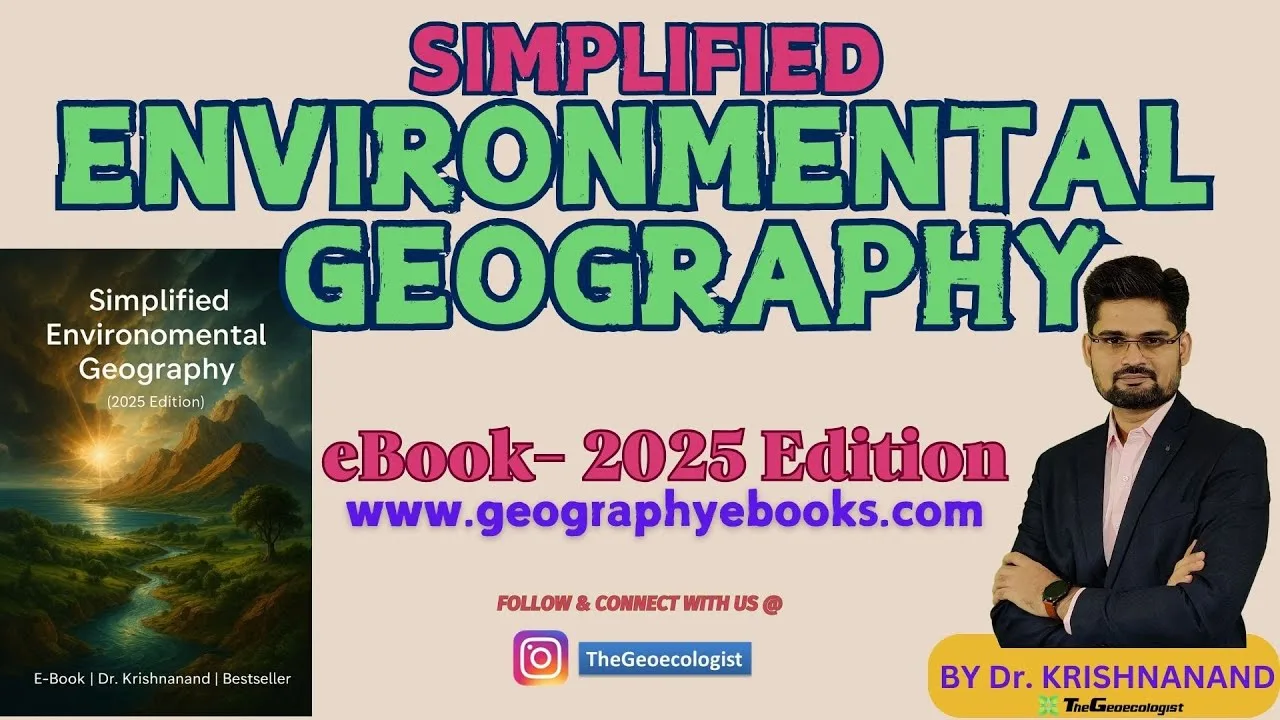
aspirants and geography students often struggle with the Tri cellular atmospheric circulation model, a cornerstone of climatology that explains how heat drives global wind patterns. Mastering this model is essential for cracking the UPSC CSE exam and university geography courses. In this article, we break down the challenges, evaluate effective study solutions, and highlight why Dr. Krishnanand’s Simplified Climatology (2025 Edition) stands out as the go‑to e‑book for clear, exam‑focused explanations.
- Concise, point‑wise descriptions of the Tri cellular atmospheric circulation model with diagrams and maps.
- Aligned with the CBCS geography syllabus and UPSC exam patterns.
- Updated monsoon insights and fully revised climate science for 2025.
- Downloadable e‑book format for flexible on‑the‑go study.
- Packed with visual aids to make complex atmospheric processes easy to grasp.
Tri cellular atmospheric circulation model: Core Concepts for Exam Success
The Tri cellular atmospheric circulation model divides the Earth into three convection cells – Hadley, Ferrel, and Polar – each responsible for distinct wind and precipitation patterns. Understanding the mechanics of these cells, their interaction with solar insolation, and the role of temperature gradients is critical for answering UPSC questions on monsoons, cyclones, and regional climates. The model also explains why tropical regions experience consistent trade winds while mid‑latitude zones have westerlies and variable weather.
Because the Tri cellular atmospheric circulation model is frequently tested in geography sections of competitive exams, students need a resource that breaks down each cell’s dynamics, provides visual maps, and links theory to real‑world phenomena like the Indian monsoon. Simplified Climatology (2025 Edition) delivers exactly that – clear explanations, highlighted key points, and high‑quality diagrams that demystify the model.
Why Traditional Textbooks Often Fall Short
Conventional geography textbooks can be dense, overloaded with technical jargon, and lack the focused practice questions needed for UPSC preparation. Many students spend hours parsing paragraphs about atmospheric pressure without gaining a solid grasp of how the Tri cellular atmospheric circulation model operates in practice. Moreover, older editions may not reflect the latest updates in climate science, leaving aspirants unprepared for new questions on recent climate events.
Another common problem is the absence of integrated visual aids. Without clear maps and diagrams, visualizing the three cells, their boundaries, and seasonal shifts becomes a struggle, directly impacting a student’s ability to answer diagram‑based questions in the exam.
How to Evaluate an Effective Solution for Learning the Model
When choosing a study material, consider these evaluation criteria:
- Relevance: Does the content cover the Tri cellular atmospheric circulation model in depth and align with the CBCS syllabus?
- Clarity: Are concepts explained in simple, point‑wise language with minimal jargon?
- Visual Support: Does the book include diagrams, maps, and images that illustrate the Hadley, Ferrel, and Polar cells?
- Exam Orientation: Are there practice questions, tables, and summary boxes that aid quick revision?
- Currency: Has the material been updated to reflect the latest climate research and monsoon patterns?
Dr. Krishnanand’s Simplified Climatology (2025 Edition) ticks all these boxes, making it a reliable choice for serious aspirants.
Deep Dive into Simplified Climatology (2025 Edition)
This e‑book is structured to guide readers from fundamental concepts to advanced applications. Key chapters relevant to the Tri cellular atmospheric circulation model include:
- Chapter 1: Introduction to Climatology – lays the groundwork, explaining why atmospheric circulation matters for climate prediction.
- Chapter 2: Atmosphere: Structure and Composition – details the layers that create the environment for the three cells.
- Chapter 3: Solar Insolation – clarifies how solar energy fuels convection in each cell.
- Chapter 4: Heat Budget – explores energy balance that drives the Hadley updraft and polar sink.
- Chapter 5: Latitudinal Heat Balance – shows how heat redistribution shapes the boundaries of the cells.
- Chapter 6: Temperature Distribution – links temperature gradients to wind patterns within the Tri cellular atmospheric circulation model.
- Chapter 7: Lapse Rate – examines temperature changes with altitude, influencing atmospheric stability in each cell.
- Chapter 8: Adiabatic Processes – explains cooling and warming of air parcels as they move vertically, a key mechanism in the Hadley and Polar cells.
Each chapter ends with highlighted summaries and concise diagrams that make revisiting the Tri cellular atmospheric circulation model a breeze. The e‑book’s point‑wise format ensures that UPSC aspirants can quickly revise critical concepts before the exam.
Practical Tips for Using the E‑book in Your UPSC Prep
Begin by reading Chapter 1 to refresh your understanding of climatology terminology. Then, focus on the chapters that directly discuss atmospheric circulation. Use the diagrams to draw the three cells on paper, labeling the Hadley, Ferrel, and Polar cells, and note the typical wind directions and pressure zones.
Because the book is digital, you can zoom into maps, save key diagrams for flashcards, and search for specific terms like “Tri cellular atmospheric circulation model” instantly. Pair the reading with practice questions from past UPSC papers to test your grasp of how the model applies to monsoon forecasting and climate variability.
Finally, schedule short revision sessions each day. The e‑book’s concise style allows you to cover the entire Tri cellular atmospheric circulation model content within a week of focused study.
Comparing Simplified Climatology with Free Online Resources
While platforms like Wikipedia (Atmospheric circulation) and NASA’s climate pages (NASA climate) provide valuable background, they often lack the structured syllabus alignment and exam‑specific focus needed for UPSC success. Free resources can be scattered, requiring you to piece together information about the Tri cellular atmospheric circulation model from multiple sites.
In contrast, Simplified Climatology (2025 Edition) offers a single, coherent narrative backed by expert explanations, ensuring you don’t miss any critical details. The e‑book’s price of 249 makes it a cost‑effective alternative to buying multiple guides or subscribing to costly coaching modules.
Frequently Asked Questions
Q1: Is Simplified Climatology (2025 Edition) suitable for beginners new to geography?
A1: Yes. The book starts with foundational concepts and uses simple language, making it ideal for undergraduates and UPSC aspirants who are new to climatology.
Q2: Does the e‑book cover the Tri cellular atmospheric circulation model in enough depth for UPSC?
A2: Absolutely. The chapters on heat budget, temperature distribution, lapse rate, and adiabatic processes provide comprehensive coverage of the Tri cellular atmospheric circulation model, complete with diagrams and exam‑oriented summaries.
Q3: Can I access the e‑book on mobile devices for on‑the‑go revision?
A3: Yes. The e‑book is delivered in a downloadable format compatible with smartphones, tablets, and laptops, allowing you to study the Tri cellular atmospheric circulation model anytime, anywhere.
By following this structured approach and leveraging the clear explanations in Simplified Climatology (2025 Edition), you’ll build a solid foundation in atmospheric circulation and boost your confidence for the UPSC geography section.
Remember, consistent revision of the Tri cellular atmospheric circulation model, combined with strategic use of visual aids, is the key to mastering this topic and achieving a top rank in the exam.
Our Recommendation
📖 Part of our complete guide: Evolution of Geographical Thought: A Comprehensive Guide for UPSC Aspirants and Geography Enthusiasts
Frequently Asked Questions
Is Simplified Climatology (2025 Edition) suitable for beginners new to geography?
Yes. The book starts with foundational concepts and uses simple language, making it ideal for undergraduates and UPSC aspirants who are new to climatology.
Does the e‑book cover the Tri cellular atmospheric circulation model in enough depth for UPSC?
Absolutely. The chapters on heat budget, temperature distribution, lapse rate, and adiabatic processes provide comprehensive coverage of the Tri cellular atmospheric circulation model, complete with diagrams and exam‑oriented summaries.
Can I access the e‑book on mobile devices for on‑the‑go revision?
Yes. The e‑book is delivered in a downloadable format compatible with smartphones, tablets, and laptops, allowing you to study the Tri cellular atmospheric circulation model anytime, anywhere.