Blog
Economic Geography UPSC: E-book Release Guide

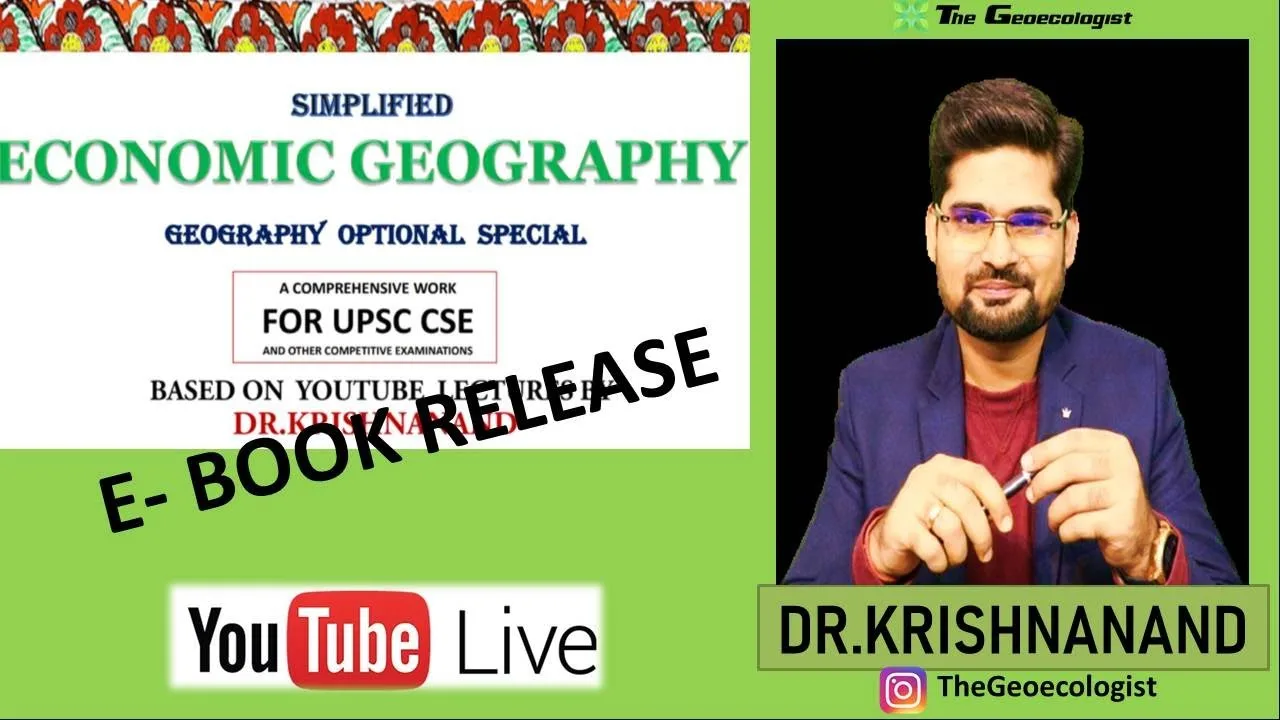
Table of Contents
Economic Geography UPSC aspirants now have a comprehensive e‑book that simplifies complex topics and boosts exam readiness. Economic Geography UPSC explores the new release, its features, and why it stands out among Geography optional resources. For a solid foundation, refer to the detailed article on Economic geography on Wikipedia, and official notifications and syllabus are available on the UPSC official website.
- Instant access to a fully searchable PDF that covers all UPSC Economic Geography topics.
- Written by Dr. Krishnanand, a renowned teacher with 20+ years of UPSC coaching experience.
- Contains over 800 pages of concise notes, maps, and practice questions.
- Compatible with mobiles, tablets, and desktops for on‑the‑go learning.
- Regular updates aligned with the latest UPSC syllabus and trend analysis.
Understanding Economic Geography for UPSC
Economic Geography is a core segment of the UPSC Geography optional syllabus. It examines the spatial dimensions of production, distribution, and consumption of resources, and it directly influences policy making, regional development, and global trade patterns. UPSC candidates need not only theoretical knowledge but also the ability to apply concepts to current affairs, making Economic Geography UPSC both challenging and rewarding. Mastering Economic Geography UPSC topics can give aspirants a decisive edge in the examination.
Why This Economic Geography UPSC E‑book is a Game‑Changer
The newly launched Simplified Economic Geography e‑book by Dr. Krishnanand is specifically designed to address the pain points of UPSC candidates. It distills massive volumes of academic content into a reader‑friendly format that emphasizes high‑yield areas. The e‑book’s unique selling points include:
- Clear, diagrammatic representations of economic activities across continents.
- Chapter‑wise focus on industrial geography, agricultural patterns, resource distribution, and trade routes.
- Integrated case studies that link theory with real‑world examples such as the rise of the Asian Tigers or the impact of NAFTA on North American economies.
- Extensive practice questions with detailed solutions, mirroring the difficulty level of UPSC’s previous years’ papers.
By consolidating these elements, the Economic Geography UPSC e‑book becomes an indispensable companion for any serious aspirant.
Author Credentials
Dr. Krishnanand holds a Ph.D. in Economic Geography from a premier Indian university and has been teaching UPSC Geography optional for over two decades. His publications have been cited in numerous coaching manuals and his lecture series are widely watched on platforms like YouTube. The author’s deep insight into the UPSC exam pattern ensures that the e‑book aligns perfectly with the latest syllabus.
Content Structure
The book is organized into 15 modules, each covering a specific sub‑topic of Economic Geography. Every module begins with key concepts, followed by illustrative maps, tables, and flowcharts. At the end of each module, you’ll find:
- 5–7 practice questions to test comprehension.
- A quick‑reference summary sheet for rapid revision.
- Links to additional reading material, including journal articles and government reports.
This systematic approach ensures that UPSC candidates can track their progress chapter by chapter, identifying strengths and areas needing improvement.
How This E‑book Transforms Your Preparation
Traditional textbooks often overwhelm students with dense academic language. The Simplified Economic Geography e‑book flips this script by presenting information in bite‑sized, high‑impact paragraphs. The digital format also enables:
- Instant search functionality to locate specific topics within seconds.
- Highlight and annotation features for personalized learning.
- Cross‑references to related chapters, fostering a holistic understanding of Economic Geography UPSC.
Moreover, the e‑book is regularly updated, so aspirants always have access to the most recent data on global economic shifts, which are frequently featured in UPSC mains questions.
Comparison with Traditional Study Materials
While conventional books are static, the e‑book offers dynamic content that can be adapted to the evolving UPSC syllabus. Below is a quick comparison:
| Aspect | Traditional Books | Economic Geography UPSC E‑book |
|---|---|---|
| Update Frequency | Yearly or longer | Quarterly updates |
| Searchability | Manual index | Built‑in search |
| Portability | Heavy paper volume | Lightweight on any device |
| Interactive Elements | Static diagrams | Animated maps & quizzes |
The e‑book’s advantages make it a compelling choice for modern UPSC candidates who value flexibility and up‑to‑date information.
Study Tips and Best Practices
Even the best resources require strategic usage. Here are some proven tips for leveraging the Economic Geography UPSC e‑book:
- Start with the Summary Sheets. Skim each module’s summary to create a mental framework before deep diving.
- Use Active Reading. Highlight key terms, draw marginal notes, and rephrase concepts in your own words.
- Integrate Current Affairs. After reading a chapter, scan recent news articles on the topics discussed. This habit aligns your knowledge with UPSC’s emphasis on contemporary issues.
- Practice Under Timed Conditions. The e‑book’s practice questions can be used in mock tests to simulate exam pressure.
- Review Regularly. Set a weekly revision schedule to revisit previously covered modules, reinforcing retention.
By following these practices, aspirants can maximize the utility of the e‑book and improve their chances of cracking the UPSC Geography optional paper.
External Resources and Further Reading
While the e‑book is comprehensive, broadening your perspective with additional sources is always beneficial. For a deeper dive, explore the extensive coverage on Economic geography on Wikipedia, which provides global perspectives and historical context. The UPSC official website offers the latest syllabus updates, notification circulars, and previous year question papers, all of which are essential for targeted preparation.
Conclusion
The launch of Dr. Krishnanand’s Simplified Economic Geography e‑book marks a significant milestone for Economic Geography UPSC preparation. Its blend of concise content, interactive features, and regular updates makes it a powerful tool for aspirants seeking to master this optional subject. By integrating the e‑book into a disciplined study routine, candidates can boost their confidence, improve answer quality, and ultimately increase their probability of success in the UPSC examinations.
Ready to elevate your Geography optional preparation? Access the e‑book now at https://mithilacraft.com/product/simplified-economic-geography-e-book-by-dr-krishnanand and start your journey toward UPSC excellence today.
Frequently Asked Questions
The e‑book covers all 15 modules of the UPSC Geography optional syllabus, including industrial geography, agricultural systems, resource distribution, trade routes, and regional development patterns.
Yes, the PDF is fully compatible with smartphones, tablets, and computers, allowing on‑the‑go access and easy annotation.
The content is updated quarterly to reflect the latest UPSC syllabus changes and current economic trends, ensuring your preparation remains current.