Blog
Nature Scope Human Geography: Complete UPSC Guide

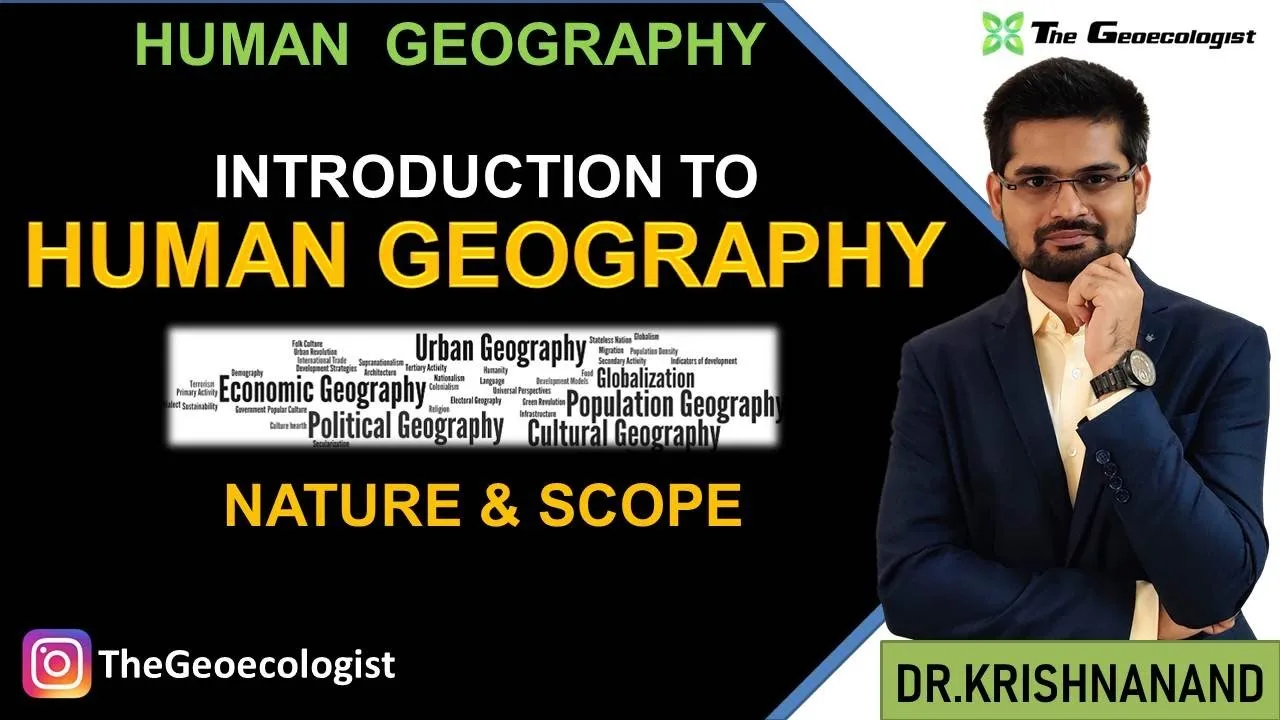
Table of Contents
- Defining Nature Scope Human Geography: Core Concepts
- Historical Evolution of the Discipline
- Major Approaches in Nature Scope Human Geography
- 1. Determinism
- 2. Possibilism
- 3. Neo-Determinism (Stop-and-Go Determinism)
- 4. Behavioural and Humanistic Approaches
- Scope and Sub-Fields of Human Geography
- Population Geography
- Settlement Geography
- Economic Geography
- Social and Cultural Geography
- Political Geography
- Contemporary Relevance and UPSC Examination Trends
- Answer Writing Strategy for UPSC
- Key Thinkers and Their Contributions: A Quick Reference
- Integrating Nature Scope Human Geography with General Studies
- Recommended Resources and Study Plan
- Common Pitfalls and How to Avoid Them
- Conclusion
The Nature Scope Human Geography forms the foundational bedrock for every aspirant preparing for the UPSC Geography Optional paper. Understanding the nature and scope of human geography is not merely an academic exercise; it is a strategic imperative that frames how candidates approach the entire syllabus, from population dynamics to settlement patterns and regional planning. This comprehensive guide, drawing on the expert pedagogy of Dr. Krishnanand, founder of TheGeoecologist, deconstructs the core concepts, historical evolution, and contemporary relevance of the discipline for the Civil Services Examination.
- Nature Scope Human Geography defines the interplay between human societies and their spatial environments.
- It encompasses major approaches: Determinism, Possibilism, Neo-determinism, and Behaviouralism.
- The scope covers population, migration, settlements, economic activities, and cultural landscapes.
- Mastery of this topic is essential for UPSC Geography Optional Paper I and General Studies Paper I.
- Key thinkers include Friedrich Ratzel, Ellen Churchill Semple, Paul Vidal de la Blache, and Carl Sauer.
Defining Nature Scope Human Geography: Core Concepts
At its heart, Nature Scope Human Geography is the study of the dynamic, reciprocal relationship between human beings and the geographical space they inhabit. Unlike physical geography, which focuses on natural processes—geomorphology, climatology, oceanography—human geography investigates how societies organize themselves across space, modify environments, and create cultural landscapes. The nature and scope of human geography is inherently interdisciplinary, borrowing theories from sociology, economics, anthropology, political science, and history to explain spatial patterns of human activity.
The discipline asks fundamental questions: Why do populations cluster in specific regions? How do cultural practices diffuse across borders? What drives urbanization and rural-urban migration? How do economic systems shape regional development disparities? Answering these requires a robust grasp of the nature scope human geography framework, which UPSC examiners consistently test through both direct questions and applied case studies.
Historical Evolution of the Discipline
The evolution of Nature Scope Human Geography mirrors the intellectual history of geography itself. In the late 19th and early 20th centuries, Environmental Determinism dominated, championed by Friedrich Ratzel and his student Ellen Churchill Semple. They argued that physical environment—climate, topography, resources—rigidly determines human culture, economy, and societal trajectory. Semple’s Influences of Geographic Environment (1911) became a seminal text, asserting that “man is a product of the earth’s surface.”
By the 1920s, French geographer Paul Vidal de la Blache challenged this orthodoxy, introducing Possibilism. He contended that while the environment sets constraints, human agency—technology, culture, innovation—offers a range of possibilities. His concept of genre de vie (way of life) emphasized that societies choose how to adapt. This shift marked a pivotal moment in the nature and scope of human geography, recentering human creativity.
Mid-20th century saw Neo-determinism (or Stop-and-Go Determinism) by Griffith Taylor, a middle path acknowledging environmental limits while affirming human choice within those bounds. The 1950s–60s Quantitative Revolution brought statistical rigor, spatial modeling, and systems theory, transforming the nature scope human geography into a nomothetic science seeking universal laws. Later, Humanistic, Radical, Behavioural, and Postmodern turns critiqued quantification, emphasizing lived experience, power structures, perception, and deconstruction of grand narratives.
Major Approaches in Nature Scope Human Geography
For UPSC aspirants, mastering the four major philosophical approaches within Nature Scope Human Geography is non-negotiable. Each offers a distinct lens for interpreting human-environment interaction.
1. Determinism
Determinism posits that the physical environment is the primary, often sole, determinant of human history, culture, and societal development. Key proponents: Friedrich Ratzel (Germany), Ellen Churchill Semple (USA), Ellsworth Huntington (USA). Ratzel’s concept of Lebensraum (living space) influenced geopolitical thought, though later misappropriated. Semple’s work linked climate to civilization stages. UPSC questions often ask: “Critically examine the relevance of Determinism in contemporary human geography” or “Contrast Determinism with Possibilism.”
2. Possibilism
Possibilism argues that nature provides possibilities; humans choose among them based on culture, technology, and historical context. Vidal de la Blache (France) is the father of this school. His students—Jean Brunhes, Albert Demangeon—expanded it. The genre de vie concept illustrates how similar environments yield different cultural landscapes (e.g., pastoralism vs. intensive agriculture in Mediterranean zones). This approach widened the nature and scope of human geography to include human agency as a geographic force.
3. Neo-Determinism (Stop-and-Go Determinism)
Griffith Taylor (Australia/Canada) proposed this synthesis. He used the analogy of a traffic controller: the environment sets the route and speed limits (stops), but the driver (human) decides when to accelerate, pause, or turn (go). This approach acknowledges ecological constraints—carrying capacity, resource limits—while preserving human decision-making. It resonates strongly with modern sustainability discourse and the nature scope human geography focus on sustainable development.
4. Behavioural and Humanistic Approaches
Emerging in the 1970s, Behavioural geography (Golledge, Cox) studies cognitive maps, perception, and decision-making processes behind spatial behavior. Humanistic geography (Yi-Fu Tuan, Anne Buttimer) explores place attachment, topophilia, and lived experience. These approaches enriched the nature and scope of human geography by incorporating subjectivity, meaning, and agency—critical for understanding migration decisions, urban neighborhood dynamics, and cultural landscapes.
Scope and Sub-Fields of Human Geography
The Nature Scope Human Geography is vast, traditionally divided into systematic (thematic) and regional branches. For UPSC Geography Optional, the systematic sub-fields are paramount.
Population Geography
Population geography examines spatial distribution, density, growth, composition (age, sex, literacy), and migration. Key models: Demographic Transition Model (Notestein, 1945), Malthusian vs. Boserupian theories, Zelinsky’s Mobility Transition. India’s Census 2011 data—population 1.21 billion, density 382/km², sex ratio 943—provides essential empirical grounding. The nature scope human geography lens reveals how population pressure drives urbanization, agricultural intensification, and regional disparities.
Settlement Geography
Rural and urban settlement patterns, morphology, hierarchy (Christaller’s Central Place Theory, 1933), and functional classification fall here. India’s urbanization rate crossed 34% (Census 2011), projected to reach 40% by 2030 (UN World Urbanization Prospects). Smart Cities Mission, AMRUT, and RURBAN Mission are policy applications. Understanding settlement geography through Nature Scope Human Geography enables analysis of rural-urban continuum, slum formation, and sustainable urban planning.
Economic Geography
This sub-field studies spatial organization of economic activities: primary (agriculture, mining), secondary (manufacturing), tertiary (services), quaternary (knowledge), quinary (decision-making). Von Thünen’s Agricultural Location Model (1826), Weber’s Industrial Location Theory (1909), and Losch’s Market Area Theory are staples. India’s shifting sectoral share—services ~54% GDP, industry ~26%, agriculture ~18% (2023–24 estimates)—exemplifies structural transformation. The nature and scope of human geography integrates globalization, supply chains, and regional development policies like Special Economic Zones (SEZs).
Social and Cultural Geography
This explores spatial patterns of language, religion, ethnicity, caste, gender, and identity. In India, linguistic reorganization of states (1956), tribal concentrations (Scheduled Areas, Fifth/Sixth Schedules), and gender geography (sex ratio, literacy gaps) are critical. The nature scope human geography perspective helps decode communal tensions, regionalism, and social exclusion spatially.
Political Geography
Boundaries, frontiers, geopolitics, electoral geography, and federalism. Concepts: Heartland (Mackinder), Rimland (Spykman), Organic Theory (Ratzel). India’s border disputes (LoC, LAC), maritime boundaries (UNCLOS), and inter-state water disputes (Cauvery, Krishna) are direct applications. The nature and scope of human geography provides the analytical toolkit for GS Paper II (International Relations) and GS Paper III (Internal Security) as well.
Contemporary Relevance and UPSC Examination Trends
The Nature Scope Human Geography is not static. Contemporary debates—Anthropocene, climate justice, digital divide, pandemic geographies, gig economy spatialities—constantly reshape the discipline. UPSC has increasingly framed questions linking theory to current affairs. For instance:
- 2022: “Discuss the relevance of Von Thünen’s model in the context of modern supply chains.”
- 2021: “Examine the impact of COVID-19 on migration patterns in India with reference to Zelinsky’s Mobility Transition.”
- 2020: “Critically evaluate the Smart Cities Mission through the lens of sustainable urban development.”
Aspirants must integrate static theory (Ratzel, Vidal, Christaller) with dynamic data (Census, NSSO, NFHS, World Bank, UN reports). The nature scope human geography framework is the bridge. Dr. Krishnanand’s lectures at TheGeoecologist emphasize this synthesis, training students to write answers that are conceptually rigorous, data-rich, and structurally coherent.
Answer Writing Strategy for UPSC
High-scoring answers in Geography Optional follow a template: Definition → Theoretical Framework → Models/Theories → Indian Context (Data/Case Studies) → Contemporary Relevance → Conclusion. For Nature Scope Human Geography questions, explicitly name-drop thinkers, define key terms (e.g., Lebensraum, genre de vie, central place), use diagrams (models, flowcharts, maps), and cite recent government schemes or reports. The Wikipedia entry on Human Geography offers a reliable starting point for key concepts and references, while the official UPSC website provides syllabus, previous year papers, and notification updates.
Key Thinkers and Their Contributions: A Quick Reference
| Thinker | Approach | Key Concept / Work | Relevance to Nature Scope Human Geography |
|---|---|---|---|
| Friedrich Ratzel | Determinism | Anthropogeographie (1882–91), Lebensraum | Foundation of human-environment determinism |
| Ellen Churchill Semple | Determinism | Influences of Geographic Environment (1911) | Climate-civilization linkage |
| Paul Vidal de la Blache | Possibilism | Principles of Human Geography (1921), genre de vie | Human agency within environmental limits |
| Griffith Taylor | Neo-determinism | Environment and Nation (1930s) | Stop-and-go analogy, carrying capacity |
| Walter Christaller | Quantitative/Spatial Science | Central Place Theory (1933) | Urban hierarchy, service provision |
| Alfred Weber | Location Theory | Industrial Location Theory (1909) | Least-cost location, agglomeration |
| Yi-Fu Tuan | Humanistic | Topophilia (1974), Space and Place (1977) | Place attachment, lived experience |
| David Harvey | Radical/Marxist | Social Justice and the City (1973) | Capital accumulation, uneven development |
Integrating Nature Scope Human Geography with General Studies
The utility of Nature Scope Human Geography extends far beyond Geography Optional. GS Paper I (Indian Heritage, History, Geography of World & Society) explicitly includes “Salient features of world’s physical geography,” “Distribution of key natural resources,” “Factors responsible for location of primary, secondary, tertiary sector industries,” and “Urbanization, their problems and remedies.” Every one of these topics is a direct application of human geography principles.
GS Paper II (Governance, Constitution, Polity, Social Justice, International Relations) benefits from political geography insights—federalism, border management, geopolitics of Indo-Pacific. GS Paper III (Technology, Economic Development, Biodiversity, Environment, Security, Disaster Management) draws on economic geography (industrial corridors, logistics), population geography (demographic dividend), and settlement geography (disaster-resilient cities). Even Essay paper topics—”Urbanization is a blessing in disguise,” “Geography determines destiny”—demand a nuanced nature and scope of human geography perspective.
Recommended Resources and Study Plan
To master Nature Scope Human Geography for UPSC, follow a structured resource hierarchy:
- NCERTs (Class XI–XII): Fundamentals of Human Geography (Class XII) — foundational, lucid, syllabus-aligned.
- Standard Reference: Majid Husain’s Human Geography (Rawat Publications) — comprehensive, model-rich, UPSC-oriented.
- Advanced: Human Geography: People, Place, and Culture by Fouberg, Murphy, de Blij (Wiley) — global perspective, contemporary case studies.
- Video Lectures: Dr. Krishnanand’s TheGeoecologist YouTube channel and website (thegeoecologist.com) offer topic-wise, exam-focused explanations with diagram practice.
- Current Affairs: Yojana, Kurukshetra, Down To Earth, PIB releases, NITI Aayog reports, Census/NFHS data.
- Answer Writing: Join a test series; practice 2–3 answers weekly; get feedback on structure, diagrams, data usage.
A 60-day study plan for Nature Scope Human Geography could allocate: Week 1–2 (Approaches, Thinkers, Models), Week 3–4 (Population, Migration, Settlement), Week 5–6 (Economic, Social, Political Geography), Week 7–8 (Regional Planning, Contemporary Issues, Full-Length Tests). Consistency in diagram drawing—Christaller’s hexagons, Von Thünen’s rings, Demographic Transition stages—is a force multiplier.
Common Pitfalls and How to Avoid Them
- Rote memorization of models without understanding assumptions: Every model (Von Thünen, Weber, Christaller) rests on simplifying assumptions (isotropic plain, rational economic man, perfect competition). UPSC asks for “critical examination” — discuss limitations.
- Neglecting Indian context: Theory without Indian data (Census, NSSO, government schemes) yields generic answers. Always localize.
- Skipping diagrams: Geography is visual. A well-labeled sketch map of India showing population density zones or industrial corridors fetches disproportionate marks.
- Ignoring contemporary debates: Climate migration, digital economy geography, gendered spaces, decolonial geography — these signal updated knowledge.
- Poor answer structure: Use Introduction → Body (subheadings, bullet points, diagrams) → Conclusion (forward-looking, policy-oriented).
Conclusion
The Nature Scope Human Geography is the intellectual compass that orients a UPSC aspirant through the vast terrain of human-environment interactions. From the deterministic shadows of Ratzel to the possibilist horizons of Vidal de la Blache, from Christaller’s geometric elegance to Harvey’s radical critique, the discipline offers a kaleidoscope of lenses to decode the spatial organization of humanity. For the Civil Services Examination, it is not just a topic—it is a methodology, a vocabulary, and a strategic asset that permeates Optional, General Studies, Essay, and Interview alike.
Dr. Krishnanand’s pedagogical approach at TheGeoecologist—conceptual clarity, diagram mastery, current affairs integration, and answer-writing discipline—exemplifies how to transform this expansive subject into a scoring stronghold. Aspirants who internalize the nature and scope of human geography as a living, evolving framework, rather than a static syllabus chunk, will find themselves equipped not only to crack the exam but to think geographically about the complex policy challenges awaiting them as future administrators.
Ready to deepen your preparation? Download the Simplified Human Geography eBook (PDF) for structured notes, model answers, and diagram workbooks tailored for UPSC Geography Optional. Subscribe to TheGeoecologist YouTube channel for weekly lecture updates, and follow @thegeoecologist on Instagram for daily map practice and current affairs snippets.
Frequently Asked Questions
The nature and scope of human geography for UPSC encompasses the study of human-environment interactions, major philosophical approaches (Determinism, Possibilism, Neo-determinism, Behaviouralism), and systematic sub-fields including population, settlement, economic, social, cultural, and political geography. It requires understanding key thinkers, models, theories, and their application to Indian and global contexts with current data.
Key thinkers include Friedrich Ratzel (Determinism, Lebensraum), Ellen Churchill Semple (Environmental Determinism), Paul Vidal de la Blache (Possibilism, genre de vie), Griffith Taylor (Neo-determinism), Walter Christaller (Central Place Theory), Alfred Weber (Industrial Location Theory), Yi-Fu Tuan (Humanistic Geography), and David Harvey (Radical Geography). Their concepts form the theoretical core of the syllabus.
Start with NCERT Class XII 'Fundamentals of Human Geography', then move to Majid Husain's Human Geography for models and theories. Supplement with Dr. Krishnanand's TheGeoecologist lectures for concept clarity and answer writing. Integrate Census 2011, NFHS-5, NITI Aayog reports, and current affairs. Practice diagram drawing (Von Thünen, Christaller, DTM) and write 2-3 structured answers weekly with feedback.