

Blog
Aralam Butterfly Sanctuary: Kerala’s Biodiversity Hotspot Demands Official Recognition

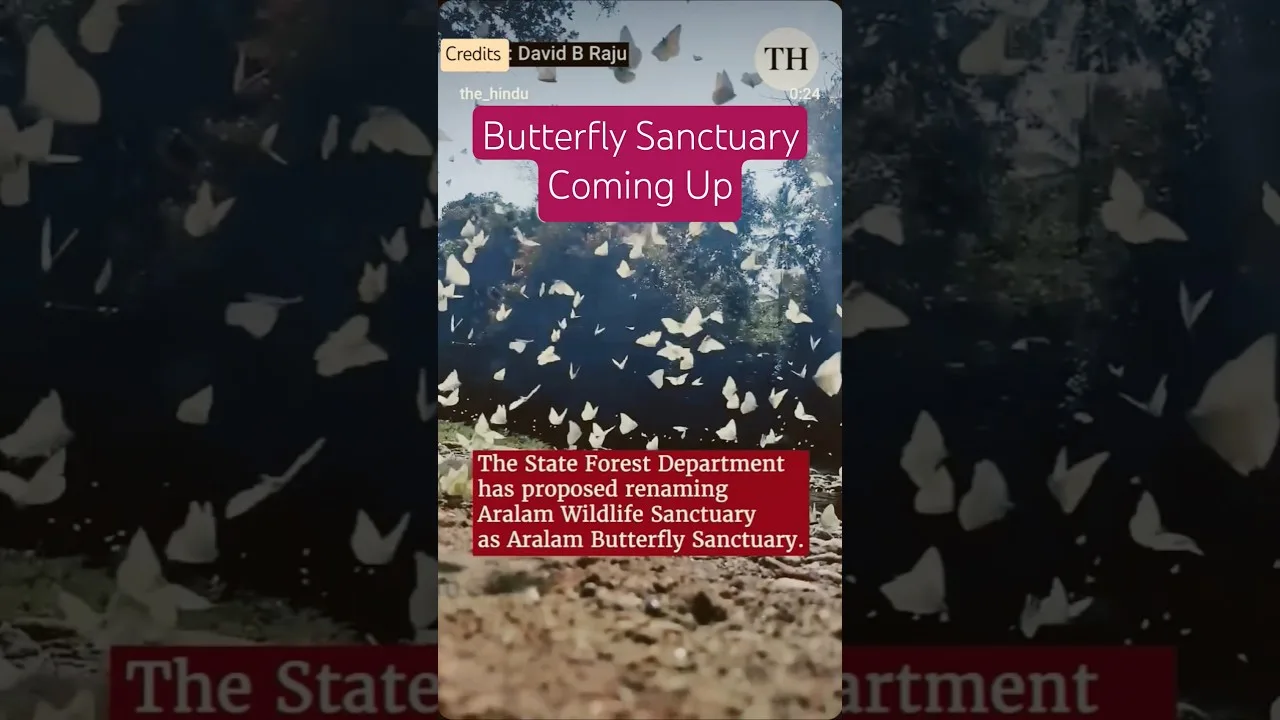
Table of Contents
- Why Aralam Butterfly Sanctuary Deserves Official Status
- Quarter-Century of Citizen Science: The 25th Annual Census
- Ecological Significance of the Western Ghats Butterfly Corridor
- Migration Phenomenon: A Spectacle of Nature
- Conservation Challenges and the Need for Enhanced Protection
- Economic and Educational Potential
- Global Context: Butterfly Sanctuaries as Conservation Models
- Policy Pathway: From Demand to Declaration
- The Role of Long-Term Monitoring in Adaptive Management
- Community Engagement: The Human Dimension
- Future Roadmap: Science, Policy, and Public Engagement
- Conclusion: A Call to Action for Kerala's Natural Heritage
Aralam Butterfly Sanctuary is rapidly emerging as a critical conservation priority in the Western Ghats, with leading entomologists and senior forest officials urging the Kerala government to formally declare the Aralam Wildlife Sanctuary as a dedicated butterfly sanctuary. This demand gained significant momentum during the inauguration of the 25th consecutive annual butterfly migration observation and census camp held recently at Aralam, highlighting the region’s unparalleled lepidopteran diversity.
- Aralam Wildlife Sanctuary hosts the highest butterfly diversity in Kerala, with over 250 recorded species.
- The 25th annual butterfly migration census camp was held recently, marking a quarter-century of continuous monitoring.
- Butterfly observers and senior forest officials jointly demanded official butterfly sanctuary status.
- The sanctuary is part of the Western Ghats, a UNESCO World Heritage Site and global biodiversity hotspot.
- Key species include the Southern Birdwing, Malabar Banded Peacock, and the endemic Malabar Tree Nymph.
Why Aralam Butterfly Sanctuary Deserves Official Status
The push to designate Aralam Butterfly Sanctuary as a formally recognized entity stems from decades of scientific documentation. Spanning 55 square kilometers in Kannur district, the Aralam Wildlife Sanctuary forms a crucial corridor in the Western Ghats. Its unique microclimate — characterized by high humidity, moderate temperatures, and diverse vegetation ranging from evergreen to moist deciduous forests — creates an ideal habitat for butterflies. Researchers have documented over 250 species here, representing nearly 70% of Kerala’s total butterfly fauna.
According to data compiled by the Aralam Wildlife Sanctuary Wikipedia page, the sanctuary was established in 1984 and lies on the slopes of the Western Ghats, with the highest peak being Katti Betta at 1,145 meters. This altitudinal gradient supports distinct ecological zones, each harboring specialized butterfly communities. The 25-year continuous census data provides one of India’s most valuable long-term ecological datasets, enabling scientists to track population trends, migration patterns, and climate change impacts. – a key consideration for Aralam Butterfly Sanctuary.
Quarter-Century of Citizen Science: The 25th Annual Census
The recently concluded three-day butterfly migration observation camp marked the 25th consecutive year of this pioneering citizen science initiative. Organized by the Kerala Forest Department in collaboration with the Malabar Natural History Society and various butterfly enthusiast groups, the camp drew over 80 participants including researchers, students, and amateur naturalists from across South India. – a key consideration for Aralam Butterfly Sanctuary.
“This 25-year unbroken dataset is rare in tropical ecology,” noted Dr. Kalesh Sadasivan, a prominent lepidopterist associated with the Travancore Nature History Society. “The Aralam Butterfly Sanctuary census has documented range extensions for several species, first records for Kerala, and concerning declines in some endemic taxa. Such longitudinal data is indispensable for evidence-based conservation policy.”
During the 2024 camp, participants recorded 187 species over three days, including rare sightings of the Papilio buddha (Malabar Banded Peacock), Idea malabarica (Malabar Tree Nymph), and Troides minos (Southern Birdwing) — India’s largest butterfly. The Southern Birdwing, with a wingspan reaching 190mm, is listed under Schedule II of India’s Wildlife Protection Act, 1972.
Ecological Significance of the Western Ghats Butterfly Corridor
The Western Ghats, recognized as one of the world’s eight “hottest hotspots” of biological diversity, serves as a critical butterfly corridor. The Aralam Butterfly Sanctuary region functions as a vital link between the Brahmagiri hills in the north and the Wayanad plateau in the south. This connectivity facilitates genetic exchange between butterfly populations, essential for long-term species viability.
Research published in the Journal of the Bombay Natural History Society highlights that the Aralam landscape supports 17 species endemic to the Western Ghats. These include the Parantica nilgiriensis (Nilgiri Tiger), Mycalesis oculus (Red-disc Bushbrown), and Lethe drypetis (Tamil Treebrown). The sanctuary’s riparian habitats along the Valapattanam and Kuppam rivers provide crucial larval host plants and nectar resources throughout the year.
Migration Phenomenon: A Spectacle of Nature
One of the most remarkable phenomena documented at Aralam Butterfly Sanctuary is the mass migration of Catopsilia pomona (Common Emigrant) and Catopsilia pyranthe (Mottled Emigrant) during the pre-monsoon months (March–May). Millions of butterflies move in directional flights, creating what locals call “butterfly rivers.” This migration, triggered by the onset of southwest monsoon winds, involves butterflies moving from the plains to the hill forests in search of fresh larval host plants.
The 25-year census data reveals that migration intensity correlates strongly with pre-monsoon rainfall patterns. Years with deficient summer rains show 40–60% reduction in migrant numbers, underscoring the vulnerability of this phenomenon to climate variability. Scientists from the Indian Institute of Science, Bangalore, have used this dataset to model future migration scenarios under different climate change projections.
Conservation Challenges and the Need for Enhanced Protection
Despite its ecological richness, Aralam Butterfly Sanctuary faces mounting pressures. Encroachment along the sanctuary fringes, pesticide drift from adjacent cashew and rubber plantations, and unregulated tourism threaten butterfly habitats. The recent proliferation of invasive species like Chromolaena odorata (Siam weed) and Lantana camara has altered native vegetation composition, reducing availability of specific larval host plants.
“Formal declaration as a butterfly sanctuary would unlock targeted conservation funding, mandate butterfly-specific management plans, and elevate the profile of invertebrate conservation in Kerala,” argues P. K. Uthaman, former Deputy Conservator of Forests, Kannur. “Currently, butterfly conservation is incidental to megafauna-focused management. A dedicated status would ensure nectar corridors, host plant enrichment, and pesticide-free buffer zones become management priorities.”
The Kerala Forest Department has already initiated several butterfly-friendly measures, including the establishment of a butterfly garden at the Aralam information center, planting of native host plants like Aristolochia tagala (for Birdwings) and Citrus species (for Citrus butterflies), and training frontline staff in butterfly identification. However, advocates argue these efforts need statutory backing and dedicated budgetary allocation.
Economic and Educational Potential
Beyond ecological value, Aralam Butterfly Sanctuary holds immense potential for nature tourism and environmental education. Butterfly-watching tourism, already a multi-million dollar industry globally, remains underdeveloped in Kerala. The sanctuary’s accessibility — just 45 km from Kannur city and 15 km from Iritty — makes Aralam Butterfly Sanctuary ideal for day-visitor programs.
The Kerala Forest Department’s official website outlines plans for developing eco-tourism circuits in the northern Western Ghats, with Aralam as a key node. A dedicated butterfly sanctuary designation would strengthen the case for central government funding under the Integrated Development of Wildlife Habitats scheme and attract CSR investments for conservation infrastructure.
Educational institutions across Malabar region regularly conduct field trips to Aralam. The 25-year census camp itself has trained over 2,000 students in butterfly identification and monitoring techniques. Many alumni now work as researchers, forest officers, and conservation practitioners across India.
Global Context: Butterfly Sanctuaries as Conservation Models
India can draw inspiration from successful butterfly sanctuary models worldwide. The Monarch Butterfly Biosphere Reserve in Mexico, a UNESCO World Heritage Site, protects the overwintering grounds of the migratory Monarch butterfly while generating sustainable livelihoods for local communities. Similarly, the Butterfly Conservation Trust in the UK manages over 30 reserves specifically for lepidoptera.
In India, the Butterfly Park at Bannerghatta (Karnataka) and the Sikkim Butterfly Reserve demonstrate the viability of butterfly-focused conservation. However, Aralam Butterfly Sanctuary would be unique as the first in-situ butterfly sanctuary in the Western Ghats protecting wild populations in their natural habitat across a large, ecologically intact landscape.
Policy Pathway: From Demand to Declaration
The process for declaring a butterfly sanctuary in India typically involves: (1) a scientific proposal from the state forest department with species inventories and habitat assessments; (2) approval by the State Board for Wildlife; (3) notification under Section 26A of the Wildlife Protection Act, 1972 (for sanctuaries) or Section 35 (for national parks); and (4) development of a management plan with butterfly-specific objectives.
Kerala has precedent for species-specific sanctuary designations — the Thattekad Bird Sanctuary (declared 1983) was India’s first bird sanctuary. A butterfly sanctuary at Aralam would follow this tradition, positioning Kerala as a leader in invertebrate conservation. The state’s 2023–2030 Biodiversity Strategy and Action Plan explicitly mentions “enhancing conservation of lesser-known taxa including pollinators” as a priority.
The Role of Long-Term Monitoring in Adaptive Management
The 25-year census at Aralam Butterfly Sanctuary exemplifies the power of long-term ecological monitoring (LTEM). LTEM programs are globally recognized as essential for detecting slow ecological changes, distinguishing natural cycles from anthropogenic impacts, and evaluating conservation intervention effectiveness.
Data from Aralam has already informed several management decisions: identification of critical host plant species for enrichment planting, timing of controlled burns to avoid peak larval seasons, and designation of “no-entry” zones during mass migration events. The census methodology — standardized transect walks, timed counts, and photo-voucher documentation — follows protocols established by the Butterfly Conservation Europe network, ensuring international comparability.
“The Aralam dataset is a national treasure,” states Dr. Krushnamegh Kunte, faculty at the National Centre for Biological Sciences, Bangalore, and lead author of Butterflies of India (ifoundbutterflies.org). “Aralam Butterfly Sanctuary provides baseline data against which we can measure impacts of climate change, habitat fragmentation, and pesticide use across the Western Ghats. Formal sanctuary status would institutionalize this monitoring, ensuring its continuation regardless of individual officer transfers or funding cycles.”
Community Engagement: The Human Dimension
Successful conservation at Aralam Butterfly Sanctuary requires active participation of forest-fringe communities. The sanctuary adjoins 14 villages with a combined population of approximately 25,000. Historically, these communities have depended on forest resources for fuelwood, minor forest produce, and grazing. The transition to butterfly-focused conservation must address livelihood concerns.
Innovative initiatives are already underway. The Kerala Forest Department’s Participatory Forest Management program has formed 8 Eco-Development Committees (EDCs) around Aralam. These EDCs are being trained in butterfly guiding, homestay hospitality, and production of butterfly-themed handicrafts. A pilot “Butterfly Friendly Farming” program encourages farmers in buffer zones to reduce pesticide use and maintain hedgerows as butterfly corridors, with premium pricing for produce certified under the scheme.
Future Roadmap: Science, Policy, and Public Engagement
As the demand for Aralam Butterfly Sanctuary declaration gains traction, stakeholders have outlined a comprehensive roadmap:
- Short-term (2024–2025): Submission of formal proposal to State Board for Wildlife; completion of host plant mapping using drone-based LiDAR; launch of “Adopt a Butterfly Species” citizen sponsorship program.
- Medium-term (2025–2028): Notification as butterfly sanctuary; development of 10-year management plan with butterfly-specific objectives; establishment of a permanent butterfly research station with laboratory facilities.
- Long-term (2028–2035): Application for UNESCO Biosphere Reserve status; integration with Western Ghats landscape-level conservation planning; development of Aralam as a global center for tropical butterfly research and training.
The 25th census camp concluded with a resolution unanimously adopted by participants — scientists, forest officials, students, and community representatives — urging the Chief Minister of Kerala and the Minister for Forests to expedite the declaration process. As one participant poignantly noted, “We have 25 years of data proving Aralam’s butterfly richness. How many more years of evidence do we need before we act?”
Conclusion: A Call to Action for Kerala’s Natural Heritage
The case for Aralam Butterfly Sanctuary rests on robust science, quarter-century of monitoring, and broad stakeholder consensus. Formal designation would not merely add a label — Aralam Butterfly Sanctuary would catalyze a paradigm shift from incidental to intentional butterfly conservation, securing the future of over 250 species and the ecological processes they sustain. As climate change and habitat loss accelerate globally, protecting biodiversity hotspots like Aralam becomes not just a regional imperative but a planetary necessity.
Kerala, often celebrated as “God’s Own Country” for its natural beauty, has the opportunity to lead India in recognizing that the smallest wings often carry the weight of entire ecosystems. The time for Aralam Butterfly Sanctuary is now.
Frequently Asked Questions
Aralam Butterfly Sanctuary is located in Kannur district, Kerala, India, spanning 55 sq km on the slopes of the Western Ghats, approximately 45 km from Kannur city and 15 km from Iritty town.
Over 250 butterfly species have been recorded in Aralam Butterfly Sanctuary, representing nearly 70% of Kerala's total butterfly fauna, including 17 Western Ghats endemics like the Malabar Banded Peacock and Malabar Tree Nymph.
The best time to visit Aralam Butterfly Sanctuary is during the pre-monsoon months (March–May) for mass migration events, and post-monsoon (September–November) for peak species diversity and breeding activity.
