Blog
BRICS dollar challenge: Can BRICS Challenge the Dollar?

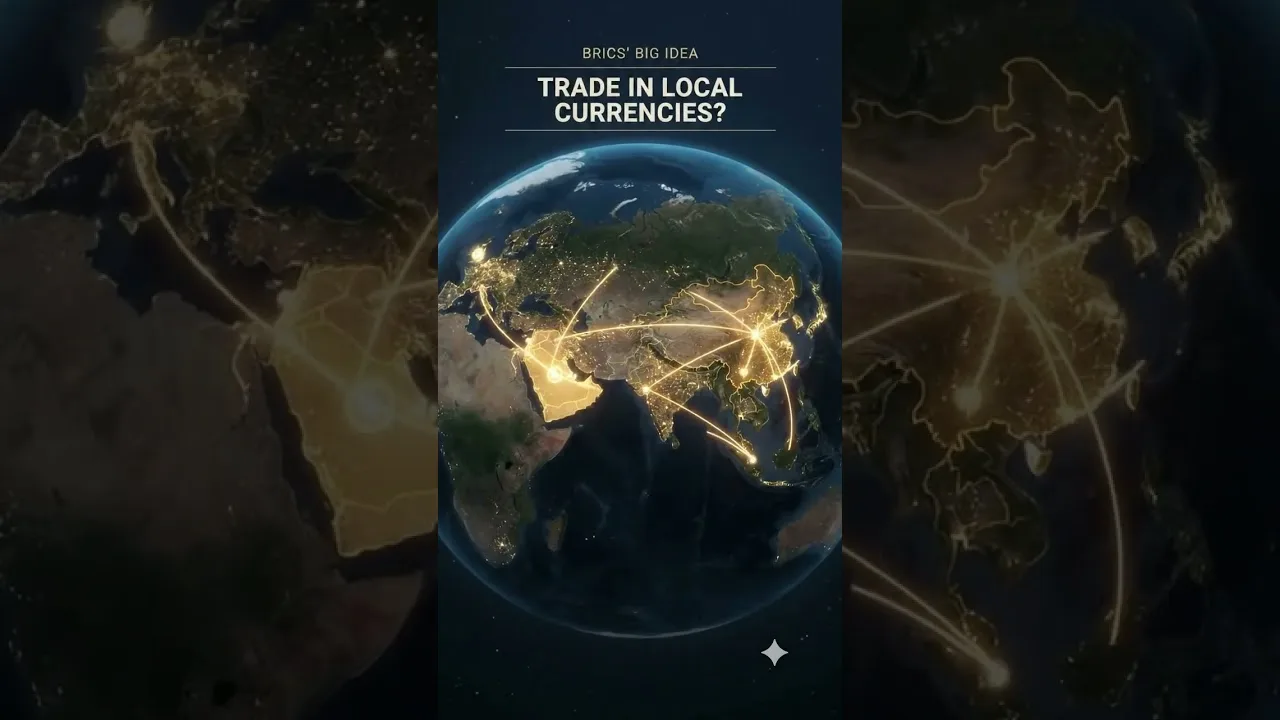
Table of Contents
- Introduction
- BRICS dollar challenge: Key Drivers
- Historical Context of the US Dollar’s Dominance
- BRICS’ Strategic Objectives
- Mechanisms Behind the BRICS Dollar Challenge
- Local Currency Trade Agreements
- Alternative Payment Systems
- Digital Currency Initiatives
- Economic Impact and Global Repercussions
- Trade Flow Shifts
- Financial Market Reactions
- Obstacles and Counterarguments
- Political Coordination Challenges
- Economic Disparities Among Members
- Legal and Regulatory Hurdles
- Case Studies and Real‑World Examples
- Russia‑China Bilateral Trade
- India’s Rupee‑Based Trade Expansion
- Future Scenarios
- Optimistic Path: A Multipolar Currency System
- Pessimistic Path: Continued Dollar Dominance
- Concluding Thoughts
Introduction
The BRICS dollar challenge has moved from niche discussion to mainstream debate. In just a few years, the grouping of Brazil, Russia, India, China, and South Africa has been pushing for a reduction in reliance on the US dollar in international trade and finance. This article unpacks the geopolitical forces, the practical mechanisms, and the real‑world evidence that together form the BRICS dollar challenge. By examining historical context, current initiatives, and the obstacles that remain, we aim to answer the central question: can BRICS really challenge the dollar? The analysis also highlights what this means for policymakers, businesses, and investors worldwide.
- The BRICS dollar challenge is driven by a desire to reduce vulnerability to US monetary policy and sanctions.
- Local‑currency trade agreements and alternative payment systems are the primary tools used in the BRICS dollar challenge.
- Digital currency pilots and a potential common BRICS currency are part of the longer‑term BRICS dollar challenge roadmap.
- Economic disparities and political coordination hurdles pose significant risks to the success of the BRICS dollar challenge.
- Real‑world case studies (e.g., Russia‑China trade, India’s rupee settlements) illustrate both progress and limits of the BRICS dollar challenge.
- Global markets are watching the BRICS dollar challenge for signs of a shift toward a multipolar currency system.
BRICS dollar challenge: Key Drivers
The BRICS dollar challenge is rooted in several converging factors. First, the unilateral use of US sanctions has prompted members to seek payment alternatives that are less exposed to US jurisdiction. Second, the sheer size of BRICS economies—accounting for roughly 30% of global GDP—creates a compelling bloc for renegotiating trade terms. Third, technological advancement, especially in digital finance, provides the infrastructure needed for the BRICS dollar challenge to move beyond rhetoric. Finally, the perceived instability of the US dollar’s long‑term dominance fuels political will across capitals to experiment with de‑dollarization mechanisms, making the BRICS dollar challenge a focal point of contemporary geopolitics.
Historical Context of the US Dollar’s Dominance
Since the Bretton Woods agreement in 1944, the US dollar has served as the anchor currency for global trade and reserves. The dollar’s role was cemented by the petrodollar system, deep liquidity in US Treasury markets, and the openness of American financial institutions. This historical advantage creates a high barrier for any BRICS dollar challenge. Scholars such as Barry Eichengreen have noted that replacing a hegemon currency typically requires a sustained coalition, credible alternatives, and a crisis that erodes confidence in the incumbent. The BRICS dollar challenge is therefore not just an economic project but also a historic attempt to rewrite a decades‑old financial order.
BRICS’ Strategic Objectives
Member states have articulated several strategic objectives that together constitute the BRICS dollar challenge. Brazil seeks to diversify export financing away from dollar‑denominated loans. Russia aims to circumvent Western payment processors after facing extensive sanctions. India wants to internationalize the rupee and reduce dollar outflows for oil imports. China promotes the yuan as a trade settlement currency, especially through its Belt and Road Initiative. South Africa, while smaller, supports a more inclusive financial architecture that could lessen its reliance on the US dollar for regional trade. These divergent national agendas are woven into the broader BRICS dollar challenge narrative, making coordination both essential and complex.
Mechanisms Behind the BRICS Dollar Challenge

The BRICS dollar challenge is implemented through a suite of practical mechanisms. The most visible are local‑currency trade agreements, which allow member nations to settle invoices in their own currencies rather than converting to dollars. Complementary to this are alternative payment systems that bypass SWIFT and reduce exposure to US‑controlled financial messaging networks. In addition, pilot projects for central bank digital currencies (CBDCs) and discussions about a common BRICS currency signal a longer‑term vision for the BRICS dollar challenge. Each mechanism is designed to chip away at the dollar’s dominance incrementally rather than attempting an abrupt replacement.
Local Currency Trade Agreements
Since 2022, BRICS nations have signed bilateral agreements to trade in local currencies. For example, the Russia‑China agreement allows for ruble‑yuan settlements in energy trade, directly supporting the BRICS dollar challenge. India and the United Arab Emirates have experimented with rupee‑dirham swaps, while Brazil and China have used the real‑yuan pair for agricultural commodities. These agreements reduce transaction costs, hedge against exchange‑rate volatility, and demonstrate that the BRICS dollar challenge can be operationalized through straightforward contractual arrangements.
Alternative Payment Systems
To circumvent the US‑dominated SWIFT network, BRICS members have explored alternative messaging platforms. The Chinese‑developed Cross‑Border Interbank Payment System (CIPS) and Russia’s System for Transfer of Financial Messages (SPFS) are early attempts that form part of the BRICS dollar challenge. While they currently handle a modest share of global payments, ongoing integration efforts aim to increase interoperability. The emergence of these systems illustrates how the BRICS dollar challenge leverages technology to create a parallel infrastructure that can eventually diminish reliance on dollar‑based channels.
Digital Currency Initiatives
Digital currencies are a cornerstone of the BRICS dollar challenge’s forward‑looking strategy. India’s Digital Rupee pilot, China’s Digital Yuan, and Russia’s prototype CBDC are being tested in cross‑border contexts. In 2023, the BRICS New Development Bank announced a joint study on a common digital currency, signaling a coordinated push that could accelerate the BRICS dollar challenge’s impact. Although these initiatives are still in early stages, they provide the technical foundation for a future where the dollar is not the default settlement medium for BRICS trade.
Economic Impact and Global Repercussions
The BRICS dollar challenge does not exist in a vacuum; its ripple effects are already visible in global capital markets. Trade flow shifts, currency volatility, and investor sentiment all respond to developments in the BRICS economic bloc. Understanding these repercussions is essential for assessing whether the BRICS dollar challenge can achieve meaningful de‑dollarization.
Trade Flow Shifts
Empirical studies show that bilateral trade between BRICS members settled in local currencies has risen from less than 5% in 2020 to over 15% by mid‑2024. This shift, while modest relative to total global trade, underscores the practical feasibility of the BRICS dollar challenge. For instance, China’s imports of Brazilian soybeans are increasingly paid in reais, a clear sign that the BRICS dollar challenge is gaining traction in commodity markets. Such changes reduce the demand for dollars in routine trade, gradually weakening the currency’s entrenched position.
Financial Market Reactions
Financial markets react to news surrounding the BRICS dollar challenge with a mix of caution and opportunism. When BRICS announces a new payment system, US Treasury yields sometimes dip as investors seek safer assets, while emerging‑market currencies may experience short‑term volatility. The International Monetary Fund (IMF) has repeatedly highlighted the potential for regional currency arrangements to complement, rather than replace, the dollar system. Analysts at major investment banks note that while the BRICS dollar challenge may not trigger an immediate dollar collapse, it could foster a more balanced, multipolar currency environment over the long term.
Obstacles and Counterarguments
Despite its ambition, the BRICS dollar challenge faces formidable headwinds. Political coordination, economic heterogeneity, and legal‑regulatory constraints all threaten to stall progress. Recognizing these obstacles is crucial for realistic assessment of the challenge’s viability.
Political Coordination Challenges
BRICS members are not a monolith; divergent geopolitical interests can impede unified action. While China and Russia share a strategic desire to counter US influence, India and Brazil maintain more neutral stances, sometimes preferring to keep dollar access open. These political frictions can dilute the coherence of the BRICS dollar challenge, making it difficult to launch a synchronized alternative payment system or common digital currency.
Economic Disparities Among Members
The BRICS dollar challenge is hampered by wide economic disparities. China’s massive foreign‑exchange reserves contrast sharply with South Africa’s limited reserves, and Brazil’s inflation volatility differs from India’s relatively stable macro‑environment. Such asymmetry complicates the design of a single alternative to the dollar, as each economy requires different levels of liquidity support and risk management. The challenge, therefore, is not only technical but also deeply economic.
Legal and Regulatory Hurdles
International trade law, anti‑money‑laundering (AML) regulations, and know‑your‑customer (KYC) standards are largely built around dollar‑centric frameworks. The BRICS dollar challenge must navigate these legal landscapes, which can be a time‑consuming and costly endeavor. For example, ensuring compliance with the US Treasury’s Office of Foreign Assets Control (OFAC) sanctions while using non‑dollar payment rails requires sophisticated legal engineering. These regulatory barriers represent a significant, albeit surmountable, obstacle for the BRICS dollar challenge.
Case Studies and Real‑World Examples
Examining concrete examples helps to gauge the actual progress and limitations of the BRICS dollar challenge. Two prominent cases illustrate both successes and constraints.
Russia‑China Bilateral Trade
Since the onset of Western sanctions, Russia and China have accelerated their bilateral trade settlement in rubles and yuan. Data from the Russian Central Bank shows that over 70% of trade between the two countries now bypasses the dollar. This case demonstrates that the BRICS dollar challenge can succeed when political will is high and alternative payment systems are robustly supported by state‑backed infrastructure.
India’s Rupee‑Based Trade Expansion
India has pursued a more gradual approach, using rupee settlements for trade with neighboring countries and select partners. The Reserve Bank of India’s rupee‑denominated trade facilitation agreement with Sri Lanka and the UAE showcases the BRICS dollar challenge’s incremental nature. While the volume remains modest compared to dollar‑settled trade, the policy signals a strategic shift that could expand over time as confidence in the rupee grows.
Future Scenarios
Projecting the trajectory of the BRICS dollar challenge involves weighing optimistic and pessimistic outcomes. Both scenarios provide valuable insights for stakeholders.
Optimistic Path: A Multipolar Currency System
If the BRICS dollar challenge succeeds in establishing interoperable payment systems, a credible digital currency, and deep local‑currency markets, the global financial architecture could evolve toward a multipolar system. In this scenario, the US dollar would share dominance with the yuan, euro, and potentially a BRICS‑issued digital currency. Such a development would increase resilience, reduce systemic risk, and democratize access to international finance.
Pessimistic Path: Continued Dollar Dominance
Conversely, if political disagreements, economic imbalances, and regulatory obstacles persist, the BRICS dollar challenge may remain largely symbolic. The dollar could continue to dominate global trade, with BRICS initiatives serving primarily as risk‑mitigation tools for individual members. In this case, the long‑term impact of the BRICS dollar challenge would be limited to incremental improvements in payment efficiency rather than a fundamental shift in the currency hierarchy.
Concluding Thoughts
The BRICS dollar challenge encapsulates the growing ambition of a coalition of major emerging economies to reduce dependence on the US dollar. While the initiative has made measurable progress—through local‑currency trade agreements, alternative payment systems, and digital currency pilots—significant structural, political, and regulatory hurdles remain. The ultimate success of the BRICS dollar challenge will depend on the ability of its members to harmonize divergent national interests, build robust financial infrastructure, and gain broader international acceptance for non‑dollar settlement mechanisms. For now, the BRICS dollar challenge serves as both a catalyst for innovation in cross‑border finance and a barometer of shifting geopolitical dynamics. Whether it will reshape the global monetary order or remain a complementary framework remains an open question, but its emergence marks a pivotal moment in the evolution of international economics.
Frequently Asked Questions
The BRICS dollar challenge refers to a coordinated effort by Brazil, Russia, India, China, and South Africa to reduce reliance on the US dollar in international trade and finance through local‑currency agreements, alternative payment systems, and digital currency initiatives.
Progress is measurable but limited. By mid‑2024, over 15% of BRICS internal trade was settled in local currencies, up from less than 5% in 2020. However, the majority of global trade still uses the dollar, indicating that the BRICS dollar challenge remains a work in progress.
Key obstacles include political coordination differences among members, significant economic disparities, regulatory and legal hurdles tied to AML/KYC standards, and the deep‑rooted dominance of the US dollar in global financial infrastructure.