

Blog
Simplified Disaster Management 2025: Complete Guide for UPSC & NET Aspirants

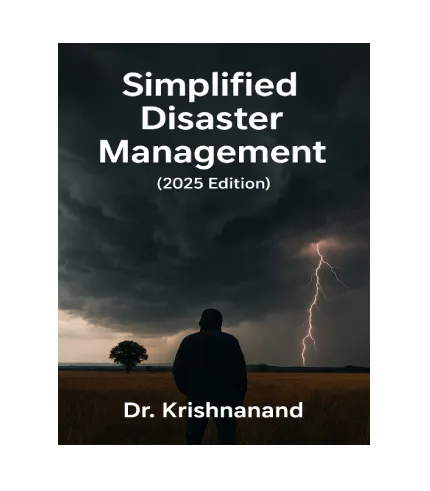

Many UPSC Geography Optional aspirants, UGC NET‑NTA candidates, and geography students find themselves searching for a reliable, up‑to‑date resource when they type the query “Download Simplified Disaster Management 2025 Edition PDF by Dr Krishnanand” into Google. The demand for a concise yet comprehensive guide reflects the growing importance of disaster management in competitive exams and real‑world policy work.
- Understand the core phases of disaster management: preparedness, response, recovery, mitigation.
- Learn how to assess risks and create effective emergency plans tailored to Indian geographic contexts.
- Gain access to practical tips, case studies, and multimedia supplements that reinforce textbook concepts.
- Save time by using a single, updated source that aligns with the 2025 syllabus changes.
Why Disaster Management Matters for Competitive Exams
Disaster management has become a recurring theme in UPSC Geography Optional papers, UGC NET Geography, and various state PSC examinations. Questions often test knowledge of the disaster management cycle, institutional frameworks like NDMA and SDMA, and recent case studies such as the 2023 Turkey‑Syria earthquake or the 2022 floods in Pakistan. Aspirants who lack a structured source waste valuable time scavenging fragmented notes, coaching material, and outdated PDFs. The search for a reliable, updated guide—often expressed as “Download Simplified Disaster Management 2025 Edition PDF by Dr Krishnanand”—highlights the need for a single authoritative text that matches the latest syllabus and exam pattern.
How to Evaluate a Disaster Management Study Guide
When evaluating any study material, candidates should consider four criteria: syllabus alignment, clarity of explanation, inclusion of current data, and availability of supplementary resources. A guide must cover the four phases of disaster management, risk assessment methodologies, legislative frameworks (Disaster Management Act 2005, Sendai Framework), and practical tools like hazard maps and early warning systems. Clarity is judged by the use of diagrams, flowcharts, and plain language that avoids unnecessary jargon. Current data means incorporating events from the last 3–5 years and referencing the latest NDMA guidelines. Finally, supplementary resources such as video links, quiz banks, or downloadable worksheets enhance retention and self‑assessment.
What Makes Simplified Disaster Management 2025 Stand Out
Simplified Disaster Management 2025 by Dr. Krishnanand satisfies all four evaluation criteria. The e‑book is explicitly updated for the 2025 syllabus, integrating recent amendments to the Disaster Management Act and the latest NDMA annual reports. Each chapter begins with a concise learning objective, followed by step‑by‑step explanations of concepts such as vulnerability analysis, capacity building, and post‑damage needs assessment. The author uses over 40 original maps, flowcharts, and tables that simplify complex processes like incident command systems and relief logistics. Moreover, the package includes QR‑coded links to short video lectures and a downloadable worksheet bank, addressing the multimedia need that many aspirants express when they search for “Download Simplified Disaster Management 2025 Edition PDF by Dr Krishnanand”.
Key Topics Covered in the E‑Book
The content is organized into eight units that mirror the typical exam structure:
- Introduction to Disaster Management – definitions, types of disasters, and the disaster management cycle.
- Risk Assessment and Vulnerability Analysis – hazard identification, exposure mapping, and socio‑economic vulnerability indices.
- Disaster Preparedness – early warning systems, community‑based planning, resource inventory, and training drills.
- Response Mechanisms – incident command, search and rescue operations, emergency medical services, and relief distribution.
- Recovery and Rehabilitation – damage assessment, livelihood restoration, psychosocial support, and reconstruction standards.
- Mitigation Strategies – structural and non‑structural measures, land‑use planning, building codes, and ecosystem‑based approaches.
- Institutional and Legal Framework – NDMA, SDMA, NDRF, role of paramilitary forces, and international cooperation.
- Case Studies and Recent Events – detailed analysis of the 2021 Uttarakhand glacier burst, 2022 floods in Assam, 2023 cyclone Mocha, and the 2024 heatwave in North India.
Each unit ends with a summary bullet list, a set of practice questions, and a QR code linking to a 5‑minute video recap. This structure directly supports the study habits of candidates who prefer modular learning and quick revision.
How to Use the E‑Book Effectively in Your Study Routine
To maximize the benefit of Simplified Disaster Management 2025, aspirants should adopt a three‑stage approach:
- Initial Survey (Day 1‑2): Skim the table of contents, read the learning objectives, and glance at the diagrams to form a mental map of the subject.
- Deep Dive (Week 1‑3): Study one unit per day, taking notes in the margin, solving the end‑of‑unit questions, and watching the linked video for reinforcement. Use the worksheet bank to practice map‑based questions.
- Revision and Mock Tests (Week 4‑5): Review the summary bullets, attempt full‑length mock tests focused on disaster management, and revisit any weak areas using the QR‑coded videos.
Because the e‑book is available in PDF format, it can be annotated on tablets or printed for highlight‑based revision. This flexibility addresses the practical concern behind the search query “Download Simplified Disaster Management 2025 Edition PDF by Dr Krishnanand”—the desire for a portable, searchable, and updatable resource.
Practical Buying Guidance and Access Tips
When purchasing the e‑book, verify that you are accessing the 2025 edition from the official seller to ensure you receive the latest updates. The product page provides a free sample chapter that allows you to evaluate the writing style and diagram quality before committing. After purchase, you receive a secure download link that remains active for one year, enabling re‑downloads if needed. The price point of ₹249 is positioned competitively against similar niche guides, offering value given the depth of content and included multimedia. Avoid third‑party sites that claim to offer a free “Download Simplified Disaster Management 2025 Edition PDF by Dr Krishnanand” as they often host outdated or incomplete versions that could jeopardize exam preparation.
Frequently Asked Questions
While the dedicated FAQ section follows this article, common queries addressed in the e‑book’s preface include: How does the 2025 edition differ from the 2023 version? Answer: It incorporates the latest NDMA guidelines, adds a new unit on climate‑linked disasters, and updates all case studies to events post‑2022. Is the e‑book suitable for non‑UPSC candidates? Answer: Yes, the clear explanations and practical focus make it useful for geography undergraduates, NGO workers, and civil service aspirants beyond UPSC. Can I access the video lectures without an internet connection? Answer: The QR codes stream videos, but the worksheet bank and PDF content are fully offline once downloaded.
Further reading: Simplified Disaster Management 2025 on Wikipedia
Our Recommendation
📖 Part of our complete guide: Evolution of Geographical Thought: A Comprehensive Guide for UPSC Aspirants and Geography Enthusiasts
Frequently Asked Questions
What is the main advantage of the 2025 edition over previous versions?
The 2025 edition includes the latest NDMA guidelines, updated case studies from 2022‑2024, and a new unit on climate‑linked disasters, ensuring full alignment with the current syllabus.
Can I use this e‑book for state PSC exams besides UPSC?
Absolutely. The content covers national disaster management frameworks and regional case studies that are relevant to State PSC geography papers and other competitive exams.
Is there a refund policy if I am not satisfied with the e‑book?
The seller provides a 7‑day money‑back guarantee if the PDF file is corrupted or if the edition received is not the advertised 2025 version.
