Blog
Organic Theory of State: Friedrich Ratzel’s Political Geography Legacy

Table of Contents
- Who Was Friedrich Ratzel? The Father of Political Geography
- Core Principles of the Organic Theory of State
- States as Living Organisms
- The Lebensraum Concept: Space as Nutrient
- Seven Laws of State Growth
- Social Darwinism and the Organic Theory of State
- Competition as Natural Law
- Civilizational Hierarchy and Imperial Justification
- Criticisms and Controversies: The Dark Legacy
- Ethical Indictment: Racism, Eugenics, and Exploitation
- The Nazi Appropriation of Lebensraum
- Intellectual Oversimplification
- Legacy and Modern Relevance in Political Geography
- Geopolitical Analysis and Territorial Disputes
- Environmental Determinism Revisited
- Intellectual Lineage: Mackinder, Spykman, and Beyond
- Why Study the Organic Theory of State Today?
- Academic and Examination Relevance
- Critical Thinking and Ethical Geopolitics
- Historical Context for Contemporary Conflicts
- Conclusion: A Theory That Refuses to Die
The Organic Theory of State remains one of the most influential and controversial frameworks in political geography, shaping how scholars understand territorial expansion, state behavior, and geopolitical competition. Developed by German geographer Friedrich Ratzel in the late 19th century, this theory applies biological principles to political entities, arguing that states function like living organisms that are born, grow, compete for space, and eventually decline. While the theory provided a scientific veneer for imperialist ambitions and was later misappropriated by Nazi ideologues, its analytical core continues to inform contemporary debates on sovereignty, resource conflicts, and environmental determinism.
- Biological Analogy: States are conceptualized as living organisms with life cycles of birth, growth, and death.
- Lebensraum Imperative: Territorial expansion is framed as a biological necessity for state survival.
- Social Darwinist Roots: The theory merges with “survival of the fittest” logic to justify great-power competition.
- Historical Misuse: Nazi Germany weaponized the Lebensraum concept to legitimize aggression in WWII.
- Enduring Influence: Modern geopolitics, from Heartland Theory to resource wars, still echoes Ratzel’s spatial logic.
Who Was Friedrich Ratzel? The Father of Political Geography
Friedrich Ratzel (1844–1904) was a German geographer and ethnographer widely recognized as a founding figure of modern political geography. Born in Karlsruhe, Ratzel initially trained as a pharmacist before turning to geography, studying under the influential geomorphologist Ferdinand von Richthofen. His extensive fieldwork in North America (1873–1875) and later academic appointments at Munich and Leipzig positioned him at the intersection of geography, anthropology, and the emerging life sciences.
Ratzel’s intellectual formation coincided with the explosive impact of Charles Darwin’s On the Origin of Species (1859). Like many contemporaries, Ratzel sought to extend evolutionary logic beyond biology into the realm of human societies. His magnum opus, Politische Geographie (1897), systematically articulated the Organic Theory of State, while his earlier Anthropogeographie (1882–1891) explored how physical environments shape cultural development. Ratzel’s work earned him recognition across Europe and America, influencing figures like Ellen Churchill Semple, who introduced his ideas to Anglo-American geography.
Core Principles of the Organic Theory of State
States as Living Organisms
The central metaphor of the Organic Theory of State is straightforward: the state is a biological entity. Ratzel wrote that “the state is not a machine, but an organism” — a claim that carries profound implications. Like organisms, states have:
- Birth: Formation through unification, revolution, or decolonization
- Growth: Territorial expansion, population increase, economic development
- Maturity: Stability, institutional consolidation, cultural flowering
- Decline: Territorial loss, demographic stagnation, institutional decay
- Death: Conquest, partition, or dissolution
This organic view rejects the static, legalistic conception of the state as a mere juridical person. Instead, Organic Theory of State portrays political entities as dynamic, metabolic systems that must continuously interact with their environment to survive.
The Lebensraum Concept: Space as Nutrient
Perhaps the most famous — and consequential — element of Ratzel’s framework is Lebensraum (“living space”). Just as organisms require nutrients, Ratzel argued that states require territory. Land provides:
- Agricultural resources to feed the population
- Mineral wealth for industrial production
- Strategic depth for defense
- Room for population growth
In Ratzel’s formulation, Lebensraum is not static but elastic. A healthy, growing state naturally seeks to expand its living space, while a contracting state signals decline. This dynamic creates inevitable friction between states competing for finite terrestrial surface — a zero-sum spatial competition that Ratzel viewed as a natural law.
Seven Laws of State Growth
Ratzel articulated seven principles governing state expansion in Politische Geographie:
- States expand in proportion to their cultural development
- Territorial growth follows the path of least resistance
- Strong states absorb weaker neighbors
- Frontiers are peripheral organs of the state organism
- Sea power extends the state’s metabolic reach
- Colonies function as external organs of nutrition
- The state’s life cycle determines its expansionary trajectory
These laws reflect a deterministic worldview: geography dictates destiny, and power follows biological imperatives rather than moral choice.
Social Darwinism and the Organic Theory of State
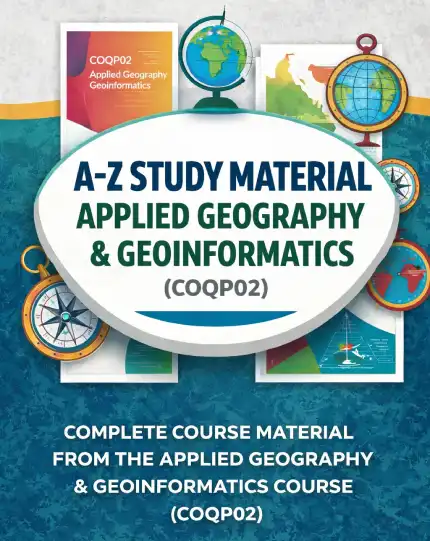
The Organic Theory of State cannot be separated from Social Darwinism, the late-19th-century ideology that applied Darwinian concepts — “struggle for existence,” “survival of the fittest,” natural selection — to human societies. Ratzel was not alone in this endeavor; Herbert Spencer, William Graham Sumner, and Ernst Haeckel pursued similar syntheses. But Ratzel’s spatial focus gave Social Darwinism a distinctively geopolitical dimension.
Competition as Natural Law
In the Social Darwinist reading, international relations become a biological arena. Powerful states, like dominant species, naturally outcompete weaker ones. War, conquest, and colonization are not moral failures but evolutionary necessities — the mechanism by which “fitter” political forms expand and “unfit” forms disappear. Ratzel’s student, the Swedish political scientist Rudolf Kjellén, later coined the term “geopolitics” (1905) to describe this synthesis of geography, biology, and statecraft.
Civilizational Hierarchy and Imperial Justification
European imperial powers eagerly adopted Ratzel’s framework to legitimize the Scramble for Africa (1881–1914) and Asian colonization. The Organic Theory of State provided a pseudo-scientific narrative: European states were “mature organisms” with a biological mandate to expand into territories held by “infant” or “senile” societies. The 1884–1885 Berlin Conference, which partitioned Africa among European powers, operated within this ideological paradigm. Colonization was reframed not as exploitation but as the natural metabolic process of vigorous states incorporating underutilized space.
Criticisms and Controversies: The Dark Legacy
Ethical Indictment: Racism, Eugenics, and Exploitation
By the mid-20th century, the Organic Theory of State faced devastating moral and intellectual critique. The theory’s biological determinism provided cover for:
- Scientific racism: Hierarchical classifications of “civilized” vs. “primitive” peoples
- Eugenics movements: Policies to “improve” national racial stock
- Imperial exploitation: Resource extraction justified as organic necessity
Critics like Franz Boas in anthropology and later postcolonial scholars (Edward Said, Frantz Fanon) dismantled the theory’s claim to scientific objectivity, exposing Organic Theory of State as a cultural projection of European power.
The Nazi Appropriation of Lebensraum
The most infamous misuse came in Nazi Germany. Adolf Hitler, influenced by geopolitician Karl Haushofer (a student of Ratzel’s ideas), made Lebensraum the cornerstone of Nazi foreign policy. In Mein Kampf (1925), Hitler explicitly argued that Germany required eastern expansion at the expense of Slavic peoples — a direct, murderous application of Ratzel’s metaphor. The Generalplan Ost envisioned the displacement and extermination of tens of millions to create living space for the “Aryan” organism. This history forever tainted the Organic Theory of State, forcing postwar geographers to reckon with their discipline’s complicity.
Intellectual Oversimplification
Beyond moral critique, scholars identified analytical flaws:
- Category error: States are social constructs, not biological entities; they lack DNA, metabolism, or genetic inheritance
- Environmental determinism: Geography shapes but does not dictate political outcomes
- Agency denial: Leaders, institutions, ideologies, and economies drive state behavior — not biological imperatives
- Teleological fallacy: States do not follow a predetermined life cycle; many defy “decline” narratives
Legacy and Modern Relevance in Political Geography
Despite its flaws, the Organic Theory of State casts a long shadow. Contemporary political geography engages with Ratzel critically rather than reverently, extracting analytical insights while rejecting deterministic baggage.
Geopolitical Analysis and Territorial Disputes
Modern scholars reference Ratzel’s spatial logic when analyzing:
- Resource conflicts: Competition for water, energy, and rare earth minerals echoes the Lebensraum dynamic
- Maritime disputes: China’s “nine-dash line” in the South China Sea reflects organic expansion toward resource zones
- Arctic geopolitics: Melting ice opens new “living space” for great-power competition
Environmental Determinism Revisited
Climate change has revived debates about geography’s role in political stability. While few accept Ratzel’s hard determinism, the “climate-security” nexus — drought driving migration, resource scarcity triggering conflict — resonates with his emphasis on environment-state interaction. The Pentagon’s 2021 Climate Risk Analysis explicitly links environmental stress to geopolitical instability, a Ratzelian insight stripped of biological metaphor.
Intellectual Lineage: Mackinder, Spykman, and Beyond
The Organic Theory of State directly influenced the classical geopolitical tradition:
- Halford Mackinder’s Heartland Theory (1904): “Who rules East Europe commands the Heartland” — a spatial determinism rooted in Ratzelian logic
- Nicholas Spykman’s Rimland Theory (1942): Coastal peripheries, not the heartland, determine Eurasian dominance
- Karl Haushofer’s Geopolitik: Direct transmission belt to Nazi ideology
- Cold War containment: George Kennan’s “long telegram” reflects organic metaphors of Soviet expansion
Even critical geopolitics (Ó Tuathail, Agnew) defines itself against the Ratzelian tradition, proving its enduring centrality.
Why Study the Organic Theory of State Today?
Academic and Examination Relevance
For students of geography, political science, and international relations, the Organic Theory of State remains a core curriculum component. It features prominently in:
- UPSC Civil Services Examination (Geography Optional, GS Paper I)
- UGC NET/JRF Geography
- University courses in political geography, geopolitics, and international relations
- Competitive exams for diplomatic and defense services worldwide
Mastery of Ratzel’s concepts — Lebensraum, state-as-organism, seven laws — is essential for analytical questions on the ideological roots of imperialism, the evolution of geopolitical thought, and contemporary territorial disputes.
Critical Thinking and Ethical Geopolitics
Studying the Organic Theory of State cultivates vital critical faculties:
- Ideology detection: Recognizing when biological metaphors mask political agendas
- Historical consciousness: Understanding how scientific theories serve power
- Normative clarity: Distinguishing descriptive analysis from prescriptive justification
These skills transfer directly to analyzing modern discourses — “civilizational struggle,” “demographic destiny,” “vital interests” — that echo Ratzel’s vocabulary.
Historical Context for Contemporary Conflicts
The theory illuminates the deep structure of 20th-century conflicts and their 21st-century afterlives. The partition of India (1947), the Arab-Israeli conflict, the dissolution of Yugoslavia (1991–2001), and Russia’s 2022 invasion of Ukraine all involve competing claims to “living space,” historical territory, and organic national unity. Ratzel provides the vocabulary to deconstruct these claims.
Conclusion: A Theory That Refuses to Die
The Organic Theory of State occupies a paradoxical position in intellectual history: thoroughly discredited in its original form, yet ineradicable in its influence. Friedrich Ratzel’s biological metaphor gave geopolitics a scientific vocabulary that shaped empires, wars, and the academic discipline of political geography itself. The concept of Lebensraum justified atrocities but also forced scholars to confront the spatial dimensions of power.
Today, the theory serves as both a cautionary tale and an analytical toolkit. It warns against the seduction of deterministic metaphors that naturalize political choices. Simultaneously, its core insight — that states are spatial entities locked in competition for territory, resources, and strategic position — remains the bedrock of geopolitical analysis. Students who engage deeply with Ratzel gain not just exam-ready knowledge but a sharper lens for dissecting the spatial logic of power in our fragmented world.
For further study, explore Dr. Krishnanand’s lecture on the Organic Theory of State and Social Darwinism on TheGeoecologist YouTube channel. Follow @thegeoecologist on Instagram and visit thegeoecologist.com for comprehensive courses and study materials on political geography.
Frequently Asked Questions
The Organic Theory of State, developed by Friedrich Ratzel, compares states to living organisms that are born, grow, require territory (Lebensraum) to survive, compete with other states, and eventually decline or die. It applies biological laws to political entities.
Ratzel's concept of Lebensraum (living space) was directly adopted by Nazi ideologues like Karl Haushofer and Adolf Hitler to justify eastward expansion, the subjugation of Slavic peoples, and the Generalplan Ost — framing genocide as a biological necessity for the German 'organism.'
While the biological determinism is rejected, the theory's spatial logic — states competing for territory, resources, and strategic depth — underpins modern analysis of resource conflicts, maritime disputes, Arctic competition, and great-power rivalry. It remains a foundational reference in political geography.