Blog
Geography Optional Answer Writing: Master UPSC CSE 2026 Strategy for 280+ Marks

Table of Contents
- Why Geography Optional Answer Writing Determines Your Final Rank
- Deconstructing UPSC's Expectations: The Hidden Marking Rubric
- Relevance and Directive Adherence
- Depth, Balance, and Multidimensionality
- Contemporary Linkages and Policy Integration
- Anatomy of a 15/15 Answer: Structural Mastery
- Introduction: The Hook (30-40 words)
- Body: Thematic Subheadings with Visuals (150-180 words)
- Conclusion: Forward-Looking Synthesis (20-30 words)
- Visual Enrichment: Maps, Diagrams, and Flowcharts as Force Multipliers
- Value Addition Arsenal: Theories, Models, Data, and Case Studies
- Standard Theories and Models
- Data-Driven Authority
- Case Studies: Indian and Global
- Common Pitfalls That Silently Drain Marks
- PYQ Trend Analysis: 2018-2024 Patterns and 2026 Projections
- The Complete 2026 Action Plan: Phased Geography Optional Answer Writing Calendar
- Phase 1: Foundation (Months 1-3) — Concept-to-Answer Translation
- Phase 2: Thematic Integration (Months 4-6) — Cross-Paper Synthesis
- Phase 3: Mock Simulation (Months 7-8) — Exam Temperament
- Resource Ecosystem for Geography Optional Answer Writing Excellence
- Mentorship and Feedback Loops: The Accelerator
- Final Word: Your 280+ Journey Starts Today
Geography Optional Answer Writing is the single most decisive skill separating aspirants who merely clear the cutoff from those who secure top-100 ranks in UPSC CSE 2026. While content mastery across Physical Geography, Human Geography, and Indian Geography forms the foundation, the Union Public Service Commission evaluates how you structure, analyze, and visualize that knowledge within strict word and time limits. This comprehensive guide deconstructs the exact methodology, daily regimens, and examiner expectations that constitute the 280+ marks blueprint.
- Key Takeaways
- UPSC rewards analytical depth over factual regurgitation in Geography Optional Answer Writing.
- Integration of maps, diagrams, and flowcharts can add 15-20 marks per paper.
- A phased 8-month practice calendar — foundation, thematic, mock simulation — is essential.
- Contemporary linkages (schemes, climate reports, Census 2021/2024 data) differentiate average from exceptional answers.
- Previous Year Question (PYQ) trend analysis reveals recurring themes: climate change, urbanization, regional disparities, and resource conflicts.
Why Geography Optional Answer Writing Determines Your Final Rank
The UPSC Mains examination allocates 500 marks to Geography Optional (250 each for Paper 1 and Paper 2). Historical data from the Union Public Service Commission annual reports shows that the highest scores in Geography Optional have consistently hovered around 320-340 marks, while the median for successful candidates ranges between 260-290. This 50-80 mark spread is almost entirely attributable to answer writing proficiency, not content gaps. Examiners evaluate answers on five implicit parameters: relevance to the directive keyword, structural coherence, conceptual accuracy, visual enrichment, and contemporary awareness. A candidate who writes 10 well-structured answers with diagrams will outscore one who writes 15 unstructured, text-heavy responses every time. — a key consideration for Geography Optional Answer Writing.
Deconstructing UPSC’s Expectations: The Hidden Marking Rubric
Relevance and Directive Adherence
Every question carries a directive — “critically examine,” “analyze,” “discuss,” “elucidate.” Misinterpreting “critically examine” as “describe” costs 3-4 marks per answer. Geography Optional Answer Writing training must begin with directive decoding workshops. For instance, a 2023 Paper 1 question — “Critically examine the role of jet streams in Indian monsoon dynamics” — demands both the mechanism (role) and limitations/alternative theories (critical examination), not merely a description of jet streams.
Depth, Balance, and Multidimensionality
UPSC expects answers to traverse physical, human, and environmental dimensions. A question on “Desertification in India” requires: (a) climatic causes (aridity index), (b) anthropogenic drivers (overgrazing, faulty irrigation), (c) socio-economic impacts (migration, farm distress), (d) policy responses (UNCCD, National Action Plan), and (e) technological interventions (remote sensing monitoring). This multidimensional lens is non-negotiable for 15/15 scores. — a key consideration for Geography Optional Answer Writing.
Contemporary Linkages and Policy Integration
Answers devoid of recent data (IPCC AR6, WMO State of Climate 2023, Census 2024 provisional figures, Union Budget 2024-25 allocations for Jal Jeevan Mission, PM-KUSUM) appear outdated. The Press Information Bureau releases are primary sources for scheme-level data that examiners expect. For example, any answer on “Water Security” must reference the 2024 Jal Shakti Abhiyan: Catch the Rain campaign and the 2023 National Water Policy draft. — a key consideration for Geography Optional Answer Writing.
Anatomy of a 15/15 Answer: Structural Mastery
Introduction: The Hook (30-40 words)
Open with a precise definition, a striking statistic, or a conceptual framework. For “Urban Heat Islands in Indian Megacities,” begin: “Urban Heat Island (UHI) intensity in Delhi and Mumbai exceeds 4-5°C (IMD 2023), driven by impervious surfaces, anthropogenic heat, and reduced evapotranspiration — a classic manifestation of Oke’s boundary layer modification theory.” This signals conceptual clarity instantly. — a key consideration for Geography Optional Answer Writing.
Body: Thematic Subheadings with Visuals (150-180 words)
Divide the body into 4-5 subheadings aligned with the question’s dimensions. Each subheading must contain: a key argument, supporting data/fact, and a micro-diagram or map sketch. Example structure for “Regional Disparities in Indian Agricultural Productivity”:
1. Agro-climatic divergence — map sketch of 15 agro-climatic zones with productivity gradient.
2. Infrastructure asymmetry — irrigation coverage bar chart (Punjab 98% vs Jharkhand 12%).
3. Institutional factors — land tenure, credit access (NSSO 77th round).
4. Technology adoption gap — HYV penetration, farm mechanization index.
5. Policy interventions — PM-KISAN, Soil Health Card, RKVY impact assessment. — a key consideration for Geography Optional Answer Writing.
Conclusion: Forward-Looking Synthesis (20-30 words)
Close with a policy prescription or SDG linkage. “Bridging agricultural disparities requires convergent action on irrigation (PMKSY), credit (KCC saturation), and climate-resilient cropping — critical for SDG 2 (Zero Hunger) and SDG 10 (Reduced Inequalities) by 2030.” — a key consideration for Geography Optional Answer Writing.
Visual Enrichment: Maps, Diagrams, and Flowcharts as Force Multipliers
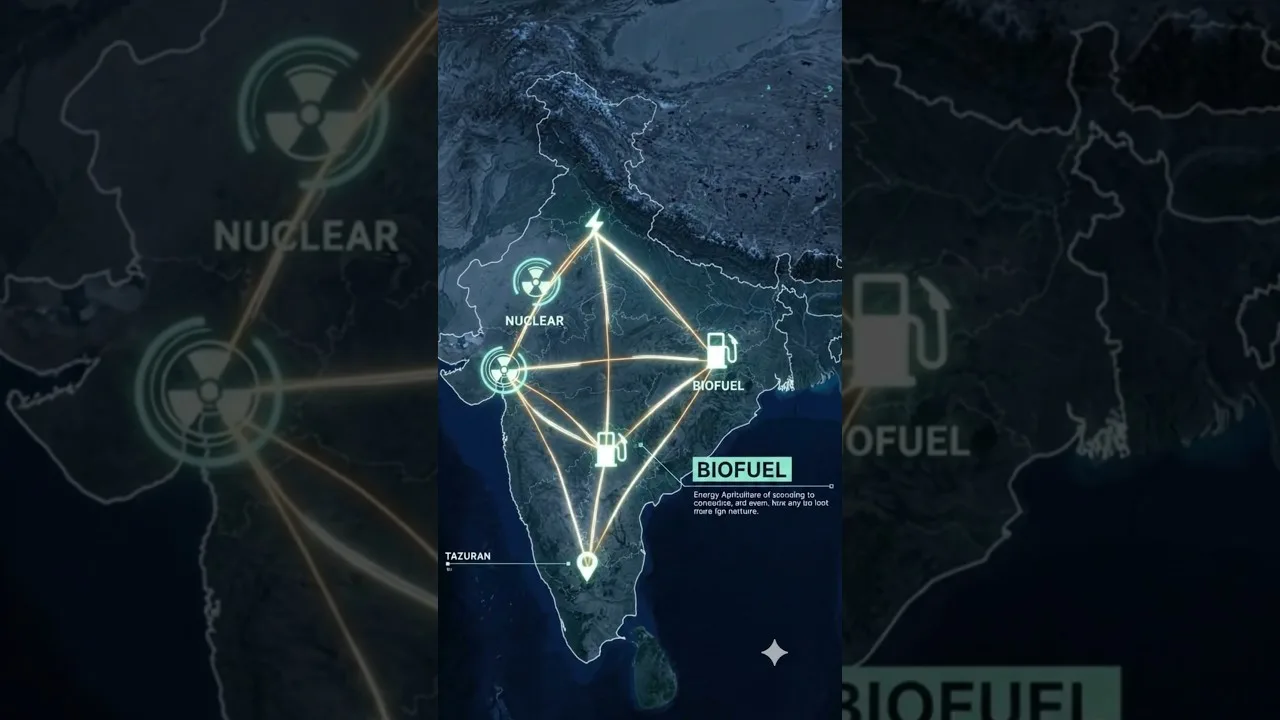
Examiners allocate implicit marks for visualization. A well-drawn sketch map of the “Indo-Gangetic Plain groundwater depletion” (using GRACE satellite data trends) or a flowchart linking “Western Disturbance → Precipitation → Rabi Crop → Food Security” communicates in 30 seconds what 150 words cannot. Geography Optional Answer Writing practice must allocate 15 minutes daily to diagram drills: climatology (Koppen classification, tri-cellular model), geomorphology (cycle of erosion, karst topography), oceanography (thermohaline circulation, El Niño-Southern Oscillation), and India-specific maps (coal belts, nuclear plants, Dedicated Freight Corridors). The UPSC examination pattern consistently rewards candidates who integrate at least one visual per 10-mark question and two per 15-mark question.
Value Addition Arsenal: Theories, Models, Data, and Case Studies
Standard Theories and Models
Malthus, Boserup, Demographic Transition Model (DTM), Ravenstein’s Migration Laws, Christaller’s Central Place Theory, Von Thünen’s Agricultural Location Model, Weber’s Industrial Location Theory, Rostow’s Stages of Growth, Myrdal’s Cumulative Causation, Friedman’s Core-Periphery — these must be cited by name with critical caveats. Example: “While Christaller’s CPT explains hierarchical urban spacing in the Gangetic plain, Geography Optional Answer Writing fails to account for political capital primacy (Delhi) and colonial port cities (Mumbai, Kolkata).”
Data-Driven Authority
Memorize 50-60 high-utility statistics: India’s forest cover (21.71%, ISFR 2023), groundwater extraction stage (60.08%, CGWB 2023), urbanization rate (35.9%, Census 2024 projection), sectoral GDP shares (Agriculture 18.3%, Industry 25.2%, Services 56.5%, 2023-24), HDI rank (134/193, UNDP 2023-24). Deploy them precisely: “Punjab’s groundwater extraction at 166% (CGWB 2023) exemplifies the tragedy of commons in Green Revolution belts.” — a key consideration for Geography Optional Answer Writing.
Case Studies: Indian and Global
Curate 15-20 reusable case studies: Kerala’s decentralized planning (People’s Plan Campaign), Indore’s waste management (Swachh Survekshan #1), Bhungroo irrigation (Gujarat), Sikkim’s organic transition, Netherlands’ land reclamation, China’s Three Gorges Dam impacts, Sahel’s Great Green Wall, Rhine Action Programme. Tag each with relevant themes (urban, agriculture, environment, regional planning) for rapid retrieval.
Common Pitfalls That Silently Drain Marks
- Generic definitions without contextual application. Defining “sustainable development” without linking to the specific question wastes 40 words.
- Missing diagrams in questions explicitly demanding “illustrate with examples” or implicitly requiring spatial representation.
- Imbalanced answers — 80% on causes, 10% on impacts, 10% on solutions. UPSC expects 30-30-40 distribution.
- Outdated data — quoting Census 2011 in 2026 answers signals negligence. Always use latest available.
- Poor handwriting and presentation — illegible scripts, no margins, cramped diagrams. Use ruled A4 sheets, pencil for diagrams, blue/black pen for text.
- Ignoring directive keywords — writing a descriptive answer for “critically analyze.”
PYQ Trend Analysis: 2018-2024 Patterns and 2026 Projections
Analysis of the last seven years reveals stable high-weightage themes. Paper 1 consistently tests: Geomorphology (cycles, slope development, applied geomorphology), Climatology (monsoon mechanisms, climate change, Koppen), Oceanography (bottom topography, resources, coral bleaching), Biogeography (soil genesis, biodiversity hotspots), and Environmental Geography (degradation, conservation, policies). Paper 2 emphasizes: Regional Planning (planning regions, multi-level planning, NITI Aayog), Agriculture (cropping patterns, food security, reforms), Industry (locational factors, corridors, MSME), Transport/Trade (logistics, ports, inland waterways), and Cultural Setting (tribes, language, religion). Emerging 2026 focus areas: Blue Economy (Draft Blue Economy Policy 2023), Green Hydrogen Mission, National Logistics Policy 2022 impact, Urban Flood Resilience (Chennai, Bengaluru, Delhi 2022-24 events), and Digital Agriculture (AgriStack, Kisan Drones).
The Complete 2026 Action Plan: Phased Geography Optional Answer Writing Calendar
Phase 1: Foundation (Months 1-3) — Concept-to-Answer Translation
- Daily: 1 hour content reading + 30 minutes diagram practice (topic-aligned).
- Weekly: 3 structured answers (10-markers) from completed topics. Peer/mentor review mandatory.
- Resources: NCERT Class 11-12, G.C. Leong, Majid Husain, Khullar, TheGeoecologist class notes.
- Output: 36+ answers, diagram bank of 50+ sketches.
Phase 2: Thematic Integration (Months 4-6) — Cross-Paper Synthesis
- Daily: 45 minutes current affairs mapping (The Hindu, Down To Earth, Yojana, Kurukshetra, PIB) to syllabus topics.
- Weekly: 2 full-length 15-marker answers (1 Paper 1, 1 Paper 2) + 1 map-based question. Timed: 20 minutes each.
- Monthly: 1 sectional test (Paper 1 or Paper 2) under exam conditions.
- Focus: Directive adherence, data integration, contemporary linkages, conclusion quality.
Phase 3: Mock Simulation (Months 7-8) — Exam Temperament
- Weekly: 2 full mock papers (3 hours each, 20 questions). Strict evaluation against model answers.
- Post-Mock Analysis: Error log categorization (content gap, structural flaw, missing diagram, time management, directive miss).
- Final 3 Weeks: Revision of error log, diagram bank, statistics sheet, case study index. Zero new content.
- Target: Consistent 140+ per paper in mocks = 280+ in actuals.
Resource Ecosystem for Geography Optional Answer Writing Excellence
Primary: TheGeoecologist Answer Writing Workbook 2026 (structured templates, model answers, diagram bank). Standard References: Certificate Physical and Human Geography (G.C. Leong), Geography of India (Majid Husain), India: A Comprehensive Geography (Khullar), Human Geography (Majid Husain), Models in Geography (Majid Husain). Periodicals: Yojana (monthly theme), Kurukshetra (rural focus), Down To Earth (environment), Economic & Political Weekly (select articles). Government Sources: India State of Forest Report, Central Ground Water Board Yearbook, NITI Aayog Reports (Composite Water Management Index, SDG India Index), Economic Survey 2023-24 (Chapter on Climate Change), Union Budget 2024-25 (Geography-relevant allocations). Digital: TheGeoecologist YouTube (orientation lectures, PYQ discussions), PIB releases, IMD climate summaries.
Mentorship and Feedback Loops: The Accelerator
Self-evaluation suffers from blind spots. A structured mentorship program — weekly answer review by evaluators who have scored 300+ in Geography Optional — provides calibrated feedback on: introduction effectiveness, subheading relevance, diagram accuracy, data currency, conclusion impact, and presentation. TheGeoecologist’s 2026 Answer Writing Program includes 24 evaluated tests (12 sectional, 12 full-length) with personalized audio feedback, rank-comparative analytics, and strategy recalibration calls. This external accountability mechanism is what transforms consistent practitioners into toppers.
Final Word: Your 280+ Journey Starts Today
The gap between a 220 and a 300 in Geography Optional is not 80 marks of knowledge — Geography Optional Answer Writing is 80 marks of Geography Optional Answer Writing discipline. Every topper since 2018 (Kanishak Kataria AIR 1 2018, Junaid Ahmad AIR 3 2018, Pratibha Verma AIR 3 2019, Shubham Kumar AIR 1 2020) has credited structured answer writing practice initiated 8-10 months before Mains. The 2026 cycle offers you the same window. The orientation lecture by TheGeoecologist is your strategic starting point — a live demonstration of the methodology, a walkthrough of the 2026 calendar, and a Q&A to resolve your specific doubts. Register, attend, and commit to the daily grind. The blueprint is proven. The execution is yours.
Ready to begin? Visit thegeoecologist.com for the 2026 Answer Writing Program schedule and geographyebooks.com for comprehensive study materials. Contact: krishna.geography@gmail.com
Frequently Asked Questions
A minimum of 6-8 months of consistent Geography Optional Answer Writing practice is recommended, starting with 2-3 answers weekly and scaling to daily timed mocks in the final 3 months before Mains.
A high-scoring answer follows: Introduction (2-3 lines with definition/context), Body (4-5 subheadings with diagrams/maps/data), and Conclusion (2-3 lines with forward-looking policy linkage or SDG alignment).
Paper 1 rewards climatology diagrams (tri-cellular model, ITCZ), geomorphology cycles (Davis, Penck), and population models. Paper 2 expects India-specific maps (river basins, agro-climatic zones, industrial corridors) and regional planning flowcharts.