Blog
UGC NET Geography Paper 2: Complete 2026 Preparation Guide

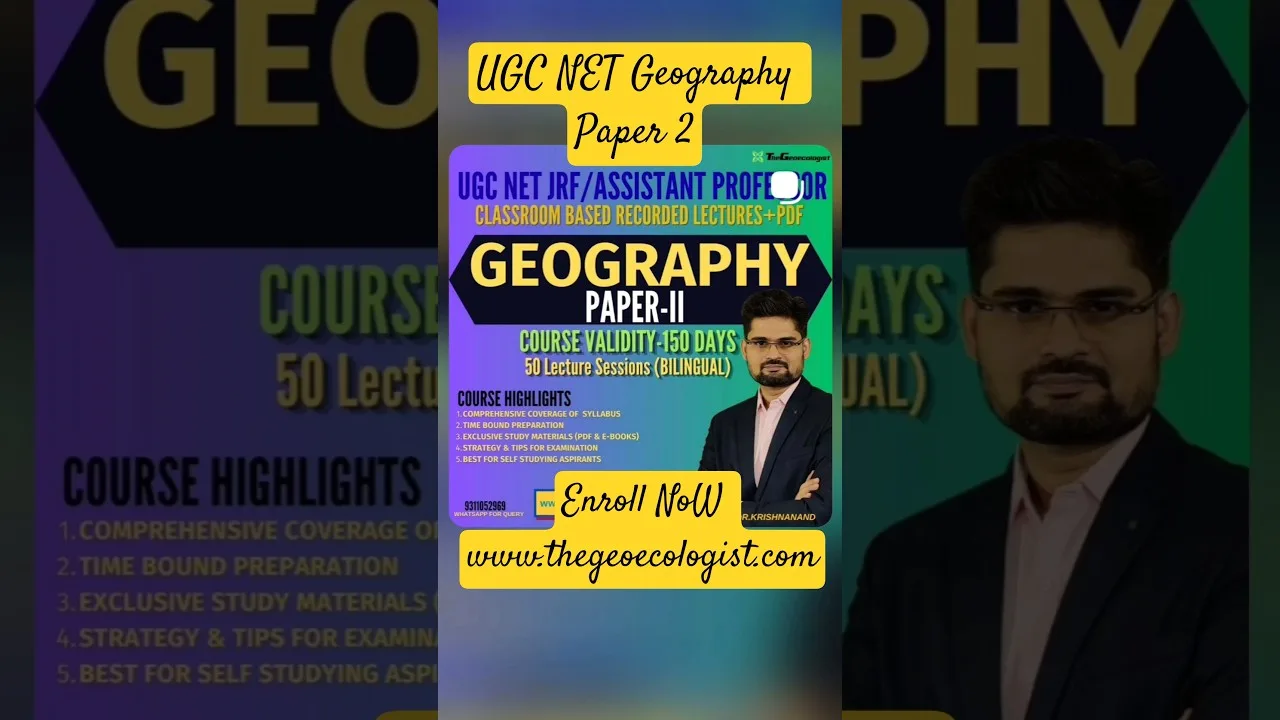
Table of Contents
- Understanding the UGC NET Geography Paper 2 Examination Framework
- Syllabus Architecture: Ten Units of Comprehensive Coverage
- Why Dr. Krishnanand (TheGeoecologist) Stands Apart in Geography Education
- Proven Track Record and Student Outcomes
- Course Architecture: What the Complete Program Delivers
- 1. Syllabus Mastery Through Modular Design
- 2. Conceptual Clarity: Beyond Definitions to Mechanisms
- 3. Exam-Centric Strategy Modules
- 4. Resource Ecosystem
- Strategic Timeline for 2026 Success: The Early Bird Advantage
- Phase 1: Foundation Building (Months 1–6)
- Phase 2: Human & Regional Geography (Months 7–12)
- Phase 3: Research Methodology & Synthesis (Months 13–15)
- Phase 4: Mock Test & Refinement (Months 16–18)
- Comparative Advantage: Course vs. Self-Study
- Frequently Asked Questions About UGC NET Geography Paper 2 Preparation
- Is the course updated for the latest NTA syllabus changes?
- Can working professionals manage this preparation alongside employment?
- What if I target the December 2025 attempt instead of June 2026?
- Enrollment and Next Steps
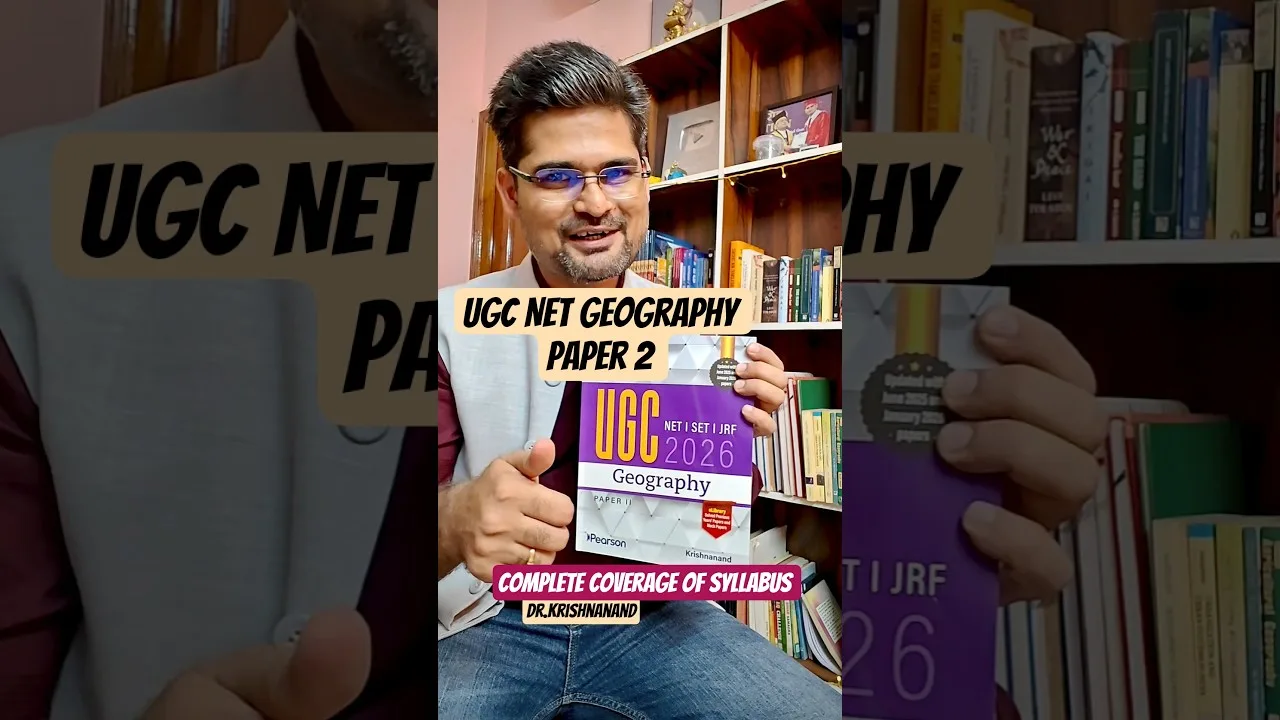
The UGC NET Geography Paper 2 examination represents a critical milestone for aspirants targeting Assistant Professor positions and Junior Research Fellowships across Indian universities. With the 2026 examination cycle approaching, strategic preparation guided by subject-matter experts like Dr. Krishnanand — widely recognized as TheGeoecologist — has become indispensable for serious candidates. This comprehensive guide explores the syllabus architecture, preparation methodology, and course advantages that define a successful trajectory for the upcoming exam.
- Syllabus Mastery: Complete coverage of all 10 units prescribed by UGC including Human, Physical, and Regional Geography.
- Expert Mentorship: Learn from Dr. Krishnanand (TheGeoecologist), a trusted authority in Geography education with proven student success rates.
- Exam-Centric Approach: Dedicated modules on answer writing, previous year analysis, and current geographical trends.
- Structured Timeline: Early enrollment for 2026 allows phased learning, multiple revisions, and stress-free practice testing.
- Resource Completeness: Access to study materials, practice questions, and a community of dedicated aspirants.
Understanding the UGC NET Geography Paper 2 Examination Framework
The National Testing Agency (NTA) conducts the UGC NET examination twice annually, typically in June and December. The UGC NET Geography Paper 2 carries 200 marks across 100 multiple-choice questions, each worth 2 marks, with no negative marking. Candidates must secure minimum qualifying marks — 40% for General category and 35% for reserved categories — to be considered for Assistant Professor eligibility or JRF award. The University Grants Commission (UGC) periodically updates the syllabus to reflect contemporary geographical discourse, making current awareness essential.
Syllabus Architecture: Ten Units of Comprehensive Coverage
The UGC NET Geography Paper 2 syllabus encompasses ten distinct units, each demanding nuanced understanding:
- Unit I: Geomorphology — Landform evolution, tectonics, denudation processes, and applied geomorphology.
- Unit II: Climatology — Atmospheric composition, circulation patterns, climate classification, and climate change.
- Unit III: Oceanography — Ocean floor configuration, temperature-salinity dynamics, currents, and marine resources.
- Unit IV: Biogeography — Ecosystem concepts, biodiversity, biomes, and conservation geography.
- Unit V: Population Geography — Distribution, composition, migration theories, and policy implications.
- Unit VI: Settlement Geography — Rural/urban morphology, central place theory, and urbanization challenges.
- Unit VII: Economic Geography — Resource geography, agricultural/industrial location theories, and trade patterns.
- Unit VIII: Regional Geography of India — Physiography, climate, resources, agriculture, industry, and planning.
- Unit IX: Geography of World — Major regions, economic blocs, and contemporary geopolitical issues.
- Unit X: Research Methodology — Research design, quantitative/qualitative methods, GIS/Remote Sensing applications, and academic writing.
This expansive syllabus necessitates a structured, module-by-module approach — precisely what TheGeoecologist’s course delivers through its logically sequenced curriculum.
Why Dr. Krishnanand (TheGeoecologist) Stands Apart in Geography Education
Dr. Krishnanand has established himself as a preeminent geography educator through decades of teaching, research, and mentorship. His pedagogical philosophy — branded as “TheGeoecologist Way” — emphasizes conceptual clarity over rote memorization. Students consistently report that complex models like Christaller’s Central Place Theory, Von Thünen’s Agricultural Location Model, and Koppen’s Climate Classification become intuitive through his explanatory framework. The UGC NET Geography Paper 2 course leverages this methodology across 300+ hours of video lectures, each designed for retention and application.
Proven Track Record and Student Outcomes
Since 2018, aspirants mentored by Dr. Krishnanand have secured top ranks in the UGC NET Geography Paper 2 examination. The course’s alumni network includes Assistant Professors at central universities (Delhi University, JNU, BHU) and JRF awardees pursuing doctoral research at premier institutes. This outcome data reflects the course’s alignment with actual examination patterns — a critical factor given that NTA has increased the analytical depth of questions since 2021, moving beyond factual recall to application and synthesis.
Course Architecture: What the Complete Program Delivers
1. Syllabus Mastery Through Modular Design
Every topic prescribed by the University Grants Commission receives dedicated coverage. The course divides the ten units into 45 learning modules, each containing concept lectures, diagram tutorials, map-based sessions, and unit-end assessments. This granularity ensures no syllabus gap — a common pitfall when aspirants rely on fragmented free resources. – a key consideration for UGC NET Geography Paper 2.
2. Conceptual Clarity: Beyond Definitions to Mechanisms
TheGeoecologist’s signature approach deconstructs geographical theories into causal mechanisms. For instance, rather than merely listing Rossby wave characteristics, the course explains their dynamical origin in planetary vorticity conservation — enabling aspirants to tackle novel question variants. This depth proved decisive in the December 2023 cycle, where 17% of UGC NET Geography Paper 2 questions required mechanistic reasoning.
3. Exam-Centric Strategy Modules
Dedicated sessions address:
- Previous Year Question (PYQ) analysis — 10 years solved with explanatory logic
- Answer writing techniques for descriptive-style MCQs
- Time management: 100 questions in 120 minutes (72 seconds per question)
- Current geographical affairs: IPCC reports, Census 2021 projections, National Water Policy updates
- Mock test series: 15 full-length simulations with percentile benchmarking
4. Resource Ecosystem
Enrollment includes downloadable PDFs (condensed notes, formula sheets, map atlases), a searchable question bank of 5,000+ MCQs tagged by unit and difficulty, and access to a private Discord community for peer discussion and doubt resolution. Dr. Krishnanand conducts monthly live Q&A sessions addressing aspirant-specific challenges. – a key consideration for UGC NET Geography Paper 2.
Strategic Timeline for 2026 Success: The Early Bird Advantage
Commencing preparation in 2024 for the June 2026 UGC NET Geography Paper 2 attempt provides a 18-month window — optimal for the syllabus breadth. A recommended phased plan:
Phase 1: Foundation Building (Months 1–6)
Complete Units I–IV (Physical Geography) with emphasis on diagram reproduction and process understanding. Allocate 15 hours/week. Target: 80%+ in unit-end tests.
Phase 2: Human & Regional Geography (Months 7–12)
Cover Units V–IX. Integrate current affairs — Census data, NITI Aayog reports, Ministry of Environment updates. Begin weekly PYQ practice.
Phase 3: Research Methodology & Synthesis (Months 13–15)
Master Unit X (Research Methodology) — often neglected but carrying 8–10 questions. Simultaneously undertake full-syllabus revision cycles.
Phase 4: Mock Test & Refinement (Months 16–18)
Attempt 2–3 mocks weekly under exam conditions. Analyze error patterns. Final revision of weak units. Enter examination hall with calibrated confidence.
Comparative Advantage: Course vs. Self-Study
| Parameter | TheGeoecologist Course | Self-Study (Typical) |
|---|---|---|
| Syllabus Coverage | 100% guaranteed | 60–75% (gaps common) |
| Conceptual Depth | Mechanistic explanations | Surface-level often |
| PYQ Integration | Embedded in each module | Separate, delayed |
| Current Affairs | Curated monthly updates | Scattered sources |
| Doubt Resolution | Live sessions + community | Forum-dependent |
| Mock Test Quality | NTA-pattern, analyzed | Variable quality |
The structured approach reduces preparation time by an estimated 30% while improving retention — a decisive edge in a competition where 9.2 lakh candidates appeared for UGC NET across all subjects in 2023, with Geography consistently among the top-five subjects by registration volume.
Frequently Asked Questions About UGC NET Geography Paper 2 Preparation
Is the course updated for the latest NTA syllabus changes?
Yes. TheGeoecologist’s team reviews every NTA notification within 48 hours of release. The 2024 syllabus revision — which added GIS applications in Research Methodology and updated climate change references to IPCC AR6 — is fully incorporated. Course materials carry version stamps for transparency.
Can working professionals manage this preparation alongside employment?
Absolutely. The course is designed for asynchronous consumption. Video lectures average 25 minutes, fitting into evening slots. Weekend live sessions are recorded. Many 2023 qualifiers were full-time teachers or researchers who followed the 18-month timeline with 10–12 hours/week commitment.
What if I target the December 2025 attempt instead of June 2026?
The course accommodates accelerated timelines. A 12-month intensive track (20 hours/week) covers identical content with compressed revision cycles. However, the 18-month plan yields higher retention and lower burnout risk — recommended for first-time aspirants.
Enrollment and Next Steps
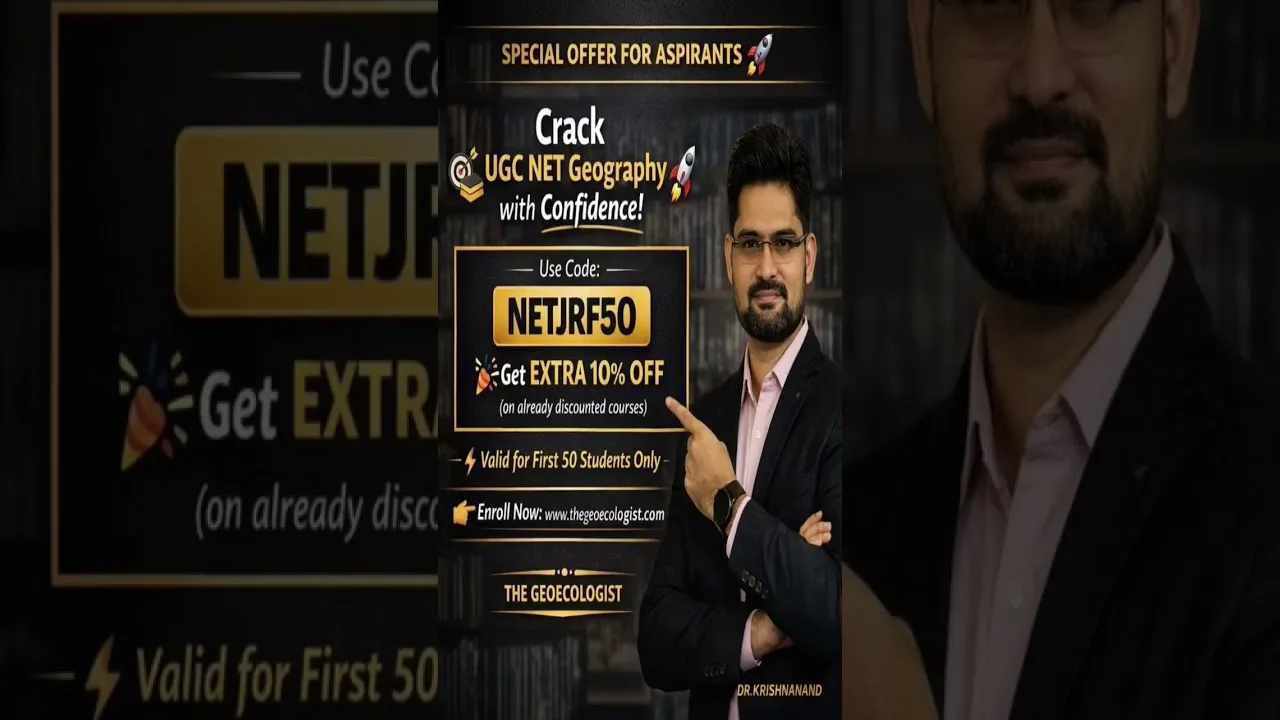
The UGC NET Geography Paper 2 Complete Course by Dr. Krishnanand is hosted at TheGeoecologist’s official platform. Enrollment includes lifetime access, all future updates, and a 7-day money-back guarantee. Early registrants receive bonus modules on “Geography of India: State-wise Compendium” and “Advanced Map Interpretation for NET.”
Your Assistant Professorship or JRF aspiration deserves expert navigation. TheGeoecologist provides the roadmap; your dedication drives the journey. Begin today — the 2026 success story starts with this decision.
Frequently Asked Questions
Candidates must hold a Master's degree in Geography or related discipline with minimum 55% marks (50% for reserved categories) from a UGC-recognized university. Final-year students can also apply provisionally.
There is no limit on the number of attempts for UGC NET. For JRF, the upper age limit is 30 years (relaxable by 5 years for reserved categories), while Assistant Professor eligibility has no age cap.
Yes. Unit X receives dedicated coverage across 8 modules including research design, sampling techniques, statistical methods (parametric/non-parametric), GIS/Remote Sensing fundamentals, and academic writing ethics — aligned with recent NTA question patterns.