
Blog
Yosemite Firefall: See Nature’s Molten Lava Illusion in February

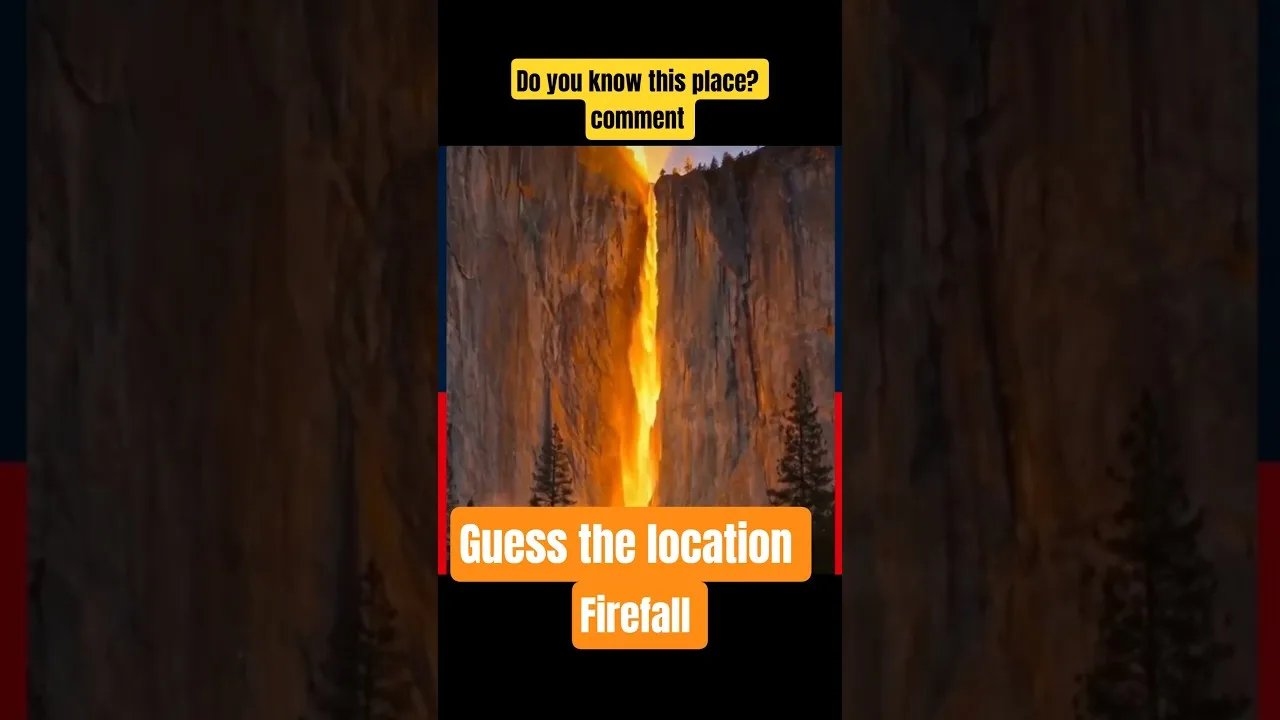
Table of Contents
- What Is the Yosemite Firefall?
- The Science Behind the Spectacle
- Three Precise Ingredients
- Why the Granite Glows
- When and Where to See the Yosemite Firefall in 2025
- Optimal Viewing Window
- Prime Locations
- Historical Context: From Man-Made to Natural Wonder
- Photography Guide: Capturing the Glow
- Gear Recommendations
- Settings & Technique
- Conservation and Visitor Responsibility
- Planning Your 2025 Yosemite Firefall Trip
- Reservations & Logistics
- Weather & Road Conditions
- Sample Itinerary
- Beyond the Firefall: Winter Yosemite Highlights
- Conclusion: Chasing the Light
The Yosemite Firefall is one of Earth’s most breathtaking optical illusions, transforming Horsetail Fall into a cascade of molten gold each February. This rare natural phenomenon occurs when the setting sun strikes the waterfall at a precise angle, igniting the water with fiery hues of orange, red, and yellow that mimic flowing lava. For roughly ten minutes at sunset, the granite cliffs of El Capitan frame a spectacle that draws photographers, nature lovers, and viral content creators from around the globe. Unlike the historic man-made firefall of burning embers pushed from Glacier Point (discontinued in 1968), this Yosemite Firefall is entirely natural—a fleeting alignment of geology, hydrology, and astronomy.
- Yosemite Firefall is a natural optical illusion at Horsetail Fall, not actual fire.
- Peak viewing occurs February 12–27, 2025, requiring clear skies and adequate snowmelt.
- Best vantage points: El Capitan Meadow, Cathedral Beach, and the Northside Drive pullouts.
- Arrive 1–2 hours before sunset; tripods and telephoto lenses (200mm+) are recommended.
- Park reservations are mandatory on select weekends in February 2025 via Recreation.gov.
What Is the Yosemite Firefall?
The Yosemite Firefall is a seasonal phenomenon at Horsetail Fall, a small, ephemeral waterfall that flows over the eastern edge of El Capitan in Yosemite Valley. For about two weeks in mid-to-late February, the sun’s azimuth aligns perfectly with the waterfall’s orientation. When conditions are ideal—clear western skies, sufficient snowpack feeding the fall, and the sun at roughly a 45-degree angle—the water catches the last direct rays of daylight. The result: a glowing ribbon of light that appears identical to molten lava spilling over the cliff.
This Yosemite Firefall lasts only 5–15 minutes, peaking around 5:30–5:45 PM PST. The effect is purely optical; the water remains cold. The phenomenon was first photographed in color by Galen Rowell in 1973, but it remained relatively obscure until social media exploded its popularity in the 2010s. Today, the Yosemite Firefall is a bucket-list event, with #Firefall generating millions of views on TikTok, Instagram Reels, and YouTube Shorts annually.
The Science Behind the Spectacle
Three Precise Ingredients
Geologists and meteorologists identify three non-negotiable conditions for the Yosemite Firefall:
- Hydrology: Horsetail Fall is fed by snowmelt from a 30-acre basin atop El Capitan. A warm early February or heavy winter snowpack ensures flow; drought years (e.g., 2014, 2018, 2021) can leave the fall dry.
- Solar Geometry: The sun must set at an azimuth of ~250°–255°, which occurs only in the second half of February. The angle of incidence reflects light off water droplets directly toward the viewer.
- Atmospheric Clarity: Even thin clouds on the western horizon block the critical rays. The National Weather Service’s forecast for Yosemite Valley is essential viewing.
Why the Granite Glows
The dark, vertical face of El Capitan provides a high-contrast backdrop. The waterfall’s thin, sheet-like flow (often just 1–3 cubic feet per second) maximizes surface area for reflection. As solar physicist Dr. Kate Russo explains, “The Yosemite Firefall is a masterclass in Mie scattering—water droplets forward-scatter the longer wavelengths of sunset light, amplifying reds and oranges while the dark cliff absorbs competing wavelengths.” This combination creates the illusion of self-illuminating lava.
When and Where to See the Yosemite Firefall in 2025

Optimal Viewing Window
The 2025 peak window is February 12–27, with the absolute best alignment predicted for February 18–22. The sun sets at 5:41 PM PST on February 18, shifting to 5:47 PM by February 27. Photographers should be in position by 4:30 PM.
Prime Locations
| Location | Distance from Fall | Pros | Cons |
|---|---|---|---|
| El Capitan Meadow | ~0.7 miles | Classic frontal composition; tripod-friendly | Extremely crowded; limited parking |
| Cathedral Beach / Picnic Area | ~1 mile | Wider angle includes Merced River reflections | Requires walk from Northside Drive parking |
| Northside Drive Pullouts (between El Capitan Bridge & Cathedral Beach) | 0.5–1 mile | Multiple compositions; easier parking | Shoulder parking fills by 3 PM |
| Valley View (eastbound) | ~1.5 miles | Iconic wide valley framing | Distant; fall appears small |
Pro tip: Scout your spot the day before. The Yosemite Firefall attracts 1,000+ viewers on peak weekends; the meadow’s prime real estate is claimed by 2 PM.
Historical Context: From Man-Made to Natural Wonder
Yosemite’s firefall legacy began in 1872 when James McCauley pushed glowing coals from Glacier Point for hotel guests. The “Fire Fall” became a nightly summer tradition until the National Park Service ended it in 1968, citing fire risk and unnatural spectacle. The natural Yosemite Firefall at Horsetail Fall was known to locals but gained global fame after Rowell’s 1973 photograph “Last Light on Horsetail Fall” appeared in National Geographic. The National Park Service now manages the event with traffic controls, designated viewing zones, and a reservation system for February weekends—measures implemented after 2022 saw gridlock and vegetation damage.
Photography Guide: Capturing the Glow
Gear Recommendations
- Lens: 200–600mm (full-frame equivalent) for tight compression; 70–200mm for environmental context.
- Tripod: Mandatory. Shutter speeds drop to 1/15–1/30s at ISO 100–400.
- Filters: Circular polarizer to reduce glare on wet rock; 2-stop ND if shooting video at 24fps.
- Remote shutter: Prevents vibration.
Settings & Technique
Shoot in RAW. Start at ISO 200, f/8, 1/30s. Bracket exposures (±1 EV) for HDR blending—the dynamic range between the bright fall and dark cliff exceeds most sensors. Use spot metering on the brightest part of the water. For video, lock white balance to 5,500K (daylight) to preserve the warm tones; auto white balance will neutralize the fire colors. Many pros shoot verticals for Reels/TikTok and horizontals for prints simultaneously using two bodies.
Conservation and Visitor Responsibility
The surge in Yosemite Firefall tourism threatens the fragile riparian zone at the base of El Capitan. In 2023, park botanists documented trampling of rare mosses and compaction of meadow soils. The NPS urges visitors to:
- Stay on paved paths and established pullouts.
- Pack out all waste; no restrooms at meadow viewing areas.
- Use the free Yosemite Valley shuttle (runs every 10–15 minutes in February) to reduce traffic.
- Respect quiet hours; the experience is diminished by drone noise (drones are prohibited park-wide).
As Yosemite geologist Greg Stock notes, “The Yosemite Firefall is geography, geology, and poetry in motion. Protecting the setting ensures future generations witness the same wonder.”
Planning Your 2025 Yosemite Firefall Trip
Reservations & Logistics
For February 2025, Yosemite Firefall weekends (Feb 14–16, Feb 21–23) require a Recreation.gov day-use reservation ($2 non-refundable fee, released in blocks starting January 2025). Weekdays do not require reservations but arrive early. Lodging in Yosemite Valley (The Ahwahnee, Yosemite Valley Lodge, Curry Village) books 6–12 months ahead. Nearby gateway communities—El Portal, Mariposa, Oakhurst—offer alternatives with 30–60 minute drives.
Weather & Road Conditions
February highs average 52°F (11°C); lows near 30°F (-1°C). Carry tire chains (required by law when chain control is in effect). Check current road conditions via NPS or call 209-372-0200. Tioga Pass and Glacier Point Road are closed; access is via Highway 140 (All-Weather Highway) or Highway 41.
Sample Itinerary
- Day 1: Arrive by noon. Scout El Capitan Meadow and Cathedral Beach. Sunset at Valley View for warm-up shots.
- Day 2 (Firefall Day): Breakfast early. Enter park by 1 PM. Claim meadow spot by 2:30 PM. Shoot Firefall at 5:30 PM. Stay for blue hour reflections in Merced River.
- Day 3: Morning hike to Lower Yosemite Fall or Mirror Lake. Depart midday.
Beyond the Firefall: Winter Yosemite Highlights
While the Yosemite Firefall is the star, February offers other spectacles: frazil ice flows in Yosemite Creek (best seen at Lower Yosemite Fall bridge on freezing mornings), snow-dusted Half Dome reflections in Mirror Lake, and the “moonbow” (lunar rainbow) at Lower Yosemite Fall on full moon nights (February 12, 2025). Cross-country skiing the Valley Loop Trail or snowshoeing to Dewey Point provides solitude the Firefall crowds miss.
Conclusion: Chasing the Light
The Yosemite Firefall is a reminder that our planet’s most magical moments are often brief, conditional, and utterly free. Whether you stand tripod-to-tripod with hundreds in El Capitan Meadow or watch a 15-second Reel on your phone, the sight of water becoming fire ignites a primal awe. Plan meticulously, tread lightly, and savor the ten minutes when geology and geometry conspire to paint the cliffs with liquid gold. As the park’s signage reads: “Nature’s magic isn’t hidden—it’s waiting for the light to reveal it.”
Frequently Asked Questions
The optimal window is February 12–27, 2025, with peak alignment predicted for February 18–22. The effect occurs at sunset (~5:30–5:45 PM PST) and lasts only 5–15 minutes.
Yes, day-use reservations are required on February weekends (Feb 14–16 and Feb 21–23, 2025) via Recreation.gov. Weekdays do not require reservations, but arrive early as parking fills by mid-afternoon.
A telephoto lens (200–600mm full-frame equivalent), sturdy tripod, and remote shutter are essential. Shoot RAW, bracket exposures, and use spot metering on the bright water. A circular polarizer helps reduce glare on wet rock.