Blog
World Population Problems and Policies: A Comprehensive Geography Guide

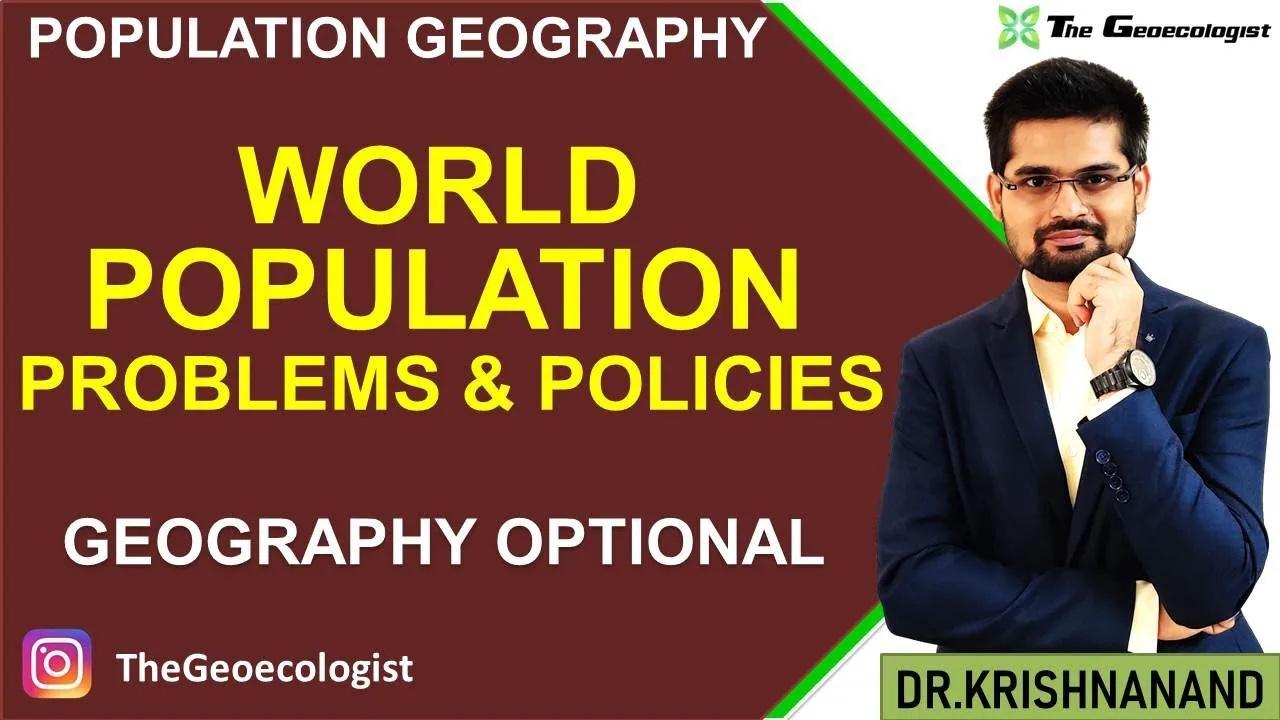
Table of Contents
- World Population Problems: Key Challenges and Solutions
- Demographic Trends and Their Impact
- Population Growth Rates
- Age Distribution and Dependency Ratio
- Urbanization and Migration Patterns
- Policy Responses and International Frameworks
- Case Studies and Regional Variations
- Preparing for UPSC: Study Tips and Resources
- Conclusion: Linking Population Geography to Broader Development Goals
World population problems and policies are central themes in population geography and crucial for UPSC aspirants. In this article, we distill the essential concepts discussed in Dr. Krishnanand’s video “World population problems and policies- Population Geography”, making them accessible for UPSC geography optional and other geography students. The material is also available in the e‑book “Simplified Population Geography” (https://geographyebooks.com/product/simplified-population-geography/).
- Understanding the core world population problems and policies essential for geography optional.
- How demographic trends shape economic, social, and environmental challenges globally.
- Policy frameworks and international strategies to manage population growth and distribution.
- Key statistical sources and how to use them for exam preparation.
- Practical tips for UPSC aspirants studying population geography.
World Population Problems: Key Challenges and Solutions
The phrase “world population problems” appears repeatedly in academic literature because the challenges are multifaceted. Overpopulation in densely populated regions, underpopulation in aging societies, uneven sex ratios, and rapid urbanization all fall under the umbrella of world population problems. These issues influence resource allocation, health systems, and political stability. For aspirants, grasping these dynamics is the first step toward mastering the geography optional syllabus.
One of the most cited resources for raw data is the world population statistics page on Wikipedia. It provides historical trends, current estimates, and projections that are frequently referenced in UPSC questions. Dr. Krishnanand emphasizes using such reliable sources to avoid misinformation.
Regional case studies further illustrate the breadth of world population problems. The rapid growth in Sub‑Saharan Africa contrasts sharply with the demographic decline in parts of Europe, creating distinct policy imperatives. Understanding these variations helps candidates answer questions that require comparative analysis.
Demographic Trends and Their Impact
Population Growth Rates
World population problems are intimately linked to growth rates. The global average growth rate has slowed to about 1.1% per year, yet many developing nations experience rates above 2%. This disparity fuels migration pressures and strains infrastructure, reinforcing the importance of monitoring these metrics. The latest figures are compiled by the United Nations and are often cited in news reports, such as a recent BBC news overview of demographic shifts.
Age Distribution and Dependency Ratio
Another facet of world population problems is the shifting age structure. Many high‑income countries face aging populations, raising the old‑age dependency ratio and challenging pension systems. Conversely, low‑income nations grapple with a youthful demographic, demanding massive investments in education and employment. These trends shape policy debates on healthcare, labor markets, and social security.
Urbanization and Migration Patterns
Urbanization is both a symptom and a driver of world population problems. By 2050, over 70% of the global populace is projected to reside in cities, intensifying demands for housing, transportation, and services. Migration, whether internal or cross‑border, reflects these pressures and introduces cultural, economic, and political dimensions that exam questions often probe.
Policy Responses and International Frameworks
Governments and international bodies have devised various strategies to mitigate world population problems. China’s historic one‑child policy, though relaxed recently, serves as a case study in population control. Meanwhile, the United Nations Population Fund (UNFPA) promotes reproductive health and rights, aiming to balance demographic dynamics through voluntary measures. A comprehensive analysis of these policies can be found in a recent The Guardian’s coverage of global population strategies.
In India, the National Population Policy (2000) and its revised versions underline the need for sustainable development, improved healthcare, and gender equity. These policy frameworks are frequently examined in the geography optional syllabus, making them essential reading for UPSC candidates.
Case Studies and Regional Variations
Regional variations highlight the complexity of world population problems. In East Asia, Japan’s shrinking workforce and low fertility rates pose economic challenges. In contrast, Nigeria’s youthful population offers a demographic dividend if properly harnessed. The Middle East faces a youth bulge combined with water scarcity, creating a volatile mix of social and environmental stresses.
Each region’s unique combination of cultural, economic, and environmental factors demands tailored policy responses. Dr. Krishnanand’s lecture underscores the importance of linking theoretical knowledge with real‑world examples to answer application‑based questions.
Preparing for UPSC: Study Tips and Resources
For UPSC geography optional, a systematic approach to world population problems is vital. Begin by reading the e‑book “Simplified Population Geography” to get a concise overview. Then, supplement this with data from Wikipedia’s world population page and recent news articles from sources like the BBC and The Guardian.
Create a table that lists key statistics, policy initiatives, and case studies for each major region. This visual aid helps in quick revision and reinforces the interconnection between demographic trends and geographic outcomes.
Practice answer writing by linking population problems to related themes such as resource distribution, environmental degradation, and economic development. This integrated approach mirrors the interdisciplinary nature of population geography and improves scoring potential.
Conclusion: Linking Population Geography to Broader Development Goals
World population problems and policies are not isolated academic topics; they are central to achieving the United Nations Sustainable Development Goals (SDGs). From ensuring quality education to combating climate change, demographic dynamics influence every aspect of global development.
By mastering the concepts outlined in this guide and leveraging resources like the e‑book, UPSC aspirants can confidently tackle questions on population geography. The insights from Dr. Krishnanand’s video, combined with up‑to‑date data and policy analysis, provide a solid foundation for success.
Stay updated with the latest demographic research, follow reputable news portals, and regularly revise the key takeaways. The journey through population geography is complex, but with structured preparation, the challenges become manageable and the opportunities for excellence multiply.
Frequently Asked Questions
The article covers overpopulation, underpopulation, age distribution imbalances, rapid urbanization, migration pressures, and regional demographic variations.
Use the e‑book "Simplified Population Geography", refer to Wikipedia’s world population data, incorporate recent news from BBC and The Guardian, create summary tables, and practice linking demographic trends to policy outcomes.
Authoritative sources include the United Nations Population Fund (UNFPA), the Wikipedia page on world population, and recent news coverage from BBC and The Guardian.