Blog
World Trade Patterns: A Complete Guide for UPSC CSE Aspirants and Geography Students

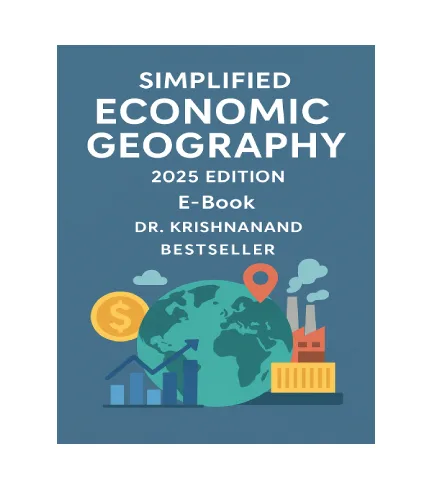
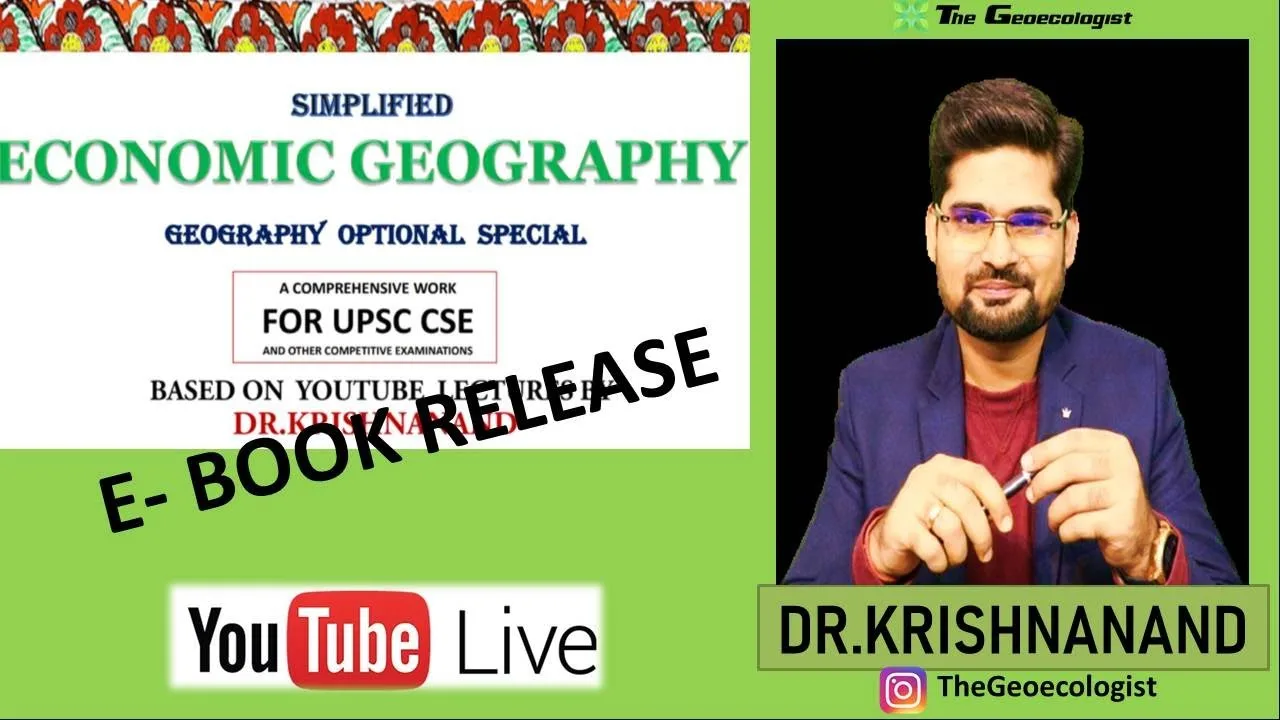
World trade patterns shape the global economy in ways that directly affect employment, prices, development, and geopolitics. Whether you are a UPSC CSE aspirant preparing for the Geography optional or an undergraduate studying economic geography, understanding how goods, services, and capital flow across borders is essential. This guide breaks down the most important concepts, evaluation criteria, and study resources — including how the Simplified Economic Geography (2025 Edition) | E-Book | Dr. Krishnanand | Bestseller can accelerate your mastery of the subject.
- World trade patterns determine which countries export and import specific goods and services.
- Key theories include Comparative Advantage, Heckscher-Ohlin, and the New Trade Theory.
- Understanding trade patterns is a core component of the UPSC CSE Geography syllabus and CBCS curriculum.
- The Simplified Economic Geography (2025 Edition) covers these topics with diagrams, maps, and point-wise descriptions designed for exam readiness.
- Effective study of world trade patterns requires a combination of theoretical clarity and data-driven practice.
Understanding World Trade Patterns and Why They Matter
World trade patterns refer to the spatial distribution of international trade — the flows of goods, services, and capital between nations. These patterns are shaped by factors such as comparative advantage, factor endowments, technological capability, transportation costs, trade policies, and geopolitical relationships. According to the World Trade Organization (WTO), global merchandise trade reached approximately $25.6 trillion in 2023, reflecting the sheer scale and complexity of international commerce.
For UPSC CSE candidates, world trade patterns fall under Paper I of the Geography optional, specifically in the units covering economic geography, world development, and industrial location. The CBCS syllabus prescribed by many universities also dedicates significant attention to trade theory and its practical implications. Ignoring this topic is not an option — it is consistently tested in both preliminary and mains examinations.
The significance of world trade patterns extends beyond the examination hall. They influence a nation’s GDP growth rate, employment structure, foreign exchange reserves, and even its strategic alliances. For instance, the shift of manufacturing from developed to developing economies over the past three decades has redrawn global trade maps, with countries like China, Vietnam, and India emerging as central nodes in supply chains. The United Nations Conference on Trade and Development (UNCTAD) provides detailed reports on these evolving world trade patterns, offering data that aspirants can reference for answer writing.
Key Concepts in World Trade Patterns Every Student Should Know
To master world trade patterns, you need a solid grasp of foundational theories and contemporary trends. Here are the critical concepts that recur in exams and academic coursework:
Classical and Modern Trade Theories
Adam Smith’s Absolute Advantage and David Ricardo’s Comparative Advantage remain the bedrock of trade theory. These explain why countries specialize in producing goods where they have a lower opportunity cost. The Heckscher-Ohlin model extends this by incorporating factor endowments — labor, land, and capital — predicting that labor-abundant countries export labor-intensive goods while capital-abundant countries export capital-intensive goods. More recently, Paul Krugman’s New Trade Theory accounts for economies of scale and network effects, explaining why similar countries trade similar products (intra-industry trade). All of these theories are integral to understanding world trade patterns and appear regularly in UPSC questions.
Global Value Chains and Trade in Services
Modern world trade patterns are increasingly defined by global value chains (GVCs), where a single product crosses multiple borders during its production process. A smartphone, for example, may involve components sourced from over a dozen countries. Simultaneously, trade in services — including IT outsourcing, financial services, and tourism — has grown faster than merchandise trade. The General Agreement on Trade in Services (GATS), administered by the WTO, provides the regulatory framework for these flows.
Trade Agreements and Blocs
Regional trade agreements such as the EU, ASEAN, USMCA, and RCEP significantly shape world trade patterns by reducing tariffs and non-tariff barriers among member nations. As of 2024, the WTO has recorded over 350 regional trade agreements, and their cumulative coverage exceeds 50% of global trade. Understanding the implications of these blocs — including trade diversion and trade creation effects — is critical for both theoretical and analytical exam questions.
How to Evaluate a World Trade Patterns Study Resource
Not every resource on world trade patterns is created equal. When evaluating study materials, consider the following criteria:
Syllabus Alignment
The resource must align with the UPSC CSE Geography syllabus and, if applicable, the CBCS curriculum. Check whether it covers the prescribed chapters — introduction to economic geography, world economic development, primary and secondary activities, and manufacturing regions. A resource like the Simplified Economic Geography (2025 Edition) by Dr. Krishnanand is explicitly designed around the prescribed CBCS syllabus, ensuring no critical topic is missed.
Clarity and Pedagogical Design
Economic geography involves abstract concepts that benefit from clear explanations. Look for resources that use point-wise descriptions, labeled diagrams, maps, and images to reinforce learning. The best materials make complex trade theories accessible through visual and structured presentations, which is precisely what the Simplified Economic Geography (2025 Edition) delivers with its highlighted descriptions and comprehensive visual aids.
Currency of Data
Trade data evolves rapidly. A 2025 edition resource incorporates the latest trade statistics, updated trade agreements, and recent shifts in world trade patterns — including post-pandemic supply chain reconfigurations and the impact of geopolitical tensions on trade routes. Outdated data weakens answer quality in both exams and academic assessments.
Exam-Ready Format
Your study material should facilitate both learning and revision. It should include model questions, key term definitions, and structured chapter summaries. The ability to locate information quickly during revision is often the difference between a good and an excellent preparation strategy.
Why Simplified Economic Geography (2025 Edition) Stands Out
The Simplified Economic Geography (2025 Edition) | E-Book | Dr. Krishnanand | Bestseller has earned its reputation by addressing the specific pain points of UPSC CSE aspirants and geography undergraduates. Here is how it aligns with what effective study of world trade patterns demands:
First, the book covers the full spectrum of economic geography topics — from the nature and scope of the discipline through world economic development, factor location, primary, secondary, and tertiary activities, manufacturing regions, and special economic zones. This comprehensive coverage means that when you study world trade patterns, you also understand the underlying production and distribution systems that drive those patterns.
Second, Dr. Krishnanand’s approach of using point-wise highlighted descriptions, diagrams, maps, and images transforms abstract trade concepts into concrete, visual learning experiences. For example, when discussing manufacturing regions and their role in global trade, the accompanying maps and diagrams help you visualize industrial clusters and their connectivity — knowledge that directly translates to stronger answer writing in mains examinations.
Third, the book is available as an affordable e-book at ₹249, making it one of the most accessible comprehensive resources available for this subject. The 2025 edition ensures alignment with the latest syllabus changes and contemporary data, giving you confidence that your preparation is current and complete.
How to Use This Guide for UPSC and Academic Success
Understanding world trade patterns is not just about reading theory — it requires a structured approach that integrates conceptual learning with analytical practice. Here is a step-by-step method:
Step 1: Build Conceptual Foundations. Start with the core theories — Absolute Advantage, Comparative Advantage, Heckscher-Ohlin, and New Trade Theory. Ensure you can explain each theory in two to three sentences and provide a real-world example.
Step 2: Map the Patterns. Use world maps to identify major trade corridors, export hotspots, and manufacturing regions. The diagrams and maps in the Simplified Economic Geography (2025 Edition) are particularly useful for this visual exercise. Relate each map to specific data points — trade volumes, commodity composition, and directional flows.
Step 3: Connect Theory to Current Affairs. Link trade theories to current events such as the Russia-Ukraine conflict’s impact on energy trade, US-China trade tensions, or India’s growing exports in services and pharmaceuticals. UPSC examiners reward candidates who demonstrate awareness of contemporary world trade patterns alongside theoretical knowledge.
Step 4: Practice Answer Writing. Write at least two descriptive answers per week on trade-related topics. Use data from WTO and UNCTAD reports to substantiate your arguments. This habit builds both content mastery and exam technique simultaneously.
Practical Buying Guidance and Study Tips
If you have decided to invest in the Simplified Economic Geography (2025 Edition), here are practical tips to maximize its value:
- Download the sample before purchasing to verify that the writing style and presentation suit your learning preferences.
- Read each chapter twice: first for conceptual understanding, then for revision using the point-wise highlights and visual elements.
- Create your own one-page summary sheets for each chapter, focusing on key definitions, theories, and data points related to world trade patterns and other economic geography topics.
- Supplement the e-book with the latest WTO World Trade Report and UNCTAD publications for current-year data that may not yet be reflected in any textbook.
- Join a study group or online forum where you can discuss world trade patterns and related topics with fellow aspirants — peer discussion significantly improves retention and analytical depth.
At ₹249, this e-book represents one of the most cost-effective investments you can make for your geography preparation. The combination of syllabus alignment, visual pedagogy, expert authorship, and updated content makes it a resource that delivers measurable value across your entire exam journey.
Frequently Asked Questions (FAQs)
What are world trade patterns and why are they important for UPSC CSE?
World trade patterns refer to the international flows of goods, services, and capital between countries, shaped by comparative advantage, factor endowments, and trade policies. They are important for UPSC CSE because they fall under the Geography optional’s economic geography syllabus and test candidates’ understanding of global development, industrial location, and spatial economic organization.
Which theories should I focus on when studying world trade patterns?
The essential theories include Adam Smith’s Absolute Advantage, David Ricardo’s Comparative Advantage, the Heckscher-Ohlin Factor Endowment model, and Paul Krugman’s New Trade Theory. Together, these explain why countries specialize and trade as they do, covering both traditional and modern dimensions of world trade patterns.
How does the Simplified Economic Geography (2025 Edition) help with understanding trade topics?
The book covers economic geography topics prescribed in the CBCS syllabus, including primary, secondary, and tertiary activities, manufacturing regions, and world economic development. Its use of point-wise descriptions, diagrams, maps, and images helps students visualize and retain complex concepts related to world trade patterns and their underlying economic structures.
Is the Simplified Economic Geography e-book suitable for undergraduates as well?
Yes. The book is designed for UPSC CSE aspirants, undergraduates, and geography enthusiasts. Its simplified language, structured format, and visual aids make it accessible for students at different academic levels who need a clear and comprehensive introduction to economic geography topics.
Where can I find the latest data on world trade patterns to supplement my preparation?
Authoritative sources include the WTO’s annual World Trade Report, UNCTAD’s Trade and Development Report, and the World Bank’s World Development Indicators. These publications provide up-to-date statistics on trade volumes, commodity composition, and regional trade agreements that can strengthen your answer writing and analytical responses on world trade patterns
Further reading: World Trade Patterns on Wikipedia
Our Recommendation
📖 Part of our complete guide: Evolution of Geographical Thought: A Comprehensive Guide for UPSC Aspirants and Geography Enthusiasts
Frequently Asked Questions
What are world trade patterns and why are they important for UPSC CSE?
World trade patterns refer to the international flows of goods, services, and capital between countries, shaped by comparative advantage, factor endowments, and trade policies. They are important for UPSC CSE because they fall under the Geography optional's economic geography syllabus and test candidates' understanding of global development, industrial location, and spatial economic organization.
Which theories should I focus on when studying world trade patterns?
The essential theories include Adam Smith's Absolute Advantage, David Ricardo's Comparative Advantage, the Heckscher-Ohlin Factor Endowment model, and Paul Krugman's New Trade Theory. Together, these explain why countries specialize and trade as they do, covering both traditional and modern dimensions of world trade patterns.
How does the Simplified Economic Geography (2025 Edition) help with understanding trade topics?
The book covers economic geography topics prescribed in the CBCS syllabus, including primary, secondary, and tertiary activities, manufacturing regions, and world economic development. Its use of point-wise descriptions, diagrams, maps, and images helps students visualize and retain complex concepts related to world trade patterns and their underlying economic structures.
Is the Simplified Economic Geography e-book suitable for undergraduates as well?
Yes. The book is designed for UPSC CSE aspirants, undergraduates, and geography enthusiasts. Its simplified language, structured format, and visual aids make it accessible for students at different academic levels who need a clear and comprehensive introduction to economic geography topics.
Where can I find the latest data on world trade patterns to supplement my preparation?
Authoritative sources include the WTO's annual World Trade Report, UNCTAD's Trade and Development Report, and the World Bank's World Development Indicators. These publications provide up-to-date statistics on trade volumes, commodity composition, and regional trade agreements.