Blog
World mineral resources: Complete Study Guide for UPSC CSE Aspirants

Understanding world mineral resources distribution is a critical component of economic geography, especially for UPSC CSE aspirants who must grasp how minerals are located, extracted, and traded across continents.
- Master the spatial patterns of key minerals such as iron ore, copper, bauxite, and petroleum.
- Learn how geological, economic, and political factors influence resource availability.
- Connect theoretical concepts to real‑world case studies that appear in UPSC mains and prelims.
- Use diagrams and maps to visualize global supply chains and trade flows.
- Build a revision‑ready foundation that supports both descriptive and analytical answers.
Understanding the Importance of World Mineral Resources in Economic Geography
The study of World mineral resources forms the backbone of economic geography because it links physical earth processes with human economic activities. Minerals are not evenly spread; their concentration in specific regions shapes industrial locations, trade policies, and even geopolitical strategies. For instance, the bulk of global iron ore reserves lies in Australia, Brazil, and China, while the Democratic Republic of Congo dominates cobalt production. Recognizing these patterns helps students explain why certain countries become manufacturing hubs and why others rely on imports. In the UPSC syllabus, questions often ask candidates to describe the distribution of minerals and evaluate its impact on regional development. A clear grasp of World mineral resources therefore translates directly into higher scores in both objective and descriptive papers.
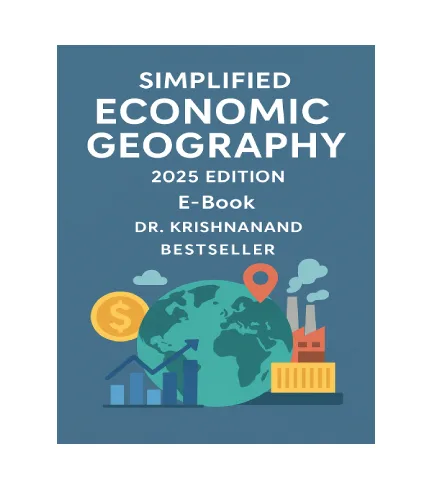
Moreover, the topic extends beyond mere memorization. Aspirants are expected to analyze how technological advancements in mining, shifts in global demand, and environmental regulations alter traditional patterns. For example, the rise of electric vehicles has increased the strategic importance of lithium, pushing exploration toward new basins in Argentina and Chile. By linking current events to the static distribution of minerals, learners develop the analytical depth that examiners reward. This dynamic perspective is precisely what the Simplified Economic Geography (2025 Edition) offers through its point‑wise highlighted descriptions, updated maps, and concise diagrams that reflect the 2025 data releases from the United Nations Geoscience Programme.
Common Challenges Students Face When Studying Mineral Distribution
Many learners report difficulty in visualizing the three‑dimensional spread of ore bodies and translating textual descriptions into map‑based answers. Traditional textbooks often present dense paragraphs without sufficient graphical support, leaving aspirants to rely on rote memorization. Another frequent obstacle is the lack of updated data; older editions cite reserve figures from a decade ago, which no longer reflect recent discoveries or depletion trends. Additionally, the interdisciplinary nature of the topic—requiring knowledge of geology, economics, and international relations—can overwhelm students who have not yet integrated these domains.
Time pressure during exam preparation exacerbates these issues. Aspirants need a resource that distills complex information into digestible points while retaining the nuance required for high‑scoring answers. They also benefit from practice questions that mirror the UPSC format, enabling them to apply conceptual knowledge under timed conditions. Without such targeted support, students risk spending excessive hours on low‑yield reading, leading to fatigue and gaps in understanding.
How to Evaluate a Good Study Resource for Economic Geography
When selecting a study aid for World mineral resources, aspirants should consider five key criteria. First, the material must align with the latest CBCS syllabus and include any recent amendments released by the UPSC board. Second, it should offer clear, point‑wise explanations accompanied by high‑quality diagrams, maps, and images that facilitate quick revision. Third, the resource must provide updated statistical data—preferably from authoritative sources such as the World Bank’s World Development Indicators or the United Nations Commodity Statistics Database. Fourth, it should incorporate practice questions, previous year papers, and answer‑writing tips tailored to the UPSC pattern. Fifth, the language needs to be accessible yet precise, avoiding unnecessary jargon while preserving academic rigor.
A product that satisfies these benchmarks not only saves preparation time but also builds confidence. Aspirants can then focus on higher‑order skills such as comparative analysis and critical evaluation, which are essential for scoring well in the geography optional paper. The next section examines how the Simplified Economic Geography (2025 Edition) meets each of these criteria, making it a strong candidate for anyone serious about mastering World mineral resources.
Why Simplified Economic Geography (2025 Edition) Aligns with Your Needs
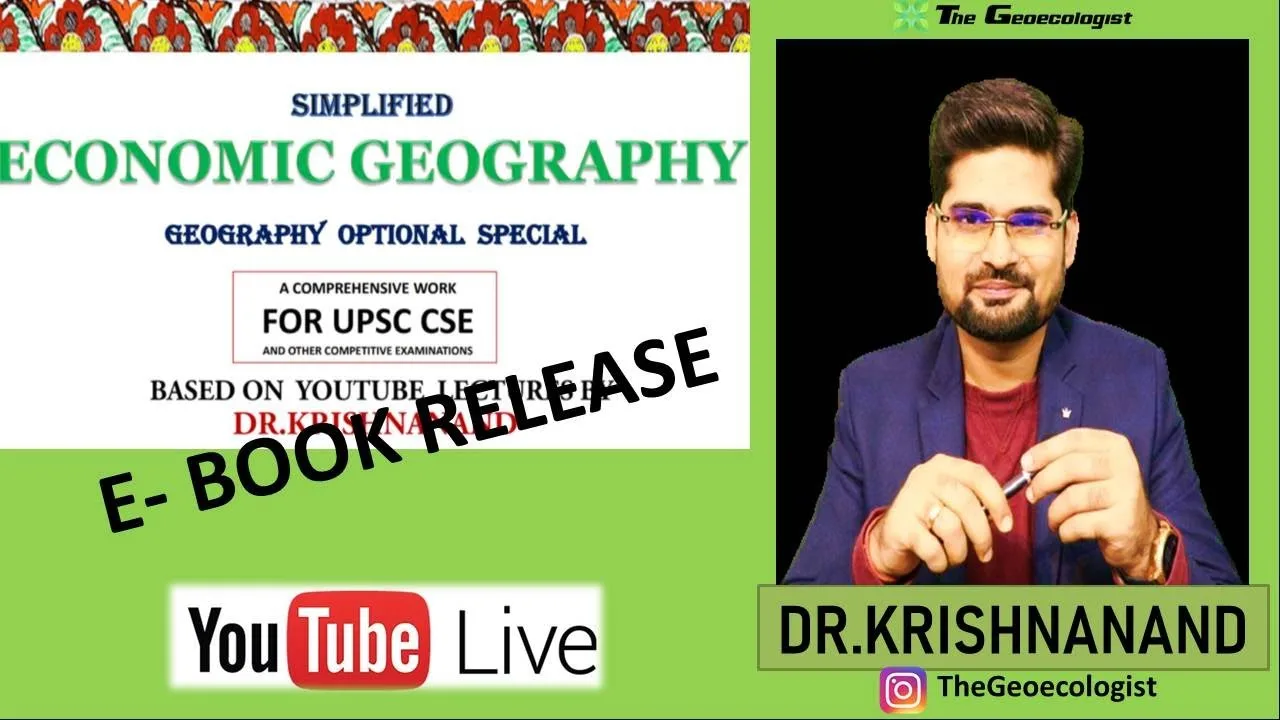
Authored by Dr. Krishnanand, a veteran educator with extensive experience in training UPSC candidates, this e‑book is explicitly designed to simplify complex economic geography concepts without sacrificing depth. The 2025 edition incorporates the most recent data on World mineral resources, including revised reserve estimates for rare earth elements and updated trade flow charts reflecting post‑pandemic shifts in global supply chains. Each chapter begins with a concise learning objective, followed by point‑wise highlighted descriptions that allow rapid scanning—a feature particularly useful during last‑minute revision.
Visual learning is strengthened through carefully curated diagrams, maps, and images. For example, Chapter 4 on Primary Activities includes a full‑color world map highlighting major iron ore belts, copper zones, and petroleum fields, each accompanied by a short explanatory caption. These visuals are directly tied to the textual content, ensuring that students can correlate spatial patterns with economic explanations. Furthermore, the e‑book adheres to the prescribed CBCS syllabus in geography, meaning that every topic covered is relevant to the UPSC CSE geography optional and undergraduate curricula.
Priced at INR 249, the product offers substantial value compared to traditional printed guides that often cost more and lack digital convenience. Being an e‑book, it is accessible on multiple devices, enabling aspirants to study during commutes or breaks. The format also allows for quick search functionality, so learners can jump directly to sections on specific minerals such as bauxite or tungsten without scrolling through irrelevant content. All these attributes make the Simplified Economic Geography (2025 Edition) a practical, syllabus‑aligned tool for mastering World mineral resources.
Practical Tips: Using the E-Book for Exam Preparation and Beyond
To maximize the benefits of this resource, aspirants should adopt a structured study routine. Begin by scanning the table of contents and identifying the chapters that deal directly with World mineral resources—primarily Chapters 1 through 4. Allocate dedicated time blocks to read each chapter’s point‑wise summary, then close the book and attempt to reproduce the key maps from memory. This active recall technique reinforces spatial retention and improves map‑drawing skills, which are frequently tested in the UPSC mains.
Next, leverage the embedded diagrams to create personalized flashcards. On one side, write the name of a mineral and its major producing regions; on the other, sketch a rough outline of the distribution pattern. Reviewing these cards weekly helps cement long‑term retention. Additionally, the e‑book includes short practice questions at the end of each chapter; treat these as mini‑mock tests and time yourself to simulate exam conditions. Comparing your answers with the provided explanations highlights areas needing further clarification.
Finally, integrate the knowledge gained from the e‑book with current affairs. Subscribe to a reliable source such as the Ministry of Mines’ monthly bulletin or the World Bank’s commodity market reports, and note any new discoveries, policy changes, or price fluctuations. Then, refer back to the relevant section in the Simplified Economic Geography (2025 Edition) to see how the static description aligns with the dynamic update. This habit not only enriches answers but also demonstrates the interdisciplinary awareness that UPSC examiners value.
Frequently Asked Questions About World Mineral Resources Study
What is the most reliable source for latest data on World mineral resources?
The United Nations Commodity Statistics Database and the World Bank’s World Development Indicators provide regularly updated, internationally comparable figures on mineral production, reserves, and trade. These sources are cited in the Simplified Economic Geography (2025 Edition) to ensure data accuracy.
How many minerals should I focus on for the UPSC geography optional?
While the syllabus does not prescribe an exact list, aspirants are advised to master the distribution of major minerals such as iron ore, manganese, bauxite, copper, lead, zinc, gold, silver, petroleum, natural gas, coal, and key non‑metallic minerals like limestone and gypsum. The e‑book covers each of these with dedicated sections and maps.
Can I rely solely on this e‑book for my economic geography preparation?
The Simplified Economic Geography (2025 Edition) is designed to be a comprehensive, syllabus‑aligned guide that includes theory, visuals, practice questions, and updated data. For most aspirants, it serves as a primary resource. Supplementing it with current affairs and occasional reference to standard textbooks for deeper theoretical debates can further enhance readiness, but the e‑book alone covers the essential requirements for scoring well.
Further reading: World mineral resources on Wikipedia
Our Recommendation
📖 Part of our complete guide: Evolution of Geographical Thought: A Comprehensive Guide for UPSC Aspirants and Geography Enthusiasts
Frequently Asked Questions
What is the most reliable source for latest data on World mineral resources?
The United Nations Commodity Statistics Database and the World Bank’s World Development Indicators provide regularly updated, internationally comparable figures on mineral production, reserves, and trade. These sources are cited in the Simplified Economic Geography (2025 Edition) to ensure data accuracy.
How many minerals should I focus on for the UPSC geography optional?
While the syllabus does not prescribe an exact list, aspirants are advised to master the distribution of major minerals such as iron ore, manganese, bauxite, copper, lead, zinc, gold, silver, petroleum, natural gas, coal, and key non‑metallic minerals like limestone and gypsum. The e‑book covers each of these with dedicated sections and maps.
Can I rely solely on this e‑book for my economic geography preparation?
The Simplified Economic Geography (2025 Edition) is designed to be a comprehensive, syllabus‑aligned guide that includes theory, visuals, practice questions, and updated data. For most aspirants, it serves as a primary resource. Supplementing it with current affairs and occasional reference to standard textbooks for deeper theoretical debates can further enhance readiness, but the e‑book alone covers the essential requirements for scoring well.