Blog
Spiti Valley Fossils: India’s Hidden Paleontological Treasure Trove

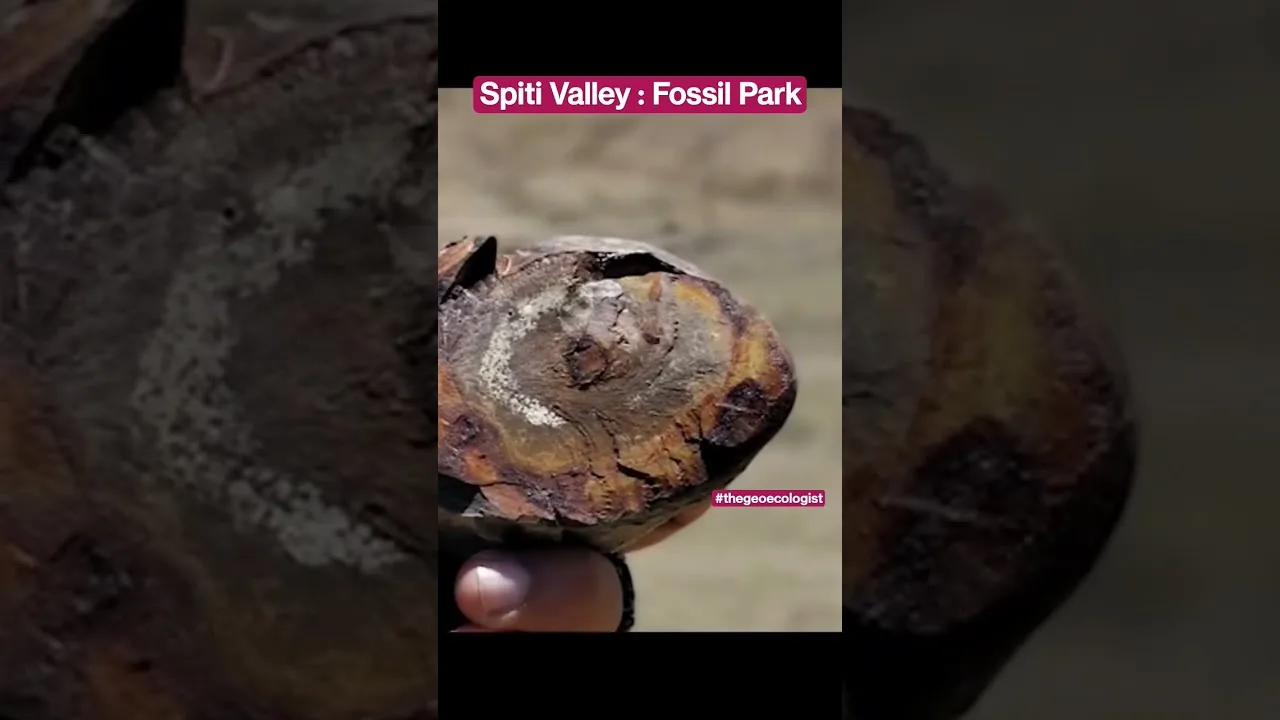
Table of Contents
- Why Spiti Valley Fossils Matter to Global Science
- The Tethyan Connection: A Window into an Ancient Ocean
- Ammonite Biozones: Nature's High-Resolution Clock
- Major Fossil-Bearing Formations in Spiti
- 1. Haimanta Group (Cambrian–Ordovician)
- 2. Kuling and Lilang Formations (Silurian–Devonian)
- 3. Muth and Karsha Formations (Carboniferous–Permian)
- 4. Spiti Shale and Chikkim Formations (Jurassic–Cretaceous)
- The Geoecologist's Perspective: Beyond Taxonomy
- Tectono-Sedimentary Evolution Recorded in Fossils
- Conservation Challenges and the Case for a Fossil Park
- Community-Led Stewardship: The Langza Model
- Legal Framework and International Precedents
- Geotourism Potential: Economic Engine for a Fragile Region
- Designing the Visitor Experience
- Research Frontiers: What Remains to Be Discovered
- Technology-Driven Exploration
- Educational and Cultural Significance
- Curriculum Integration
- Policy Roadmap: From Potential to Protected Park
- Timeline for Implementation
- Conclusion: A Legacy Written in Stone
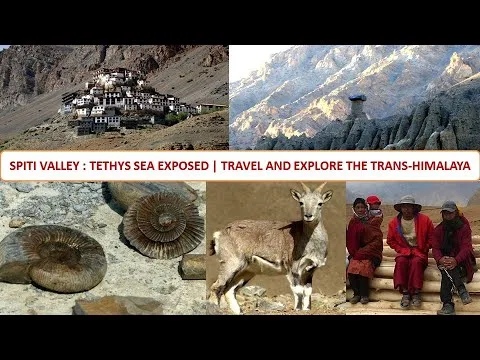
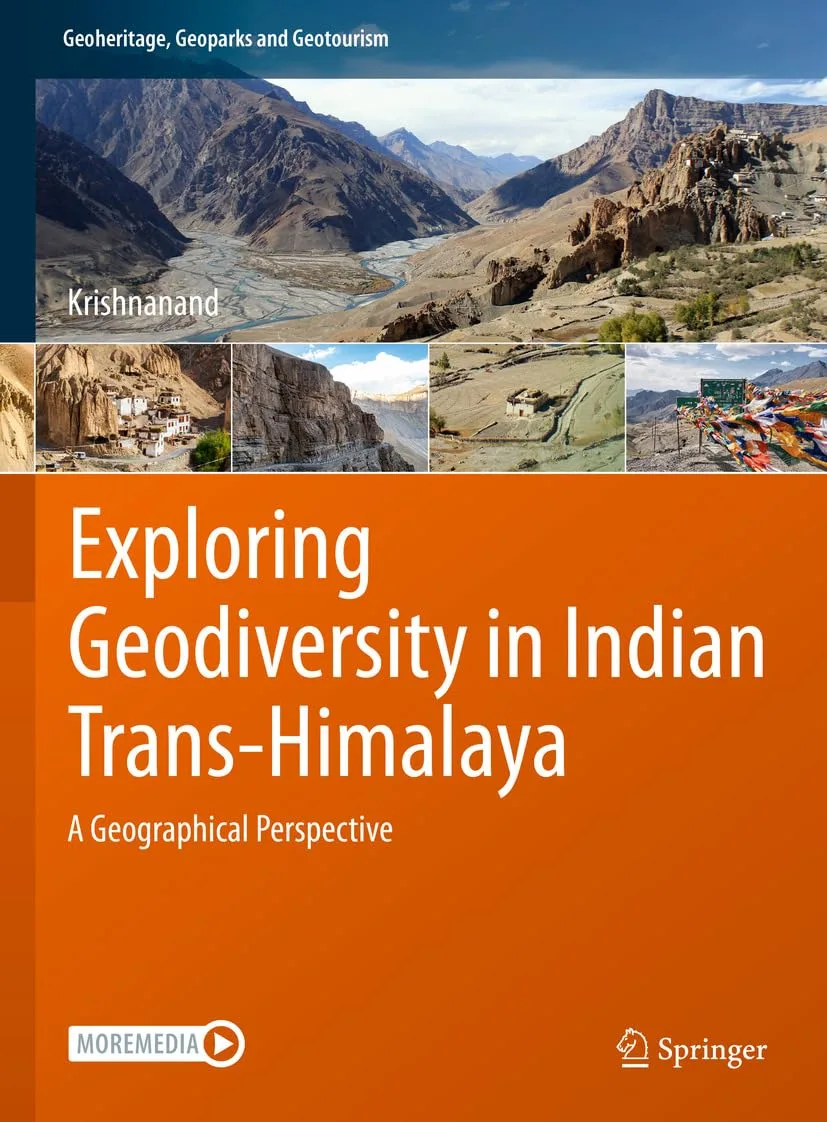
Spiti Valley fossils represent one of the most remarkable yet understudied paleontological archives in the Himalayas. Nestled in the cold desert of Himachal Pradesh, this high-altitude valley preserves a near-continuous sedimentary record spanning over 500 million years, from the Cambrian explosion to the rise of the Himalayas themselves. For geoecologists and paleontologists, Spiti is not merely a scenic destination—it is a living laboratory where Earth’s deep history lies exposed in stratigraphic perfection.
- Geological timescale: Spiti’s rock layers cover the Paleozoic, Mesozoic, and Cenozoic eras.
- Key fossil groups: Ammonites, belemnites, bivalves, brachiopods, trilobites, and early vertebrate remains.
- Strategic importance: The valley offers the best-exposed Tethyan sedimentary sequence in the Indian Himalaya.
- Conservation status: No formal fossil park exists yet; protection relies on local awareness and ASI oversight.
- Economic potential: Geotourism could generate sustainable livelihoods for Spitian communities.
Why Spiti Valley Fossils Matter to Global Science
The Spiti Valley fossils assemblage is globally significant because it records the northern passive margin of the Indian Plate before its collision with Eurasia. Unlike many Himalayan sections deformed by thrust faulting, Spiti’s strata remain largely horizontal, offering an unbroken page of Earth’s autobiography. Researchers from the Geological Survey of India (GSI), the Wadia Institute of Himalayan Geology, and international teams have documented over 200 fossil species here, many of which are type specimens for Himalayan biostratigraphy.
The Tethyan Connection: A Window into an Ancient Ocean
During the Paleozoic and Mesozoic, the Tethys Ocean separated Gondwana from Laurasia. Spiti lay on the northern shelf of this ocean, accumulating limestone, shale, and sandstone rich in marine life. The Spiti Valley fossils from the Kuling, Lilang, and Koto formations capture critical intervals: the Cambrian explosion, the Great Ordovician Biodiversification Event, the end-Permian mass extinction, and the Mesozoic marine revolution. Ammonite zones in the Spiti Shale and Chikkim formations allow precise correlation with European and Tibetan sections, making Spiti a keystone for global chronostratigraphy.
Ammonite Biozones: Nature’s High-Resolution Clock
Ammonites—extinct cephalopods with coiled shells—are the superstars of Spiti Valley fossils. Their rapid evolution and wide distribution make them ideal index fossils. In Spiti, the Jurassic-Cretaceous boundary is marked by the first appearance of Berriasella jacobi, while the Aptian-Albian transition yields diverse Deshayesites and Dufrenoyia species. These biozones help geologists date Himalayan uplift phases and reconstruct paleoceanographic changes in the Neo-Tethys.
Major Fossil-Bearing Formations in Spiti
Understanding Spiti Valley fossils requires navigating a stack of formations each with distinct paleontological signatures:
1. Haimanta Group (Cambrian–Ordovician)
The oldest fossiliferous rocks in Spiti, the Haimanta Group, yield trilobites (Redlichia, Olenellus), brachiopods, and trace fossils like Cruziana and Rusophycus. These indicate shallow-marine environments on the Indian passive margin. The Cambrian Parahio valley section is a candidate for a Global Boundary Stratotype Section and Point (GSSP) for the Cambrian Series 2–3 boundary.
2. Kuling and Lilang Formations (Silurian–Devonian)
These units contain graptolites, tentaculitids, and early fish scales—rare evidence of vertebrate colonization of the Tethyan shelf. The Spiti Valley fossils here help constrain the timing of the Caledonian orogeny’s far-field effects on the Indian margin.
3. Muth and Karsha Formations (Carboniferous–Permian)
Gondwanan glaciation signatures (dropstones, diamictites) alternate with fossiliferous limestones bearing fusulinids, corals, and bryozoans. The end-Permian extinction horizon is sharply defined, showing a 90% loss of marine genera—a stark reminder of climate-driven biodiversity collapse.
4. Spiti Shale and Chikkim Formations (Jurassic–Cretaceous)
This is the crown jewel of Spiti Valley fossils. Thick, organic-rich shales preserve exquisite ammonites, belemnites, bivalves (e.g., Inoceramus), and rare marine reptile vertebrae. The Chikkim limestone yields rudist bivalves, indicating warm, shallow seas before the final Tethyan closure.
The Geoecologist’s Perspective: Beyond Taxonomy
A geoecologist views Spiti Valley fossils not as isolated curiosities but as proxies for reconstructing ancient ecosystems, climate cycles, and tectonic-climate feedbacks. Stable isotope analysis (δ18O, δ13C) of belemnite rostra from the Spiti Shale reveals Cretaceous seawater temperatures of 25–30°C, supporting greenhouse climate models. Trace fossil assemblages (Thalassinoides, Zoophycos) map oxygenation levels on the Tethyan seafloor, linking anoxic events to global carbon cycle perturbations.
Tectono-Sedimentary Evolution Recorded in Fossils
The transition from passive-margin carbonates (Haimanta) to foreland-basin molasse (Kaza Group) is mirrored in Spiti Valley fossils. Detrital zircon U-Pb dating of interbedded volcanic ash layers constrains the India-Asia collision to ~50–55 Ma, while the first appearance of Himalayan-derived detritus in the upper Kaza Group marks the rise of the proto-Himalaya. Fossil plants (e.g., Glossopteris in Permian coals) confirm Spiti’s paleolatitude within Gondwana.
Conservation Challenges and the Case for a Fossil Park
Despite their scientific value, Spiti Valley fossils face mounting threats: unregulated collection by tourists, road-widening projects blasting through fossil beds, and climate-change-induced permafrost thaw accelerating erosion. The Geological Survey of India has declared several sites as National Geological Monuments (e.g., the Langza ammonite bed), but enforcement is thin on the ground.
Community-Led Stewardship: The Langza Model
In Langza village, residents have partnered with the Himachal Pradesh Tourism Department to create a community fossil museum displaying locally found ammonites. Villagers act as guides, earning income while deterring illegal extraction. This model—blending geoheritage conservation with livelihood security—could be scaled valley-wide.
Legal Framework and International Precedents
India’s Geological Heritage Sites Bill (draft 2022) aims to protect fossil sites under the Biological Diversity Act. Globally, UNESCO Global Geoparks like the Zhangjiajie in China and the Jeju Volcanic Island in Korea demonstrate how fossil-rich landscapes can drive sustainable tourism. Spiti meets all UNESCO criteria: scientific rarity, educational value, and aesthetic appeal.
Geotourism Potential: Economic Engine for a Fragile Region
Spiti’s economy relies on apple farming, pastoralism, and seasonal tourism. A designated Spiti Valley fossils park could extend the tourist season beyond summer, attract high-spending niche travelers (geologists, students, photographers), and fund local schools and healthcare. The Himachal Pradesh government’s 2023 “Geotourism Policy” allocates ₹50 crore for infrastructure at fossil sites—interpretive centers, fossil trails, and research field stations.
Designing the Visitor Experience
Imagine a 12-km fossil trail from Langza to Hikkim, with augmented-reality stations reconstructing Jurassic seascapes. Night-sky programs could link fossil ages to cosmic timescales. Local schools would adopt “adopt-a-fossil” curricula. Revenue sharing (70% to village councils) ensures equity. Such a park would put Spiti Valley fossils on the global geotourism map alongside Canada’s Burgess Shale and China’s Chengjiang.
Research Frontiers: What Remains to Be Discovered
Despite 150 years of study (Stoliczka’s 1865 memoir remains a classic), Spiti Valley fossils still hold secrets:
- Early vertebrates: Conodont elements and fish teeth from the Ordovician-Silurian could rewrite Himalayan paleogeography.
- Amber inclusions: Cretaceous amber from the Chikkim Formation may preserve insects, feathers, or microbes.
- Microfossil biostratigraphy: High-resolution foraminiferal and nannofossil zonation is needed for Cretaceous Oceanic Anoxic Events.
- Paleomagnetism: Coupled with fossil data, it can test competing India-Asia collision models.
Technology-Driven Exploration
Drone-based photogrammetry, ground-penetrating radar, and portable XRF analyzers now allow non-destructive mapping of fossil horizons. The Wadia Institute’s 2024 LiDAR survey of the Parahio valley revealed previously unknown Cambrian sections. Machine learning applied to ammonite suture patterns could automate species identification, accelerating biodiversity counts.
Educational and Cultural Significance
Spiti Valley fossils are not just scientific assets; they are cultural touchstones. Tibetan Buddhist monasteries (Key, Tabo, Dhankar) house fossil ammonites as “shaligrams”—sacred symbols of Vishnu. This reverence has inadvertently protected fossils for centuries. Integrating indigenous knowledge with modern paleontology creates a powerful narrative: science and spirituality as twin lenses on deep time.
Curriculum Integration
NCERT’s 2023 textbook revision includes a case study on Spiti’s ammonites for Class 11 Geography. Field trips sponsored by the Ministry of Earth Sciences bring 500+ students annually. Virtual reality modules developed by IIT Mandi let students worldwide “walk” the Spiti Shale. These initiatives foster a generation that values geoheritage as national heritage.
Policy Roadmap: From Potential to Protected Park
Realizing a Spiti Valley fossils park requires coordinated action:
- Notification: Declare the 500-sq-km Spiti Fossil Conservation Zone under the Geological Heritage Sites Act.
- Zoning: Core (no extraction), buffer (guided access), transition (sustainable tourism).
- Funding: Blend central grants, CSR (ONGC, NTPC), and UNESCO grants.
- Governance: Multi-stakeholder board (GSI, HP Forest Dept., monastery reps, village panchayats, scientists).
- Monitoring: Annual fossil audits, drone surveillance, community watch groups.
Timeline for Implementation
Phase 1 (2025–26): Baseline survey, stakeholder consultations, interpretive signage at 10 key sites. Phase 2 (2027–28): Visitor center at Kaza, fossil trail construction, guide certification. Phase 3 (2029–30): UNESCO Global Geopark application, international research partnerships, school exchange programs. By 2030, Spiti Valley fossils could anchor a thriving geotourism circuit linking Ladakh, Lahaul, and Kinnaur.
Conclusion: A Legacy Written in Stone
The Spiti Valley fossils are more than relics; they are chronicles of planetary transformation. Each ammonite whorl, each trilobite eye, each ripple mark tells a story of oceans opening and closing, continents colliding, life evolving and perishing. Protecting this archive is not a luxury—it is a duty to science, to local communities, and to future generations who will ask, “What was here before us?” The valley’s rocks have waited half a billion years to be read. The time to turn the page is now.
Frequently Asked Questions
Spiti Valley fossils include ammonites, belemnites, trilobites, brachiopods, bivalves, graptolites, fusulinids, rudist bivalves, and rare marine reptile vertebrae, spanning Cambrian to Cretaceous periods.
No formal fossil park exists yet. Several sites are declared National Geological Monuments, and Langza village runs a community fossil museum, but a valley-wide protected park with infrastructure is still a proposal.
They provide the best-exposed, near-continuous Tethyan sedimentary record in the Indian Himalaya, enabling precise biostratigraphic correlation, paleoclimate reconstruction, and testing of India-Asia collision models.