

Blog
Tree Wind Adaptation: How Anemomorphogenesis Shapes Resilient Forests

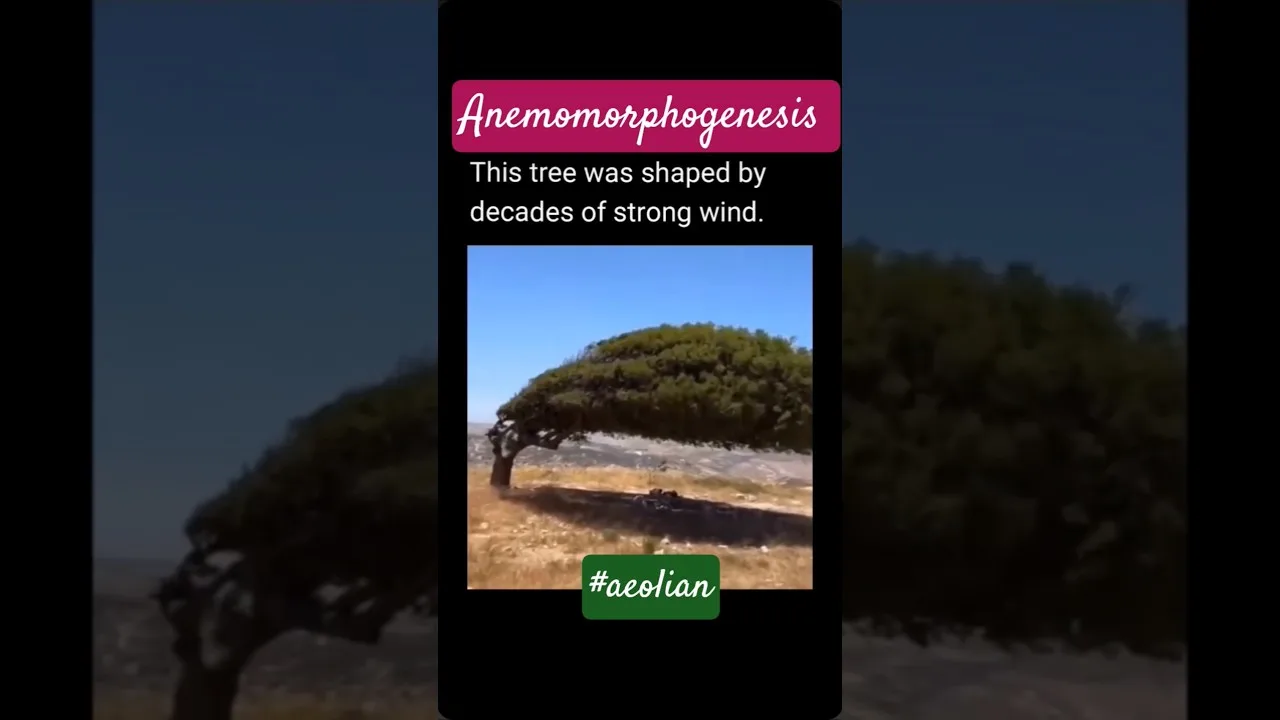
Table of Contents
- What Is Anemomorphogenesis? The Science of Tree Wind Adaptation
- Distinguishing Anemomorphogenesis from General Thigmomorphogenesis
- Mechanosensing and Signal Transduction in Wind-Exposed Trees
- Hormonal Mediation of Growth Reprogramming
- Morphological Signatures of Tree Wind Adaptation
- Stem and Crown Architecture
- Wood Anatomy and Reaction Wood Formation
- Root System Remodeling for Anchorage
- Ecological and Evolutionary Implications of Tree Wind Adaptation
- Population-Level Consequences
- Genetic Assimilation and Local Adaptation
- Practical Applications: Forestry, Urban Forestry, and Engineering
- Silvicultural Strategies Leveraging Tree Wind Adaptation
- Urban Tree Selection and Management
- Biomimetic Engineering Inspiration
- Measuring and Monitoring Tree Wind Adaptation
- Future Research Directions in Anemomorphogenesis
- Frequently Asked Questions About Tree Wind Adaptation
- How quickly does tree wind adaptation occur?
- Can any tree species develop wind adaptation traits?
- Does tree wind adaptation reduce timber quality?
Tree wind adaptation through anemomorphogenesis represents one of nature’s most remarkable engineering feats, where persistent wind stress sculpts trees into aerodynamic, structurally reinforced survivors. This phenotypic plasticity allows woody plants to modify their growth patterns, architecture, and biomass allocation in direct response to mechanical loading from prevailing winds. Understanding tree wind adaptation mechanisms provides critical insights for forestry, urban landscaping, and climate resilience planning in an era of intensifying storm events.
- Anemomorphogenesis is the wind-specific subset of thigmomorphogenesis, driving structural changes like reduced height, increased stem taper, and asymmetric crowns.
- Mechanosensing at the cellular level triggers hormonal shifts that alter lignin deposition, cell elongation, and root-to-shoot ratios.
- Flagging, krummholz formation, and streamlined crowns are visible signatures of long-term tree wind adaptation.
- Root systems deepen and widen asymmetrically to resist uprooting moments on the windward side.
- These adaptations reduce drag coefficients by 30–50% compared to sheltered conspecifics, dramatically lowering mechanical failure risk.
What Is Anemomorphogenesis? The Science of Tree Wind Adaptation
Tree wind adaptation via anemomorphogenesis describes the developmental reprogramming of trees under chronic wind exposure. Unlike acute thigmomorphogenetic responses to touch or shaking, anemomorphogenesis unfolds over growing seasons, producing heritable phenotypic adjustments within a single genotype. The term derives from Greek anemos (wind), morphe (form), and genesis (origin), coined by botanists studying subalpine and coastal tree populations in the early 20th century.
Research by Jaffe and colleagues established that mechanical perturbation alters gene expression pathways governing secondary growth, vascular differentiation, and hormone biosynthesis. In wind-exposed trees, these pathways produce shorter internodes, wider annual rings on the leeward side, and reaction wood formation—collectively optimizing the organism for its mechanical environment.
Distinguishing Anemomorphogenesis from General Thigmomorphogenesis
While all anemomorphogenesis is thigmomorphogenesis, the reverse is not true. Thigmomorphogenesis encompasses responses to any mechanical stimulus—rain impact, animal browsing, neighbor abrasion—whereas tree wind adaptation specifically addresses sustained, directional fluid dynamic loading. This distinction matters because wind imposes unique force vectors: persistent drag, oscillatory sway, and turbulent gusts that scale with canopy area and height. Consequently, anemomorphogenetic traits show strong directionality (windward-leeward asymmetry) absent in generalized touch responses.
Mechanosensing and Signal Transduction in Wind-Exposed Trees
The molecular basis of tree wind adaptation begins with mechanoreception. Plant cells detect membrane stretch, cytoskeletal tension, and cell wall stress through mechanosensitive ion channels (MS channels), receptor-like kinases (RLKs), and integrin-like proteins. In woody stems, specialized tissues like the vascular cambium and developing xylem serve as primary sensory zones, experiencing cyclic strain during each sway event.
Hormonal Mediation of Growth Reprogramming
Mechanical signals rapidly modulate phytohormone profiles. Within minutes of wind-induced bending, jasmonic acid (JA) and ethylene surge in compressed tissues, while auxin transport polarizes toward the leeward side. This hormonal asymmetry drives differential growth: suppressed elongation on the windward flank, enhanced radial expansion on the leeward flank. Concurrently, gibberellin (GA) downregulation reduces overall height increment, a hallmark of tree wind adaptation that lowers the center of gravity and lever arm for wind forces.
Abscisic acid (ABA) accumulation in roots under wind stress promotes deeper rooting and suberization, enhancing anchorage. A 2021 study in New Phytologist demonstrated that Populus tremula subjected to controlled wind regimes showed 40% higher root:shoot ratios and 2.3-fold increased suberin deposition within 60 days—quantifiable metrics of tree wind adaptation at the whole-plant level.
Morphological Signatures of Tree Wind Adaptation

Stem and Crown Architecture
The most visible tree wind adaptation traits manifest in stem form and crown geometry. Wind-exposed individuals develop:
- Reduced height growth: 20–60% shorter than sheltered counterparts, decreasing bending moment at the base.
- Increased stem taper: Basal diameter expands disproportionately, improving section modulus and critical buckling height.
- Asymmetric crowns (flagging): Branches on the windward side die back or grow horizontally, while leeward branches extend, creating a streamlined profile aligned with prevailing flow.
- Reduced leaf area and thicker cuticles: Minimizing drag and desiccation from wind-driven evaporation.
In extreme environments—coastal cliffs, alpine treelines—these modifications produce krummholz (crooked wood) forms: dense, mat-like canopies hugging the ground, with vertical leaders repeatedly killed by ice-wind abrasion. Such tree wind adaptation represents the phenotypic ceiling of plasticity, where genetic potential for height is fully suppressed by mechanical constraints.
Wood Anatomy and Reaction Wood Formation
At the microscopic scale, tree wind adaptation alters xylem anatomy. Windward sides produce compression wood in conifers (tracheids with thick, lignified walls and high microfibril angles) and tension wood in angiosperms (gelatinous fibers with cellulose-rich G-layers). Both types generate internal stresses that counteract external bending, effectively “pre-stressing” the stem. A 2019 Tree Physiology meta-analysis found that compression wood proportion correlates linearly with mean annual wind speed across 12 conifer species (R² = 0.78), confirming its role as a quantitative tree wind adaptation indicator.
Root System Remodeling for Anchorage
Belowground, tree wind adaptation drives profound root architectural changes. The root plate—the shallow, disk-like zone of lateral roots—expands asymmetrically, with windward roots thickening and developing extensive secondary growth. Taproots and sinker roots deepen, accessing stable soil horizons. Finite element modeling by Fourcaud et al. (2008) showed that wind-adapted root systems increase rotational stiffness by 200–400% compared to symmetric root plates of equivalent biomass.
Mycorrhizal associations also shift under wind stress. Ectomycorrhizal fungi enhance root tensile strength through fungal mantle formation and Hartig net integration, a symbiosis-mediated tree wind adaptation documented in Pinus sylvestris stands across Fennoscandia. This underground reinforcement is critical: uprooting accounts for 60–80% of windthrow mortality in temperate forests, making root plasticity a primary survival determinant.
Ecological and Evolutionary Implications of Tree Wind Adaptation
Population-Level Consequences
Tree wind adaptation shapes forest structure at stand scales. Wind-exposed edges develop “wind-firm” boundaries where edge trees, pre-adapted through chronic exposure, buffer interior trees from catastrophic windthrow. This edge effect creates vertical heterogeneity, promoting regeneration niches and biodiversity. In hurricane-prone regions like the Caribbean, historical wind regimes select for species with high anemomorphogenetic plasticity—Tabebuia heterophylla, Bucida buceras—driving community composition toward wind-resilient assemblages.
Genetic Assimilation and Local Adaptation
Prolonged selection on plastic tree wind adaptation traits can lead to genetic assimilation, where formerly inducible traits become constitutively expressed. Common garden experiments with Picea sitchensis from coastal vs. inland provenances reveal heritable differences in stem taper, wood density, and root architecture persisting without wind cues. This suggests that anemomorphogenesis provides the phenotypic raw material for evolutionary adaptation, a process accelerated under climate change as storm frequency increases.
Practical Applications: Forestry, Urban Forestry, and Engineering
Silvicultural Strategies Leveraging Tree Wind Adaptation
Modern forestry exploits tree wind adaptation through pre-commercial thinning regimes that expose crop trees to sub-lethal wind stress, “hardening” them before final harvest rotations. In British Columbia, variable retention harvesting retains wind-firm veterans to shelter regeneration while allowing gradual acclimation. Modeling by the USDA Forest Service indicates that such regimes reduce windthrow losses by 35–50% in coastal Douglas-fir stands.
Urban Tree Selection and Management
Cities increasingly prioritize species with demonstrated tree wind adaptation capacity for street and park plantings. Traits like strong compartmentalization (CODIT model), flexible wood (high modulus of rupture), and deep rooting potential guide species lists. Quercus virginiana (live oak), Taxodium distichum (bald cypress), and Ulmus parvifolia (Chinese elm) rank highly due to their anemomorphogenetic track records in hurricane zones. Structural pruning that mimics natural flagging—reducing windward crown density—further enhances urban tree resilience.
Biomimetic Engineering Inspiration
The principles of tree wind adaptation inspire passive flow-control structures. Wind turbine blade designers study compliant, tapered morphologies that shed load through controlled bending—analogous to tree sway. Architectural façades incorporating flexible, porous elements reduce vortex shedding and pedestrian-level wind speeds, mimicking crown streamlining. These cross-disciplinary transfers highlight the broader relevance of anemomorphogenesis research.
Measuring and Monitoring Tree Wind Adaptation
Quantifying tree wind adaptation employs both traditional and remote sensing approaches. Dendrochronology reveals historical wind exposure through asymmetric ring widths and reaction wood frequency. Terrestrial laser scanning (TLS) captures 3D crown architecture, enabling drag coefficient estimation via computational fluid dynamics (CFD) modeling. Drone-based photogrammetry tracks flagging progression across landscapes. Emerging techniques include accelerometer-based sway monitoring, where natural frequency shifts indicate changing stiffness—an early warning for windthrow risk.
Future Research Directions in Anemomorphogenesis
Key frontiers in tree wind adaptation science include: (1) epigenomic regulation of mechanoresponsive genes across generations; (2) interactive effects of wind, drought, and elevated CO₂ on allocation trade-offs; (3) scaling from individual plasticity to forest-atmosphere feedbacks in Earth system models; and (4) CRISPR-based validation of candidate genes (e.g., MSL10, FERONIA) for breeding wind-resilient cultivars. As extreme wind events intensify globally, understanding and harnessing anemomorphogenesis becomes imperative for ecosystem stewardship and bio-inspired design.
Frequently Asked Questions About Tree Wind Adaptation
How quickly does tree wind adaptation occur?
Visible morphological changes require at least one full growing season, but hormonal and gene expression responses initiate within minutes of mechanical stimulation. Significant structural reinforcement—measurable as increased stem taper or root asymmetry—typically manifests over 2–5 years of chronic exposure.
Can any tree species develop wind adaptation traits?
All woody plants exhibit some degree of thigmomorphogenesis, but anemomorphogenetic capacity varies widely. Pioneer species (poplars, willows) show high plasticity; late-successional climax species (beech, hemlock) are less responsive. Genetic constraints and evolutionary history determine the phenotypic range.
Does tree wind adaptation reduce timber quality?
Reaction wood (compression/tension wood) alters machining properties, dimensional stability, and pulp yield—generally considered defects in commercial timber. However, for structural applications like poles, pilings, and laminated beams, the high density and spiral grain of wind-adapted stems can be advantageous. Silvicultural balancing acts optimize both volume and quality.
Frequently Asked Questions
Visible morphological changes require at least one full growing season, but hormonal and gene expression responses initiate within minutes of mechanical stimulation. Significant structural reinforcement—measurable as increased stem taper or root asymmetry—typically manifests over 2–5 years of chronic exposure.
All woody plants exhibit some degree of thigmomorphogenesis, but anemomorphogenetic capacity varies widely. Pioneer species (poplars, willows) show high plasticity; late-successional climax species (beech, hemlock) are less responsive. Genetic constraints and evolutionary history determine the phenotypic range.
Reaction wood (compression/tension wood) alters machining properties, dimensional stability, and pulp yield—generally considered defects in commercial timber. However, for structural applications like poles, pilings, and laminated beams, the high density and spiral grain of wind-adapted stems can be advantageous. Silvicultural balancing acts optimize both volume and quality.
