Blog
Spiti Valley geotourism: Tethys Sea Fossils & Trans-Himalaya

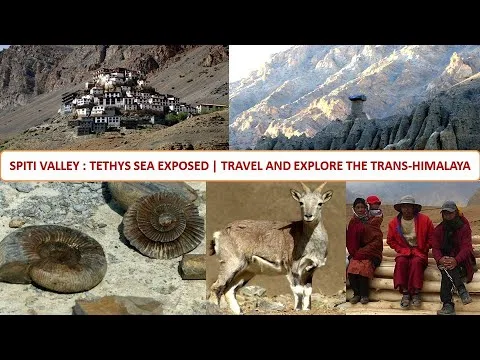
Table of Contents
- The Geological Legacy of the Tethys Sea in Spiti Valley
- From Ancient Ocean to High Himalaya
- Fossil Evidence: Ammonites, Brachiopods, and More
- Top Geotourism Sites in Spiti Valley
- Langza, Hikkim, and Komic: The Fossil Villages
- Pin Valley National Park: A Paleontological Hotspot
- Chandratal and Suraj Tal: High-Altitude Geological Wonders
- Research and Conservation: The 2014–2019 Field Study
- Challenges Facing Spiti Valley Geotourism
- Lack of Geoconservation Laws
- Accessibility and Infrastructure Gaps
- Awareness and Education Deficits
- Opportunities for Sustainable Geotourism Development
- Establishing Fossil Parks and UNESCO Global Geoparks
- Community-Based Conservation Models
- Responsible Tourism Practices
- Dr. Krishnanand's Contribution to Spiti Valley Geotourism
- Planning Your Geotourism Trip to Spiti Valley
- Best Time to Visit
- Permits and Logistics
- Where to Stay
Spiti Valley geotourism offers a rare window into Earth’s deep past, where the ancient Tethys Sea once covered the towering peaks of the Trans-Himalaya. Nestled in the rain-shadow region of Himachal Pradesh, this cold desert mountain valley exposes fossil-rich Tethyan sediments that date back millions of years, making Spiti Valley geotourism a premier destination for geologists, paleontologists, and curious travelers alike. The valley’s unique geoheritage—ammonites, brachiopods, and marine fossils embedded in limestone—tells the story of the Indian plate’s collision with Eurasia, a tectonic drama that birthed the Himalaya.
- Spiti Valley geotourism centers on the exposed Tethyan sedimentary sequence, a globally significant geoheritage site.
- Key fossil localities include Langza, Hikkim, Komic, and Pin Valley National Park, where ammonites and brachiopods are abundant.
- A 2014–2019 field study using GPS and GIS mapping identified priority sites for geoconservation and geopark development.
- Challenges include fossil souvenir collection, remote access, and lack of formal geoconservation legislation.
- Opportunities lie in UNESCO Global Geopark nomination, community-led conservation, and responsible tourism frameworks.
The Geological Legacy of the Tethys Sea in Spiti Valley
From Ancient Ocean to High Himalaya
Before the Himalaya rose, the Tethys Ocean separated the Indian subcontinent from Eurasia. Over 50 million years ago, the northward drift of the Indian plate closed this ocean, thrusting marine sediments onto the continental crust. Today, Spiti Valley geotourism showcases these uplifted Tethyan strata—limestone, shale, and sandstone layers rich in marine fossils. The sequence spans the Cambrian to the Cretaceous, providing a near-continuous record of Paleozoic and Mesozoic life. Researchers from the Geological Survey of India and international universities have documented over 200 fossil species here, including iconic ammonites like Perisphinctes and Himalayites.
Fossil Evidence: Ammonites, Brachiopods, and More
The fossil beds of Spiti are extraordinary in both diversity and preservation. Ammonite shells, some exceeding 30 centimeters in diameter, litter hillsides near Langza and Hikkim. Brachiopods, bivalves, belemnites, and crinoid stems are equally common. These fossils are not merely curiosities; they serve as index fossils for correlating Himalayan strata with global geological timescales. Tethys Ocean paleogeography reconstructions rely heavily on Spiti’s biostratigraphy. For visitors, spotting a coiled ammonite in a village wall or a brachiopod in a streambed transforms a trek into a journey through deep time.
Top Geotourism Sites in Spiti Valley
Langza, Hikkim, and Komic: The Fossil Villages
At elevations above 4,400 meters, the trio of Langza, Hikkim, and Komic forms the heart of Spiti Valley geotourism. Langza, dominated by a towering Buddha statue overlooking the valley, is renowned for ammonite fossils weathering out of the surrounding cliffs. Locals often incorporate fossil-bearing stones into house foundations, creating an unintentional open-air museum. Hikkim, home to the world’s highest post office (4,400 m), offers similar fossil-hunting opportunities along its slopes. Komic, one of the highest motorable villages (4,587 m), provides access to the Komic Fossil Bed, where researchers have collected well-preserved Jurassic ammonoids. These villages also exemplify sustainable high-altitude living, with traditional mud-brick homes and community-based tourism initiatives.
Pin Valley National Park: A Paleontological Hotspot
Established in 1987, Pin Valley National Park spans 675 square kilometers of rugged Trans-Himalayan terrain. Beyond its fame as a sanctuary for the snow leopard and Siberian ibex, the park harbors exceptional fossil sites. The Pin River gorge exposes thick sequences of Tethyan limestone teeming with marine invertebrates. A 2017 survey by the Wildlife Institute of India documented rare fossilized coral colonies and gastropods previously unrecorded in the region. For Spiti Valley geotourism, Pin Valley represents a dual attraction: world-class biodiversity and geoheritage in a single protected area. Trekking routes like the Pin-Parvati Pass traverse these fossiliferous zones, allowing geotourists to combine adventure with scientific discovery.
Chandratal and Suraj Tal: High-Altitude Geological Wonders
Chandratal (Moon Lake) at 4,300 meters and Suraj Tal (Sun Lake) at 4,890 meters are glacial lakes surrounded by dramatic moraines, fault scarps, and folded Tethyan strata. Chandratal’s crescent shape occupies a glacial cirque, while Suraj Tal feeds the Bhaga River, a tributary of the Chenab. The lake margins reveal varved sediments—annual layers that record climate fluctuations over millennia. These sites are integral to Spiti Valley geotourism itineraries, offering accessible geomorphology lessons alongside breathtaking scenery. The Manali–Leh highway crosses the Baralacha La pass near Suraj Tal, providing road access to these high-altitude classrooms.
Research and Conservation: The 2014–2019 Field Study
A comprehensive field study conducted between 2014 and 2019 by the Department of Geology, Panjab University, in collaboration with the Himachal Pradesh Council for Science, Technology & Environment, mapped over 50 geoheritage sites across Lahaul and Spiti. Using differential GPS and GIS, researchers created a geodatabase of fossil localities, stratigraphic sections, and geomorphological features. The study, published in the Journal of the Geological Society of India (2020), recommended the establishment of a Spiti Valley geotourism circuit with interpreted trails, on-site signage, and a central fossil museum at Kaza. It also highlighted the urgent need for legal protection under the Geological Survey of India’s Geoheritage Sites framework, noting that unregulated fossil collection by tourists and commercial dealers had already depleted several key outcrops.
Challenges Facing Spiti Valley Geotourism
Lack of Geoconservation Laws
India currently lacks a dedicated geoconservation statute. While the Biological Diversity Act (2002) and Wildlife Protection Act (1972) safeguard biodiversity, geological heritage falls through the cracks. Fossils in Spiti are often sold as souvenirs in local markets or online, with prices ranging from ₹500 for a small ammonite to ₹50,000 for a large, well-preserved specimen. This trade, though technically regulated under the Antiquities and Art Treasures Act (1972), is poorly enforced in remote areas. Spiti Valley geotourism stakeholders advocate for a national geoheritage law modeled on UNESCO’s Global Geoparks guidelines, which would criminalize unauthorized fossil extraction and export.
Accessibility and Infrastructure Gaps
The valley’s remoteness is both its charm and its constraint. The only motorable access from Shimla via Kinnaur (NH-505) remains closed for 6–7 months due to heavy snowfall at Kunzum Pass (4,551 m). The alternative Manali–Kaza route (via Rohtang and Kunzum passes) is equally seasonal. Within the valley, roads are unpaved, prone to landslides, and lack signage for geoheritage sites. Accommodation is limited to homestays and a few guesthouses in Kaza, Tabo, and Dhankar. Electricity and internet connectivity are intermittent. These infrastructure deficits limit Spiti Valley geotourism to a niche audience of hardened trekkers and researchers, constraining economic benefits for local communities.
Awareness and Education Deficits
Many visitors—and even some local guides—cannot distinguish a fossil from an ordinary rock. School curricula in Himachal Pradesh rarely cover regional geology, leaving residents unaware of the scientific value beneath their feet. Tour operators seldom include geological interpretation in their packages, focusing instead on monasteries and landscapes. The 2014–2019 study found that 78% of surveyed tourists had no prior knowledge of Spiti’s Tethyan heritage. Bridging this gap requires multilingual interpretive panels, trained geo-guides, and integration of geoheritage into state tourism marketing. Spiti Valley geotourism cannot thrive without an informed visitor base that values conservation over collection.
Opportunities for Sustainable Geotourism Development
Establishing Fossil Parks and UNESCO Global Geoparks
The most transformative step would be nominating Spiti as a UNESCO Global Geopark. This designation requires a management plan, community participation, and visible conservation outcomes—criteria Spiti increasingly meets. A Spiti Geopark could encompass the Langza–Hikkim–Komic fossil cluster, Pin Valley National Park, Chandratal Wetland (a Ramsar site), and the monastic circuit of Tabo, Dhankar, and Key. Fossil parks at Langza and Komic, with fenced in-situ displays and visitor centers, would protect vulnerable outcrops while generating revenue through entry fees. The Geological Survey of India has already shortlisted Spiti for its National Geoheritage Monument program, a potential precursor to UNESCO recognition. Spiti Valley geotourism would gain international visibility, attracting research funding and responsible tourists.
Community-Based Conservation Models
Local communities are the de facto custodians of Spiti’s geoheritage. In Langza, the village council (panchayat) has informally banned fossil sales, directing tourists to the community museum instead. In Demul, a homestay cooperative funds a village school through tourism revenue, demonstrating the livelihood potential of conservation. Scaling such models requires capacity building: training youth as certified geo-guides, establishing women-led fossil replica workshops (using 3D-printed models), and creating benefit-sharing agreements with tour operators. The Himachal Pradesh Tourism Department’s 2022 “Homestay Scheme” offers subsidies for eco-friendly accommodations, a policy lever that could be tied to geoheritage stewardship. Spiti Valley geotourism rooted in community ownership ensures long-term protection and equitable benefit distribution.
Responsible Tourism Practices
Visitors can minimize impact by following a simple code: photograph fossils but do not collect; stay on marked trails to avoid trampling fragile alpine vegetation; carry out all non-biodegradable waste; and hire local guides certified by the Spiti Ecosphere or similar NGOs. The “Leave No Trace” principles, adapted for high-altitude deserts, should be mandatory for all trekking permits. Digital tools like the “GeoSpiti” mobile app (in development) will offer offline maps, fossil identification keys, and audio guides in Hindi, English, and Bhoti. Such innovations enhance the Spiti Valley geotourism experience while reducing the need for physical infrastructure in sensitive zones.
Dr. Krishnanand’s Contribution to Spiti Valley Geotourism
Dr. Krishnanand, a geographer, educator, and founder of The Geoecologist platform, has been instrumental in popularizing Spiti’s geological narrative. His documentary series “Spiti Valley: Tethys Sea Exposed” (2021) combines field footage, animated plate tectonics, and interviews with local elders to explain the valley’s evolution from seabed to summit. Spiti Valley geotourism, used in university geomorphology courses across India, emphasizes the interplay of geological and cultural heritage—a core tenet of Spiti Valley geotourism. Dr. Krishnanand’s field workshops train students in GPS mapping, sediment logging, and fossil documentation, creating a pipeline of young geoscientists invested in Himalayan geoheritage. His Instagram channel @thegeoecologist shares real-time expedition updates, making cutting-edge research accessible to a global audience.
Planning Your Geotourism Trip to Spiti Valley
Best Time to Visit
The optimal window for Spiti Valley geotourism is June to September, when passes are open and daytime temperatures range from 15–25°C. July–August brings monsoon clouds to the southern slopes but Spiti, in the rain shadow, remains largely dry. October offers crisp air and golden landscapes but risks early snow at Kunzum La. Winter (November–April) is only for specialized expeditions with full logistical support, as temperatures plummet to -20°C and road access is severed.
Permits and Logistics
Indian nationals need no special permits for Spiti Valley. Foreign nationals require an Inner Line Permit (ILP) for areas beyond Kaza (e.g., Tabo, Dhankar, Pin Valley), obtainable online via the Himachal Pradesh e-Pass portal or at the Reckong Peo/Kaza DC offices. The nearest airports are Bhuntar (Kullu, 240 km from Kaza) and Shimla (450 km). Shared taxis and HRTC buses ply the Shimla–Reckong Peo–Kaza route (12–14 hours). Self-drive requires a high-clearance vehicle, spare tires, and experience with mountain roads. Fuel is available only at Kaza and Tabo—fill up at Reckong Peo.
Where to Stay
Kaza offers the widest range: Hotel Deyzor (mid-range), Spiti Heritage (homestay), and Zostel (backpacker). In fossil villages, homestays like Langza Homestay and Komic Homestay provide basic amenities and home-cooked meals (dal-chawal, thukpa, butter tea). Booking ahead via Spiti Ecosphere or local contacts is advisable in peak season. Camping is permitted at designated sites near Chandratal and Dhankar, but wild camping is discouraged to protect fragile soils.
Spiti Valley geotourism is more than a travel trend—it is a call to witness planetary history written in stone, to support communities safeguarding that heritage, and to advocate for policies that value geoheritage as highly as biodiversity. Whether you are a geologist tracing ammonite sutures, a photographer capturing folded limestone at sunset, or a family marveling at a fossil in a village wall, Spiti invites you to read the Earth’s autobiography. Plan your journey, tread lightly, and carry the story of the Tethys Sea back to the world.
Frequently Asked Questions
The best time for Spiti Valley geotourism is June to September when mountain passes are open, roads are accessible, and daytime temperatures are pleasant (15–25°C). July–August offers dry weather in the rain-shadow region, while October provides stunning autumn colors but carries a risk of early snowfall at high passes.
Indian nationals do not require special permits for Spiti Valley. Foreign nationals need an Inner Line Permit (ILP) for areas beyond Kaza, including key fossil villages like Langza, Hikkim, Komic, and Pin Valley National Park. The ILP can be obtained online via the Himachal Pradesh e-Pass portal or at the District Commissioner offices in Reckong Peo or Kaza.
No. Fossil collection is illegal and harmful to Spiti's geoheritage. The Geological Survey of India and local panchayats prohibit unauthorized extraction. Fossils are protected under the Antiquities and Art Treasures Act (1972), and their sale or export is a punishable offense. Responsible geotourism encourages photography and observation only—leave fossils in place for science and future visitors.