Blog
India Water Crisis: National Emergency Amid Heatwaves and Scarcity

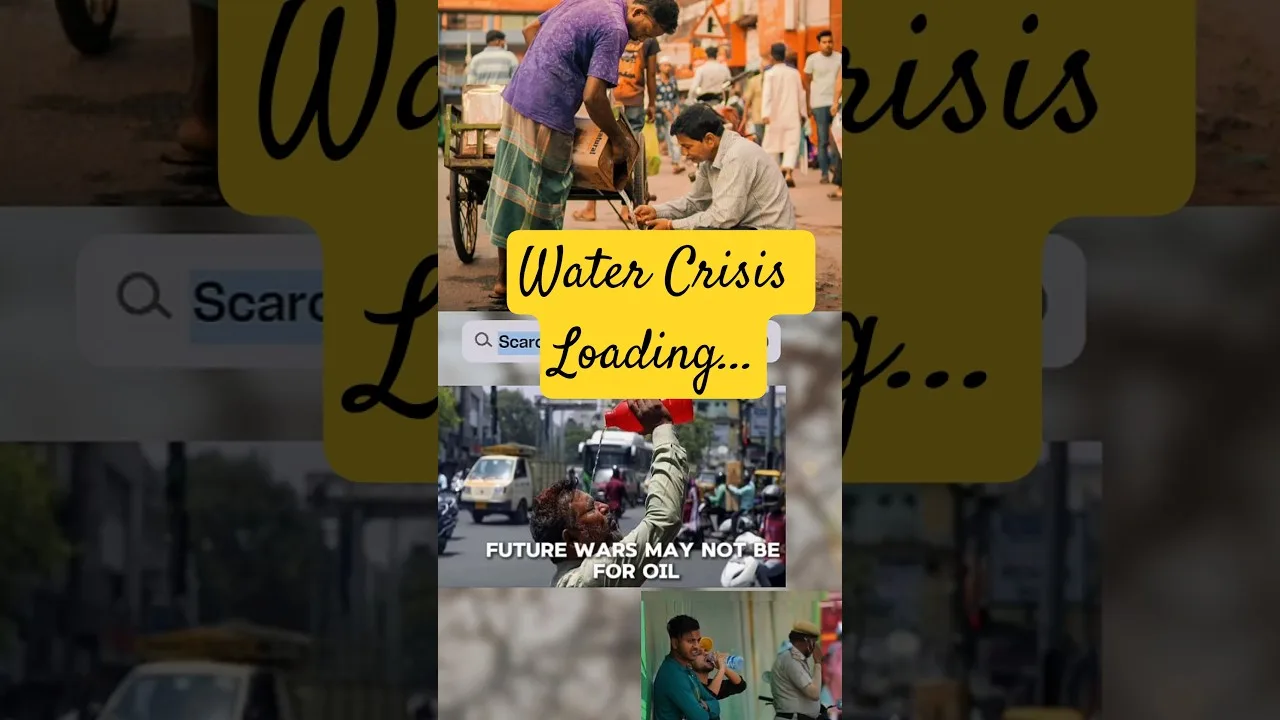
Table of Contents
- The Anatomy of the India Water Crisis
- Groundwater Depletion: The Invisible Collapse
- Urban Hydrology in Freefall
- Climate Change as a Threat Multiplier
- Pollution: Rendering Available Water Unusable
- Geographic Hotspots: A Nation in Peril
- The Parched Northwest: Punjab, Haryana, Rajasthan
- The Deccan Plateau: Karnataka, Maharashtra, Telangana
- The Himalayan Foothills: Uttarakhand, Himachal Pradesh
- Interstate Water Conflicts: Federalism Under Stress
- Sectoral Water Use: Where Every Drop Goes
- Agriculture: The 70% Challenge
- Industrial and Energy Demands
- Domestic Use: The Equity Gap
- Solutions: From Crisis Management to Water Security
- Supply-Side: Capture, Store, Recharge
- Demand-Side: Efficiency, Reuse, Pricing
- Governance: Data, Institutions, Participation
- The Economic Stakes: Cost of Inaction
- Community-Led Resilience: The Human Dimension
- Technology and Innovation: Leapfrogging to Water Security
- Conclusion: A Red Alert We Cannot Ignore
The India water crisis has escalated from a looming threat into a full-blown national emergency, intensified by record-breaking heatwaves and chronic scarcity across the subcontinent. As temperatures soared past 50°C in Delhi during the summer of 2024, the convergence of rapid urbanization, groundwater depletion, climate change, and pollution has pushed millions to the brink of water insecurity. This comprehensive analysis examines the causes, geographic hotspots, socioeconomic impacts, and actionable solutions required to avert a catastrophic collapse of India’s water systems.
- Groundwater overextraction: India extracts 25% of the world’s groundwater, with aquifers in Punjab, Rajasthan, and Haryana declining 1–2 meters annually.
- Urban collapse: Cities like Bengaluru, Chennai, and Delhi face parched reservoirs as concrete infrastructure prevents rainwater recharge.
- Climate multiplier: Heatwaves accelerate evaporation, disrupt monsoons, and reduce dam levels — Sardar Sarovar and Bhakra Nangal hit record lows in 2024.
- Pollution crisis: 80% of surface water is unsafe due to industrial waste and untreated sewage contaminating rivers like the Yamuna.
- Agricultural strain: 70% of freshwater goes to agriculture, dominated by water-intensive crops and inefficient flood irrigation.
- Policy imperative: Rainwater harvesting, drip irrigation, wastewater recycling, and community-led governance are non-negotiable for survival.
The Anatomy of the India Water Crisis
The India water crisis is not a singular event but a compounding polycrisis. According to the Composite Water Management Index by NITI Aayog, 600 million Indians face high-to-extreme water stress, and 21 major cities were projected to run out of groundwater by 2020 — a deadline that has effectively arrived. The crisis manifests across three interlocking dimensions: physical scarcity, quality degradation, and institutional failure.
Groundwater Depletion: The Invisible Collapse
India is the world’s largest groundwater user, extracting approximately 251 cubic kilometers annually — more than the United States and China combined. The northwestern states of Punjab, Haryana, and Rajasthan, which produce the bulk of India’s wheat and rice, sit atop the critically endangered Indus Basin aquifer. NASA’s GRACE satellite data confirms that groundwater levels in this region have declined by 29 trillion liters between 2002 and 2022. Farmers now drill borewells exceeding 300 meters, often finding only saline water or sand. The India water crisis in rural agrarian zones has triggered a cycle of debt, distress migration, and farmer suicides, with over 10,000 agricultural suicides recorded annually since 2015 per National Crime Records Bureau data.
Urban Hydrology in Freefall
India’s urban population is projected to reach 600 million by 2031, but water infrastructure has not kept pace. Bengaluru, once known as the “City of Lakes,” has lost 85% of its water bodies to encroachment and pollution. The city now depends on the Cauvery River, pumped 100 kilometers uphill at enormous energy cost, supplying only 65% of demand. Chennai’s 2019 “Day Zero” — when reservoirs hit 0.1% capacity — forced the city to rely on water trains from Jolarpettai, 200 km away. Delhi’s Yamuna River, the capital’s primary source, receives 800 million liters of untreated sewage daily. The India water crisis in metros is exacerbated by non-revenue water losses (leakage, theft) averaging 40–50%, far above the global benchmark of 15%.
Climate Change as a Threat Multiplier
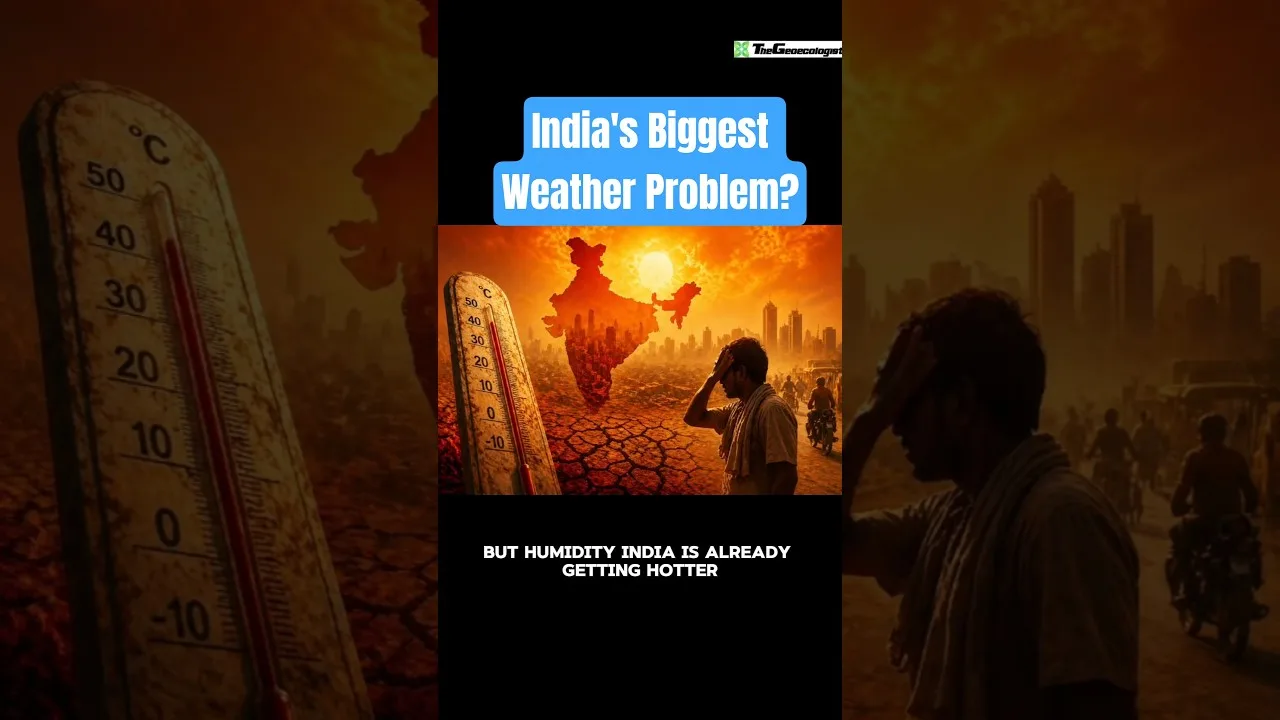
The 2024 heatwave season shattered records: Delhi recorded 52.9°C in Mungeshpur on May 29, while Phalodi, Rajasthan hit 51°C. The India Meteorological Department (IMD) reported that heatwave days have increased by 138% between 1980 and 2023. Extreme heat accelerates reservoir evaporation — the Sardar Sarovar Dam lost 1.5 million acre-feet to evaporation alone in 2023 — while simultaneously spiking demand for cooling and irrigation. Climate models from the Indian Institute of Tropical Meteorology project a 10–15% decline in summer monsoon rainfall over central India by 2050, coupled with more intense but shorter bursts, reducing groundwater recharge. The India water crisis is thus inextricably linked to the climate emergency, creating a feedback loop where water scarcity reduces hydropower capacity, increasing reliance on coal, which further drives warming.
Pollution: Rendering Available Water Unusable
Even where water exists, it is often toxic. The Central Pollution Control Board (CPCB) identifies 351 polluted river stretches across 323 rivers. The Yamuna, Ganga, Sabarmati, and Cooum carry heavy metals, fecal coliform, and industrial effluents far exceeding Bureau of Indian Standards (BIS) limits. A 2023 study by the Centre for Science and Environment found that 70% of India’s sewage goes untreated into water bodies. Groundwater in 209 districts across 21 states contains excess fluoride, 335 districts have excess nitrate, and 212 districts report arsenic contamination. The India water crisis is therefore as much a quality crisis as a quantity crisis, with waterborne diseases costing India an estimated $600 million annually in medical expenses and lost productivity.
Geographic Hotspots: A Nation in Peril
The Parched Northwest: Punjab, Haryana, Rajasthan
This breadbasket region faces the most severe groundwater depletion globally. The Green Revolution’s legacy of paddy-wheat monoculture, subsidized electricity for pumps, and minimum support prices for water-intensive crops has created an ecological trap. Punjab’s water table falls 0.5–1 meter yearly; 79% of its blocks are “over-exploited.” Rajasthan’s Thar Desert expands by 12,000 hectares annually. The India water crisis here threatens national food security, as these states contribute 60% of central wheat procurement and 40% of rice.
The Deccan Plateau: Karnataka, Maharashtra, Telangana
Hard-rock aquifers in the Deccan have low storage and slow recharge. Maharashtra’s Marathwada and Vidarbha regions face recurrent droughts; 2024 saw 15,000 villages dependent on tanker water. Karnataka’s inter-state disputes over Cauvery and Krishna waters have reached the Supreme Court repeatedly. Bengaluru’s 13 million residents face a 500 MLD deficit. The India water crisis in peninsular India is compounded by deforestation in the Western Ghats, which reduces orographic rainfall critical for river headwaters.
The Himalayan Foothills: Uttarakhand, Himachal Pradesh
Glacial retreat in the Himalayas — losing 0.3–1 meter ice thickness annually — threatens the perennial flow of the Indus, Ganga, and Brahmaputra. Spring discharge has declined 30–50% in many mountain springs (“dhara”), the primary water source for hill communities. Hydropower projects and unregulated tourism degrade catchments. The India water crisis in the mountains portends downstream catastrophe for 600 million people in the Gangetic plains.
Interstate Water Conflicts: Federalism Under Stress
Water is a state subject under India’s Constitution (Entry 17, State List), but interstate rivers fall under Union jurisdiction (Entry 56, Union List). This duality fuels perpetual disputes. The Cauvery Water Disputes Tribunal (1990) and Krishna Water Disputes Tribunal (2004) awards remain contentious. The Mahanadi dispute between Odisha and Chhattisgarh, the Palar dispute between Tamil Nadu and Karnataka, and the Sutlej-Yamuna Link Canal controversy between Punjab and Haryana exemplify how the India water crisis strains cooperative federalism. The 2023 amendment to the Inter-State River Water Disputes Act aims for time-bound adjudication, but enforcement remains weak.
Sectoral Water Use: Where Every Drop Goes
Agriculture: The 70% Challenge
Agriculture consumes 70% of India’s freshwater, yet irrigation efficiency averages 35–40% for canal systems and 55–60% for groundwater. Flood irrigation dominates, wasting 50% of applied water. The India water crisis demands a shift to micro-irrigation: drip and sprinkler systems can raise efficiency to 90% while reducing fertilizer use. However, only 11 million hectares (7% of net irrigated area) use micro-irrigation despite the Pradhan Mantri Krishi Sinchayee Yojana (PMKSY) target of 10 million hectares by 2025. Crop diversification — replacing paddy with millets, pulses, and oilseeds in water-stressed zones — is essential but requires market incentives and procurement reform.
Industrial and Energy Demands
Thermal power plants consume 88% of industrial water withdrawals. India’s 21 A 2023 World Resources Institute study found 40% of India’s thermal capacity faces high water stress. The India water crisis forces plant shutdowns during summer — NTPC’s Farakka and Raichur plants have repeatedly curtailed generation. Mandating dry-cooling and wastewater reuse for new plants, and retrofitting existing ones, is critical. Industries must adopt zero-liquid-discharge (ZLD) systems, already mandatory for textile units in Tamil Nadu.
Domestic Use: The Equity Gap
Urban India averages 135 liters per capita daily (LPCD) supply, but distribution is grossly unequal. Slum dwellers receive 20–30 LPCD from communal taps, while affluent neighborhoods consume 300+ LPCD. The Jal Jeevan Mission (JJM) aims to provide 55 LPCD piped water to every rural household by 2024; as of March 2024, 74% coverage was achieved. However, source sustainability remains unaddressed — many JJM schemes tap the same depleted aquifers. The India water crisis cannot be solved without confronting this equity deficit.
Solutions: From Crisis Management to Water Security
Supply-Side: Capture, Store, Recharge
Rainwater harvesting (RWH) must be mandatory for all buildings >100 sqm, with enforcement via property tax rebates/penalties. Chennai’s 2003 RWH ordinance raised groundwater levels 6–8 meters in five years — a replicable model. Watershed development under MGNREGA and the Atal Bhujal Yojana (World Bank-funded, ₹6,000 crore) promotes community-led aquifer mapping and recharge structures (check dams, contour trenches, percolation tanks). Reviving traditional systems — johads in Rajasthan, eris in Tamil Nadu, zings in Ladakh, khadins in Gujarat — leverages indigenous hydrological wisdom. The India water crisis response must decentralize storage from large dams (high evaporation, displacement) to distributed, small-scale structures.
Demand-Side: Efficiency, Reuse, Pricing
Micro-irrigation adoption requires upfront capital subsidies (currently 55% for small farmers) coupled with electricity feeder separation to prevent groundwater over-pumping. Wastewater recycling can meet 30–40% of urban non-potable demand (gardening, cooling, construction). Singapore’s NEWater model — treating sewage to potable standards — is technically feasible; Nagpur’s 130 MLD sewage-to-power-plant project proves viability in India. Volumetric water pricing with lifeline tariffs for basic needs and rising block rates for discretionary use curbs waste. The India water crisis demands treating water as an economic good while safeguarding the human right to water.
Governance: Data, Institutions, Participation
The National Water Mission and National Water Framework Bill (draft) propose a unified water governance architecture. Critical gaps remain: real-time aquifer monitoring (only 23,000 monitoring wells for 2.5 million km²), water accounting at basin scale, and participatory groundwater management (PGM) via Water User Associations (WUAs). The Ministry of Jal Shakti, created in 2019, merges water resources and drinking water departments but lacks authority over state irrigation bureaucracies. The India water crisis requires a constitutional amendment moving water to the Concurrent List, enabling binding national standards.
The Economic Stakes: Cost of Inaction
The World Bank estimates that water scarcity could cost India 6% of GDP by 2050. A 2024 Asian Development Bank study projects that without reform, the India water crisis will reduce agricultural output by 15–20%, increase food prices 25–30%, and displace 50–70 million people by 2030. Health costs from waterborne diseases and heat stress could exceed $10 billion annually. Conversely, investing ₹20 lakh crore ($240 billion) in water security by 2030 — efficiency, reuse, recharge, governance — yields a 4:1 benefit-cost ratio. The 2024 heatwave is a fiscal warning: water stress reduced hydropower generation by 15% in April–June 2024, forcing expensive coal imports.
Community-Led Resilience: The Human Dimension
Top-down engineering cannot solve the India water crisis alone. The Pani Panchayat model in Maharashtra, where farmers collectively manage watershed equity, and the Tarun Bharat Sangh’s johad revival in Alwar (1,200 villages, 7 rivers revived) demonstrate that social capital is as vital as physical infrastructure. Women, who bear 80% of water-fetching burden in rural India, must lead Water User Associations. The 73rd/74th Constitutional Amendments devolve water to panchayats and municipalities, but funds, functions, and functionaries (3Fs) remain with state line departments. Empowering local bodies with untied water grants and technical capacity is the governance frontier.
Technology and Innovation: Leapfrogging to Water Security
Digital tools can transform water management. IoT-based smart meters in Pune and Bengaluru reduce non-revenue water by 20–30%. Satellite-based evapotranspiration mapping (OpenET, India-WRIS) enables real-time irrigation scheduling. AI-driven leak detection in pipe networks cuts losses. Desalination — currently 0.1% of supply — becomes viable for coastal cities as solar-powered reverse osmosis costs fall below ₹30/kL. Atmospheric water generators offer decentralized drinking water in arid zones. The India water crisis demands an innovation ecosystem linking IITs, startups, and utilities through challenge funds and sandbox regulations.
Conclusion: A Red Alert We Cannot Ignore
The India water crisis is no longer a distant projection — it is a daily reality for 600 million citizens. The 2024 heatwaves, with temperatures breaching 50°C, exposed the fragility of systems built on the assumption of climatic stability. Groundwater tables falling 1–2 meters annually, rivers turning into toxic drains, cities trucking water from hundreds of kilometers away, and farmers abandoning parched fields — these are not isolated incidents but symptoms of a systemic failure. The solutions are known: rainwater harvesting, micro-irrigation, wastewater reuse, pollution control, volumetric pricing, and participatory governance. What is missing is political will, institutional coordination, and societal urgency. Water is not merely a resource; it is the lifeline of civilization. Every day of delay deepens the deficit. The choice is stark: collective action now, or a future where water wars, food riots, and climate migration become India’s new normal. The heatwaves of 2024 have sounded the alarm. The time for half-measures is over.
Frequently Asked Questions
The India water crisis is driven by groundwater overextraction (25% of global use), rapid urbanization preventing rainwater recharge, climate change intensifying heatwaves and disrupting monsoons, severe pollution making 80% of surface water unsafe, and inefficient agricultural practices consuming 70% of freshwater with only 35–40% irrigation efficiency.
The most severely affected regions include the northwestern states of Punjab, Haryana, and Rajasthan (groundwater depletion), the Deccan Plateau states of Maharashtra, Karnataka, and Telangana (hard-rock aquifers and recurrent droughts), and major metros like Delhi, Bengaluru, and Chennai (urban supply deficits). Himalayan foothills face spring discharge decline due to glacial retreat.
Key solutions include mandatory rainwater harvesting, micro-irrigation (drip/sprinkler) for agriculture, wastewater recycling for non-potable use, volumetric water pricing with lifeline tariffs, pollution control to revive rivers, community-led watershed management, aquifer mapping and recharge, and institutional reform moving water to the Concurrent List for unified governance.