Blog
Mass Extinctions: Earth’s Five Great Dying Events Explained

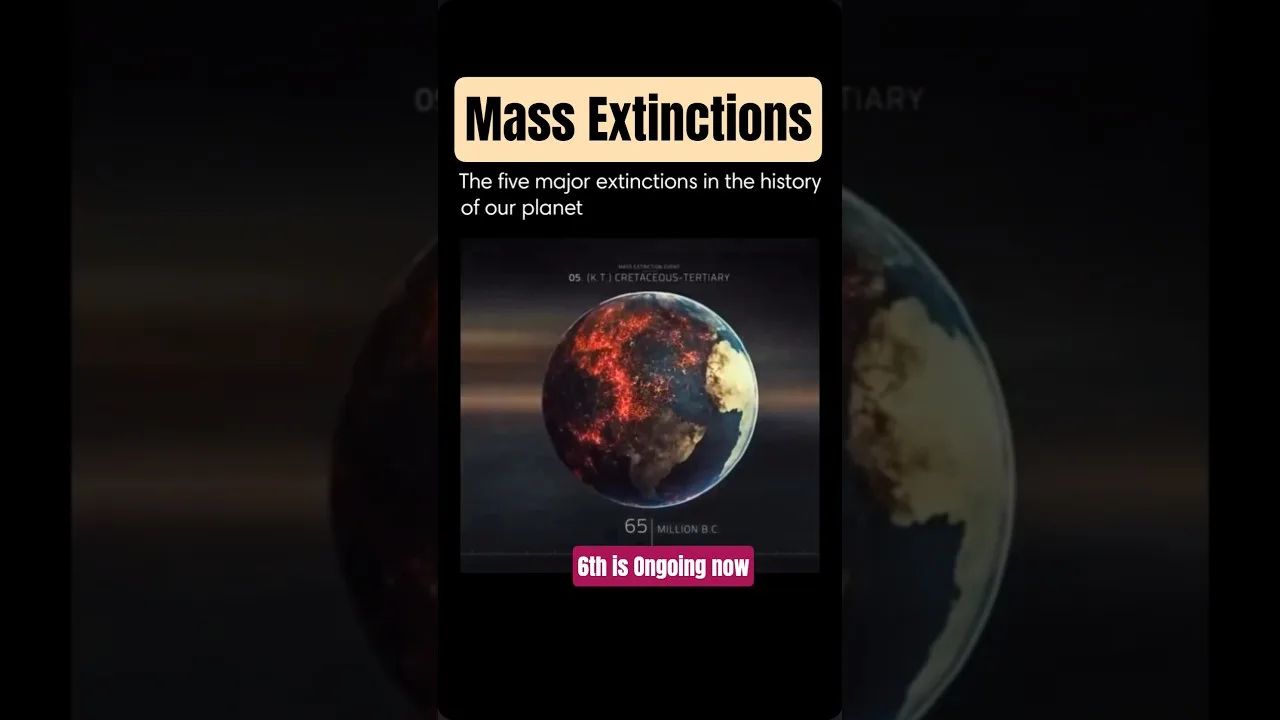
Table of Contents
- Mass Extinctions: Key Facts and Figures
- The End‑Ordovician Glaciation (~443 Million Years Ago)
- The Late Devonian Crisis (~372 Million Years Ago)
- Permian‑Triassic: The Great Dying (~252 Million Years Ago)
- Triassic‑Jurassic (~201 Million Years Ago)
- Cretaceous‑Paleogene (K‑Pg) (~66 Million Years Ago)
- Drivers and Mechanisms Behind Mass Extinctions
- Lessons for Today: The Ongoing Sixth Mass Extinction
- Why Mass Extinctions Matter for UPSC and Earth Science Preparation
- Key Takeaways for Quick Revision
Mass Extinctions have shaped the trajectory of life on Earth, wiping out vast percentages of species and resetting evolutionary pathways. These planetary crises are not rare anomalies; they are pivotal moments that redefine biodiversity, climate, and the very fabric of ecosystems. Understanding the pattern, causes, and consequences of Mass Extinctions provides essential insights for students of earth science, paleontology, and competitive exams like UPSC, where questions on geological time scales and environmental change frequently appear.
- Mass Extinctions refer to episodes where at least 75% of Earth’s species disappear in a geologically short period.
- The “Big Five” are the most widely recognized events, with a possible sixth ongoing today.
- Primary drivers include rapid climate change, massive volcanism, asteroid impacts, oceanic anoxia, and sea‑level fluctuations.
- Each extinction cleared ecological niches, allowing new groups to diversify—most famously mammals after the Cretaceous‑Paleogene event.
- Studying past Mass Extinctions helps predict the impacts of current anthropogenic climate change and biodiversity loss.
Mass Extinctions: Key Facts and Figures
Mass Extinctions are defined by the loss of a substantial proportion of global biodiversity within a relatively brief interval of geological time—typically less than a few million years. The fossil record shows five major events, each associated with distinct environmental catastrophes. While the exact numbers vary among studies, the consensus estimates are: End‑Ordovician (~85% marine species loss), Late Devonian (~75% species loss), Permian‑Triassic (~96% marine and ~70% terrestrial vertebrate loss), Triassic‑Jurassic (~80% species loss), and Cretaceous‑Paleogene (~76% of all species). These figures illustrate the sheer scale of biological upheaval that our planet has endured.
The End‑Ordovician Glaciation (~443 Million Years Ago)
The first of the major Mass Extinctions occurred at the end of the Ordovician period. Intense glaciation locked up water in ice sheets, causing sea levels to drop dramatically. This habitat loss, combined with changes in ocean chemistry, devastated marine invertebrates such as brachiopods, trilobites, and early reef‑building organisms. Fossil evidence from sites like the Anticosti Island in Canada shows a sharp decline in diversity coinciding with glacial deposits. The extinction set the stage for the subsequent diversification of jawed fishes in the Silurian.
The Late Devonian Crisis (~372 Million Years Ago)
Spanning several million years, the Late Devonian Mass Extinction was a protracted crisis rather than a single snap event. Widespread oceanic anoxia—oxygen‑depleted waters—created deadly conditions for marine life. The spread of early terrestrial plants increased nutrient runoff, fueling algal blooms that consumed oxygen as they decomposed. Volcanic activity, possibly from the Viluy Traps in Siberia, added greenhouse gases, exacerbating warming and further destabilizing ocean circulation. Groups heavily impacted included placoderm fishes, ammonites, and many reef builders. — a key consideration for Mass Extinctions.
Permian‑Triassic: The Great Dying (~252 Million Years Ago)
Known as the single most severe Mass Extinction in Earth’s history, the Permian‑Triassic event eradicated approximately 96% of marine species and 70% of terrestrial vertebrates. The primary trigger was the Siberian Traps flood basalt eruptions, which released colossal volumes of CO₂ and methane over hundreds of thousands of years. This led to runaway global warming, ocean acidification, and pervasive anoxia. Evidence from marine carbonate layers shows a dramatic shift in carbon isotopes, reflecting the massive injection of light carbon. The aftermath opened ecological niches that allowed archosaurs—the ancestors of dinosaurs—to rise in the subsequent Triassic period.
For a detailed overview of the Permian‑Triassic extinction, see the Wikipedia article.
Triassic‑Jurassic (~201 Million Years Ago)
The Triassic‑Jurassic Mass Extinction cleared the way for dinosaur dominance. Linked to the Central Atlantic Magmatic Province (CAMP) volcanism, this event released vast amounts of CO₂, causing rapid warming and ocean acidification. The fossil record shows the disappearance of large amphibians, many therapsids (mammal‑like reptiles), and numerous reef‑building bivalves. With these groups gone, early dinosaurs faced reduced competition and began to diversify into the myriad forms that would characterize the Mesozoic Era.
Cretaceous‑Paleogene (K‑Pg) (~66 Million Years Ago)
The most famous Mass Extinction, the Cretaceous‑Paleogene event, ended the reign of non‑avian dinosaurs. The Chicxulub asteroid impact in the Yucatán Peninsula is widely accepted as the primary trigger, generating an impact winter, wildfires, tsunamis, and subsequent greenhouse warming. However, contemporaneous Deccan Traps volcanism in India likely contributed additional climate stress. The extinction eliminated ammonites, pterosaurs, marine reptiles, and about 76% of all species, paving the way for mammalian radiation.
Further reading on the K‑Pg boundary can be found at the Wikipedia page.
Drivers and Mechanisms Behind Mass Extinctions
Although each Mass Extinction has unique features, several common mechanisms recur. Rapid climate change—whether warming from volcanic CO₂ or cooling from sunlight‑blocking aerosols—remains the most consistent killer. When temperatures shift faster than species can adapt or migrate, extinctions cascade through food webs. Ocean acidification, caused by dissolved CO₂ forming carbonic acid, undermines calcifying organisms such as corals, mollusks, and some plankton.
Massive volcanism, exemplified by flood basalt provinces, injects not only greenhouse gases but also sulfur compounds that can produce acid rain and short‑term cooling. Asteroid or comet impacts deliver instantaneous energy, creating shockwaves, heat pulses, and ejecta that block sunlight. Oceanic anoxia and euxinia (anoxia plus hydrogen sulfide) often follow warming‑driven stratification, preventing oxygen replenishment and producing toxic conditions that kill marine life.
Sea‑level fluctuations, driven by glaciation or tectonic uplift, alter coastal habitats and can exacerbate stress when combined with other factors. Methane hydrate release from ocean sediments can cause sudden spikes in atmospheric methane, a potent greenhouse gas, further amplifying warming trends.
Lessons for Today: The Ongoing Sixth Mass Extinction
Current biodiversity loss rates have led many scientists to propose that we are entering a sixth Mass Extinction, driven primarily by human activities. Habitat destruction, overexploitation, pollution, and especially anthropogenic climate change are pushing extinction rates far above background levels. The Intergovernmental Science‑Policy Platform on Biodiversity and Ecosystem Services (IPBES) estimates that around one million species face extinction, many within decades.
Studying past Mass Extinctions provides a deep‑time benchmark for evaluating the severity of modern crises. The speed of current change—measured in decades rather than millennia—rivals or exceeds the rates seen during the Permian‑Triassic or Cretaceous‑Paleogene events. This underscores the urgency of mitigation: reducing greenhouse gas emissions, protecting and restoring ecosystems, and curbing unsustainable resource use.
For UPSC aspirants, linking these deep‑time concepts to contemporary environmental policies is essential. Questions often examine the relationship between geological events and present‑day climate challenges, requiring candidates to draw analogies between past mass die‑offs and the Anthropocene.
Why Mass Extinctions Matter for UPSC and Earth Science Preparation
Mass Extinctions are a recurring theme in the UPSC syllabus under Geography (Physical Geography – Geological Time Scale), Environment (Biodiversity Conservation), and General Science. A solid grasp of the timing, causes, and consequences of these events enables candidates to tackle analytical questions that link Earth’s history with current environmental policy.
Key preparation points include:
- Memorizing the approximate ages and percentage losses of the Big Five Mass Extinctions.
- Understanding the primary mechanisms: volcanism, impacts, climate change, oceanic anoxia.
- Being able to compare past extinction drivers with modern anthropogenic factors.
- Recognizing the evolutionary aftermath—how each extinction opened niches for new groups (e.g., mammals after K‑Pg).
- Linking the concept of a potential sixth Mass Extinction to current affairs such as climate summits, biodiversity conventions, and sustainable development goals.
By integrating deep‑time perspectives with contemporary issues, aspirants can produce well‑rounded answers that demonstrate both factual knowledge and critical thinking—qualities highly valued in the UPSC examination.
Key Takeaways for Quick Revision
- Mass Extinctions are defined by loss of ≥75% of species in a short geological interval.
- The Big Five: End‑Ordovician, Late Devonian, Permian‑Triassic, Triassic‑Jurassic, Cretaceous‑Paleogene.
- Major drivers: rapid climate change, flood basalt volcanism, asteroid impacts, oceanic anoxia, sea‑level shifts.
- Each extinction reshaped ecosystems, allowing new groups to radiate (e.g., dinosaurs after Permian‑Triassic, mammals after K‑Pg).
- Current human‑driven changes mirror past extinction triggers, signaling a possible sixth Mass Extinction.
- For UPSC, focus on dates, mechanisms, evolutionary consequences, and modern analogies.
Frequently Asked Questions
The Big Five Mass Extinctions are the End-Ordovician, Late Devonian, Permian-Triassic, Triassic-Jurassic, and Cretaceous-Paleogene events, each wiping out a large percentage of Earth's species.
The Permian-Triassic extinction, also called the Great Dying, was the most severe, eliminating about 96% of marine species and 70% of terrestrial vertebrates.
Past Mass Extinctions show how rapid climate change, volcanism, and oceanic anoxia can drive massive species loss; today's human-induced changes mirror these triggers, warning of a potential sixth Mass Extinction.