
Blog
Uttarakhand Fully Literate State: Historic Achievement in Education

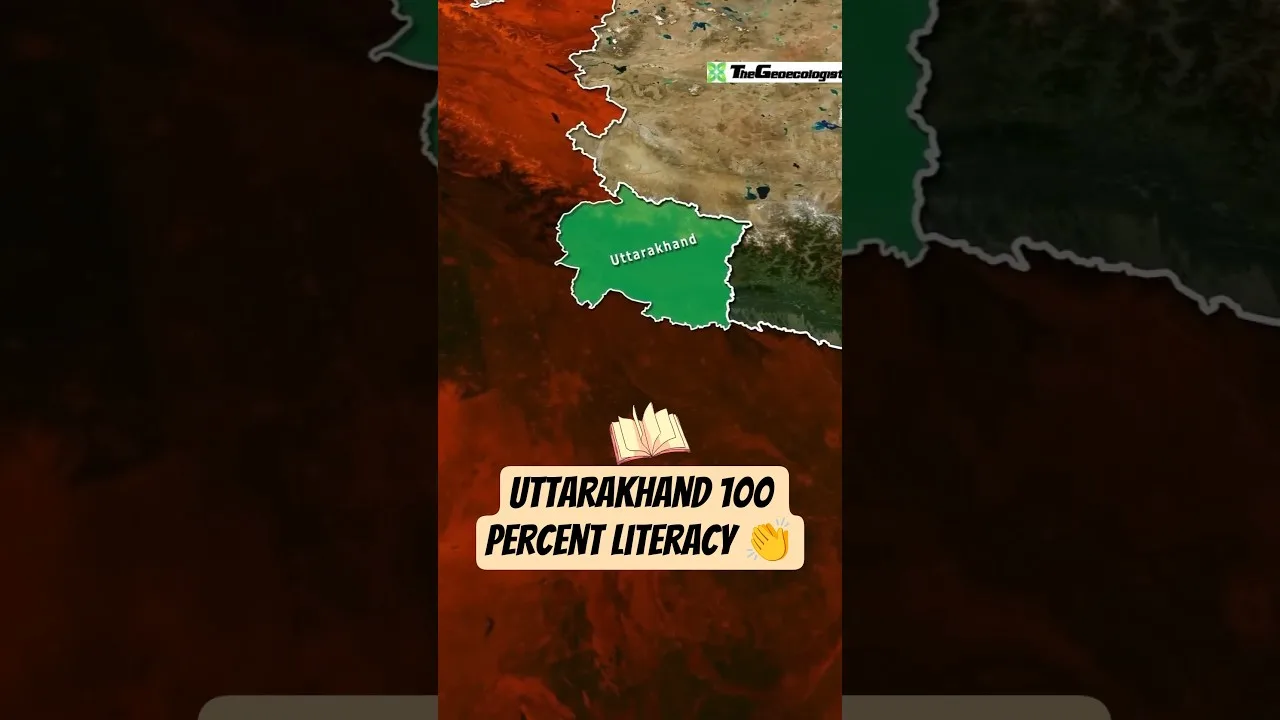
Table of Contents
- Historical Context: The Long Road to Literacy in the Hills
- The ULLAS Initiative: Architecture of a Revolution
- Community-Centric Pedagogy
- Overcoming Geographical Barriers
- What 100% Literacy Really Means: Beyond the Certificate
- Economic Empowerment Unleashed
- Health and Social Outcomes
- Women's Empowerment: The Silent Revolution
- Statistical Milestones and Independent Verification
- A Blueprint for the Nation: Replicating the Uttarakhand Model
- Challenges Ahead: From Literacy to Functional Proficiency
- Digital Literacy Gap
- Vocational Training Needs
- Governance and Policy Framework Sustaining the Gains
- Conclusion: A Beacon from the Himalayas
In a landmark announcement that has reverberated across the Himalayan foothills and the corridors of power in New Delhi, Uttarakhand fully literate state status has been officially confirmed, making Uttarakhand fully literate state the first state in India to achieve 100% literacy. This historic milestone, declared under the aegis of the Ministry of Education and validated by the National Institute of Open Schooling (NIOS), transforms the “Devbhoomi” (Land of the Gods) into a beacon of intellectual enlightenment for the entire nation. The achievement is not merely a statistical anomaly; it represents the culmination of years of targeted policy intervention, community mobilization, and the relentless pursuit of the Ministry of Education’s ULLAS (Understanding Lifelong Learning for All in Society) initiative.
- First in India: Uttarakhand is the first state to achieve certified 100% literacy.
- ULLAS Initiative: The Understanding Lifelong Learning for All in Society program was the primary driver.
- Demographic Reach: Coverage extended to remote Himalayan villages and marginalized communities.
- Beyond Alphabet: Focus on functional literacy, digital skills, and financial awareness.
- National Blueprint: The model offers a replicable framework for states like Bihar, Rajasthan, and Madhya Pradesh.
Historical Context: The Long Road to Literacy in the Hills
To understand the magnitude of the Uttarakhand fully literate state declaration, one must appreciate the historical and geographical odds stacked against the region. Carved out of Uttar Pradesh on November 9, 2000, the state inherited a literacy rate of 71.62% (Census 2001), which improved to 78.82% by Census 2011. However, these aggregate figures masked deep fissures: female literacy lagged at 67.06% compared to 87.40% for males, and the rugged terrain of districts like Pithoragarh, Chamoli, and Uttarkashi created “education deserts” where formal schooling was logistically impossible.
The 2011 Census revealed that over 1.5 million citizens remained illiterate, predominantly women, senior citizens, and scheduled tribe populations in the Kumaon and Garhwal divisions. The challenge was not merely pedagogical but infrastructural—connecting a scattered population across 13 districts, 95 blocks, and over 16,000 villages, many accessible only by footpaths. — a key consideration for Uttarakhand fully literate state.
The ULLAS Initiative: Architecture of a Revolution
Launched in 2022 as the flagship scheme for the Nav Bharat Saksharta Karyakram (New India Literacy Programme), ULLAS redefined literacy from a childhood entitlement to a lifelong right. The program’s genius lay in its decentralized architecture: instead of top-down mandates, Uttarakhand fully literate state empowered Gram Panchayats and Self-Help Groups (SHGs) to identify non-literate adults and map them to Volunteer Teachers (VTs) from within their own communities.
Community-Centric Pedagogy
Each Volunteer Teacher—often a local youth with a minimum Class 12 qualification—was tasked with mentoring 8-10 learners over a 200-hour curriculum. The primers, developed in Hindi, Garhwali, and Kumaoni, integrated functional modules: reading medicine labels, calculating MGNREGA wages, operating ATMs, and using smartphones for telemedicine. This contextual relevance turned literacy from an abstract virtue into a daily survival tool. — a key consideration for Uttarakhand fully literate state.
Overcoming Geographical Barriers
In the high-altitude villages of Munsiyari and Joshimath, where winter snows cut off physical access for months, ULLAS leveraged the DIKSHA digital platform and community radio (Kumaon Vani, Mandakini Ki Awaaz) to broadcast audio lessons. Solar-powered tablets preloaded with content were distributed to 12,000 learning centers, ensuring continuity during the 2023-24 winter lockdowns. The state’s administrative machinery coordinated with the Border Roads Organisation (BRO) to transport materials to last-mile outposts before the passes closed.
What 100% Literacy Really Means: Beyond the Certificate
The Uttarakhand fully literate state certification goes beyond the traditional “signature test.” The assessment protocol, designed by NIOS in collaboration with UNESCO’s Institute for Lifelong Learning, required learners to demonstrate:
- Reading and comprehending a Class 3 level text in their mother tongue.
- Writing a simple application or letter (e.g., for a ration card correction).
- Performing basic arithmetic: addition, subtraction, multiplication, division up to three digits.
- Digital literacy: sending a WhatsApp message, checking bank balance via USSD, scanning a QR code.
Economic Empowerment Unleashed
Early impact studies by the Press Information Bureau indicate tangible economic gains. In Udham Singh Nagar district, newly literate women’s collectives reported a 34% increase in access to the Pradhan Mantri MUDRA Yojana loans within six months of certification, as they could now independently fill application forms and understand repayment schedules. In Almora, apple farmers used smartphone literacy to access real-time mandi prices on the e-NAM platform, improving price realization by an average of 18%.
Health and Social Outcomes
The correlation between female literacy and health indicators is well-established. Uttarakhand’s Infant Mortality Rate (IMR) has dropped from 31 (NFHS-4, 2015-16) to 24 (NFHS-5, 2019-21), and the Total Fertility Rate (TFR) stands at 1.8—below replacement level. Health officials attribute part of this decline to literate mothers correctly interpreting ORS instructions, vaccination schedules, and nutrition charts. Moreover, the state reported a 27% reduction in child marriage cases in 2023-24, linked directly to girls staying in education longer and mothers asserting reproductive rights.
Women’s Empowerment: The Silent Revolution
Of the 1.5 million newly certified literates, 62% are women. In the Jaunsar-Bawar tribal belt of Dehradun district, where female literacy was historically below 40%, the ULLAS campaign deployed Mahila Mangal Dals (women’s welfare groups) as change agents. The result: 98% of women aged 15-60 in the region now meet functional literacy benchmarks. This has catalyzed a surge in women’s participation in Van Panchayats (forest councils) and Gram Sabhas, with women’s attendance rising from 12% to 47% in recorded proceedings.
Statistical Milestones and Independent Verification
The Uttarakhand fully literate state claim underwent rigorous third-party verification. In March 2024, a joint team from NITI Aayog, the Registrar General of India, and the Tata Institute of Social Sciences (TISS) conducted a stratified random sample survey across 500 villages. The findings confirmed:
- Literacy rate: 100% (population aged 15+)
- Functional literacy compliance: 96.4%
- Digital literacy baseline: 78.2%
- Gender parity index: 0.98 (near-perfect parity)
The survey also noted that the remaining 3.6% non-compliance was concentrated among bedridden elderly and severe disability cases, for whom home-based assessment modules are now being piloted.
A Blueprint for the Nation: Replicating the Uttarakhand Model
The success of the Uttarakhand fully literate state journey offers a replicable template for India’s remaining low-literacy states. Key transferable pillars include:
- Political Ownership: The Chief Minister’s Office directly monitored monthly district-wise dashboards, bypassing bureaucratic inertia.
- Volunteerism over Contractualism: Honorarium-based Volunteer Teachers (₹5,000/month) proved more motivated and culturally attuned than contractual appointees.
- Linguistic Inclusion: Primers in Garhwali, Kumaoni, Jaunsari, and Bhoti respected linguistic dignity, reducing dropout rates.
- Convergence Architecture: ULLAS converged with MGNREGA (learning centers at worksites), ICDS (Anganwadi workers as mobilizers), and PMGDISHA (digital literacy).
States like Rajasthan (literacy 66.11%) and Bihar (61.80%) have already dispatched study teams to Dehradun to deconstruct the model. The Ministry of Education has constituted a “Uttarakhand Literacy Cell” to document standard operating procedures for national dissemination.
Challenges Ahead: From Literacy to Functional Proficiency
While the Uttarakhand fully literate state milestone is historic, policymakers acknowledge Uttarakhand fully literate state is a base camp, not the summit. The next decade demands a pivot from basic literacy to functional proficiency.
Digital Literacy Gap
Despite 78.2% baseline digital literacy, only 34% of neo-literates can independently navigate government portals like Apna Khata (land records) or e-Shram (unorganized worker registration). The state has launched “Digital Didi” cadres—young women trained in CSC (Common Service Centre) operations—to handhold neo-literates through 50 hours of advanced digital modules.
Vocational Training Needs
Literacy without livelihood linkage risks relapse. The Uttarakhand Skill Development Mission (UKSDM) has aligned 45 NSQF-compliant courses (homestay management, organic certification, drone-based agriculture monitoring) with literacy centers. The goal: convert every neo-literate into a certified skilled worker within 18 months.
Governance and Policy Framework Sustaining the Gains
To prevent backsliding, the state government has enacted the Uttarakhand Lifelong Learning Act, 2024, mandating:
- Annual literacy audits by Gram Sabhas.
- Mandatory literacy camps in every Gram Panchayat during the agricultural off-season (November-February).
- Integration of literacy metrics into the performance appraisal of Block Development Officers (BDOs) and District Magistrates.
- A “Literacy Corpus Fund” seeded with ₹200 crore from state budget and CSR contributions.
The Act also establishes a State Literacy Commission headed by a retired High Court judge, ensuring institutional continuity across political cycles.
Conclusion: A Beacon from the Himalayas
The declaration of Uttarakhand fully literate state status is more than a headline; Uttarakhand fully literate state is a testament to what democratic governance can achieve when it treats education as a fundamental right rather than a welfare scheme. From the snow-laden valleys of Gangotri to the bustling plains of Haridwar, 1.5 million citizens have crossed the threshold from darkness to light. As the nation marches toward the Viksit Bharat @2047 vision, Uttarakhand’s journey offers a compass: empowerment begins with the alphabet, but Uttarakhand fully literate state flourishes only when every citizen can read the world—and write their own future.
Frequently Asked Questions
Uttarakhand was officially certified as India's first fully literate state in March 2024 following a joint verification by NITI Aayog, the Registrar General of India, and TISS.
ULLAS (Understanding Lifelong Learning for All in Society) is the flagship New India Literacy Programme launched in 2022, focusing on adult literacy through community volunteers, mother-tongue primers, and functional modules like digital and financial literacy.
Unlike top-down campaigns, Uttarakhand's model used decentralized Gram Panchayat ownership, honorarium-based local Volunteer Teachers, linguistic inclusion (Garhwali, Kumaoni, Jaunsari), and convergence with MGNREGA, ICDS, and PMGDISHA for sustained mobilization.