Blog
Radical Geography: Origins, Thinkers, and Modern Impact

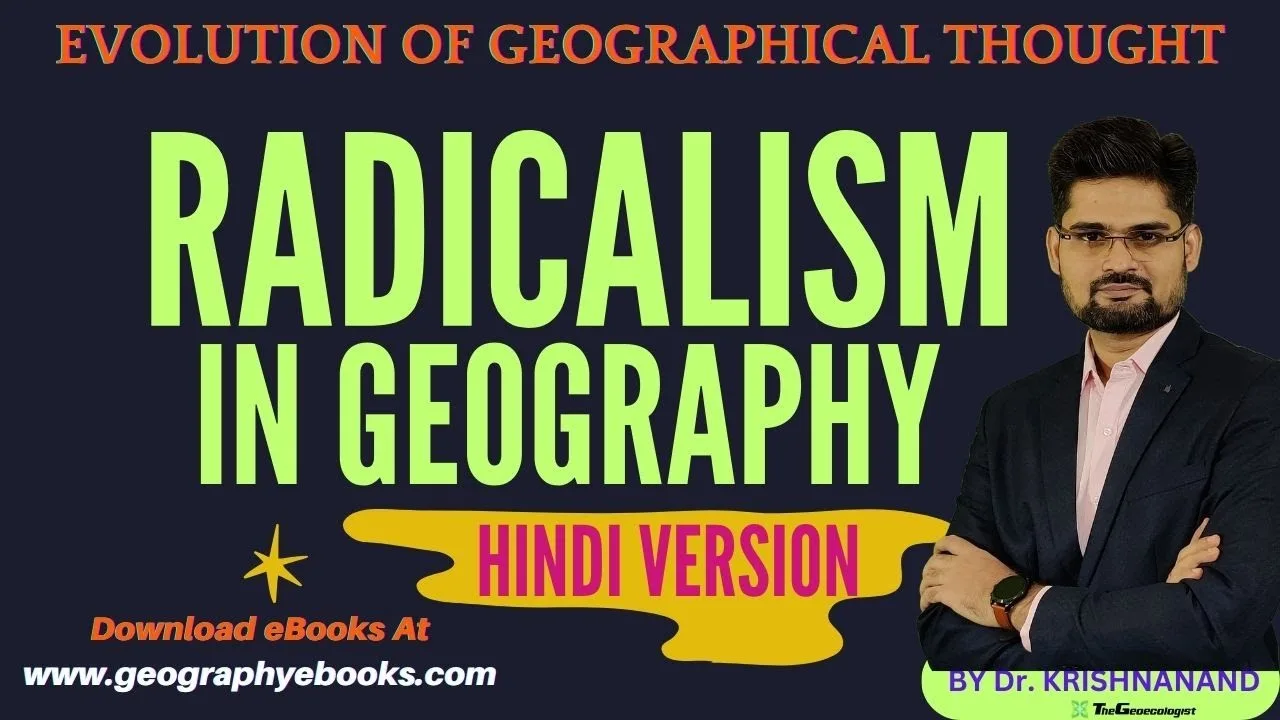
Table of Contents
- Radical Geography: Core Tenets and Principles
- Historical Origins: The 1960s‑70s Turning Point
- Key Thinkers Shaping the Movement
- David Harvey: Marxist Urban Theory
- Richard Peet: Ideology and Capitalism
- The Clark University School
- Applications Across Geographic Sub‑Disciplines
- Urban Geography and Gentrification
- Social Geography: Crime, Race, and Space
- Political Geography: Territory and Power
- Environmental Geography and Political Ecology
- Criticisms and Limitations
- Contemporary Relevance: Why Radical Geography Matters Today
- Conclusion
Radical Geography emerged in the late 1960s as a critique of traditional, value‑neutral geography, seeking to uncover how power relations produce spatial inequalities.
- Rooted in Marxist and anarchist traditions.
- Focuses on social justice and activist scholarship.
- Challenges the notion of objective, neutral geographic knowledge.
- Links economic, political, social, and environmental processes.
- Influences fields such as political ecology, urban studies, and critical GIS.
Radical Geography: Core Tenets and Principles
At its heart, Radical Geography is critical, activist‑oriented, and holistic. Scholars argue that space is never neutral; it is produced through historic struggles over labor, race, gender, and ecology. This perspective insists that understanding spatial patterns requires asking who benefits and who is disadvantaged by existing arrangements.
The methodology often combines qualitative case studies with quantitative spatial analysis, drawing on theories from Marxism, post‑structuralism, feminism, and anti‑colonial thought. By exposing the hidden forces behind maps, zoning laws, and resource distribution, Radical Geography aims to inform emancipatory praxis.
Historical Origins: The 1960s‑70s Turning Point
The intellectual roots of Radical Geography trace back to the social upheavals of the 1960s: civil rights marches, anti‑Vietnam War protests, and rising awareness of global poverty. Geographers began to question the discipline’s claim of value‑neutrality, inspired by works such as Social Justice and the City by David Harvey (1973). This book applied Marxist theory to urban processes, showing how capital accumulation shapes housing markets, gentrification, and segregation.
Around the same time, scholars at Clark University, including Richard Peet, formed a collective that pushed geography toward explicit political engagement. Their seminars and publications emphasized ideology, spatial justice, and the need for geography to serve social movements.
Key Thinkers Shaping the Movement

David Harvey: Marxist Urban Theory
David Harvey remains the most cited radical geographer. Beyond Social Justice and the City, his later works like The Limits to Capital (1982) and A Brief History of Neoliberalism (2005) trace how neoliberal restructuring creates uneven geographical development. Harvey’s concept of “spatial fix” explains how capitalism resolves crises by reorganizing space—through suburban expansion, financialization, or urban renewal projects that often displace vulnerable populations.
Richard Peet: Ideology and Capitalism
Richard Peet’s research focuses on how geographic knowledge itself serves ideological functions. In books such as Modern Geographical Thought (1998) and Uneven Development (co‑edited with Hartwick), Peet examines the production of geographic theory under capitalist conditions, arguing that seemingly neutral concepts like “location” or “region” embed power relations.
The Clark University School
The Clark University collective, active from the early 1970s through the 1990s, produced a stream of dissertations and articles that linked geography to activism. Their work on housing segregation, environmental racism, and labor geographies helped establish Radical Geography as a durable subfield within American academia.
Applications Across Geographic Sub‑Disciplines
Urban Geography and Gentrification
Radical geographers analyze gentrification not as a natural urban renewal process but as a result of deliberate capital flows, state policies, and cultural consumption that displace low‑income residents. Case studies from New York, London, and São Paulo reveal how rezoning, tax abatements, and art‑led revitalization increase property values while eroding community cohesion.
Social Geography: Crime, Race, and Space
Instead of attributing higher crime rates to cultural deficits, Radical Geography examines how disinvestment, segregated schooling, and policing patterns produce spatial concentrations of disadvantage. Researchers use GIS to map correlations between poverty, incarceration rates, and access to green space, highlighting the structural roots of urban violence.
Political Geography: Territory and Power
This branch questions the “naturalness” of borders, showing how states create territories through treaties, wars, and colonial projects. Radical analyses of resource wars—such as conflicts over oil in the Niger Delta or lithium in the Andes—demonstrate how environmental scarcity is often manufactured by corporate and state interests to justify extraction and militarization.
Environmental Geography and Political Ecology
The fusion of Radical Geography with environmental studies gave rise to political ecology, a framework that asks not only how an environmental problem occurred but why it happened and who bears its costs. For example, studies of deforestation in the Amazon link logging concessions to international debt regimes, showing how global financial structures drive local ecological degradation. Political ecology thus bridges ecological science with social justice activism.
Criticisms and Limitations
Despite its influence, Radical Geography faces several critiques. Some scholars argue that an overemphasis on economic determinism can marginalize cultural and agency‑based explanations. Others claim that the dense theoretical vocabulary—terms like “hegemony,” “dialectical,” and “uneven development”—can alienate practitioners and policymakers. Additionally, early radical work sometimes overlooked intersections of gender and sexuality, a gap later addressed by feminist and queer geographers.
Proponents counter that all knowledge is situated; transparency about political commitments enhances scholarly rigor rather than undermines it. They also point to the movement’s adaptability, noting how contemporary radical geographers incorporate big data, critical race theory, and decolonial perspectives to stay relevant.
Contemporary Relevance: Why Radical Geography Matters Today
In an era marked by climate crisis, widening inequality, and mass migrations, the tools of Radical Geography are indispensable. The approach offers a lens to examine:
- Climate justice: How carbon‑intensive industries disproportionately affect Global South communities.
- Housing justice: The role of financial speculation in creating unaffordable cities.
- Migration geographies: How border regimes and labor markets produce precarious spaces for refugees.
- Health geography: Spatial patterns of pandemics linked to unequal access to healthcare and healthy environments.
By insisting that space is produced through conflict and cooperation, Radical Geography equips activists, planners, and scholars with a critical mindset necessary for transformative action. Its emphasis on praxis—linking theory to direct engagement—continues to inspire new generations seeking to reshape the world toward greater equity.
Conclusion
Radical Geography began as a provocative challenge to the discipline’s claim of neutrality and has evolved into a vibrant, interdisciplinary tradition. From David Harvey’s Marxist urban analyses to the activist‑scholar networks at Clark University, the movement has consistently asked: Who gains from the way space is organized, and how can we rearrange it for the common good? As global challenges intensify, the radical perspective remains a vital compass for those who believe that understanding the world must go hand in hand with changing it.
Frequently Asked Questions
Radical Geography is a critical approach to geography that examines how power relations produce spatial inequalities and seeks social justice through activist scholarship.
Key figures include David Harvey, Richard Peet, and the scholars of the Clark University School who integrated Marxist theory with geographic analysis in the 1960s‑70s.
It is used to study gentrification, environmental justice, migration, and health disparities by linking spatial patterns to economic, political, and social forces.