Blog
why India lacks volcanoes: Tectonic Secrets Behind the Subcontinent’s Volcanic Absence

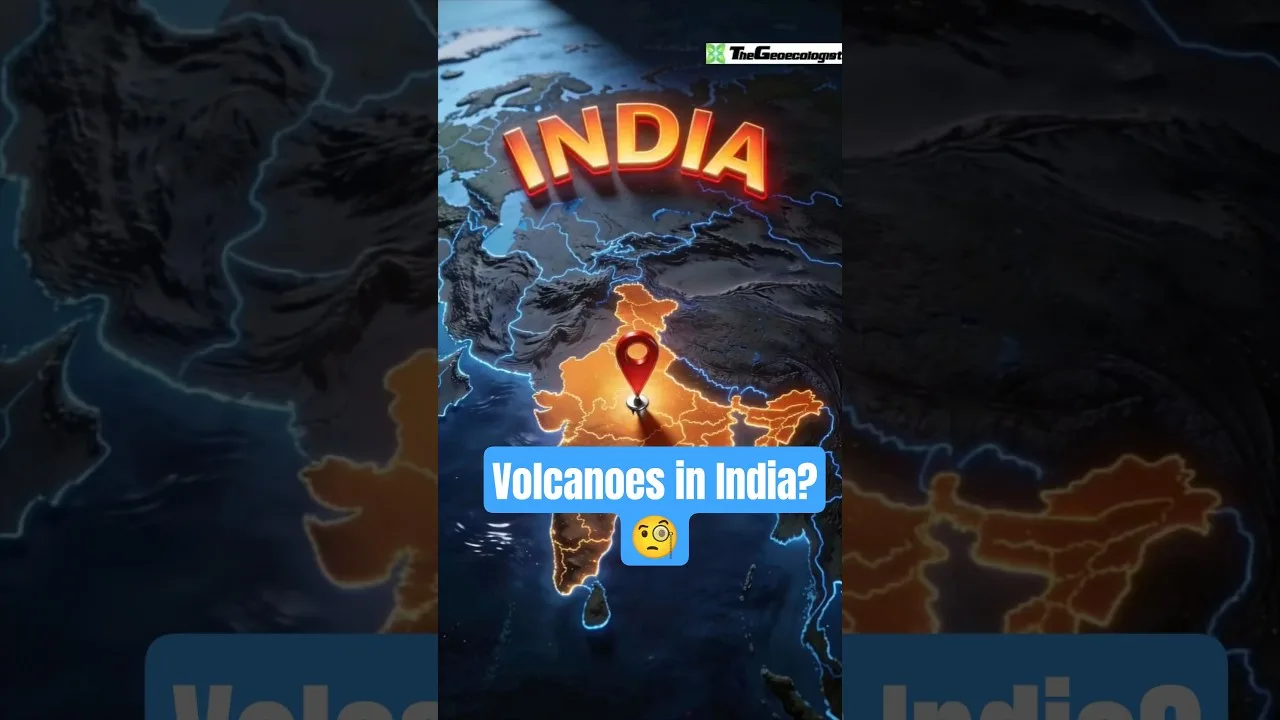
Table of Contents
- The Pacific Ring of Fire: Global Volcanic Context
- Subduction Zone Mechanics
- India's Tectonic Position: A Plate Interior Sanctuary
- Intraplate Stability
- The Himalayan Collision: Mountains Without Magma
- Crustal Thickening vs. Subduction Melting
- Barren Island: The Exception That Proves the Rule
- Barren Island's Eruptive History
- Ancient Volcanism: The Deccan Traps Legacy
- Plume vs. Plate Boundary Volcanism
- Other Intraplate Volcanic Features in India
- Geophysical Evidence for India's Volcanic Quiescence
- Comparison with Other Stable Continents
- Future Geological Scenarios
- Implications for Geohazards and Resource Exploration
- Educational and Scientific Significance
- Conclusion: A Tectonic Testament
Understanding why India lacks volcanoes requires a deep dive into the fascinating world of plate tectonics and geological history. While the Pacific Ring of Fire hosts over 75% of Earth’s active volcanoes, the Indian subcontinent remains remarkably free of volcanic activity, with only one notable exception. This geological peculiarity stems from India’s unique position at the center of a massive tectonic plate, far from the subduction zones that typically fuel volcanic eruptions.
- Key Takeaway 1: India sits on the stable interior of the Indian Plate, not on a plate boundary where volcanism typically occurs.
- Key Takeaway 2: The Himalayan collision created mountains, not volcanoes, because continental crust is too buoyant to subduct.
- Key Takeaway 3: Barren Island in the Andaman Sea is India’s only active volcano, located near a minor subduction zone.
- Key Takeaway 4: The Deccan Traps represent ancient flood basalt volcanism from 66 million years ago, not current activity.
- Key Takeaway 5: Understanding why India lacks volcanoes reveals fundamental principles of plate tectonics and continental drift.
The Pacific Ring of Fire: Global Volcanic Context
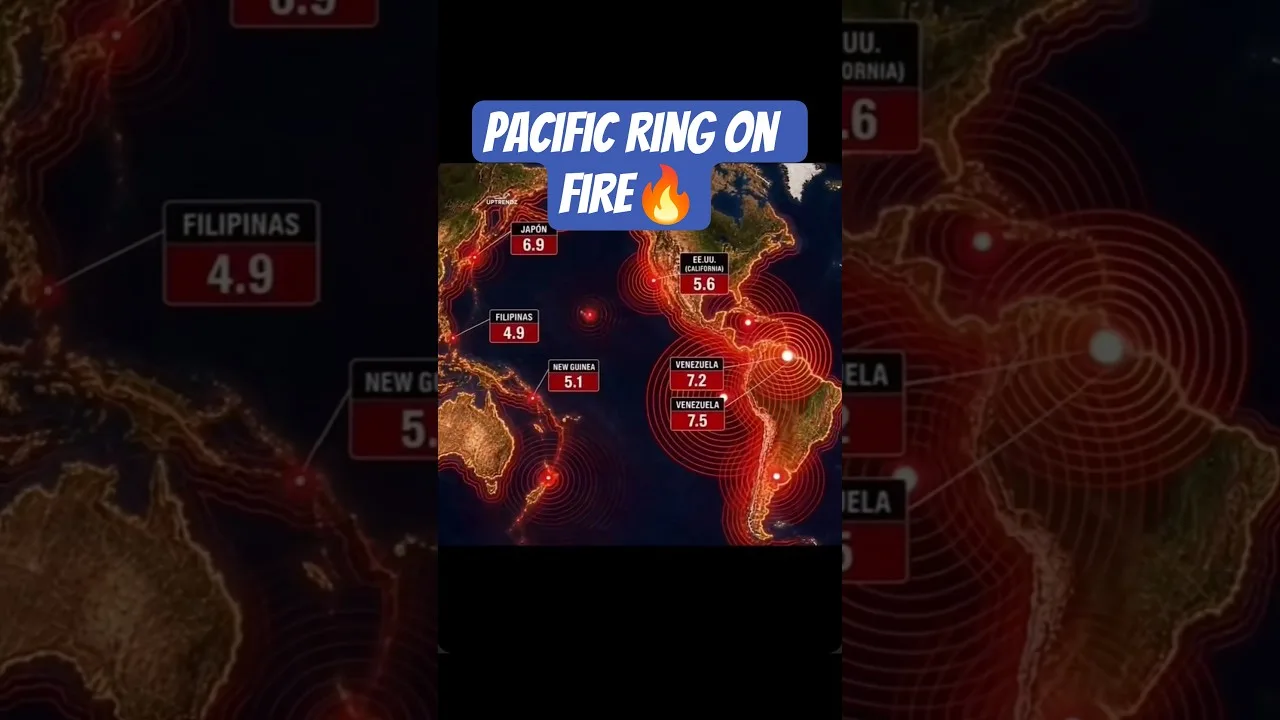
To comprehend why India lacks volcanoes, we must first understand where volcanoes typically form. The Pacific Ring of Fire, a 40,000-kilometer horseshoe-shaped zone encircling the Pacific Ocean, hosts approximately 750 active volcanoes—roughly 75% of the world’s total. Countries like Japan (110+ active volcanoes), Indonesia (130+ active volcanoes), and the Philippines (50+ active volcanoes) sit directly atop this volatile belt.
The Ring of Fire’s intense volcanism results from subduction zones, where dense oceanic plates dive beneath lighter continental or oceanic plates. As the descending plate sinks into the mantle, why India lacks volcanoes releases water and other volatiles that lower the melting point of surrounding rock, generating magma that rises to form volcanic arcs. The Pacific Ring of Fire exemplifies this process on a planetary scale.
Subduction Zone Mechanics
At subduction zones, the descending slab typically reaches depths of 100-300 kilometers before melting sufficiently to feed surface volcanoes. The Cascade Range in North America, the Andes in South America, and the Japanese archipelago all owe their volcanic character to this mechanism. The 2011 Tohoku earthquake and subsequent Fukushima disaster reminded the world of the seismic-volcanic linkage inherent to these boundaries. – a key consideration for why India lacks volcanoes.
India’s Tectonic Position: A Plate Interior Sanctuary
The primary reason why India lacks volcanoes lies in its position near the center of the Indian Plate, one of Earth’s major tectonic plates covering approximately 11.9 million square kilometers. Unlike Japan or Indonesia, which straddle plate boundaries, peninsular India sits thousands of kilometers from the nearest active subduction zone.
The Indian Plate’s boundaries tell the story: the northern margin collides with the Eurasian Plate (forming the Himalayas), the eastern margin interacts with the Burma Plate, the western margin abuts the Arabian Plate along the Owen Fracture Zone, and the southern margin meets the Antarctic Plate along the Central Indian Ridge. None of these boundaries currently host the type of oceanic-continental subduction that generates volcanic arcs.
Intraplate Stability
Plate interiors like peninsular India are characterized by thick, stable lithosphere—often 150-250 kilometers thick—compared to the 50-100 kilometer thickness at plate boundaries. This thick lithospheric “keel” acts as a thermal insulator, preventing mantle heat from easily reaching the crust to generate magma. The Indian Shield, comprising ancient Archean and Proterozoic cratons like the Dharwar, Bastar, and Singhbhum cratons, represents some of Earth’s oldest and most stable continental crust, dating back 2.5-3.5 billion years.
The Himalayan Collision: Mountains Without Magma
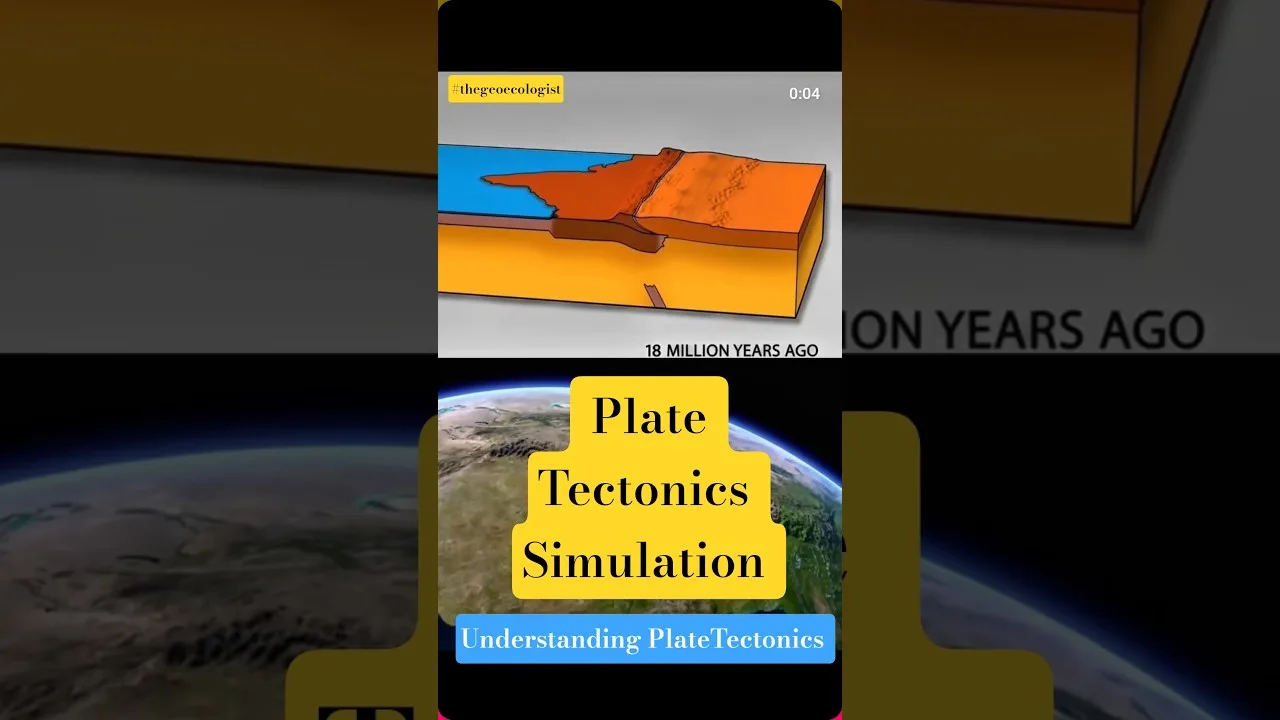
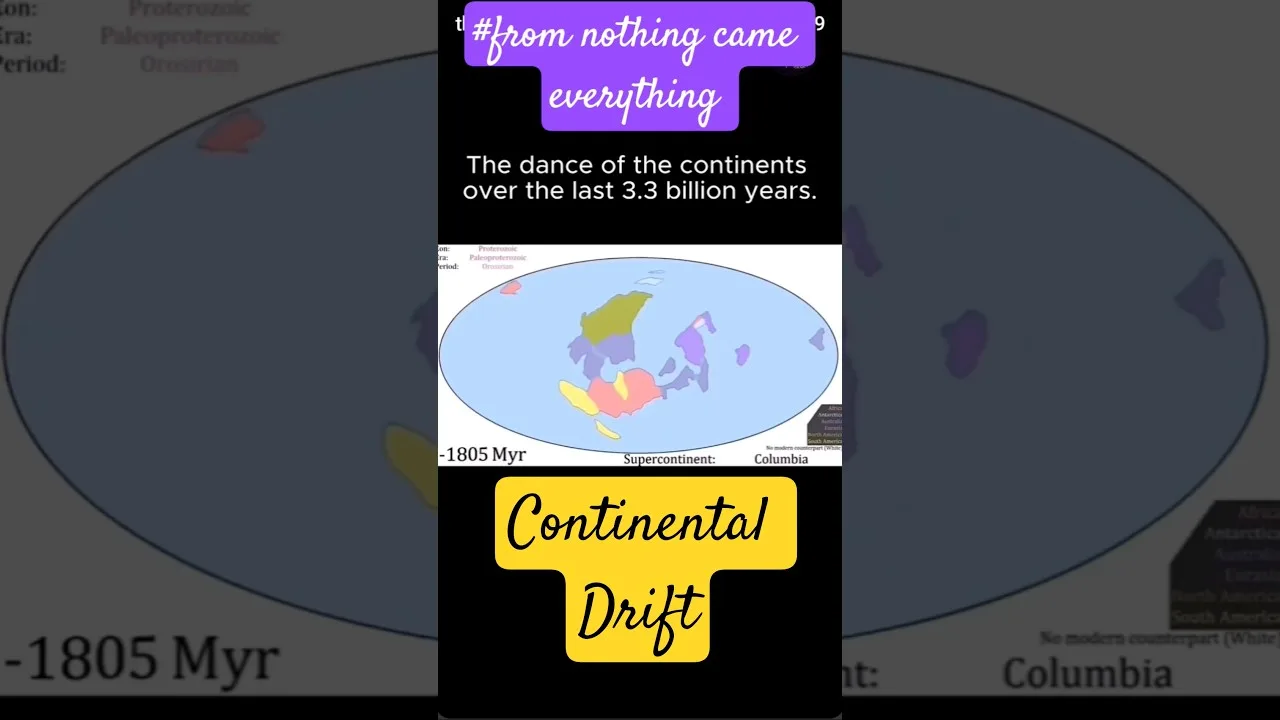
Perhaps the most counterintuitive aspect of why India lacks volcanoes involves the planet’s most dramatic continental collision. Around 50-55 million years ago, the Indian Plate—moving northward at approximately 15-20 centimeters per year—slammed into the Eurasian Plate. This collision, still ongoing at roughly 5 centimeters per year, created the Himalayan mountain range and the Tibetan Plateau.
Yet this massive convergent boundary produces virtually no volcanism. The reason: both plates consist of buoyant continental crust (average density ~2.7 g/cm³) that resists subduction. Unlike oceanic crust (density ~3.0 g/cm³), continental crust cannot sink deeply into the mantle. Instead, the crust crumples, thickens, and uplifts—doubling from a normal 35-40 kilometers to 70-80 kilometers beneath the Himalayas and Tibetan Plateau.
Crustal Thickening vs. Subduction Melting
The Himalayan orogeny illustrates a fundamental geological principle: not all convergent boundaries generate volcanoes. Continental-continental collisions produce vast mountain ranges through crustal shortening and thickening, while oceanic-continental collisions produce volcanic arcs through subduction-induced melting. The Himalayas represent the former; the Andes represent the latter.
Geophysical studies reveal that the Indian Plate’s leading edge has underthrust beneath Tibet by 500-800 kilometers, but at shallow angles insufficient to trigger the dehydration melting that feeds volcanoes. Seismic tomography shows no significant magma bodies beneath the main Himalayan range, confirming the absence of active magmatic systems.
Barren Island: The Exception That Proves the Rule

When exploring why India lacks volcanoes, one must address the singular exception: Barren Island. Located 135 kilometers northeast of Port Blair in the Andaman Sea, this 3-kilometer-wide island hosts India’s only historically active volcano. Its existence actually reinforces the tectonic explanation for India’s overall volcanic absence.
Barren Island sits near the boundary where the Indian Plate subducts beneath the Burma Plate (a sliver of the Eurasian Plate) along the Andaman-Sumatra subduction zone. This is the same subduction system that generated the catastrophic 2004 Indian Ocean earthquake (magnitude 9.1-9.3) and tsunami. However, the subduction here is oblique and relatively slow (~14 mm/year), producing limited volcanism compared to the main Sunda Arc further south.
Barren Island’s Eruptive History
Historical records document Barren Island eruptions in 1787-1832, 1991, 1994-95, 2005-06, 2008, 2010, 2013, 2017, and 2020-2022. The volcano exhibits Strombolian to Vulcanian activity, with basaltic to andesitic lava flows and occasional pyroclastic deposits. The Geological Survey of India monitors this remote volcano, which poses minimal threat to populated areas due to its isolation.
Narcondam Island, 150 kilometers northeast of Barren Island, represents a dormant volcanic center in the same arc, last active approximately 560,000 years ago. Together, these islands mark the northern terminus of the Indonesian volcanic arc system—geologically part of Southeast Asia’s volcanic framework, not peninsular India’s.
Ancient Volcanism: The Deccan Traps Legacy
While understanding why India lacks volcanoes today focuses on current tectonics, the subcontinent hosts one of Earth’s largest volcanic provinces: the Deccan Traps. This massive flood basalt province, covering ~500,000 square kilometers across central and western India, erupted around 66 million years ago near the Cretaceous-Paleogene boundary.
The Deccan Traps represent intraplate volcanism driven by a mantle plume—the Réunion hotspot—rather than plate boundary processes. As the Indian Plate drifted northward over this relatively stationary plume, massive volumes of basaltic magma erupted over roughly 30,000 years (with major pulses possibly lasting <10,000 years). The original extent may have exceeded 1.5 million square kilometers before erosion.
Plume vs. Plate Boundary Volcanism
Hotspot volcanism differs fundamentally from subduction-related volcanism. Mantle plumes originate from deep mantle upwellings (possibly core-mantle boundary), creating melting through decompression as hot material rises. The Hawaiian Islands, Yellowstone, and Iceland exemplify this mechanism. The Deccan Traps’ eruption coincided with the Chicxulub impact and end-Cretaceous mass extinction, sparking ongoing scientific debate about their relative contributions to the dinosaur extinction.
Today, the Réunion hotspot lies beneath Réunion Island in the western Indian Ocean, ~3,000 kilometers southwest of India. The Indian Plate’s northward motion (~5 cm/year) has carried the subcontinent far from this mantle plume, ending the flood basalt episode. No similar plume currently underlies peninsular India.
Other Intraplate Volcanic Features in India
Beyond the Deccan Traps, India hosts several minor volcanic features that further illuminate why India lacks volcanoes in the present day. The Rajmahal Traps in Jharkhand (118-113 Ma) and Sylhet Traps in Meghalaya/ Bangladesh (~110 Ma) represent earlier flood basalt events associated with the Kerguelen hotspot as India separated from Antarctica/Australia during Gondwana breakup.
Scattered lamproite and kimberlite pipes in central India (e.g., Majhgawan, Hinota) and the Krishna River basin indicate deep-sourced, volatile-rich magmas that rapidly ascended through the thick lithosphere. These rare, small-volume eruptions (often <1 km³) sample the deep mantle but don't constitute sustained volcanic systems. The Lonar Crater in Maharashtra, once debated as volcanic, is now confirmed as a meteorite impact structure (~52,000 years old).
Geophysical Evidence for India’s Volcanic Quiescence
Modern geophysical techniques provide compelling evidence for why India lacks volcanoes. Seismic tomography reveals high-velocity (cold, dense) lithospheric roots extending 200-250 kilometers beneath the Indian Shield—among the thickest continental lithosphere globally. Heat flow measurements across peninsular India average 40-55 mW/m², significantly lower than the 80-120 mW/m² typical of volcanic regions.
Magnetotelluric surveys show no large-scale crustal magma reservoirs beneath the Indian Shield. GPS measurements confirm the Indian Plate moves as a rigid block with internal deformation rates <2 mm/year—insufficient to generate the crustal extension or transtension that facilitates magma ascent in other intraplate settings like the East African Rift.
Comparison with Other Stable Continents
India’s volcanic quiescence mirrors other ancient cratons: the Canadian Shield, Australian Shield, and African Kaapvaal Craton similarly lack active volcanism despite their vast extents. These regions share thick, cold lithospheric keels that inhibit melting and magma transport. The craton concept—stable continental cores persisting for billions of years—directly explains why India lacks volcanoes across most of its territory.
Future Geological Scenarios
Projecting millions of years forward, several scenarios could alter why India lacks volcanoes. The ongoing India-Eurasia collision may eventually cause the Indian Plate to break, potentially creating a new subduction zone or rift system. Some models suggest the Indian Plate could split along the Narmada-Son lineament or the Central Indian Tectonic Zone, though current strain rates don’t strongly support imminent fragmentation.
Alternatively, a new mantle plume could impinge beneath the Indian Plate, as occurred with the Deccan and Rajmahal events. However, plume occurrence is stochastic and unpredictable on human timescales. The most likely near-term (geologically speaking) volcanic threat remains Barren Island and the Andaman arc, distant from mainland population centers.
Implications for Geohazards and Resource Exploration
Understanding why India lacks volcanoes has practical implications. The absence of volcanic hazards simplifies certain risk assessments for infrastructure, urban planning, and nuclear facility siting across most of India. However, the Himalayan collision zone presents severe seismic hazards (the 2015 Nepal earthquake, magnitude 7.8, killed ~9,000) that demand equal attention.
For resource exploration, India’s volcanic history created valuable mineral deposits: the Deccan Traps host groundwater aquifers, lateritic bauxite, and zeolite minerals; the Rajmahal Traps contain coal measures; kimberlite pipes offer diamond potential. Modern exploration focuses on these fossil volcanic systems rather than active ones.
Educational and Scientific Significance
The question of why India lacks volcanoes serves as an exceptional teaching case for plate tectonics theory. why India lacks volcanoes demonstrates that volcanism requires specific tectonic conditions—subduction zones, spreading ridges, or mantle plumes—not merely continental landmasses. India’s geography provides a natural laboratory for studying continental collision without volcanic complications, clarifying orogenic processes globally.
Research continues on related questions: the precise timing of India-Asia collision (recent studies suggest a multi-stage process beginning ~59 Ma), the role of the Neotethys Ocean subduction in pre-collision volcanism (now accreted as the Indus-Yarlung suture zone), and the geodynamic evolution of the Indian Plate’s lithospheric keel.
Conclusion: A Tectonic Testament
The answer to why India lacks volcanoes weaves together plate tectonics, mantle dynamics, and deep time. Peninsular India’s position on a stable cratonic plate interior, far from subduction zones and mantle plumes, explains its volcanic quiescence. The Himalayan collision—Earth’s grandest continental crash—creates mountains, not magma, because buoyant continental crust refuses to subduct. Barren Island stands as a solitary sentinel, marking where the Indian Plate finally meets a true subduction boundary.
This geological narrative reminds us that Earth’s surface is not a static stage but a dynamic system where continents drift, collide, and occasionally erupt. India’s “volcano-free” status isn’t an absence—why India lacks volcanoes’s a presence: the presence of a thick, ancient, stable lithospheric keel that has preserved the subcontinent’s geological heritage for billions of years. Next time you view the Himalayas or study a map of the Ring of Fire, remember: every landscape tells a tectonic tale, and India’s tale is one of continental stability amidst planetary turbulence.
Frequently Asked Questions
India has only one active volcano: Barren Island in the Andaman Sea, located 135 km northeast of Port Blair. It has erupted multiple times since 1787, with recent activity in 2020-2022. Narcondam Island nearby is dormant.
The Himalayas formed from continental-continental collision where both plates have buoyant crust that resists subduction. The Andes form from oceanic-continental subduction where dense oceanic crust sinks, releases water, and triggers melting. No deep subduction = no volcanic arc.
The Deccan Traps are a massive flood basalt province erupted ~66 million years ago from the Réunion mantle plume as India drifted over it. They cover ~500,000 km² but are extinct—the Indian Plate has moved ~3,000 km northward since, far from the plume now under Réunion Island.