
Blog
Groundwater Hydrology: Aquifers, Flow, and Management

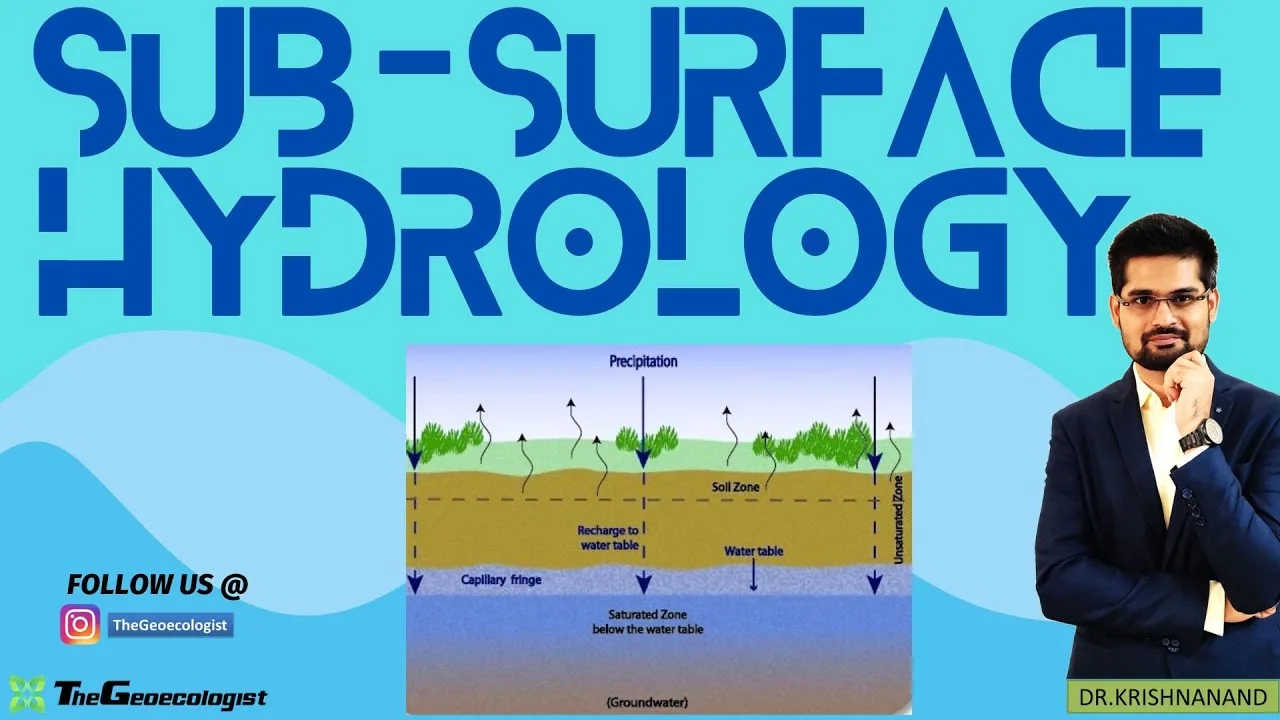
Table of Contents
- Key Takeaways
- What Is Groundwater Hydrology?
- Aquifer Types in Groundwater Hydrology
- Unconfined Aquifers
- Confined Aquifers
- Perched Aquifers
- Artesian Aquifers
- Processes of Groundwater Flow
- Darcy’s Law in Groundwater Hydrology
- Hydraulic Conductivity
- Recharge and Discharge
- Factors Controlling Groundwater Hydrology
- Geological Structures
- Human Activities
- Climate and Precipitation
- Topography
- Groundwater Hydrology and Disaster Management
- Contamination Risks
- Land Subsidence
- Sustainable Management
- Relevance for Students and Professionals
- Further Learning Resources
- Conclusion
Groundwater hydrology is the study of how water moves beneath the Earth’s surface, influencing ecosystems, agriculture, and human consumption. Understanding groundwater hydrology is essential for sustainable water management, disaster mitigation, and academic research.
Key Takeaways
- Groundwater hydrology examines aquifer types and flow mechanisms.
- Darcy’s law and hydraulic conductivity dictate water movement.
- Human activities, climate, and geology shape groundwater hydrology.
<li பயன்படுத்தப்படும் அக்வைவர் வகைகள்: unconfined, confined, perched, and artesian.
What Is Groundwater Hydrology?
Groundwater hydrology focuses on the distribution, movement, and quality of water that resides in soil pores and fractures. It integrates principles from geology, physics, and environmental science to model subsurface flow and assess resource sustainability. The field examinesëris, recharge rates, and the impact of anthropogenic extraction, making it vital for water‑sensitive planning and policy.
Aquifer Types in Groundwater Hydrology

Unconfined Aquifers
Unconfined aquifers 형태 are bounded onlyPIRED by a water table, which is open to atmospheric pressure. They receive recharge directly from rainfall and surface water infiltration. Groundwater hydrology highlights that these systems are highly responsive to seasonal precipitation patterns.
Confined Aquifers
Confined aquifers sit between impermeable layers, known as aquitards. Groundwater hydrology reveals that the pressure buildup can cause artesian wells, where water rises above the aquifer level without pumping.
Perched Aquifers
Perched aquifers are localized water tables above a main aquifer, separated by a low‑permeability layer. Groundwater hydrology notes that these can be vulnerable to contamination due to their shallow depth.
Artesian Aquifers
Artesian aquifers are a special case of confined aquifers where pressure forces water to surface naturally. Groundwater hydrology studies of artesian systems inform efficient well design and extraction limits.
Processes of Groundwater Flow
Darcy’s Law in Groundwater Hydrology
Darcy’s law, a cornerstone of groundwater hydrology, expresses the flow rate Q as Q = K A (Δh/ΔL), where K is hydraulic conductivity, Nh the hydraulic gradient, and L the flow path. The equation underscores that flow is proportional to both the medium’s permeability and the driving force.
Hydraulic Conductivity
Hydraulic conductivity, a key parameter in groundwater hydrology, measures how easily water passes through soil or rock. High values in sandy formations and low values in clayey deposits illustrate the diversity of subsurface media.
Recharge and Discharge
Groundwater hydrology identifies recharge zones—areas where water infiltrates—and discharge zones where groundwater emerges via springs, rivers, or wells. Accurate mapping of these zones can guide sustainable extraction practices.
Factors Controlling Groundwater Hydrology
The movement of groundwater is governed by a complex interplay of geological structures, human interventions, climate variability, and topography.
Geological Structures
Faults, folds, and variations in rock porosity directly influence groundwater hydrology pathways. For instance, a fault can act as a conduit, accelerating flow, or as a barrier, stalling movement.
Human Activities
Over‑pumping for irrigation and industrial use can deplete aquifers, altering groundwater hydrology and causing land subsidence. Coastal regions also face saltwater intrusion, a direct consequence of groundwater hydrology imbalance ọgwụ.
Climate and Precipitation
Робот groundwater hydrology models incorporate climatic data, noting that increased rainfall can replenish aquifers while prolonged droughts reduce recharge rates.
Topography
کنند groundwater hydrology is directed by slope and elevation gradients. Water naturally flows from high to low elevations, shaping aquifer recharge patterns.
Groundwater Hydrology and Disaster Management
Understanding groundwater hydrology is pivotal for mitigating natural hazards.
Contamination Risks
Industrial pollutants can infiltrate aquifers, compromising groundwater hydrology and downstream water quality. Regular monitoring is essential to detect early signs of contamination.
Land Subsidence
Excessive extraction disrupts groundwater hydrology equilibrium, causing ground collapse that can damage infrastructure.
Sustainable Management
Integrating groundwater hydrology data into policy helps balance extraction with recharge, ensuring long‑term availability.
Relevance for Students and Professionals
Students studying geography,-before geology, or disaster management find groundwater hydrology especially parle. The discipline informs UPSC exam sections on water resources, climate resilience, and policy frameworks such as the Atal Bhujal Yojana.
Further Learning Resources
For a deeper dive into groundwater hydrology, explore the following:
Conclusion
Mastering groundwater hydrology equips scientists, policymakers, and students with the knowledge to tackle water scarcity, preserve ecosystems, and design resilient infrastructure. By integrating aquifer science, flow dynamics, and human impact, we can navigate the challenges of a rapidly changing planet.
Frequently Asked Questions
Groundwater hydrology is the study of how water moves beneath the Earth’s surface, including its distribution, flow, and interaction with human activities.
Aquifers store and transmit large volumes of freshwater, making them essential for drinking water, irrigation, and ecosystem health.
Sustainable extraction, monitoring recharge rates, preventing contamination, and respecting geological constraints help maintain healthy groundwater hydrology.