Blog
Environmental Issues in Regional Planning: UPSC Geography Guide

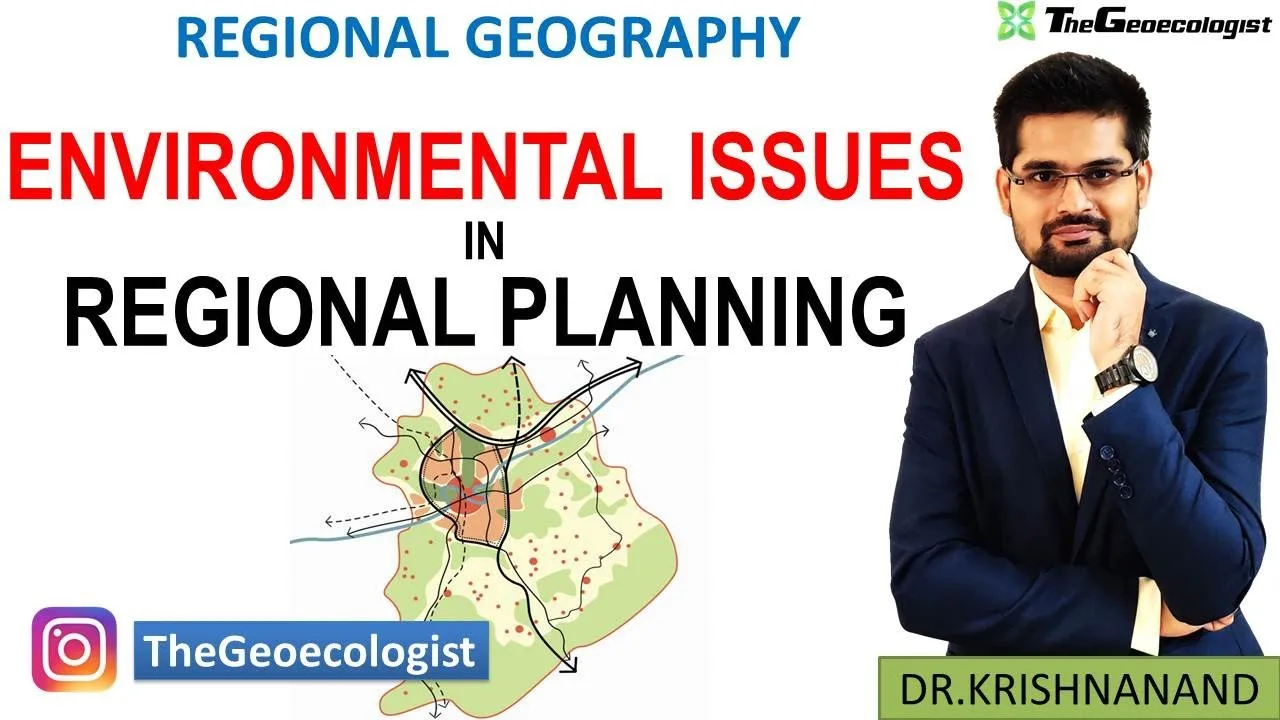
Table of Contents
- Understanding Environmental Issues in Regional Planning
- The Geoecologist's Role in Mitigating Environmental Issues in Regional Planning
- Primary Environmental Issues in Regional Planning
- 1. Unplanned Urbanization and Land Use Alterations
- 2. Resource Depletion and Sustainability Gaps
- 3. Pollution, Waste Management, and the Circular Economy
- 4. Climate Change and Disaster Vulnerability
- Integrating Sustainability: Policy and Implementation
- The Importance of Community Participation
- Case Studies: Lessons for the Indian Context
- The Chennai Floods (2015)
- Aravalli Range Conservation
- Strategic Approach for UPSC Geography Optional
- Conclusion
Understanding Environmental Issues in Regional Planning
Environmental issues in regional planning represent one of the most critical intersections in modern geography, particularly for aspirants preparing for the UPSC Civil Services Examination. As nations strive for rapid economic advancement, the tension between industrial growth and ecological preservation has become a central theme in spatial organization. Regional planning, which aims to ensure balanced socio-economic development and efficient resource allocation, often faces significant hurdles due to the escalating impact of human activities on natural ecosystems. Understanding these environmental issues in regional planning is not just an academic exercise but a necessity for designing sustainable futures.
- Core Conflict: Balancing rapid urbanization with ecological integrity.
- Role of Experts: How geoecologists bridge the gap between human activity and ecosystem health.
- Key Challenges: Land use changes, resource depletion, and climate resilience.
- Policy Tools: The importance of Environmental Impact Assessments (EIA) and sustainable frameworks.
- Real-world Application: Learning from Indian case studies like the Chennai floods and Aravalli conservation.
In the context of the UPSC Geography Optional syllabus, these environmental issues in regional planning fall under the critical domains of Regional Development and Environmental Geography. To master this topic, one must move beyond rote memorization and adopt an interdisciplinary approach that combines physical geography, economic theory, and environmental science.
The Geoecologist’s Role in Mitigating Environmental Issues in Regional Planning
A geoecologist acts as a vital intermediary in the planning process. While traditional planners might focus on infrastructure and economic corridors, the geoecologist examines the biological and geological constraints of a region. By analyzing land use patterns and resource availability, they identify the vulnerabilities that lead to various environmental issues in regional planning. For instance, a plan that ignores the hydrological cycle of a basin will inevitably lead to water scarcity or flooding, highlighting why ecological foresight is mandatory.
Geoecologists provide the scientific data necessary to prevent the over-exploitation of natural capital. They assess how a new industrial zone might affect local soil fertility or how a highway project might fragment wildlife corridors. This scientific grounding is essential to prevent the recurring mistakes seen in many developing economies, where short-term gains lead to long-term ecological bankruptcy.
Primary Environmental Issues in Regional Planning
1. Unplanned Urbanization and Land Use Alterations
One of the most visible environmental issues in regional planning is the phenomenon of urban sprawl. As cities expand horizontally rather than vertically, they consume fertile agricultural land and vital forest cover. This unplanned expansion leads to significant habitat loss, increased soil erosion, and the disruption of local microclimates. When regional planning fails to establish strict zoning laws, the resulting sprawl makes the provision of public services inefficient and destroys the natural buffers that protect cities from environmental hazards.
2. Resource Depletion and Sustainability Gaps
Regional development often relies heavily on the extraction of natural resources. However, when planning does not account for the regeneration rates of these resources, it triggers severe environmental issues in regional planning. Over-exploitation of groundwater, excessive mining of minerals, and the depletion of forest reserves are direct consequences of resource-centric planning. To combat this, planners must shift toward integrated resource management strategies that prioritize circularity and conservation.
3. Pollution, Waste Management, and the Circular Economy
Industrialization is a cornerstone of regional development, but it brings the heavy burden of pollution. Air, water, and soil pollution are systemic environmental issues in regional planning that arise when industrial zones are poorly located or when waste management infrastructure is inadequate. The discharge of untreated wastewater into river systems and the accumulation of solid waste in landfills are classic examples. Modern planning must incorporate the circular economy model to ensure that waste becomes a resource rather than a pollutant.
4. Climate Change and Disaster Vulnerability
In the 21st century, climate change has become a dominant factor in all spatial planning. Erratic rainfall patterns, rising sea levels, and the increasing frequency of extreme weather events mean that regional plans must be designed for resilience. Failure to integrate climate adaptation into regional development leads to massive economic losses and human suffering. Planners must now prioritize disaster risk reduction (DRR) and create “sponge cities” or resilient agricultural zones to mitigate these risks.
Integrating Sustainability: Policy and Implementation
Addressing the multifaceted environmental issues in regional planning requires a robust policy framework. In India, several legislative measures have been introduced to safeguard the environment during development. The Environment Protection Act (1986) serves as a primary legal tool, providing the government with the authority to regulate industrial activities and protect sensitive ecosystems.
Furthermore, the Environmental Impact Assessment (EIA) process is a mandatory requirement for major developmental projects. An EIA serves as a diagnostic tool to predict the environmental consequences of a proposed plan. However, for UPSC aspirants, it is important to note the critiques: the implementation of EIA is often hampered by lack of transparency, political pressure, and inadequate monitoring. Improving the efficacy of EIAs is a key solution to the environmental issues in regional planning.
The Importance of Community Participation
Top-down planning often fails because it ignores the traditional ecological knowledge of local inhabitants. Sustainable regional development is most successful when it adopts a bottom-up approach. Engaging local communities in afforestation programs, watershed management, and waste segregation ensures that the planning process is inclusive and that the solutions are culturally and ecologically appropriate.
Case Studies: Lessons for the Indian Context
The Chennai Floods (2015)
The devastating floods in Chennai serve as a cautionary tale regarding environmental issues in regional planning. The encroachment of wetlands and the blocking of natural drainage channels by urban infrastructure significantly exacerbated the flooding. This disaster highlighted the urgent need for stricter zoning laws and the restoration of urban water bodies. Post-2015, there has been a renewed focus on “blue-green infrastructure” to manage urban water cycles more effectively.
Aravalli Range Conservation
The Aravalli hills, which act as a vital ecological barrier against desertification, are under constant threat from illegal mining and unplanned construction. This situation exemplifies how localized developmental greed can lead to regional environmental crises. Protecting the Aravallis requires a coordinated regional planning approach that transcends state boundaries, emphasizing the need for trans-boundary ecological governance.
Strategic Approach for UPSC Geography Optional
To score high in the UPSC examination, students must approach the topic of environmental issues in regional planning with a multi-dimensional lens. Do not merely list the problems; analyze the causes, the socio-economic implications, and the potential solutions.
- Interdisciplinary Links: Connect environmental issues in regional planning to economic concepts like ‘Externalities’ and ‘Sustainable Development Goals (SDGs)’.
- Spatial Analysis: Use maps and diagrams to show the relationship between land use changes and environmental degradation.
- Critical Evaluation: Always provide a critique of current government policies. For instance, discuss how the NITI Aayog reports address regional disparities and environmental sustainability.
- Current Affairs: Stay updated on recent environmental disasters, new climate policies, and international agreements like the Paris Agreement, as these provide excellent fodder for answer writing.
Conclusion
The management of environmental issues in regional planning is the defining challenge of our era. For a balanced society, development cannot come at the cost of the very ecosystems that support life. For UPSC candidates, mastering this subject requires a deep understanding of how physical geography dictates the limits of human expansion. By studying the roles of geoecologists, the failures of unplanned urbanization, and the successes of community-led conservation, aspirants can develop the holistic perspective required to excel in the Geography Optional paper and contribute to a sustainable future.
Frequently Asked Questions
A geoecologist analyzes the interaction between human activities and natural ecosystems to ensure that regional development does not lead to irreversible ecological damage.
Unplanned urbanization causes habitat fragmentation, loss of fertile land, increased pollution, and the disruption of natural drainage systems, leading to disasters like urban flooding.
Environmental Impact Assessment (EIA) is a key tool used to evaluate the ecological consequences of development projects, making it a frequent topic in UPSC questions regarding sustainable development.