Blog
History of Hydrology: A Global Evolution of Water Science

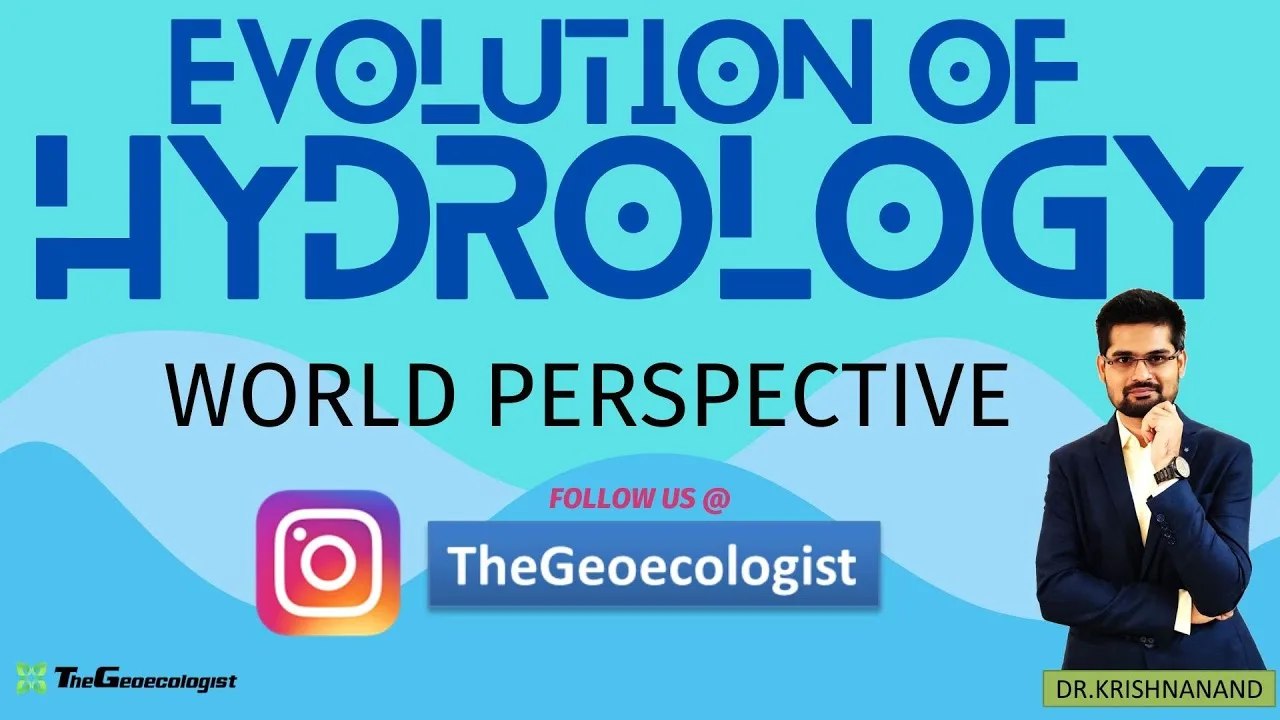
Table of Contents
- Understanding the History of Hydrology: A Global Perspective
- The Ancient Foundations of the History of Hydrology
- The Medieval and Renaissance Era: Bridging Observation and Theory
- The 18th and 19th Centuries: The Birth of Modern Hydrology
- The 20th Century: Technological and Conceptual Leaps
- Modern Hydrology and Contemporary Global Challenges
- Why Studying the History of Hydrology is Essential Today
- Conclusion: Shaping a Sustainable Water Future
Understanding the History of Hydrology: A Global Perspective
The history of hydrology is a testament to humanity’s enduring struggle and ingenuity in managing Earth’s most precious resource: water. As the scientific study of the movement, distribution, and management of water, hydrology has evolved from ancient survival-based irrigation techniques into a sophisticated, multidisciplinary science essential for modern disaster management and climate adaptation. For students of geography and professionals in environmental science, tracing the history of hydrology reveals how human civilization has transitioned from merely reacting to water cycles to actively modeling and predicting them. This comprehensive exploration, inspired by the scholarly insights of Dr. Krishnanand from TheGeoecologist, examines the pivotal milestones that shaped this discipline.
- Ancient Ingenuity: Early civilizations mastered hydraulic engineering to sustain agriculture.
- Scientific Renaissance: The transition from observation to empirical measurement and mathematical modeling.
- The Industrial Shift: The birth of modern hydrogeology and the quantification of the water cycle.
- Technological Revolution: The integration of remote sensing, computing, and global cooperation.
- Modern Application: Addressing climate change through Integrated Water Resource Management (IWRM).
The Ancient Foundations of the History of Hydrology
The history of hydrology begins long before the formalization of scientific methods. For ancient civilizations, water was not a subject of study but a matter of life and death. In the fertile crescents of Mesopotamia and Egypt, the development of complex irrigation networks and hydraulic engineering was the bedrock of societal stability. The use of canals and advanced water distribution systems demonstrated an intuitive, practical understanding of the history of hydrology and water movement.
In the Mediterranean, Greek philosophers like Aristotle began to theorize about the natural processes of the world, including the early concepts of the water cycle. Meanwhile, the Roman Empire showcased unparalleled engineering prowess through the construction of vast aqueducts, which allowed for the massive distribution of water to growing urban centers. This era marked the first major step in the history of hydrology, where human engineering began to master the natural landscape to serve social needs.
Similarly, in the Indian subcontinent, the history of hydrology is deeply rooted in ancient wisdom. Texts such as the Vedas and the Arthashastra provide detailed evidence of sophisticated rainwater harvesting and flood management techniques. These ancient practices were not merely accidental; they were systematic approaches to managing seasonal monsoon variations, proving that the history of hydrology is a global phenomenon spanning diverse cultures and climates.
The Medieval and Renaissance Era: Bridging Observation and Theory
During the Medieval period, hydrological knowledge was often passed down through practical engineering rather than theoretical science. However, the Renaissance brought a paradigm shift that significantly altered the history of hydrology. This era emphasized empirical observation and the application of mathematics to natural phenomena.
Leonardo da Vinci, a polymath of the Renaissance, contributed immensely to the history of hydrology through his detailed sketches and observations of fluid dynamics and sediment transport. His ability to visualize how water interacts with riverbeds provided an early foundation for what we now call fluvial geomorphology. Following him, thinkers like Bernard Palissy began to challenge mythological explanations of groundwater, proposing instead that water moved through underground channels, a concept that would eventually become central to modern hydrogeology.
The 18th and 19th Centuries: The Birth of Modern Hydrology
The Industrial Revolution served as a massive catalyst for the formalization of the history of hydrology. As urban populations exploded and industrial processes demanded vast quantities of water, the need for systematic study became undeniable. This period saw the transition from qualitative observation to quantitative measurement.
In France, Pierre Perrault and Edme Mariotte revolutionized the field by conducting systematic rainfall-runoff measurements in the Seine Basin. Their work allowed for the first real quantification of the water cycle, a critical milestone in the history of hydrology. This era also saw the emergence of groundbreaking mathematical laws that govern our understanding of water movement today.
One of the most significant breakthroughs occurred in 1856 when Henry Darcy formulated Darcy’s Law. This mathematical relationship describes the flow of a fluid through a porous medium, forming the bedrock of modern hydrogeology. Without Darcy’s Law, our ability to manage groundwater and understand aquifer behavior would be non-existent. Furthermore, the history of hydrology is inextricably linked to public health. In 1854, John Snow’s groundbreaking work mapping cholera outbreaks in London demonstrated the direct link between water contamination and disease. This discovery integrated environmental science with epidemiology, highlighting the socio-economic importance of managing water quality.
The 20th Century: Technological and Conceptual Leaps
The 20th century propelled the history of hydrology into the modern era through massive technological advancements. The development of sophisticated computing and remote sensing technology allowed scientists to move beyond localized observations to large-scale watershed modeling. We could suddenly track the movement of moisture across entire continents and predict flood events with increasing accuracy.
A major turning point in the global history of hydrology was the International Hydrological Decade (1965–1974). This United Nations-led initiative fostered unprecedented international cooperation, standardizing data collection and promoting a global understanding of water resources. This period solidified hydrology as a global, interdisciplinary science that transcends national borders, essential for managing shared river basins and transboundary aquifers.
Modern Hydrology and Contemporary Global Challenges
In the 21st century, the history of hydrology has entered a phase of extreme urgency. The discipline is no longer just about understanding cycles; it is about managing crises. Today, hydrologists are at the forefront of addressing the most pressing issues of our time: climate change, rapid urbanization, and extreme water scarcity.
The concept of Integrated Water Resource Management (IWRM) has emerged as the gold standard for modern practice. IWRM seeks to balance the competing needs of ecological systems, agricultural production, industrial use, and human consumption. Furthermore, the field is vital to disaster management. Modern flood forecasting, drought resilience strategies, and landslide studies all rely heavily on the complex hydrological models developed over decades of scientific evolution.
Why Studying the History of Hydrology is Essential Today
For many, the history of hydrology is more than just academic interest; it is a requirement for professional and academic success. For students preparing for competitive exams like the UPSC (Union Public Service Commission) in India, a deep understanding of the history of hydrology and its role in Geography and Environmental Science is crucial for mastering General Studies papers.
Furthermore, in the realm of disaster management, studying the history of hydrology provides critical context. Analyzing historical case studies, such as the catastrophic 1931 China floods, allows modern engineers to design better mitigation strategies and infrastructure. The interdisciplinary nature of the field connects geology (aquifer studies), climatology (the water cycle), and socio-economic planning, making it a cornerstone of modern environmental governance.
Conclusion: Shaping a Sustainable Water Future
From the ancient irrigation canals of the Nile to the AI-driven climate models of today, the history of hydrology reflects the continuous evolution of human intelligence in response to nature. As we face an era of unprecedented environmental change, the lessons learned through the history of hydrology will be vital in shaping a sustainable water future. Mastering this evolution is not just an academic pursuit; it is a prerequisite for solving the 21st-century challenges of water security and climate resilience.
To deepen your understanding of these complex processes, we recommend exploring the specialized resources provided by Dr. Krishnanand at TheGeoecologist. Whether you are an UPSC aspirant or a professional in the field, these resources provide the foundational knowledge required for success in this vital scientific discipline.
Frequently Asked Questions
The history of hydrology helps us understand how human civilizations have adapted to water availability and provides a scientific foundation for modern disaster management and climate change mitigation.
Henry Darcy is one of the most influential figures, as his 1856 law regarding groundwater flow remains a fundamental principle in hydrogeology today.
Hydrology is a critical component of Geography and Environmental Science in the UPSC syllabus, particularly for understanding environmental processes and disaster management.