Blog
Planning Sustainable Development India: NCERT Class 12 Geography Guide

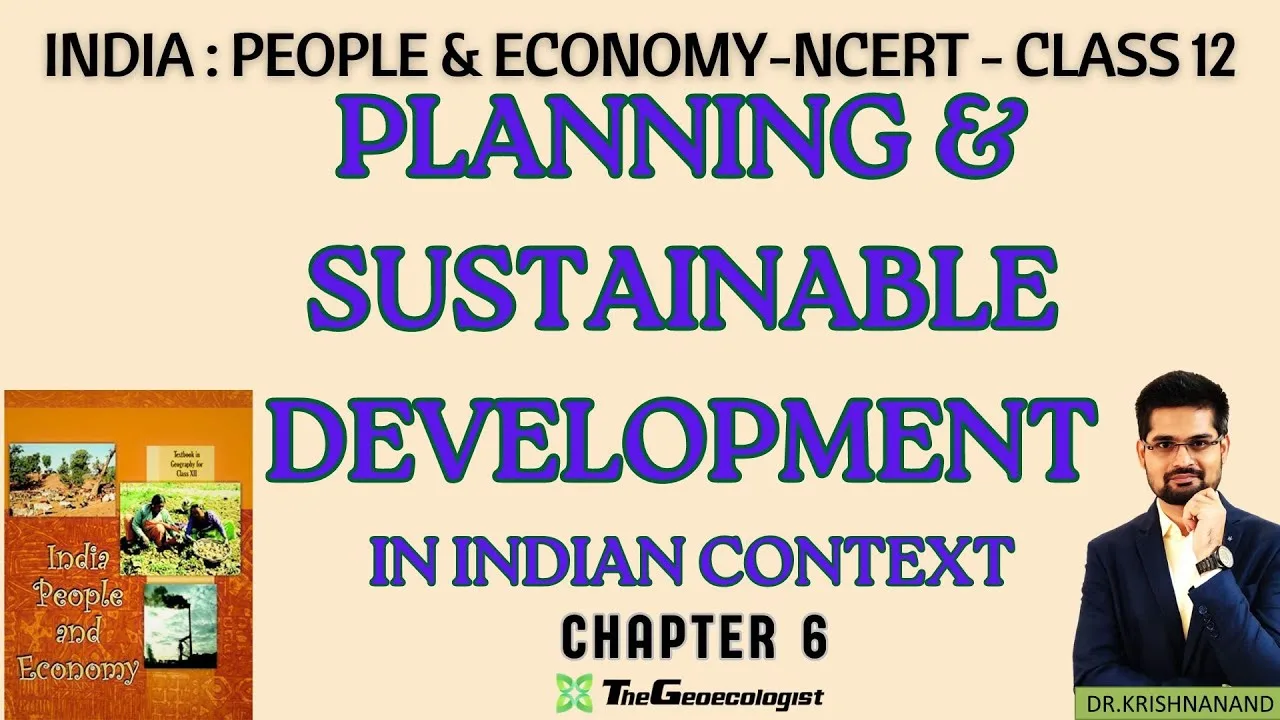
Table of Contents
- Historical Evolution of Planning Sustainable Development India
- Five-Year Plans: 1951–2017
- NITI Aayog: Decentralized Cooperative Federalism
- Core Objectives of Planning in India
- Sustainable Development: Principles, Frameworks, and the Brundtland Legacy
- Three Pillars of Sustainability
- Alignment with UN Sustainable Development Goals (SDGs)
- Key Challenges Confronting Planning Sustainable Development India
- NCERT Case Studies: Participatory Models in Action
- Bharmaur Tribal Area, Himachal Pradesh
- Drought-Prone Area Programme (DPAP)
- Strategies Operationalizing Planning Sustainable Development India
- Watershed Management: Community-Led Water Security
- Renewable Energy Transition
- Inclusive Urban and Climate Policies
- Exam Relevance: CBSE, UPSC, CUET, and UGC NET
- Sample Practice Questions
- Conclusion: The Road Ahead for Planning Sustainable Development India
Planning Sustainable Development India forms the cornerstone of the nation’s socio-economic progress, ensuring judicious resource utilization while addressing environmental and equity concerns. Chapter 6 of the Class 12 NCERT Geography textbook, India: People and Economy, provides a comprehensive framework for understanding how planning mechanisms have evolved from centralized Five-Year Plans to the decentralized NITI Aayog model, and how sustainable development principles align with global frameworks like the Brundtland Report and UN Sustainable Development Goals (SDGs). This article synthesizes textbook concepts, competitive exam insights, and real-world case studies to equip students for CBSE board exams, UPSC, CUET, and UGC NET.
- Planning Sustainable Development India transitioned from Five-Year Plans (1951–2017) to NITI Aayog’s bottom-up cooperative federalism model in 2015.
- Sustainable development rests on three pillars: economic efficiency, social equity, and environmental conservation, as defined by the 1987 Brundtland Report.
- Key challenges include environmental degradation, regional disparities, urban-rural divides, and overexploitation of water and mineral resources.
- Successful case studies like Bharmaur Tribal Area (Himachal Pradesh) and the Drought-Prone Area Programme demonstrate participatory, community-led approaches.
- Strategies such as watershed management (Haryali, Neeru-Meeru), renewable energy missions, and inclusive policies (Smart Cities, NAPCC) operationalize sustainability.
Historical Evolution of Planning Sustainable Development India
Five-Year Plans: 1951–2017
The journey of Planning Sustainable Development India began with the First Five-Year Plan (1951–56), which prioritized agriculture, irrigation, and infrastructure under the Harrod-Domar growth model. The Second Plan (1956–61), championed by P.C. Mahalanobis, shifted focus to heavy industrialization and import substitution. By the Fifth Plan (1974–79), poverty alleviation became central with the slogan “Garibi Hatao,” launching programs like the Integrated Rural Development Programme (IRDP). The Eighth Plan (1992–97) marked a paradigm shift toward economic liberalization, privatization, and globalization (LPG reforms). The Twelfth and final Five-Year Plan (2012–17) articulated the vision of “faster, sustainable, and more inclusive growth,” explicitly linking planning with sustainability outcomes.
NITI Aayog: Decentralized Cooperative Federalism
On January 1, 2015, the Planning Commission was replaced by the National Institution for Transforming India (NITI Aayog), redefining Planning Sustainable Development India through a bottom-up approach. Unlike the top-down allocation model, NITI Aayog fosters cooperative federalism by involving states in policy formulation through the Governing Council (chaired by the Prime Minister with all Chief Ministers as members). Key initiatives include the Aspirational Districts Programme (112 districts), the Strategy for New India @75, and the SDG India Index, which ranks states on 16 SDG parameters. NITI Aayog’s official portal provides real-time dashboards tracking district-level progress on health, education, agriculture, and infrastructure indicators.
Core Objectives of Planning in India
The objectives underpinning Planning Sustainable Development India have remained consistent across eras: achieving high economic growth rates, modernizing the economic structure, attaining self-reliance (atmanirbharta), and ensuring social equity. Equity-focused interventions include the Mahatma Gandhi National Rural Employment Guarantee Act (MGNREGA, 2005), which guarantees 100 days of wage employment per rural household, and the National Food Security Act (2013), covering 67% of the population. These programs operationalize the constitutional directive principles under Articles 38 and 39, linking planning directly to social justice.
Sustainable Development: Principles, Frameworks, and the Brundtland Legacy
Three Pillars of Sustainability
Sustainable development, as conceptualized for Planning Sustainable Development India, balances three interdependent pillars: economic efficiency (optimal resource allocation), social equity (inter- and intra-generational justice), and environmental conservation (preserving ecological integrity). The 1987 Brundtland Report, formally titled Our Common Future by the World Commission on Environment and Development (WCED), defined it as “development that meets the needs of the present without compromising the ability of future generations to meet their own needs.” The Brundtland Report’s Wikipedia entry details how this framework shaped the 1992 Rio Earth Summit and subsequent Agenda 21.
Alignment with UN Sustainable Development Goals (SDGs)
India adopted the 2030 Agenda for Sustainable Development in 2015, integrating 17 SDGs into national planning. NITI Aayog’s SDG India Index (launched 2018) monitors progress across 115 indicators. Key alignments for Planning Sustainable Development India include SDG 6 (Clean Water and Sanitation) via Jal Jeevan Mission, SDG 7 (Affordable and Clean Energy) via the International Solar Alliance and National Solar Mission (target: 280 GW solar by 2030), SDG 11 (Sustainable Cities) via Smart Cities Mission (100 cities), and SDG 13 (Climate Action) via the National Action Plan on Climate Change (NAPCC, 2008) with its eight national missions.
Key Challenges Confronting Planning Sustainable Development India
Despite policy frameworks, Planning Sustainable Development India faces structural challenges. Environmental degradation manifests as deforestation (forest cover at 21.71% per ISFR 2021, below the 33% policy target), air pollution (Delhi’s PM2.5 averages 98.6 µg/m³, 20× WHO guideline), and groundwater depletion (54% of wells declining per CGWB 2022). Regional disparities persist: per capita GSDP in Goa (₹4.72 lakh) is 6× that of Bihar (₹0.78 lakh, 2022–23). The urban-rural divide shows 34% urbanization (2021) with inadequate housing, sanitation, and transport. Overexploitation of minerals (coal, iron ore) and water (89% used for agriculture) threatens intergenerational equity.
NCERT Case Studies: Participatory Models in Action
Bharmaur Tribal Area, Himachal Pradesh
The Bharmaur tribal development project exemplifies Planning Sustainable Development India through participatory governance. Implemented under the Tribal Sub-Plan strategy, it empowered the Gaddi pastoral community via watershed development, horticulture, and livestock improvement while preserving indigenous culture. Outcomes included a 40% rise in household income, reduced migration, and enhanced women’s participation in gram sabhas. This case illustrates how bottom-up planning respects traditional ecological knowledge.
Drought-Prone Area Programme (DPAP)
Launched in 1973–74 and later subsumed under the Pradhan Mantri Krishi Sinchayee Yojana (PMKSY), DPAP targeted 615 blocks across 13 states. Interventions included rainwater harvesting (check dams, contour trenches), afforestation, and pasture development. In Anantapur (Andhra Pradesh), DPAP increased groundwater recharge by 1.2 million m³ annually and brought 15,000 hectares under protective irrigation. The programme demonstrates how Planning Sustainable Development India integrates ecological restoration with livelihood security.
Strategies Operationalizing Planning Sustainable Development India
Watershed Management: Community-Led Water Security
Watershed management remains a flagship strategy for Planning Sustainable Development India. The Haryali programme (launched 2003) and Andhra Pradesh’s Neeru-Meeru (“Water and You”) mobilized communities to construct 2.5 lakh water harvesting structures by 2010. Outcomes: 30–50% rise in groundwater levels, 20–30% increase in cropping intensity, and drought-proofing of 5 million hectares. The 2021 revision under PMKSY 2.0 emphasizes spring-shed management in Himalayan states and aquifer mapping via the National Aquifer Mapping Programme (NAQUIM).
Renewable Energy Transition
India’s renewable energy push directly serves Planning Sustainable Development India and SDG 7. The National Solar Mission (2010, revised 2015) targets 280 GW solar by 2030; installed capacity reached 73 GW (March 2024). Wind energy stands at 45 GW. The International Solar Alliance (ISA), co-founded by India and France (2015), now includes 116 member countries. Green hydrogen missions (₹19,744 crore outlay, 2023) and offshore wind targets (30 GW by 2030) signal deep decarbonization alignment.
Inclusive Urban and Climate Policies
The Smart Cities Mission (2015) covers 100 cities with ₹2.05 lakh crore investment, focusing on integrated command centers, non-motorized transport, and waste-to-energy. The National Action Plan on Climate Change (NAPCC, 2008) operates eight missions: Solar, Enhanced Energy Efficiency, Sustainable Habitat, Water, Himalayan Ecosystem, Green India, Sustainable Agriculture, and Strategic Knowledge. State Action Plans on Climate Change (SAPCCs) localize these. The UN SDG portal tracks India’s voluntary national reviews (2017, 2020, 2023) showcasing these integrations.
Exam Relevance: CBSE, UPSC, CUET, and UGC NET
Mastery of Planning Sustainable Development India is critical across examinations. For CBSE Class 12, focus on definitions (sustainable development, planning), objectives of Five-Year Plans, NITI Aayog’s composition, and case study details (Bharmaur, DPAP). Map-based questions often ask for drought-prone areas or tribal regions. For UPSC/CUET, emphasize linkages: NITI Aayog’s SDG India Index methodology, Aspirational Districts Programme design, and NAPCC mission outcomes. Essay topics include “Cooperative federalism and sustainable development” or “Water security in the climate crisis.” For UGC NET Geography, prepare theoretical critiques: top-down vs. bottom-up planning, Brundtland Report limitations, and political ecology perspectives on Indian resource governance.
Sample Practice Questions
- Discuss India’s transition from Five-Year Plans to NITI Aayog. How does this shift reflect changing paradigms in Planning Sustainable Development India?
- Evaluate the success of watershed management programmes in drought-prone areas with reference to Haryali and Neeru-Meeru.
- “The Brundtland Report’s definition of sustainable development remains aspirational for India.” Critically analyze with examples.
- Explain the role of the Tribal Sub-Plan and Schedule V/VI provisions in ensuring inclusive Planning Sustainable Development India.
Conclusion: The Road Ahead for Planning Sustainable Development India
Planning Sustainable Development India stands at a critical juncture. While historical policies laid robust groundwork—from the Mahalanobis model to MGNREGA—contemporary strategies must confront the twin crises of climate change and inequality. The NITI Aayog era offers institutional agility, but implementation gaps persist in last-mile delivery, data granularity, and inter-ministerial convergence. Future success hinges on strengthening gram sabha capacities under PESA (1996), mainstreaming climate budgeting (as piloted in Odisha), and leveraging digital public infrastructure (Aadhaar, UPI, DigiLocker) for transparent benefit transfer. For learners, bridging NCERT’s conceptual clarity with real-time policy tracking via NITI Aayog dashboards and UN SDG reports creates a powerful exam-ready and citizenship-ready toolkit. Explore TheGeoecologist‘s bilingual video lessons for visual concept breakdowns, and visit thegeoecologist.com for structured courses tailored to competitive exams.
Frequently Asked Questions
The Planning Commission was replaced by NITI Aayog (National Institution for Transforming India) on January 1, 2015, shifting from a top-down Five-Year Plan model to a bottom-up cooperative federalism approach for Planning Sustainable Development India.
The three pillars are economic efficiency, social equity, and environmental conservation. The 1987 Brundtland Report defined sustainable development as meeting present needs without compromising future generations' ability to meet theirs.
Two key NCERT case studies are the Bharmaur Tribal Area in Himachal Pradesh (participatory tribal development) and the Drought-Prone Area Programme (rainwater harvesting and afforestation in drought-prone regions). Both illustrate community-led sustainable planning.