Blog
Geography Optional Strategy: AIR 190 Sree Krishna’s Guide

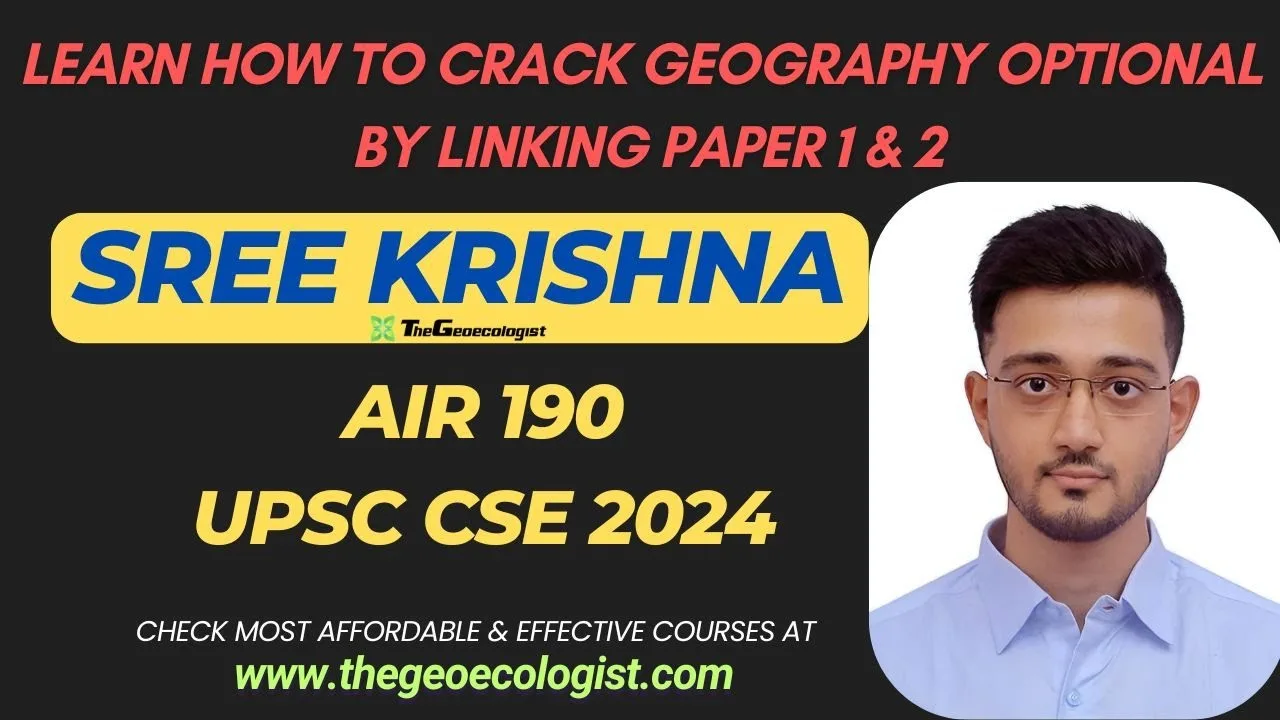
Table of Contents
- Mastering the Geography Optional Strategy for UPSC CSE Success
- Why Choose Geography for UPSC?
- The Core of a Winning Geography Optional Strategy: Paper Integration
- Mastering Map Work for High Scoring Potential
- Smart Resource Selection: Quality Over Quantity
- Structured Answer Writing and the Power of Diagrams
- Final Tips for Success: Smart Work vs. Hard Work
- Conclusion
Mastering the Geography Optional Strategy for UPSC CSE Success
Developing a foolproof Geography Optional Strategy is the cornerstone of securing a high rank in the UPSC Civil Services Examination. For Sree Krishna, who achieved an impressive AIR 190 in the UPSC CSE 2024, success was not a matter of luck but the result of a meticulously planned approach. If you are a serious aspirant looking to conquer this dynamic subject, understanding the nuances of the syllabus and the integration of concepts is vital. Geography Optional Strategy breaks down the exact roadmap used by toppers to master Geography Optional Strategy and excel in the mains examination.
- Integration: Linking Paper 1 theories with Paper 2 applications.
- Visualization: Using maps, diagrams, and flowcharts to enhance answer quality.
- Resource Management: Focusing on core NCERTs and specialized materials.
- Current Affairs: Connecting static concepts with contemporary events.
- Practice: Consistent answer writing and evaluation through test series.
Why Choose Geography for UPSC?
Geography is widely considered one of the most scoring and dynamic optional subjects in the UPSC CSE curriculum. One of the primary reasons for its popularity is the significant overlap it shares with General Studies (GS). A well-prepared Geography Optional Strategy allows a candidate to gain an edge in GS Paper 1 (Geography and Society), GS Paper 3 (Environment and Disaster Management), the Essay paper, and even Prelims. Unlike rote-learning-heavy subjects, Geography rewards students who can visualize spatial phenomena and interlink environmental, social, and economic factors.
The Core of a Winning Geography Optional Strategy: Paper Integration
The most common mistake aspirants make is treating Paper 1 and Paper 2 as isolated entities. To achieve a top rank, you must adopt an integrated approach. Paper 1 focuses on Physical and Human Geography (theories, models, and concepts), while Paper 2 focuses on the Geography of India. Sree Krishna’s success was rooted in his ability to bridge these two components seamlessly.
For instance, when discussing Geomorphic Processes in Paper 1, a student should immediately think of how these processes shape the Indian landscape, such as the formation of the Himalayas or the Deccan Plateau, in Paper 2. Similarly, when studying Population Theories like the Malthusian theory, one should apply these models to India’s demographic trends and migration patterns. This ability to link theoretical models with real-world Indian scenarios is what distinguishes a mediocre answer from a topper’s answer. To understand the broader context of Indian administration and geography, one can refer to official resources like Wikipedia’s Geography of India for a foundational overview.
Mastering Map Work for High Scoring Potential
In Geography, a map is not just a tool; it is a language. A significant part of any effective Geography Optional Strategy involves daily practice of both Indian and World maps. Map-based questions are often the most scoring sections in the UPSC Mains. You should be able to locate significant geographical features, industrial hubs, or climate zones with precision.
Moreover, you must learn to integrate current affairs into your maps. If there is a recent earthquake in a specific region or a new maritime route being discussed in the news, you should be able to plot this on a map as part of your answer. This demonstrates to the examiner that you are not just a student of textbooks, but a student of the world. Integrating news from reputable sources like Press Information Bureau (PIB) can provide the factual weight needed for these map-based discussions.
Smart Resource Selection: Quality Over Quantity
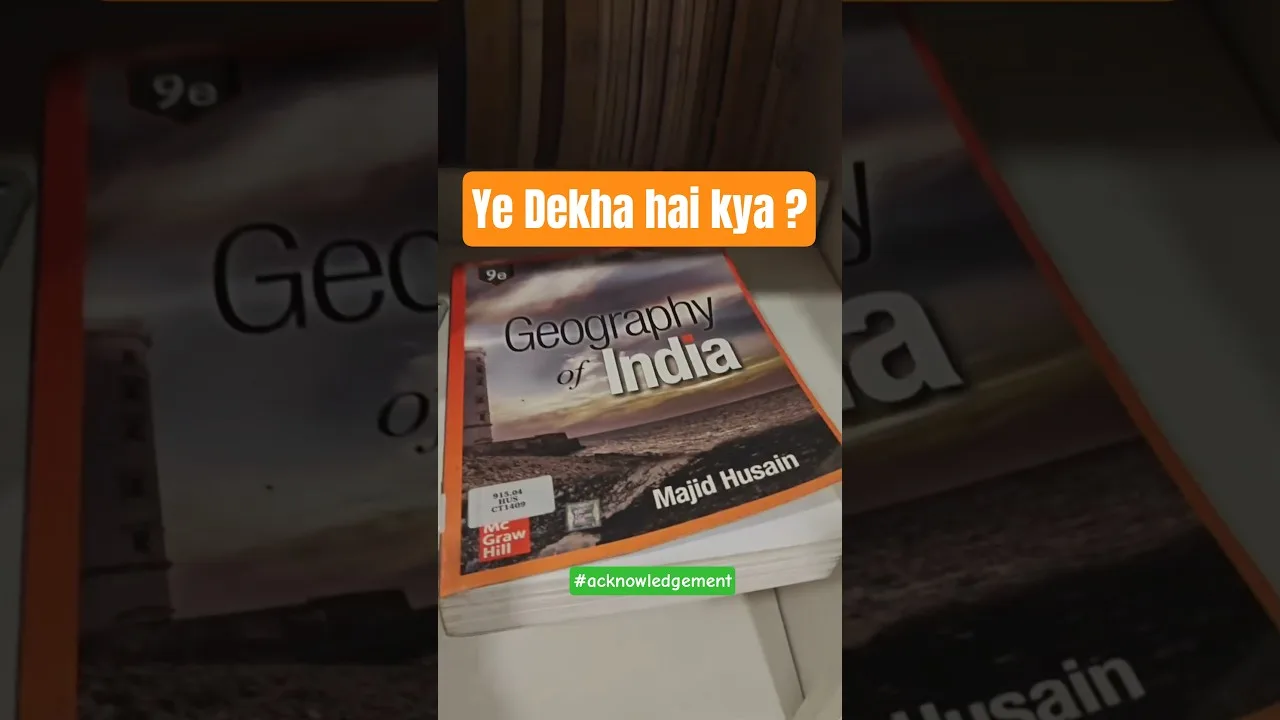
A common pitfall for UPSC aspirants is ‘esource overload.’ Many students spend more time collecting books than actually studying them. A disciplined Geography Optional Strategy demands a limited and focused reading list. Sree Krishna recommends sticking to the fundamentals: NCERTs (Class 6th to 12th) and GC Leong for physical geography. For advanced conceptual clarity, specialized materials like those provided by TheGeoecologist are highly effective.
Beyond textbooks, the integration of current affairs is non-negotiable. You should follow government reports, environmental journals, and recent climate change studies. Using video lectures can also help in visualizing complex processes like plate tectonics or atmospheric circulation, making the learning process more intuitive. For a deeper dive into global trends, studying reports from the United Nations regarding climate change and sustainable development can provide excellent case studies for your answers.
Structured Answer Writing and the Power of Diagrams
Even with perfect knowledge, you may fail if your presentation is poor. In the UPSC Mains, your ability to communicate complex ideas through diagrams, flowcharts, and case studies is paramount. A well-drawn diagram of a volcanic eruption or a flowchart showing the cycle of erosion can save you hundreds of words and make your answer much clearer to the examiner.
Practice is the only way to master this. You should practice previous year questions (PYQs) in a time-bound manner to simulate the actual exam environment. This helps in managing time and ensures that you can complete the paper within the stipulated duration. An effective Geography Optional Strategy must include a phase of rigorous testing and evaluation. Joining a specialized test series, such as TheGeoecologist’s Evaluation Program, can provide the critical feedback necessary to refine your writing style and identify gaps in your knowledge.
Final Tips for Success: Smart Work vs. Hard Work
Ultimately, the difference between an aspirant and a topper lies in the transition from rote memorization to analytical thinking. The UPSC does not test how much you can remember; it tests how well you can apply what you know to new and complex situations. Your Geography Optional Strategy should prioritize conceptual clarity and interdisciplinary linkages. Instead of memorizing every single river in India, understand the drainage patterns and why they exist. Instead of memorizing population numbers, understand the socio-economic drivers behind demographic shifts. This analytical mindset is what secured AIR 190 for Sree Krishna and can do the same for you.
Conclusion
Success in the UPSC CSE requires a combination of perseverance, discipline, and a highly specialized Geography Optional Strategy. By integrating Paper 1 and Paper 2, mastering map work, selecting the right resources, and focusing on structured answer writing, you can turn Geography into your strongest asset. Remember, the journey is long, but with a clear roadmap and consistent effort, the rank is well within your reach. Stay focused, keep practicing, and always aim for conceptual depth over superficial breadth.
Frequently Asked Questions
Link theoretical models from Paper 1 (like population or geomorphic theories) with real-world applications and case studies in India found in Paper 2.
Yes, map work is essential for scoring high. Daily practice of India and World maps and linking them with current affairs is highly recommended.
Core resources include NCERTs, GC Leong, and specialized materials from experts like TheGeoecologist, supplemented by current affairs and government reports.