Blog
Geography Answer Writing for UPSC Top Marks

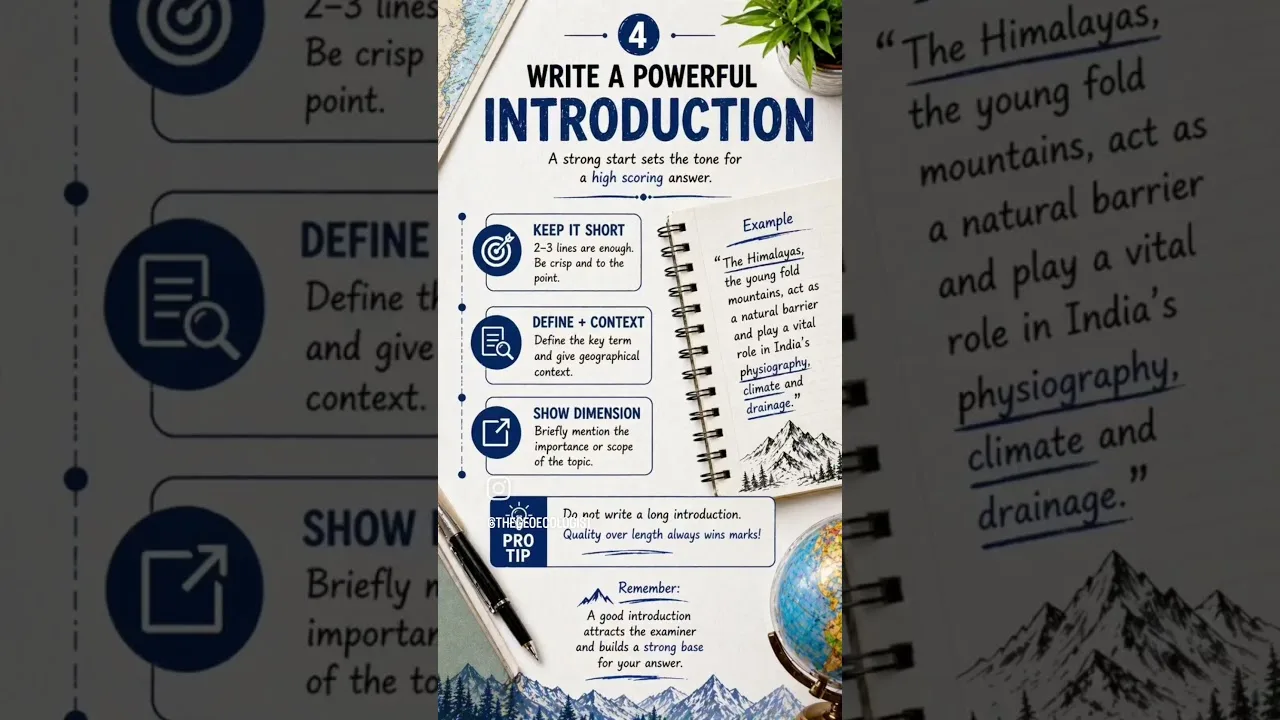
Table of Contents
- Strategic Planning for Geography Answer Writing
- Deconstructing the Question
- Mental Outlining Techniques
- Structuring Your Answer for Clarity
- Compelling Introduction
- Logical Body Flow
- Effective Conclusion
- Enhancing Answers with Real‑World Examples
- Integrating Case Studies
- Utilizing Diagrams Effectively
- Choosing Relevant Visuals
- Annotating Diagrams
- Consistent Practice and Review
- Daily Writing Routines
- Feedback and Self-Assessment
- Resources and Further Learning
Geography Answer Writing is the cornerstone of success for candidates tackling the UPSC Geography Optional paper. By mastering the art of structuring, illustrating, and presenting your responses, you transform raw knowledge into high‑scoring answers that impress examiners. This guide outlines a proven blueprint, from strategic planning to daily practice, ensuring you can consistently deliver clear, comprehensive, and well‑illustrated answers that earn top marks.
- Plan before you write: deconstruct keywords and outline core points.
- Structure answers with a clear introduction, logical body, and concise conclusion.
- Enrich answers with real‑world examples and interlink spatial relevance.
- Incorporate labeled diagrams to reinforce concepts and aid memorization.
- Practice daily under timed conditions and seek regular feedback.
Strategic Planning for Geography Answer Writing
Effective Geography Answer Writing begins with a clear understanding of the question. Before you pick up your pen, deconstruct the prompt to identify directive verbs such as analyse, compare, or evaluate. This step ensures that your response addresses exactly what the examiner expects. For more insight into the UPSC examination pattern, refer to the UPSC Civil Services Examination page, which outlines the structure and marking scheme. By mastering this initial analysis, you lay a solid foundation for Geography Answer Writing that aligns with the exam’s expectations.
Deconstructing the Question
Start by highlighting keywords. For instance, the term “compare” demands a side‑by‑side examination, while “critically evaluate” requires you to weigh advantages and disadvantages. Write these keywords on a scrap paper and note the specific aspects you must cover. This disciplined approach prevents omission of crucial points and streamlines your Geography Answer Writing process.
Mental Outlining Techniques
Create a quick mental outline listing 3‑4 core ideas, supporting examples, and a potential diagram. This outline acts as a roadmap, keeping your Geography Answer Writing focused and preventing digressions. A well‑structured outline also speeds up the writing phase, allowing you to allocate time efficiently during the exam.
Structuring Your Answer for Clarity
Compelling Introduction
The opening paragraph of Geography Answer Writing should hook the examiner. Begin with a concise definition, a striking statistic, or a relevant quote that ties directly to the question. For example, stating “India’s diverse physiographic units contribute significantly to its agricultural output” immediately signals depth. A strong introduction sets the tone and demonstrates mastery of the subject.
Logical Body Flow
Organize the body into clearly defined sections using sub‑headings (bold or underlined as per exam guidelines). Follow a logical progression: theory → empirical evidence → spatial analysis → implications. Each paragraph should revolve around a single idea, supported by data, case studies, or citations. This structure enhances readability and showcases your analytical prowess in Geography Answer Writing.
Effective Conclusion
Conclude by synthesizing the main points and linking them to contemporary issues or future prospects. A forward‑looking statement, such as the impact of climate change on river basin management, demonstrates insight and elevates your Geography Answer Writing to a higher scoring level. Our proven Geography Answer Writing framework ensures consistent high marks.
Enhancing Answers with Real‑World Examples
Integrating Case Studies
Incorporate real‑world examples to illustrate theoretical concepts. For instance, discuss how Gujarat’s coastal geography makes it a hub for wind energy, thereby reinforcing the link between location and development. Citing authentic case studies enriches Geography Answer Writing and earns extra marks for application.
Utilizing Diagrams Effectively
Choosing Relevant Visuals
Select diagrams that directly support your argument, such as slope profiles for erosion studies or climate graphs for monsoon analysis. Simple, well‑labeled sketches are more effective than complex illustrations. Refer to authoritative sources like the Geography entry for guidance on appropriate visual types.
Annotating Diagrams
Every diagram must be annotated with a brief explanation of its relevance. For example, label a river’s longitudinal profile and note the significance of its gradient in flood risk assessment. Clear annotations transform a visual aid into an integral part of Geography Answer Writing, reinforcing key concepts.
Consistent Practice and Review
Daily Writing Routines
Commit to writing at least two timed answers each day. This habit builds speed and reinforces the structure you have practiced. Regular practice of Geography Answer Writing ensures that you can articulate ideas coherently under exam pressure.
Feedback and Self-Assessment
Seek feedback from mentors or use online evaluation tools to identify gaps in your Geography Answer Writing. Constructive feedback refines your Geography Answer Writing skills. Our platform offers additional Geography Answer Writing guides and tips.
Resources and Further Learning
Access free model answers, video tutorials, and study material to sharpen your Geography Answer Writing skills. Visiting The Geo Ecologist provides curated resources, including solved papers and expert guidance. Additionally, stay updated with current events through The Hindu, which offers relevant articles for case study integration.
By following this comprehensive blueprint, aspirants can transform raw geographical knowledge into high‑scoring answers that reflect precision, clarity, and analytical depth. Persistent practice, disciplined planning, and continual feedback are the pillars of success in the UPSC Geography Optional paper.
Frequently Asked Questions
Aim for at least two timed answers daily to build speed and consistency.
Typically 150–250 words per answer, allowing enough detail without exceeding time limits.
Visit The Geo Ecologist website for free model answers, study material, and expert guidance.