Blog
Earth’s Core Changed Direction? Uncovering Earth’s Deep Secrets

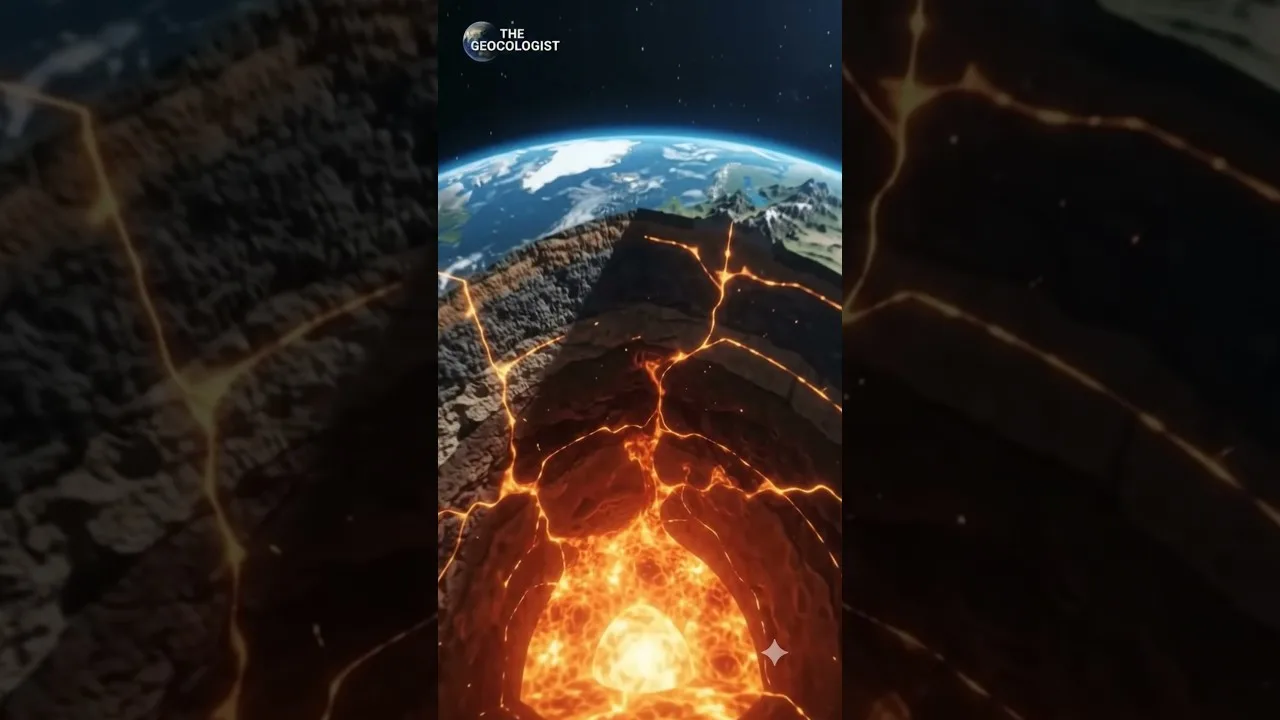
Table of Contents
- Earth's Core Changed Direction: A Mysterious Deep Earth Phenomenon
- The Hidden Structure of Earth's Interior
- Understanding Earth's Magnetic Field
- ESA's Swarm Satellites: Eyes in Space
- How Swarm Measures Earth's Magnetic Field
- The Mystery of Earth's Core Flow Changes
- What Causes These Changes?
- Why Scientists Study Earth's Core Changes
- Connections to Geomagnetic Reversals
- Implications for Future Research
- Conclusion: Earth's Core Changed Direction, and So Much More
- Key Takeaways
Earth’s Core Changed Direction: A Mysterious Deep Earth Phenomenon
Earth’s Core Changed Direction in a way that has left scientists both puzzled and intrigued. Located thousands of kilometers beneath the Pacific Ocean, this enigmatic shift in Earth’s liquid outer core has become a focal point for researchers studying our planet’s dynamic interior. Data collected by the European Space Agency’s (ESA) Swarm satellites, alongside other cutting-edge scientific observations, has provided unprecedented insights into the movement of liquid iron within Earth’s deepest layers. – a key consideration for Earths Core Changed Direction.
- Earth’s Core Changed Direction around 2010, revealing complex geophysical processes
- ESA’s Swarm satellites play a crucial role in measuring Earth’s magnetic field variations
- The liquid outer core’s movement directly influences the generation of Earth’s magnetic field
- Scientists are still investigating the root causes behind these deep-Earth flow changes
- Understanding Earth’s core dynamics is essential for predicting magnetic field behavior
The Hidden Structure of Earth’s Interior
Earth’s Core Changed Direction as a result of intricate processes occurring in our planet’s innermost regions. The Earth’s interior is composed of several distinct layers, each with unique properties. From the crust we walk on, moving inward, we encounter the mantle, followed by the outer core, and finally the solid inner core at the center. This structure isn’t static—Earth’s Core Changed Direction due to the dynamic flow of molten iron and nickel in the outer core, which generates the magnetic field that protects our planet from harmful solar radiation. – a key consideration for Earths Core Changed Direction.
Understanding Earth’s Magnetic Field
Earth’s Core Changed Direction influences the magnetic field through the movement of conductive materials. The geodynamo theory explains how the motion of liquid iron in the outer core creates electric currents, which in turn produce Earth’s magnetic field. This protective shield extends far into space, forming what scientists call the magnetosphere. Without this phenomenon, solar winds would strip away our atmosphere, making Earth uninhabitable. The recent changes in Earth’s Core Changed Direction have prompted researchers to reevaluate how these magnetic generators operate over time. – a key consideration for Earths Core Changed Direction.
ESA’s Swarm Satellites: Eyes in Space

The European Space Agency’s (ESA) Swarm mission, launched in 2013, consists of three identical satellites designed to monitor Earth’s magnetic field with unprecedented precision. These satellites orbit at different altitudes, allowing scientists to separate the contributions of the core, mantle, crust, and even the ionosphere to our planet’s magnetic environment. When Earth’s Core Changed Direction, the Swarm satellites detected subtle variations in magnetic field strength and direction that had not been observed previously. This technology has revolutionized our understanding of how Earth’s magnetic field evolves over time. – a key consideration for Earths Core Changed Direction.
How Swarm Measures Earth’s Magnetic Field
Swarm’s advanced instruments include vector field magnetometers, electric field instruments, and an altimeter. By continuously measuring the magnetic field from space, these satellites can detect minute changes in Earth’s Core Changed Direction that ground-based observatories might miss. The data collected helps scientists create detailed maps of the magnetic field, revealing patterns and anomalies that provide clues about the dynamics occurring in Earth’s deepest regions. Since their deployment, Swarm satellites have been instrumental in documenting how Earth’s Core Changed Direction affects our planet’s magnetic environment. – a key consideration for Earths Core Changed Direction.
The Mystery of Earth’s Core Flow Changes
Around 2010, researchers first noticed that Earth’s Core Changed Direction in an unexpected manner. Previously, scientists believed that the flow of liquid iron in the outer core was relatively stable, with only minor fluctuations over centuries. However, the data now suggests that Earth’s Core Changed Direction more dramatically than anticipated. This shift has significant implications for our understanding of geomagnetic reversals and the long-term stability of our magnetic field. – a key consideration for Earths Core Changed Direction.
What Causes These Changes?
The exact mechanisms behind Earth’s Core Changed Direction remain one of the biggest mysteries in geophysics. Several hypotheses have been proposed, including:
- Variations in heat flow from the inner core to the outer core
- Interactions between the solid inner core and the surrounding liquid outer core
- Changes in the Earth’s rotation rate affecting core dynamics
- Thermal and compositional convection patterns in the outer core
While scientists continue to investigate, Earth’s Core Changed Direction appears to be influenced by a complex interplay of factors that are still not fully understood. The implications of Earth’s Core Changed Direction extend beyond academic curiosity—they could affect navigation systems, satellite operations, and even biological processes that depend on Earth’s magnetic field. – a key consideration for Earths Core Changed Direction.
Why Scientists Study Earth’s Core Changes
Earth’s Core Changed Direction is not just an academic curiosity—Earths Core Changed Direction has practical implications for our daily lives. The magnetic field generated by Earth’s Core Changed Direction protects us from solar storms, which can damage power grids, disrupt GPS systems, and threaten satellite communications. By understanding how Earth’s Core Changed Direction occurs, scientists can better predict magnetic field variations and prepare for potential space weather events. This knowledge is crucial for protecting critical infrastructure and ensuring the safety of astronauts and airline passengers.
Connections to Geomagnetic Reversals
Earth’s Core Changed Direction may be related to geomagnetic reversals, where the north and south magnetic poles switch places. These events have occurred numerous times throughout Earth’s history, though not in a straightforward manner. The recent observations of Earth’s Core Changed Direction suggest that our magnetic field is more dynamic than previously thought. Understanding these changes could help scientists predict when—and if—the next reversal might occur. – a key consideration for Earths Core Changed Direction.
Implications for Future Research
The study of Earth’s Core Changed Direction represents one of the most challenging frontiers in Earth science. While satellite data from Swarm has provided invaluable insights, scientists recognize that more observations are needed to fully understand these phenomena. Future missions and improved modeling techniques will help researchers unravel the complex processes behind Earth’s Core Changed Direction. The discovery that Earth’s Core Changed Direction more dramatically than expected has opened new avenues for research, promising to deepen our understanding of our planet’s inner workings. – a key consideration for Earths Core Changed Direction.
Conclusion: Earth’s Core Changed Direction, and So Much More
The revelation that Earth’s Core Changed Direction has transformed our understanding of our planet’s magnetic field and internal dynamics. Through the careful observations made possible by ESA’s Swarm satellites, scientists have uncovered evidence of significant changes occurring thousands of kilometers beneath our feet. While the exact causes of Earth’s Core Changed Direction remain under investigation, the implications are profound. As we continue to study these deep-Earth processes, we gain not only scientific knowledge but also practical tools for protecting our technological infrastructure and understanding our place in the cosmos. The mystery of Earth’s Core Changed Direction reminds us that our planet is a dynamic, ever-changing world, full of wonders waiting to be discovered. – a key consideration for Earths Core Changed Direction.
Key Takeaways
- Earth’s Core Changed Direction around 2010, marking a significant shift in planetary dynamics
- ESA’s Swarm satellites have been instrumental in detecting these changes through magnetic field measurements
- The movement of liquid iron in the outer core directly generates Earth’s magnetic field
- Scientists are exploring multiple theories to explain what causes Earth’s Core Changed Direction
- Understanding Earth’s Core Changed Direction is crucial for protecting technology from space weather impacts
Frequently Asked Questions
Scientists believe Earth's Core Changed Direction due to variations in heat flow, interactions between the inner and outer core, changes in Earth's rotation, or convection patterns in the liquid outer core. The exact cause remains under investigation.
ESA's Swarm satellites use advanced magnetometers to measure Earth's magnetic field from space. When Earth's Core Changed Direction, these instruments detected subtle variations in magnetic field strength and direction that ground-based observatories couldn't observe.
Earth's Core Changed Direction has significant implications for understanding geomagnetic reversals, predicting space weather impacts, and protecting technological infrastructure. The discovery that Earth's Core Changed Direction more dramatically than expected has opened new research avenues in geophysics.