Blog
Human Impact on Environment: Comprehensive Guide for UPSC Geography

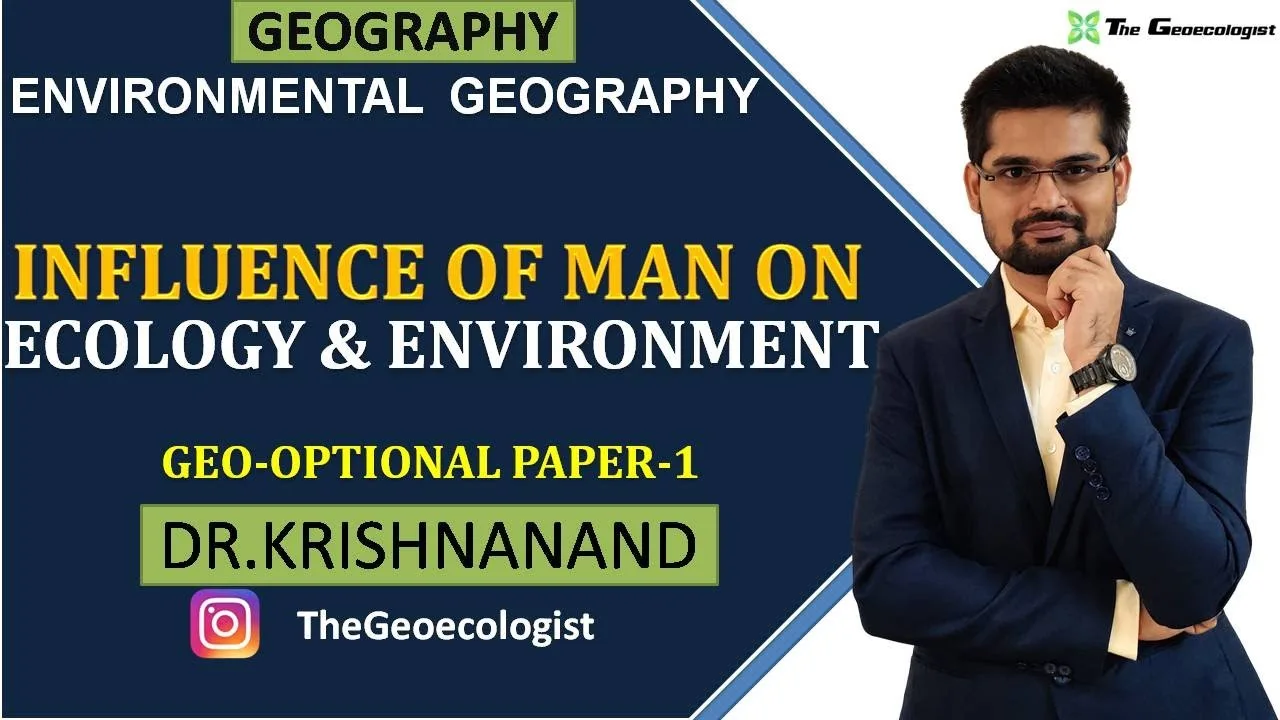
Table of Contents
- Historical Evolution of Human Impact on Environment
- Key Conceptual Frameworks in Environmental Geography
- Major Dimensions of Anthropogenic Environmental Change
- 1. Land Use and Land Cover Change (LULCC)
- 2. Biodiversity Loss and the Sixth Mass Extinction
- 3. Climate Change: The Defining Challenge
- 4. Pollution: Air, Water, Soil, and Emerging Contaminants
- 5. Biogeochemical Cycle Disruption
- Case Studies: Human Impact on Environment in the Indian Context
- The Sundarbans: Climate Vulnerability and Human Adaptation
- Western Ghats: Development vs. Conservation
- Delhi-NCR Air Pollution: A Governance Challenge
- Mitigation, Adaptation, and Sustainable Pathways
- Nature-Based Solutions (NbS)
- Circular Economy and Resource Efficiency
- Energy Transition and Decarbonization
- Environmental Governance: Institutions, Laws, and International Regimes
- Preparation Strategy for UPSC Geography Optional and GS
- Conclusion
The human impact on environment represents one of the most critical areas of study in environmental geography, encompassing the myriad ways anthropogenic activities alter natural ecosystems, biogeochemical cycles, and planetary boundaries. As Dr. Krishnanand emphasizes in the ninth lecture of his acclaimed Environmental Geography series for UPSC aspirants, understanding this dynamic relationship is fundamental for both academic excellence and informed policy-making. This comprehensive guide distills the core concepts, historical trajectory, and contemporary relevance of humanity’s ecological footprint, tailored specifically for undergraduate geography students and Geography Optional candidates preparing for the UPSC Civil Services Examination.
- Anthropogenic drivers — population growth, industrialization, urbanization, and technological advancement — are the primary forces reshaping Earth’s systems.
- Planetary boundaries such as climate change, biodiversity loss, and nitrogen/phosphorus cycles have been transgressed due to human activity.
- Environmental geography provides the spatial and temporal framework to analyze these impacts across scales — local, regional, and global.
- Mitigation and adaptation strategies require interdisciplinary approaches integrating science, policy, economics, and ethics.
- UPSC relevance — human impact on environment features prominently in GS Paper I (Geography), GS Paper III (Environment), and Geography Optional Papers I & II.
Historical Evolution of Human Impact on Environment
The trajectory of human impact on environment can be categorized into distinct phases, each marked by transformative shifts in societal organization and technological capacity. The Paleolithic era witnessed localized effects through hunting-gathering and controlled fire use, with minimal long-term ecological disruption. The Neolithic Revolution (~10,000 BCE) introduced agriculture, leading to deforestation, soil degradation, and the first large-scale habitat conversion. As Dr. Krishnanand notes, this period marks the beginning of deliberate landscape modification.
The Industrial Revolution (late 18th century) represents a quantum leap. Fossil fuel combustion, mechanized production, and urban concentration accelerated resource extraction and waste generation exponentially. Atmospheric CO₂ concentrations rose from ~280 ppm pre-industrial to over 420 ppm by 2024 (NOAA Global Monitoring Laboratory). The Great Acceleration post-1950 — characterized by exponential growth in population, GDP, energy use, and fertilizer consumption — pushed multiple Earth systems beyond Holocene stability. The International Geosphere-Biosphere Programme (IGBP) identifies 1950 as the putative start of the Anthropocene, a proposed geological epoch defined by pervasive human influence. – a key consideration for human impact on environment.
Key Conceptual Frameworks in Environmental Geography
Environmental geography employs several analytical frameworks to decode the human impact on environment. The Driver-Pressure-State-Impact-Response (DPSIR) model, adopted by the European Environment Agency, structures causality: drivers (economic sectors) exert pressures (emissions, land use) altering environmental state (air/water quality), causing impacts (health, ecosystem loss), prompting responses (policy, technology). The IPAT equation (Impact = Population × Affluence × Technology), formulated by Ehrlich and Holdren (1971), quantifies multiplicative interactions. The Ecological Footprint metric, developed by Wackernagel and Rees (1996), measures humanity’s demand on biocapacity — currently exceeding 1.7 Earths annually (Global Footprint Network, 2023).
Dr. Krishnanand’s lecture series emphasizes the human-environment interaction paradigm, tracing its intellectual lineage from environmental determinism (Semple, Huntington) through possibilism (Vidal de la Blache) to contemporary political ecology. This evolution reflects a shift from viewing nature as a constraint to recognizing co-constitutive socio-ecological systems. For UPSC aspirants, mastering these theoretical underpinnings enables nuanced answers in Geography Optional Paper II (Human Geography) and GS Paper I (Human Geography). – a key consideration for human impact on environment.
Major Dimensions of Anthropogenic Environmental Change
1. Land Use and Land Cover Change (LULCC)
Land transformation constitutes the most visible human impact on environment. Since 1700, cropland has expanded ~5.5× and pasture ~6.5×, while forest area declined ~30% (Hurtt et al., 2020, Earth System Science Data). Tropical deforestation — driven by cattle ranching, soy cultivation, palm oil, and logging — accounts for ~11% of global CO₂ emissions (IPCC AR6 WGIII). The Amazon, Congo Basin, and Southeast Asian rainforests are critical frontiers. In India, forest cover stands at 21.71% (ISFR 2021), with northeastern states experiencing net loss. Urban expansion consumes ~1.3 million km² of cropland by 2030 (Bren d’Amour et al., 2017, PNAS), threatening food security.
2. Biodiversity Loss and the Sixth Mass Extinction
Current extinction rates are 100–1,000× background levels (Ceballos et al., 2015, Science Advances), prompting scientists to declare a Sixth Mass Extinction — the first driven by a single species. The IPBES Global Assessment (2019) estimates 1 million species face extinction. Primary drivers: habitat loss (LULCC), overexploitation, invasive species, pollution, and climate change. India, a megadiverse country with 8% of global biodiversity on 2.4% land area, hosts 4 biodiversity hotspots (Himalaya, Indo-Burma, Western Ghats, Sundaland). The Wildlife Protection Act (1972), Biological Diversity Act (2002), and Project Tiger (1973) represent policy responses. For UPSC, the Convention on Biological Diversity (CBD), Nagoya Protocol, and Kunming-Montreal Global Biodiversity Framework (2022) are essential. – a key consideration for human impact on environment.
3. Climate Change: The Defining Challenge
Anthropogenic climate change epitomizes the human impact on environment at planetary scale. IPCC AR6 (2021) states unequivocally that human influence has warmed the atmosphere, ocean, and land. Global surface temperature (2011–2020) was 1.09°C above 1850–1900. Greenhouse gas concentrations: CO₂ (417 ppm), CH₄ (1,895 ppb), N₂O (334 ppb) — highest in 2 million, 800,000, and 1 million years respectively. India’s vulnerability is acute: 7,500 km coastline, Himalayan glaciers, monsoon dependence, and high population density. National Action Plan on Climate Change (NAPCC, 2008) comprises 8 missions; updated NDC (2022) targets 45% emission intensity reduction by 2030 (2005 base) and 50% non-fossil electricity capacity.
4. Pollution: Air, Water, Soil, and Emerging Contaminants
Pollution represents the direct introduction of harmful substances. Air pollution causes ~7 million premature deaths annually (WHO, 2022). India’s 2023 World Air Quality Report ranks 39 of 50 most polluted cities in India; Delhi’s PM2.5 averages 92.6 µg/m³ (WHO guideline: 5 µg/m³). Water pollution — industrial effluents, agricultural runoff (nitrogen, phosphorus), untreated sewage — affects 70% of surface water (CPCB). The Ganga Action Plan (1985) and Namami Gange (2014) target river rejuvenation. Soil degradation affects 29% of India’s land (ICAR, 2016): erosion, salinization, contamination. Plastic pollution — 400 million tonnes produced annually; 14 million tonnes enter oceans (UNEP). The UN Plastic Pollution Treaty (negotiations ongoing) aims for a legally binding instrument by 2024. – a key consideration for human impact on environment.
5. Biogeochemical Cycle Disruption
Human activity has doubled reactive nitrogen (Haber-Bosch process) and quadrupled phosphorus flows (fertilizers, detergents), exceeding planetary boundaries (Steffen et al., 2015, Science). Consequences: eutrophication (dead zones — Gulf of Mexico, Baltic Sea), N₂O emissions (300× CO₂ GWP), groundwater contamination. The International Nitrogen Management System (INMS) and Global Partnership on Nutrient Management (GPNM) coordinate responses. India’s fertilizer subsidy regime (urea-centric) exacerbates N-imbalance; Soil Health Card Scheme (2015) promotes balanced nutrition. – a key consideration for human impact on environment.
Case Studies: Human Impact on Environment in the Indian Context
The Sundarbans: Climate Vulnerability and Human Adaptation
The Sundarbans, the world’s largest mangrove forest (10,000 km², India-Bangladesh), illustrates compounded human impact on environment. Sea-level rise (3.14 mm/yr, 1993–2020), cyclone intensification (Amphan 2020, Yaas 2021), salinity intrusion, and embankment failure threaten 4.5 million residents. Mangrove loss reduces carbon sequestration (~2.5 Mg C/ha/yr) and storm protection. Human pressures: aquaculture expansion, fuelwood collection, tiger-human conflict. Conservation measures: UNESCO World Heritage Site (1987), Biosphere Reserve (1989), Joint Forest Management, and community-based adaptation (floating gardens, saline-tolerant rice). This case integrates physical geography, ecology, and human dimensions — a UPSC favorite.
Western Ghats: Development vs. Conservation
The Western Ghats, a UNESCO World Heritage Site and biodiversity hotspot, faces fragmentation from linear infrastructure (rail, road, power), mining, plantations, and hydropower. The Gadgil Committee (2011) recommended 75% as Ecologically Sensitive Area (ESA); Kasturirangan Committee (2013) reduced to 37%. The impasse reflects the core tension in environmental governance. For aspirants, this case exemplifies EIA notification (2006, 2020 amendments), Forest Conservation Act (1980), and the role of the National Green Tribunal (NGT). – a key consideration for human impact on environment.
Delhi-NCR Air Pollution: A Governance Challenge
Delhi’s annual “airpocalypse” stems from stubble burning (Punjab/Haryana, ~15–20% contribution), vehicular emissions, construction dust, industrial sources, and meteorological trapping (temperature inversion, low wind). Graded Response Action Plan (GRAP), Commission for Air Quality Management (CAQM, 2021), and BS-VI norms (2020) are interventions. The odd-even scheme, smog towers, and PUSA bio-decomposer represent technological and behavioral fixes. This case tests understanding of federalism, regulatory institutions, and science-policy interface.
Mitigation, Adaptation, and Sustainable Pathways
Nature-Based Solutions (NbS)
NbS leverage ecosystem services for climate and biodiversity co-benefits. Reforestation, afforestation, agroforestry, wetland restoration, and urban green infrastructure sequester carbon, enhance resilience, and support livelihoods. The Bonn Challenge targets 350 million hectares restoration by 2030; India pledged 26 million hectares. The UN Decade on Ecosystem Restoration (2021–2030) provides a global framework. Dr. Krishnanand highlights that NbS align with India’s traditional ecological knowledge — sacred groves, johads (Rajasthan), zabo system (Nagaland) — offering culturally grounded solutions.
Circular Economy and Resource Efficiency
Transitioning from linear (take-make-dispose) to circular models reduces extraction and waste. The EU Circular Economy Action Plan (2020), India’s Vehicle Scrappage Policy (2021), Plastic Waste Management Rules (2016, amended 2022), and E-waste Management Rules (2022) institutionalize extended producer responsibility (EPR). Material flow analysis shows India’s resource extraction grew 4.5× (1970–2017); circular strategies could yield ₹40 lakh crore annual benefits by 2050 (Ellen MacArthur Foundation, 2021).
Energy Transition and Decarbonization
Decarbonizing energy — the largest emission source (~73% global GHG) — requires renewable deployment, efficiency, electrification, and green hydrogen. India’s renewable capacity reached 180 GW (2024), targeting 500 GW by 2030. The International Solar Alliance (ISA, 2015), Green Hydrogen Mission (2023), and PM-KUSUM (solar for farmers) are key initiatives. However, coal remains ~55% of electricity; just transition for coal-dependent regions (Jharkhand, Chhattisgarh, Odisha) is a socio-economic imperative.
Environmental Governance: Institutions, Laws, and International Regimes
Effective governance mediates the human impact on environment. India’s constitutional framework — Article 48A (Directive Principle), Article 51A(g) (Fundamental Duty), and judicial interpretation of Article 21 (Right to Life includes clean environment) — provides the foundation. Key legislation: Environment (Protection) Act (1986), Air/Water Acts, Forest Conservation Act, Wildlife Protection Act, Biodiversity Act, and the recent Forest (Conservation) Amendment Act (2023). Institutions: MoEFCC, CPCB/SPCBs, NGT (2010), NCZMA, NTCA, and CAMPA.
Internationally, the UNFCCC (1992), CBD (1992), UNCCD (1994) — the Rio Conventions — form the core. The Paris Agreement (2015) operationalizes Nationally Determined Contributions (NDCs) and Global Stocktake. The Kunming-Montreal GBF (2022) sets 23 targets for 2030 (30×30 conservation, restoration, invasive species control). The Sendai Framework (2015–2030) integrates disaster risk reduction. For UPSC, India’s positions (Common But Differentiated Responsibilities, climate finance, technology transfer) and leadership (ISA, CDRI, Lifestyle for Environment — LiFE) are high-yield topics.
Preparation Strategy for UPSC Geography Optional and GS
Dr. Krishnanand’s lecture series — of which this is the ninth installment — offers a structured approach to mastering environmental geography. His Simplified Environmental Geography e-book (available at geographyebooks.com) provides concise, exam-oriented coverage. Aspirants should:
- Integrate static and dynamic: Link textbook concepts (Savindra Singh, Khullar) with current affairs (IPCC reports, COP outcomes, government schemes).
- Map practice: Plot hotspots, Ramsar sites, biosphere reserves, pollution hotspots, climate vulnerability zones.
- Case study repository: Maintain 15–20 India-specific cases with data, legal/policy response, and critical analysis.
- Answer writing: Practice structured answers — introduction (definition/data), body (dimensions/case studies), conclusion (way forward/sustainability).
- Interdisciplinary links: Connect with Economy (green budgeting), Polity (federalism, tribunals), Ethics (environmental justice, intergenerational equity), and IR (climate diplomacy).
The IPCC assessment reports, UNEP Emissions Gap Reports, and India’s Economic Survey (Environment chapter) are authoritative sources. Dr. Krishnanand’s YouTube channel TheGeoecologist and Instagram (@thegeoecologist) provide regular updates and simplified explanations.
Conclusion
The human impact on environment is not merely an academic subject but the defining challenge of our era. From the local degradation of a village pond to the planetary-scale disruption of the carbon cycle, the evidence is unequivocal: humanity has become a geological force. Environmental geography, with its spatial perspective, systems thinking, and human-environment focus, offers indispensable tools for diagnosis and remedy. For UPSC aspirants, human impact on environment is a high-return investment — human impact on environment appears across papers, rewards interdisciplinary synthesis, and cultivates the administrative temperament needed for sustainable governance. As Dr. Krishnanand’s lecture series demonstrates, clarity of concepts, command over data, and the ability to articulate balanced, solution-oriented perspectives are the keys to success. The journey from understanding the problem to contributing to the solution begins with rigorous, compassionate study — the very essence of geography as a discipline.
Frequently Asked Questions
The primary drivers are population growth, industrialization, urbanization, technological advancement, and changing consumption patterns. These drivers exert pressures like emissions, land-use change, and resource extraction that alter environmental state.
This topic is crucial for GS Paper I (Geography), GS Paper III (Environment, Disaster Management), Geography Optional Papers I & II, and Essay. It also intersects with Economy, Polity, Ethics, and International Relations, making it a high-return area for integrated preparation.
According to the Stockholm Resilience Centre, humanity has transgressed at least six of nine planetary boundaries: climate change, biosphere integrity (biodiversity loss), land-system change, biogeochemical flows (nitrogen and phosphorus), novel entities (pollution), and freshwater change.