Blog
How Seasons Occur: The Science of Earth’s Axial Tilt

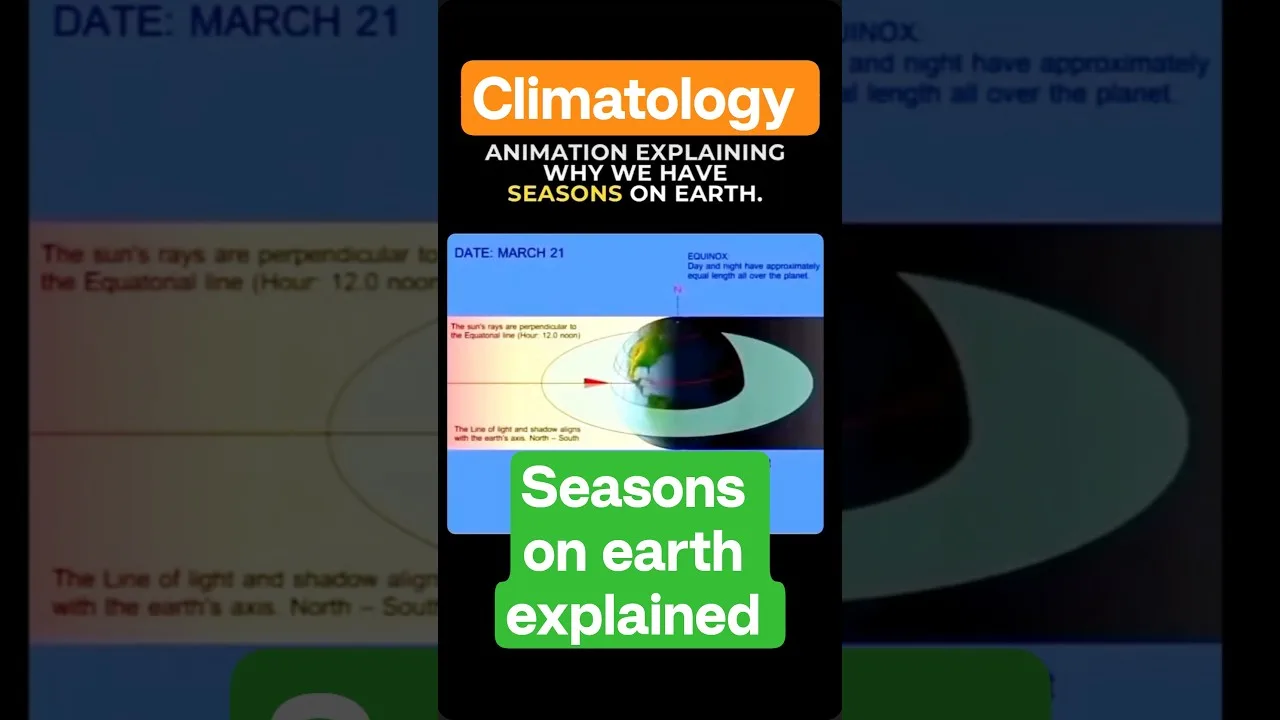
Table of Contents
- Understanding How Seasons Occur on Earth
- The Primary Drivers of How Seasons Occur
- 1. The Role of Axial Tilt
- 2. The Mechanism of Revolution
- Seasonal Variations and Solar Intensity
- Summer: Direct Sunlight and Heat Concentration
- Winter: Oblique Angles and Energy Dispersion
- Transitional Periods: Spring and Autumn
- Hemispheric Differences: A Global Perspective
- Why Earth's Distance is Not the Cause
- The Importance of Seasonal Cycles in Ecology
- Climate and Agriculture
- Summary of Seasonal Mechanics
Understanding How Seasons Occur on Earth
Have you ever wondered how seasons occur and why our planet undergoes such dramatic shifts in temperature and daylight throughout the year? Many people mistakenly believe that the changing weather is caused by the Earth’s distance from the Sun, but this is a common misconception. In reality, understanding how seasons occur requires a deeper look into the mechanics of planetary motion and geometry. The cyclical nature of our climate is driven by a combination of Earth’s specific orbital characteristics and its unique orientation in space.
- Axial Tilt: Earth’s 23.5° tilt is the primary driver of seasonal variation.
- Revolution: The annual journey around the Sun creates different hemispheric exposures.
- Solar Intensity: The angle at which sunlight hits the Earth determines temperature.
- Daylight Duration: Longer days contribute to warmer seasonal temperatures.
The Primary Drivers of How Seasons Occur
To truly grasp how seasons occur, we must examine two fundamental astronomical principles: axial tilt and revolution. Without these specific conditions, the Earth would experience a static climate, making life as we know it nearly impossible. According to Wikipedia’s astronomical records, the Earth’s axis is not perpendicular to its orbital plane.
1. The Role of Axial Tilt
The Earth’s axis is tilted at an angle of approximately 23.5 degrees relative to its orbital plane. This tilt is not a temporary occurrence but a constant feature of our planet’s orientation. This tilt is the fundamental reason how seasons occur. Because of this inclination, as the Earth moves through space, different parts of the planet receive varying amounts of solar radiation at different times of the year.
2. The Mechanism of Revolution
While the tilt provides the orientation, the Earth’s revolution around the Sun provides the timing. As the planet completes its 365.25-day journey, the tilt causes the Northern and Southern Hemispheres to alternate between leaning toward and leaning away from the Sun. This geometric relationship is the core explanation for how seasons occur across the globe.
Seasonal Variations and Solar Intensity
The way sunlight interacts with the Earth’s surface is a critical component of how seasons occur. It isn’t just about being “closer” to the Sun; it is about the angle of incidence.
Summer: Direct Sunlight and Heat Concentration
When a hemisphere is tilted toward the Sun, it experiences summer. During this period, the sunlight strikes the Earth at a more direct, vertical angle. This concentration of energy means that the same amount of solar radiation is hitting a smaller surface area, leading to higher temperatures. Additionally, the hemisphere leaning toward the Sun experiences longer daylight hours, providing more time for the surface to absorb heat. This is a primary reason how seasons occur in a way that promotes warmth and growth.
Winter: Oblique Angles and Energy Dispersion
Conversely, when a hemisphere is tilted away from the Sun, it experiences winter. In this scenario, the sunlight strikes the Earth at an oblique or shallow angle. Instead of being concentrated, the solar energy is spread over a much larger area, significantly reducing its intensity. Furthermore, the days are shorter, meaning there is less time for the Earth to absorb heat before it radiates back into space. This energy deficit is a key factor in how seasons occur and why winter temperatures drop so significantly.
Transitional Periods: Spring and Autumn
Spring and autumn act as the bridge between the extremes of summer and winter. During these transitional periods, the Earth’s tilt is positioned such that neither hemisphere is significantly leaning toward or away from the Sun. This results in more direct sunlight hitting the equator and more moderate temperatures globally. Understanding these transitions is essential for studying how seasons occur in relation to agricultural and ecological cycles.
Hemispheric Differences: A Global Perspective
One of the most fascinating aspects of how seasons occur is the hemispheric opposition. Because the tilt remains constant, the Northern and Southern Hemispheres are always in opposite states. When the Northern Hemisphere is experiencing the heat of summer, the Southern Hemisphere is moving through the chill of winter. This phenomenon is vital for understanding global climate patterns and ensures that the Earth’s energy distribution is constantly shifting.
For students preparing for competitive exams like the UPSC or UGC NET, mastering the concept of how seasons occur is foundational for physical geography and climatology. It explains everything from migratory patterns of animals to the timing of monsoon rains.
Why Earth’s Distance is Not the Cause
It is a common myth that Earth’s distance from the Sun determines the seasons. In reality, the Earth’s orbit is nearly circular, and the variation in distance (perihelion and aphelion) is too minimal to cause the seasonal temperature shifts we experience. In fact, the Earth is actually closest to the Sun during the Northern Hemisphere’s winter. This proves that the tilt, not the distance, is the mechanism for how seasons occur.
The Importance of Seasonal Cycles in Ecology
The phenomenon of how seasons occur dictates the life cycles of nearly every organism on Earth. From the blooming of flowers in spring to the hibernation of animals in winter, the seasonal cycle regulates the planet’s biodiversity. Understanding these patterns is crucial for modern climatology and for predicting how climate change might disrupt these natural rhythms.
Climate and Agriculture
Human civilization has been built around how seasons occur. Agricultural cycles—planting, growing, and harvesting—are dictated by the arrival of spring and the departure of autumn. Changes in seasonal timing can have massive implications for global food security and economic stability.
Summary of Seasonal Mechanics
To conclude, the complexity of how seasons occur is simplified into a beautiful, rhythmic dance of tilt and orbit. By understanding the 23.5-degree tilt and the annual revolution, we gain insight into the very heartbeat of our planet’s climate. Whether you are a student, a researcher, or just a curious observer, knowing how seasons occur provides a deeper appreciation for the celestial mechanics that sustain life on Earth.
For more in-depth explorations of Earth’s dynamics, visit TheGeoEcologist.com, where we provide interactive courses and detailed notes for students and enthusiasts alike.
Frequently Asked Questions
No, the distance from the Sun does not cause seasons. Seasons are caused by the Earth's 23.5° axial tilt and its revolution around the Sun.
Summers are warmer because the hemisphere is tilted toward the Sun, receiving more direct sunlight and longer daylight hours. In winter, the tilt is away, resulting in spread-out sunlight and shorter days.
Because the Earth's tilt remains constant, when one hemisphere leans toward the Sun, the other must lean away, causing opposite seasonal experiences.