Blog
Russian geography school: Exploring the Legacy

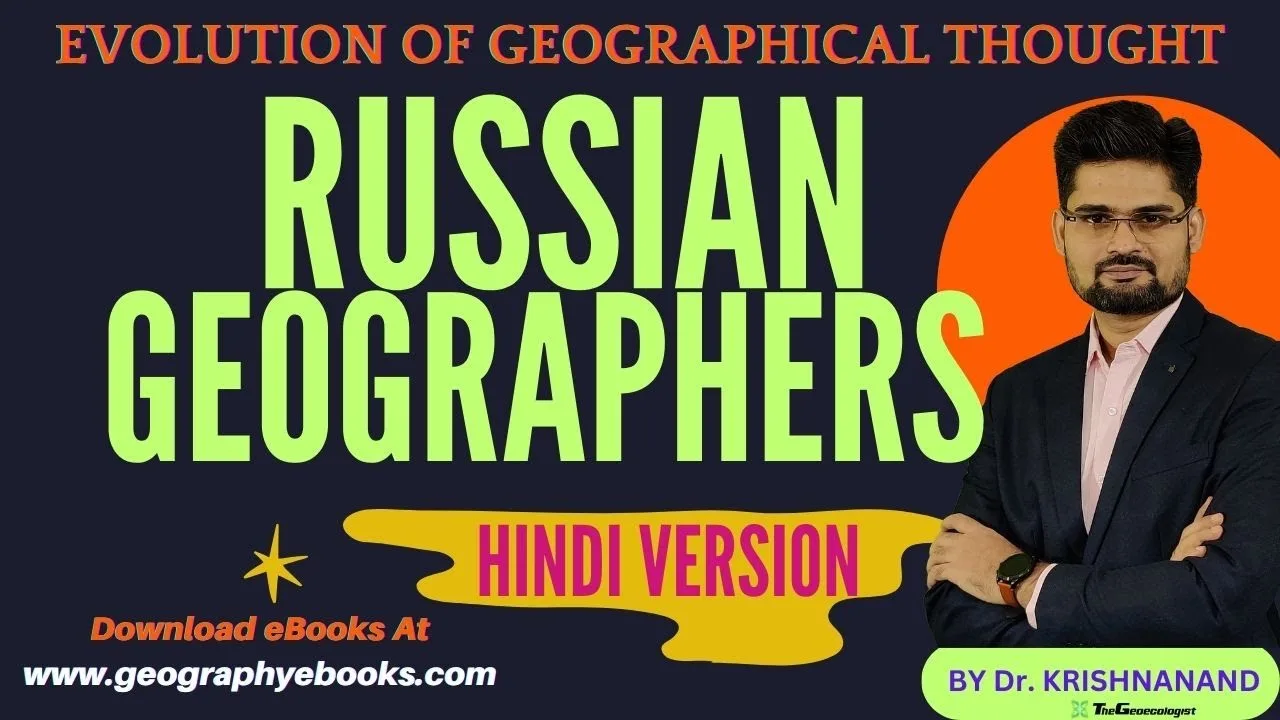
Table of Contents
- Russian geography school: Key Contributions
- Origins of the Russian geography school
- Regional Geography & Landscape Science
- Physical Geography & Environmental Determinism
- Human‑Environment Interactions
- Exam Relevance: Why Study the Russian geography school Today?
- Future Directions: The Russian geography school in Contemporary Planning
- Key Takeaways for Exam Aspirants
- FAQs
Russian geography school has carved a unique niche in the annals of geographic thought, blending rigorous scientific inquiry with a holistic appreciation of human and natural systems. By integrating landscape, climate, and socio‑economic factors, it offers a comprehensive framework that remains indispensable for modern regional planning, environmental policy, and competitive exams like the UGC NET, UPSC, and state PCS.
- Holistic integration of physical and human geography.
- Pioneering landscape science and soil genesis research.
- Early critique of deterministic views of climate.
- Foundational concepts that underpin Earth system science.
- Exam‑ready insights for geography aspirants.
Russian geography school: Key Contributions
The Russian geography school emerged in the late 19th and early 20th centuries, a period marked by rapid industrialization and expanding imperial frontiers. Geographers of this era responded to the challenges posed by a vast, diverse territory by developing theories that emphasized interdependence among landscape, climate, and human activity. Their work diverged from the more compartmentalized approaches of Western geography, establishing a unified regional model that still informs contemporary GIS and spatial analysis.
Origins of the Russian geography school
Rooted in the intersection of natural science and socio‑political thought, the Russian geography school was shaped by scholars who recognized the vast scale of the Russian landscape—from tundra to steppe—and its climatic extremes. The school’s foundational principles arose from a need to understand how these physical conditions influenced settlement patterns, agriculture, and economic development. The interdisciplinary ethos of the Russian approach set the stage for future breakthroughs in landscape science, soil studies, and environmental theory.
Regional Geography & Landscape Science
Central to the Russian geography school is the concept of landscape units, or landshaftovedenie, viewing regions as dynamic systems where natural and human forces interact. This perspective was championed by leading figures such as Vasily Dokuchaev (1846‑1903), who introduced the theory of natural zones and soil genesis as a product of climate, relief, and biology. Dokuchaev’s seminal work laid the groundwork for modern pedology, while his insistence on empirical observation remains a staple of geographic methodology.
Another key contributor was Lev Berg (1876‑1950), who formalized the theory of landscape zones and meticulously mapped the USSR’s ecological regions. Berg’s maps, published between 1910 and 1935, integrated climate data, soil types, and vegetation patterns, offering a comprehensive view of spatial heterogeneity across the Soviet Union. These pioneering studies underscored how climatic gradients and soil conditionsน์โหลด influence vegetation distribution and agricultural potential.
Physical Geography & Environmental Determinism
While many Western geographers embraced environmental determinism—asserting that climate solely dictates human societies—the Russian geography school rango challenged this reductionist view. Scholars like Alexander Voyeykov (1842‑1916) examined how climate shapes agriculture and settlement patterns, but he also highlighted the role of human agency and cultural adaptation. Voyeykov’s 1905 treatise on climatic zones remains a touchstone for climate‑human interaction studies.
Perhaps the most influential figure in this domain was Vladimir Vernadsky (1863‑1945). Vernadsky introduced the concept of the biosphere, proposing that Earth functions as an interconnected living system where biological processes influence geological and atmospheric dynamics. His ideas prefigured modern Earth system science and emphasized the planet’s biospheric resilience and fragility. Vernadsky’s 1925 lecture series on the biosphere laid the intellectual foundation for contemporary climate change research.
Human‑Environment Interactions
The Russian geography school was ahead of its time in recognizing the profound impact of human activities on natural systems. Peter Kropotkin (1842‑1921), while primarily known as an anarchist theorist, applied geographic principles to advocate for regional self‑sufficiency and ecological balance. Kropotkin’s 1902 book, “Mutual Aid,” combined ecological observations with social critiques, urging societies to align development with environmental limits.
In the mid‑20th century, Nikolay Baransky (1881‑1963) integrated Marxist theory with economic geography, analyzing spatial inequalities in industrialization across the Soviet Union. Baransky’s 1948 study highlighted how uneven resource distribution and industrial policies shaped regional development trajectories, offering a critical lens that continues to inform debates on spatial justice and urban planning.
Exam Relevance: Why Study the Russian geography school Today?
For students preparing for the UGC NET Geography, UPSC Optional, or state PCS exams, mastering the Russian geography school is essential for several reasons:
- Core Content Coverage: Many exam syllabi explicitly mention Russian contributions to landscape science and environmental theory. Understanding these concepts provides a strong foundation for tackling high‑level questions on regional analysis and human‑environment interactions.
- Interdisciplinary Insight: The Russian geography school bridges ecology, economics, and sociology. This interdisciplinary perspective is prized in competitive exams that test analytical breadth and depth.
- Historical Context: Knowledge of the school’s historical evolution helps students appreciate the development of geographic thought, enabling them to answer contextual and comparative questions with confidence.
- Research Methodology: The school’s emphasis on empirical observation, spatial mapping, and integrated analysis equips students with methodological tools useful for exam essays and research projects.
- Exam‑Focused Value: Questions related to the school frequently appear in regional geography sections of UGC NET and UPSC papers, making it a high‑yield study area.
Future Directions: The Russian geography school in Contemporary Planning
As climate change and urbanization accelerate, the principles of the Russian geography school resonate with modern sustainability initiatives. Its holistic framework supports:
- Integrated land‑use planning that balances agricultural productivity with ecological conservation.
- Resilience modeling that accounts for climate variability, soil degradation, and socio‑economic pressures.
- Community‑based resource management that encourages local stewardship and adaptive governance.
- Educational curricula that foster spatial thinking and environmental stewardship among future geographers.
Thus, the legacy of the Russian geography school continues to guide innovative solutions to today’s geographic challenges.
Key Takeaways for Exam Aspirants
- The Russian geography school pioneered landscape science and soil genesis studies.
- It offered a balanced critique of environmental determinism, emphasizing human agency.
- Vernadsky’s biosphere concept laid groundwork for Earth system science.
- Human‑environment interactions were central to its research agenda.
- Exam‑relevant topics include regional analysis, landscape units, and climate‑human dynamics.
FAQs
- What distinguishes the Russian geography school from Western geography? The Russian approach focuses on integrated landscape units and emphasizes the interplay of natural and human systems, whereas Western geography often compartmentalizes sub-disciplines.
- Which Russian geographer is considered the father of soil science? Vasily Dokuchaev is widely regarded as the father of soil science for his foundational work on soil genesis.
- How does the Russian geography school inform modern sustainability practices? Its holistic framework supports integrated chemistry, land‑use planning, and resilience modeling, essential for sustainable development and climate adaptation.
Frequently Asked Questions
The Russian approach focuses on integrated landscape units and emphasizes the interplay of natural and human systems, whereas Western geography often compartmentalizes sub-disciplines.
Vasily Dokuchaev is widely regarded as the father of soil science for his foundational work on soil genesis.
Its holistic framework supports integrated chemistry, land‑use planning, and resilience modeling, essential for sustainable development and climate adaptation.