Blog
Geography of Southeast Asia: A Comprehensive UPSC Guide

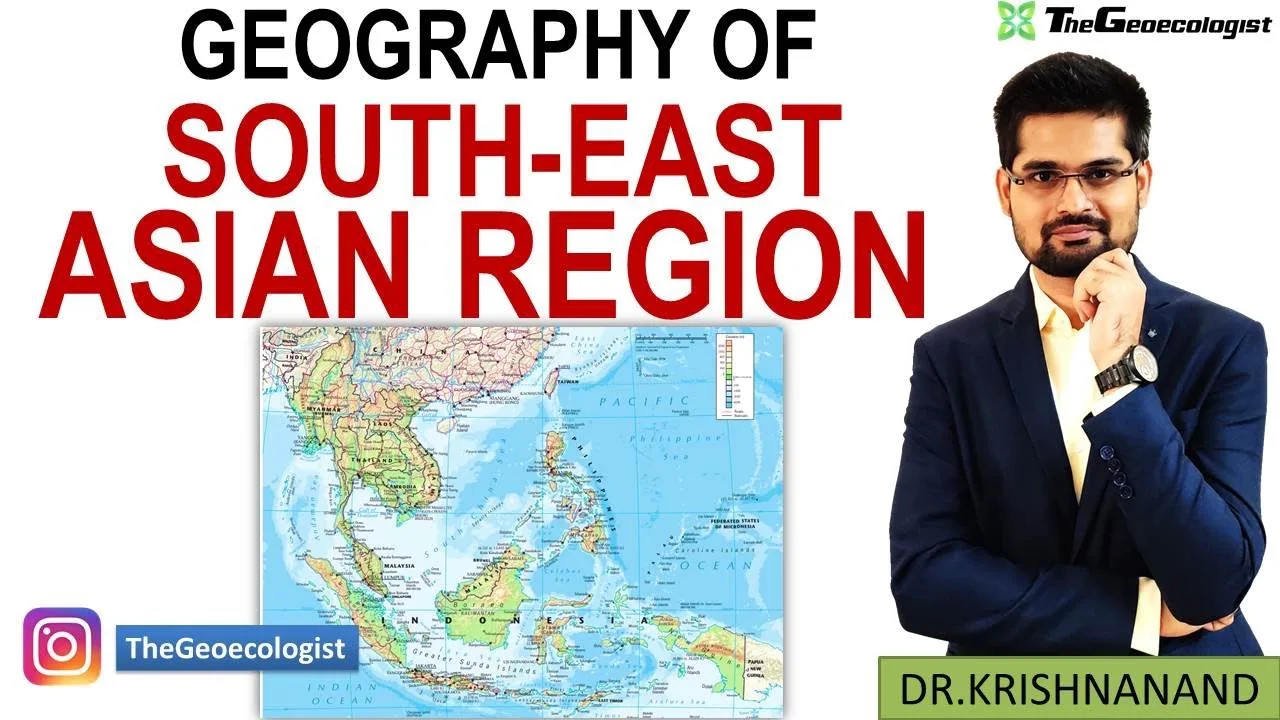
Table of Contents
- Understanding the Geography of Southeast Asia
- The Physical Landscape: Continental vs. Maritime Realms
- Cultural Tapestry and Historical Influences
- Economic Geography: Drivers of Growth and Regional Challenges
- Geopolitical Significance and Contemporary Issues
- Environmental Challenges and Urbanization
- Why Study the Geography of Southeast Asia for UPSC?
- Conclusion
Understanding the Geography of Southeast Asia
The Geography of Southeast Asia is a multifaceted subject that encompasses a vast array of physical, cultural, and geopolitical dimensions. For students and UPSC aspirants, mastering the Geography of Southeast Asia is not merely about memorizing maps; it is about understanding the intricate relationship between the physical environment and the human activities that shape this vibrant region. Comprising 11 distinct nations—including giants like Indonesia and Thailand—this realm serves as a critical bridge between the Indian and Pacific Oceans, making it a focal point for global trade and geopolitical strategy.
- Physical Diversity: From the mountainous mainland to the sprawling archipelagos of the maritime zone.
- Cultural Mosaic: A blend of Indian, Chinese, and Middle Eastern influences.
- Economic Powerhouse: A global leader in agriculture, manufacturing, and strategic maritime trade.
- Geopolitical Pivot: A central arena for international diplomacy and maritime security discussions.
The Physical Landscape: Continental vs. Maritime Realms
To truly grasp the Geography of Southeast Asia, one must distinguish between its two primary sub-regions: Mainland Southeast Asia and Maritime Southeast Asia. This distinction is fundamental to understanding the region’s climatic and economic patterns.
Mainland Southeast Asia
The mainland portion consists of Myanmar, Thailand, Laos, Cambodia, and Vietnam. This area is defined by its massive river systems, most notably the Mekong River and the Irrawaddy. These rivers act as the lifelines of the region, providing fertile silt for agriculture and creating vast deltas that support dense populations. The topography is characterized by rugged mountainous terrains, such as the Annamite Range, which influence local weather patterns and create isolated pockets of biodiversity. The seasonal tropical monsoon climate dictates the agricultural cycles here, making the region one of the world’s most significant rice-producing zones.
Maritime Southeast Asia
In contrast, the maritime realm includes Indonesia, Malaysia, Singapore, Brunei, and the Philippines. This zone is an expansive archipelago comprising over 25,000 islands. The Geography of Southeast Asia in this region is shaped by intense tectonic activity. Located along the ‘Ring of Fire,’ these islands are subject to frequent volcanic eruptions and seismic events. While these pose significant natural risks, they also contribute to incredibly fertile volcanic soils that support dense rainforests and high agricultural productivity. The biodiversity in areas like Borneo is among the highest on Earth, making the region a global priority for conservationists.
Cultural Tapestry and Historical Influences
The cultural landscape of the Geography of Southeast Asia is a testament to centuries of migration and trade. The region has acted as a cultural crossroads, absorbing and adapting influences from various civilizations.
Religious and Ethnic Diversity
Religion plays a pivotal role in the social fabric of the region. You will find a profound presence of Buddhism in countries like Thailand and Myanmar, while Islam is the predominant faith in Indonesia and Malaysia. The Philippines stands out with its significant Christian population, a legacy of Spanish colonization. This religious diversity is not just a social fact but a geographical one, as different faiths are often concentrated in specific ethnic or regional pockets.
The Impact of Colonialism
The modern borders and political structures of the Geography of Southeast Asia were heavily influenced by European colonial powers. The Dutch presence in Indonesia, the French in Vietnam, and the British in Malaysia and Myanmar left an indelible mark on the legal, linguistic, and urban landscapes of these nations. Understanding this colonial legacy is essential for analyzing current geopolitical tensions and regional identity.
Economic Geography: Drivers of Growth and Regional Challenges
The economic profile of the Geography of Southeast Asia is incredibly diverse, ranging from high-tech manufacturing to traditional subsistence farming.
Agriculture and Natural Resources
Agriculture remains a cornerstone of many Southeast Asian economies. Thailand and Vietnam, for instance, are global leaders in rice exports. The fertile deltas provided by the Mekong and Irrawaddy rivers are essential to this status. Beyond rice, the region is a major producer of palm oil, rubber, and various tropical fruits, making it a vital player in global commodity markets.
Industrialization and Trade Routes
The region has rapidly transformed into a global manufacturing hub. Singapore, a tiny island nation, has become one of the world’s most advanced financial and logistics centers. The Malacca Strait, a narrow waterway within the Geography of Southeast Asia, is one of the most strategically important shipping lanes in the world, facilitating a massive portion of global maritime trade. Countries like Malaysia and Vietnam have seen significant growth in electronics and textile manufacturing, attracting massive foreign direct investment.
Tourism and the Service Sector
Tourism is a massive economic driver, fueled by the region’s stunning natural beauty and historical sites. From the beaches of Thailand to the ancient temples of Angkor Wat in Cambodia, the region attracts millions of international visitors, creating a significant service-based economy in many coastal areas.
Geopolitical Significance and Contemporary Issues
In the modern era, the Geography of Southeast Asia has become a theater for great power competition. The strategic location between the Indian and Pacific Oceans makes the region vital to the interests of the United States, China, and India.
The South China Sea Disputes
One of the most pressing geopolitical issues is the series of overlapping territorial claims in the South China Sea. Disputes over islands and maritime boundaries involve several Southeast Asian nations as well as China, impacting regional stability and international law regarding maritime rights. This is a critical topic for any deep study of the Geography of Southeast Asia.
The Role of ASEAN
The Association of Southeast Asian Nations (ASEAN) serves as the primary vehicle for regional cooperation. While ASEAN has been successful in maintaining regional peace and promoting economic integration, it faces significant hurdles, such as addressing the humanitarian crisis involving the Rohingya refugees and managing the competing interests of global superpowers within the bloc.
Environmental Challenges and Urbanization
Rapid development has brought significant environmental costs. The Geography of Southeast Asia is currently grappling with several ecological threats:
- Deforestation: Large-scale clearing for palm oil plantations and timber has led to significant habitat loss.
- Climate Change: Rising sea levels pose an existential threat to low-lying megacities like Jakarta and Bangkok.
- Marine Degradation: Overfishing and pollution are threatening the coral reefs that are vital for biodiversity and tourism.
Furthermore, rapid urbanization has led to the rise of massive megacities. These urban centers face challenges of congestion, air pollution, and inadequate infrastructure, requiring massive government investment and sustainable planning to manage growth effectively.
Why Study the Geography of Southeast Asia for UPSC?
For aspirants of the Civil Services Examination, the Geography of Southeast Asia is a high-yield topic. Questions often appear in the Prelims regarding the locations of major rivers, mountains, or maritime routes. In the Mains, candidates are expected to provide nuanced answers on regional integration, the impact of climate change on coastal populations, or the strategic importance of the Malacca Strait. Using case studies—such as Indonesia’s disaster management strategies or Vietnam’s economic transition—can significantly elevate the quality of exam answers.
For more detailed insights, you can explore the official documentation of the ASEAN website to understand regional policy, or study the history of the region via Wikipedia. For deep academic insights into specific environmental issues, the UNESCO website provides excellent resources on cultural heritage and biodiversity conservation in the region.
Conclusion
In summary, the Geography of Southeast Asia is a complex and dynamic field of study. It requires an understanding of how physical landscapes, historical legacies, and modern economic trends intersect to create a unique regional identity. For those looking to master this subject, we recommend following the expert lectures of Dr. Krishnanand on THEGEOECOLOGIST YouTube channel, which simplifies these intricate concepts for competitive exams. To expand your learning, visit www.thegeoecologist.com for comprehensive study materials and e-books.
Frequently Asked Questions
Southeast Asia is divided into Mainland Southeast Asia (e.g., Thailand, Vietnam, Myanmar) and Maritime Southeast Asia (e.g., Indonesia, Philippines, Malaysia).
The Malacca Strait is one of the world's most strategic maritime routes, acting as a primary link between the Indian and Pacific Oceans for global trade.
Major threats include deforestation, coral reef degradation, and rising sea levels due to climate change, which affects low-lying coastal cities.