Blog
Austral Realm Geography: Complete Guide to Australia & New Zealand

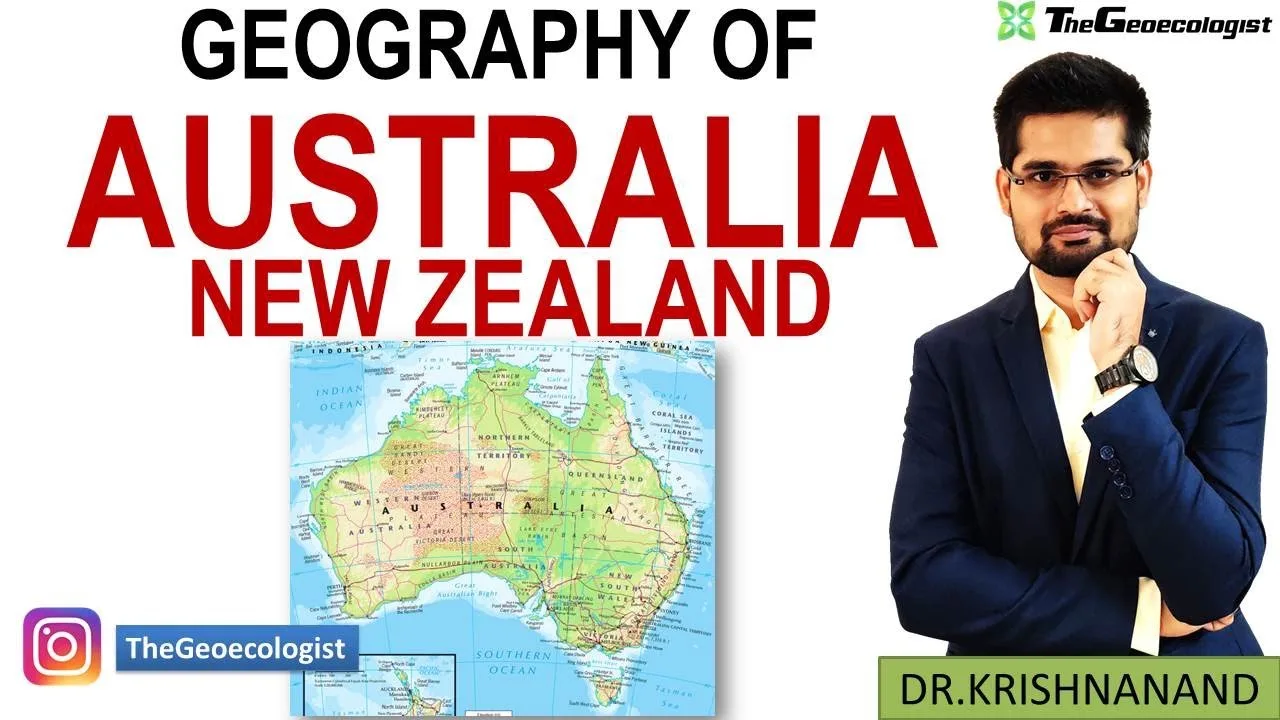
Table of Contents
- Understanding the Austral Realm Geography
- Geopolitical Boundaries and Regional Context
- Physical Geography of Australia
- Location, Size, and Physiographic Divisions
- Iconic Geological Features
- Climate and Biogeography of Australia
- Climate Zones and Variability
- Biodiversity Hotspot and Endemism
- Physical Geography of New Zealand
- Tectonic Setting and Landforms
- Volcanic and Seismic Activity
- Climate and Ecology of New Zealand
- Oceanic Climate and Rainfall Patterns
- Unique Fauna and Conservation Leadership
- Human Geography: Settlement and Economy
- Australia: Coastal Urbanization and Resource Economy
- New Zealand: Bicultural Nation and Agro-Tourism Economy
- Comparative Analysis: Australia vs. New Zealand
- Trans-Tasman Relations and Geopolitics
- Relevance for Competitive Exams: UPSC Geography Optional
- Core Syllabus Alignment
- High-Yield Case Studies
- Environmental Challenges and Future Trajectories
- Climate Change Impacts
- Biodiversity Crisis and Policy Responses
- Conclusion
Austral Realm Geography encompasses the unique physical, environmental, and human landscapes of Australia and New Zealand, two nations defined by their isolation in the southern hemisphere. This comprehensive guide explores the region’s diverse landforms, climate zones, biodiversity hotspots, and socio-economic dynamics, tailored for UPSC aspirants, geography students, and competitive exam enthusiasts seeking mastery of regional geography.
- Austral Realm Geography covers Australia (world’s 6th largest country) and New Zealand (two main islands)
- Isolation by the Southern Ocean and Pacific Ocean drives unique evolutionary history and endemic biodiversity
- Australia features three major physiographic divisions: Western Plateau, Central Lowlands, Eastern Highlands
- New Zealand is defined by the Southern Alps, volcanic zones, and oceanic climate
- Both nations face climate change threats, invasive species, and indigenous rights challenges
- Critical for UPSC Geography Optional: regional geography, biogeography, geopolitics, resource management
Understanding the Austral Realm Geography
The Austral Realm Geography refers to the southernmost regions of Oceania, dominated by the continent-country of Australia and the island archipelago of New Zealand. Separated from Asia by the Timor and Arafura Seas and bounded by the Indian Ocean, Pacific Ocean, and Southern Ocean, this realm’s isolation has profoundly shaped its evolutionary trajectory, climate systems, and cultural development. The term “Austral” derives from the Latin australis, meaning “southern,” reflecting the realm’s position in the mid-to-high southern latitudes.
Geopolitical Boundaries and Regional Context
Politically, the Austral Realm comprises two sovereign nations: the Commonwealth of Australia (including Tasmania and external territories) and New Zealand (including the Cook Islands, Niue, and Tokelau as associated states). The region sits at the intersection of the Indo-Pacific, making Austral Realm Geography strategically significant for contemporary geopolitics. The Australasia subregion also includes Papua New Guinea and neighboring Pacific islands, though the core Austral Realm focuses on the two developed nations.
Physical Geography of Australia
Location, Size, and Physiographic Divisions
Australia spans approximately 7.69 million square kilometers between latitudes 10°S and 44°S, making Austral Realm Geography the world’s sixth-largest country by total area. Its vast expanse encompasses three major physiographic divisions that define Austral Realm Geography:
1. Western Plateau
Covering two-thirds of the continent, the Western Plateau is an ancient Precambrian shield composed of some of Earth’s oldest rocks (3.5+ billion years). This stable craton hosts major deserts including the Great Victoria Desert (348,750 km²), Great Sandy Desert, and Gibson Desert. The plateau’s mineral wealth—iron ore in the Pilbara, gold in Kalgoorlie, and uranium in the Northern Territory—underpins Australia’s mining-dominated economy.
2. Central Lowlands
Stretching from the Gulf of Carpentaria to the Great Australian Bight, the Central Lowlands comprise flat sedimentary basins including the Great Artesian Basin (1.7 million km²), one of the world’s largest groundwater aquifers. The Lake Eyre Basin, an endorheic system covering 1.2 million km², features Kati Thanda–Lake Eyre, Australia’s lowest point at 15 meters below sea level. These lowlands support extensive pastoralism and agriculture.
3. Eastern Highlands (Great Dividing Range)
The Great Dividing Range extends 3,500 km from Cape York Peninsula to the Grampians in Victoria, forming Australia’s most significant topographic barrier. This orographic feature intercepts moisture-laden trade winds, creating a sharp rainfall gradient between the well-watered coastal strip and the arid interior. Major river systems—Murray-Darling (2,508 km), Fitzroy, and Burdekin—originate here, supporting the nation’s agricultural heartland.
Iconic Geological Features
Austral Realm Geography showcases globally significant landmarks. The Great Barrier Reef, a UNESCO World Heritage Site since 1981, stretches 2,300 km along the Queensland coast, comprising 2,900 individual reefs and 900 islands. Austral Realm Geography supports 1,500 fish species, 400 coral species, and generates AUD 6.4 billion annually in tourism. Uluru (Ayers Rock), a 348-meter-high sandstone inselberg in the Northern Territory, holds profound cultural significance for the Anangu people and attracts 400,000+ visitors yearly.
Climate and Biogeography of Australia
Climate Zones and Variability
Australia’s climate spans tropical (north of 18°S), arid/semi-arid (70% of landmass), and temperate (southeast and southwest) zones. The El Niño–Southern Oscillation (ENSO) drives extreme interannual variability: El Niño brings drought and bushfire risk, while La Niña triggers flooding. The Indian Ocean Dipole (IOD) further modulates rainfall. Mean annual temperatures have risen 1.47°C since 1910, with 2019 recording the hottest and driest year on record, intensifying megafire events like the 2019–2020 Black Summer bushfires (18.6 million hectares burned).
Biodiversity Hotspot and Endemism
Australia ranks among 17 megadiverse nations, with 87% of mammals, 93% of reptiles, and 45% of birds endemic. Iconic marsupials—kangaroos (Macropodidae), koalas (Phascolarctos cinereus), and Tasmanian devils (Sarcophilus harrisii)—evolved in isolation after Gondwanan separation ~45 million years ago. Eucalyptus (700+ species) and Acacia (1,000+ species) dominate vegetation. Threats include invasive species (feral cats kill 1.4 billion native animals annually), habitat clearing (6.2 million hectares lost 2000–2017), and climate-driven range shifts.
Physical Geography of New Zealand
Tectonic Setting and Landforms
New Zealand straddles the Pacific–Australian plate boundary, creating a dynamic landscape central to Austral Realm Geography. The North Island features the Taupō Volcanic Zone, a rhyolitic supervolcano system with geothermal fields at Rotorua and Tongariro National Park (UNESCO dual World Heritage). The South Island’s Southern Alps, uplifted 20 mm/year by oblique collision, host Aoraki/Mount Cook (3,724 m) and 3,000+ glaciers covering 1,160 km². Fiordland’s glacially carved sounds (Milford Sound, Doubtful Sound) exemplify fiord geomorphology.
Volcanic and Seismic Activity
The 1886 Tarawera eruption (VEI 5) and 2019 Whakaari/White Island eruption (22 fatalities) underscore volcanic hazards. The 2010–2011 Canterbury earthquake sequence (Mw 7.1 Darfield, Mw 6.2 Christchurch, 185 deaths) revealed liquefaction risks on alluvial plains. New Zealand’s GeoNet network monitors 20,000+ earthquakes annually, informing building codes and disaster resilience.
Climate and Ecology of New Zealand
Oceanic Climate and Rainfall Patterns
New Zealand’s maritime climate (Köppen Cfb/Cfc) delivers mild temperatures (10–16°C mean annual) and high rainfall (600–16,000 mm/year). The Southern Alps create a dramatic rain shadow: West Coast receives 6,000+ mm/year, while Central Otago gets <300 mm. Prevailing westerlies ("Roaring Forties") drive weather systems, with climate change shifting storm tracks poleward and increasing extreme rainfall events.
Unique Fauna and Conservation Leadership
New Zealand’s 80-million-year isolation produced extraordinary endemism: flightless birds (kiwi, kakapo, takahē), tuatara (sole surviving rhynchocephalian), and ancient frog lineages. Human arrival (~1280 CE) triggered megafauna extinction (moa, Haast’s eagle). Today, Predator Free 2050 aims to eradicate stoats, rats, and possums across 26.8 million hectares. Offshore island sanctuaries (Tiritiri Matangi, Kapiti) and mainland fenced ecosanctuaries (Zealandia) showcase world-leading restoration.
Human Geography: Settlement and Economy
Australia: Coastal Urbanization and Resource Economy
Over 85% of Australia’s 26.6 million people (2024) live within 50 km of the coast. Sydney (5.3 million) and Melbourne (5.1 million) dominate, followed by Brisbane, Perth, and Adelaide. The economy (GDP US$1.7 trillion, 2023) relies on mining (14% GDP: iron ore, coal, LNG, gold), agriculture (2.5%: wheat, wool, beef, wine), and services (70%). China receives 32% of exports. Indigenous Australians (3.8% population) face disparities in health, incarceration, and land rights despite the 1992 Mabo decision recognizing native title.
New Zealand: Bicultural Nation and Agro-Tourism Economy
New Zealand’s 5.2 million people (2024) concentrate in Auckland (1.7 million), Wellington, and Christchurch. Māori (17.3% population) and the Crown partnership underpins governance via the Treaty of Waitangi (1840) and Waitangi Tribunal (est. 1975). The economy (GDP US$250 billion) depends on agriculture (dairy 28% exports, meat, wool), tourism (pre-COVID 20.7% export earnings), and renewable energy (84% electricity from hydro, geothermal, wind). The 2019 Zero Carbon Act targets net-zero by 2050 (biogenic methane 24–47% reduction).
Comparative Analysis: Australia vs. New Zealand
| Dimension | Australia | New Zealand |
|---|---|---|
| Land Area | 7.69 million km² | 268,021 km² |
| Dominant Climate | Arid (70% landmass) | Temperate oceanic |
| Topography | Ancient shield, low relief | Young mountains, active tectonics |
| Economic Base | Mining, resources | Agriculture, tourism, services |
| Indigenous Population | Aboriginal & Torres Strait Islander (3.8%) | Māori (17.3%) |
| Key Environmental Threat | Desertification, bushfires, reef bleaching | Invasive predators, seismic hazards |
Trans-Tasman Relations and Geopolitics
The Australia–New Zealand relationship (“Trans-Tasman”) features the 1983 Closer Economic Relations (CER) agreement, creating a single economic market. The 2001 Australia–New Zealand Leadership Forum coordinates policy. Both are Five Eyes partners, Quad engagees (Australia), and Pacific Islands Forum members. The 2022 Pacific Step-up (Australia) and Pacific Reset (NZ) counter Chinese influence. AUKUS (2021) deepens Australia–US–UK security ties; New Zealand pursues independent nuclear-free policy.
Relevance for Competitive Exams: UPSC Geography Optional
Core Syllabus Alignment
Austral Realm Geography maps directly to UPSC Geography Optional Paper II (Regional Geography) and General Studies Paper I (World Geography). Key themes include:
- Regional Geography: Physiographic divisions, drainage systems, climate regions, natural vegetation
- Biogeography: Endemism, Wallace Line vs. Weber Line, Gondwanan relicts, invasive species ecology
- Resource Geography: Mineral belts (Pilbara, Bowen Basin), Great Artesian Basin, Murray-Darling Basin Plan
- Human Geography: Urbanization patterns, core-periphery dynamics, indigenous land rights
- Environmental Geography: Great Barrier Reef bleaching (2016, 2017, 2020, 2022), desertification, carbon farming
- Geopolitics: Indo-Pacific strategy, Antarctic Treaty System (both claim sectors), fisheries management
High-Yield Case Studies
Master these for 15-marker answers:
- Great Barrier Reef Conservation: Reef 2050 Plan, crown-of-thorns starfish control, water quality targets, UNESCO “in danger” listing debate
- Murray-Darling Basin Plan (2012): 2,750 GL environmental water recovery, socio-economic impacts, climate adaptation
- Māori Land Rights & Treaty Settlements: $2.5+ billion settled (2024), co-governance models (Waikato River, Te Urewera)
- Predator Free 2050: Gene drive research, community-led trapping, biodiversity outcomes
- Trans-Tasman Economic Integration: Mutual recognition agreements, labor mobility, services trade
Environmental Challenges and Future Trajectories
Climate Change Impacts
Both nations face escalating risks. Australia’s CSIRO projects 1.5–3°C warming by 2050 (RCP4.5), increasing heatwave frequency 3–4×, reducing southern rainfall 10–20%, and raising sea levels 0.3–0.5 m by 2100. New Zealand’s NIWA projects alpine glacier volume loss 70–90% by 2100, increased drought in eastern regions, and compound coastal flooding. Adaptation includes Australia’s National Climate Resilience and Adaptation Strategy (2021) and NZ’s National Adaptation Plan (2022).
Biodiversity Crisis and Policy Responses
Australia’s 2022 State of the Environment Report rated biodiversity “poor and deteriorating.” The Threatened Species Action Plan (2022–2032) targets 110 priority species. New Zealand’s Te Mana o te Taiao (2020) sets 2050 goals for ecosystem health. Both nations are CBD Kunming-Montreal Global Biodiversity Framework (2022) signatories targeting 30×30 protection.
Conclusion
Austral Realm Geography offers a profound laboratory for understanding how isolation shapes planetary systems—from Gondwanan biotic legacies to contemporary climate vulnerabilities. For UPSC aspirants, mastering this region requires integrating physical processes (tectonics, climatology, hydrology) with human dimensions (settlement, economy, indigenous rights, geopolitics). The contrast between Australia’s ancient, arid stability and New Zealand’s youthful, dynamic tectonism encapsulates the diversity of Earth’s southern lands. As climate change accelerates and Indo-Pacific geopolitics intensify, the Austral Realm’s environmental resilience and strategic significance will only grow, making it indispensable knowledge for any serious student of geography.
For detailed lectures, subscribe to TheGeoecologist YouTube channel and follow @thegeoecologist on Instagram. Visit thegeoecologist.com for study resources.
Frequently Asked Questions
The Austral Realm comprises Australia and New Zealand, the two dominant sovereign nations in the southernmost region of Oceania. Some definitions also include Papua New Guinea and neighboring Pacific islands under the broader Australasia subregion.
The Austral Realm is a core topic in UPSC Geography Optional Paper II (Regional Geography) and GS Paper I. It covers physiographic divisions, climate systems, biodiversity hotspots, resource distribution, indigenous rights, and Indo-Pacific geopolitics—all high-yield areas for 10-15 mark questions.
Australia is an ancient, stable continental shield (7.69M km²) with 70% arid land, while New Zealand (268K km²) is a tectonically active, mountainous archipelago with temperate oceanic climate. Australia's Great Dividing Range contrasts with New Zealand's Southern Alps and volcanic zones.